• Global CNC market projected to reach $128B by 2028 • New EU trade regulations for precision tooling components • Aerospace deman
NYSE: CNC +1.2%LME: STEEL -0.4%

Industrial Automation projects now depend more on software stability
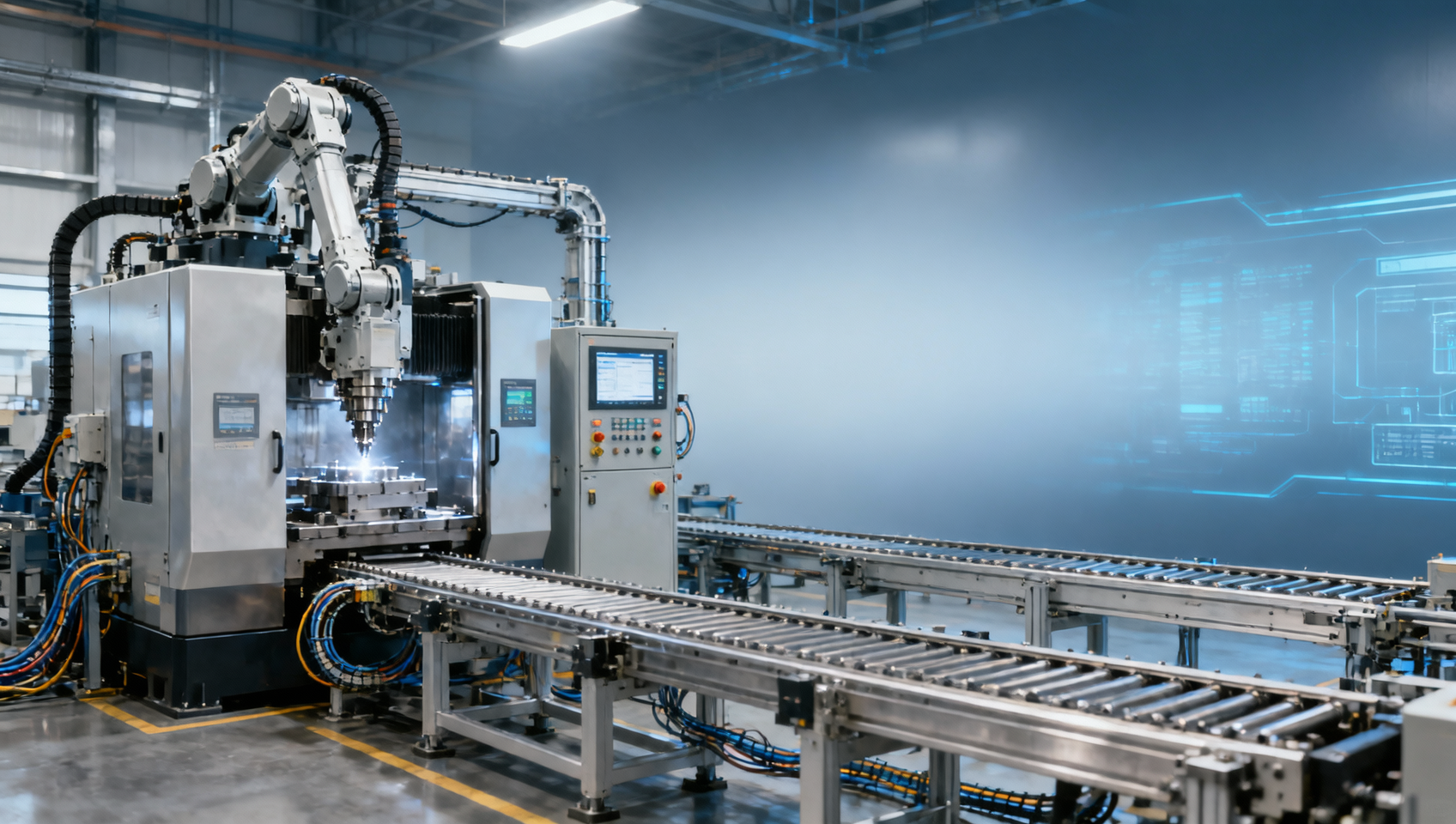
Industrial Automation projects now rely on software stability as much as hardware precision, especially across Global Manufacturing and the Machine Tool Market. From industrial CNC and CNC milling to automated lathe systems and full Automated Production Line integration, stable software drives quality, uptime, and efficiency. For manufacturers, buyers, and operators in the Manufacturing Industry, understanding this shift is essential to improving every Production Process.
In the past, many machine tool investment decisions focused first on spindle speed, axis accuracy, casting rigidity, and cutting capacity. Those metrics still matter, but they no longer tell the full story. A CNC machining center with excellent mechanical design can still underperform if its control software crashes, data interfaces fail, or motion logic becomes unstable during long production runs.
This change is especially visible in sectors such as automotive, aerospace, electronics, and energy equipment, where batch consistency, traceability, and line-level integration are now standard expectations rather than premium options. For procurement teams, plant managers, operators, and business leaders, software stability has become a key factor in machine availability, process repeatability, and return on investment over 3 to 7 years of operation.
Why software stability now defines automation performance
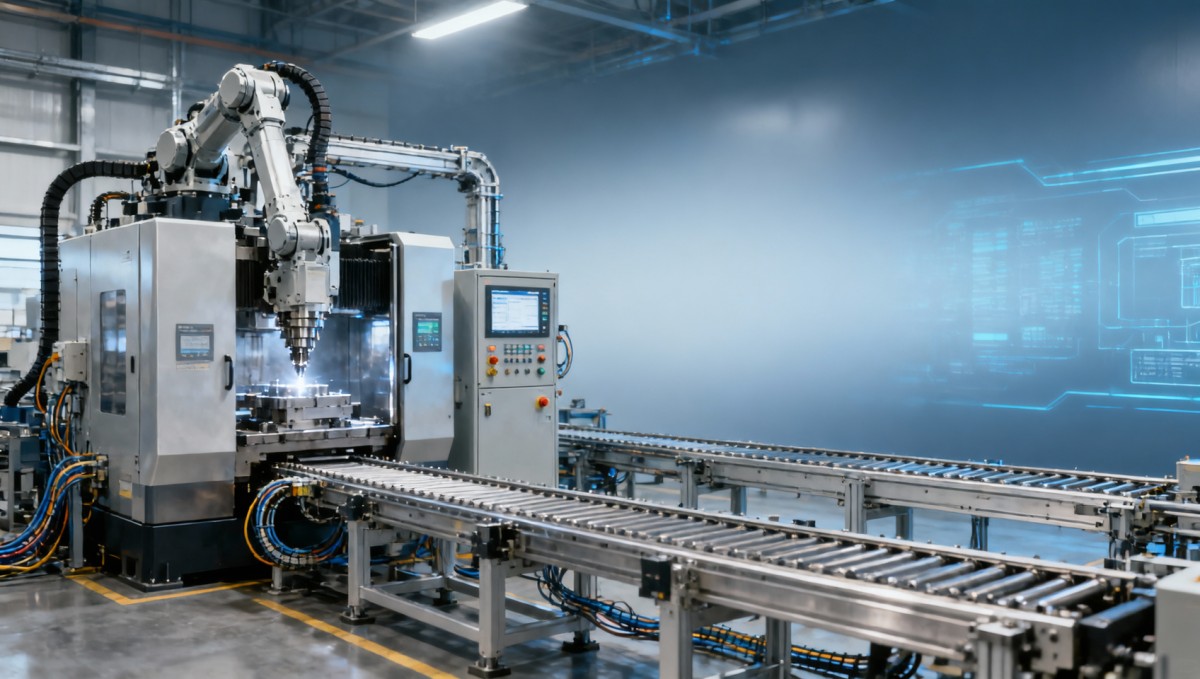
In modern industrial automation, software is no longer limited to a control panel interface. It manages motion paths, tool compensation, communication with robots, alarm logic, safety interlocks, production recipes, and data exchange with MES or ERP systems. When one layer becomes unstable, the impact can spread across an entire automated production line within minutes.
For example, a CNC lathe or multi-axis machining system may hold positioning tolerance within microns, yet still lose productivity if program execution freezes once every 8 to 12 hours. In high-mix manufacturing, even a short 5-minute software interruption can create scrap, restart delays, and operator intervention that disrupts takt time and delivery planning.
Software stability matters even more when multiple assets are connected. A standalone machine can often be restarted locally, but an integrated cell with robots, conveyors, vision systems, and automatic loaders depends on synchronized communication. If one PLC logic block, HMI module, or machine interface becomes inconsistent, upstream and downstream equipment may stop together.
This is why machine tool buyers increasingly evaluate not only hardware specifications, but also software architecture, update discipline, fault recovery logic, and compatibility with future expansion. A plant that plans to add 2, 5, or 10 machines over time needs stable digital foundations from the first purchase.
Where instability usually appears
Many failures are not dramatic system crashes. They often appear as recurring communication losses, tool offset corruption, delayed HMI response, robot handshake errors, memory overload, or version mismatch after maintenance. These problems are difficult because they may only occur under load, after several shifts, or during specific part programs.
- Motion control instability during long-cycle machining of 30 to 90 minutes per part.
- Network interruptions between CNC controllers, PLCs, robots, and line supervisors.
- Uncontrolled software updates that change alarm logic or interface behavior.
- Insufficient exception handling when sensors, probes, or loaders return abnormal signals.
Operational consequences for manufacturing plants
The cost of unstable software is usually hidden in downtime and process variation rather than in one visible repair invoice. Plants may see lower OEE, more operator callouts, delayed first-piece approval, and higher engineering workload. In some cases, the machine remains mechanically healthy while software instability becomes the real bottleneck limiting capacity utilization.
How software stability affects CNC, milling, and automated lathe applications
Different machine categories experience software risk in different ways. CNC milling centers often depend on stable interpolation, look-ahead processing, and toolpath execution for complex surfaces. CNC lathes and automated lathe systems rely heavily on synchronized cycles, bar feeding, measurement routines, and repeatable tool offset control over large production batches.
In precision manufacturing, the difference between a smooth software environment and an unstable one often appears in unattended operation. A machine that can run lights-out for 6 to 8 hours without alarm offers a very different business value than one that requires checks every 45 minutes. This directly affects labor allocation, night-shift planning, and effective machine-hour output.
For machining centers used in aerospace or energy components, software must also manage high-value processes safely. A failed probing cycle, incorrect parameter recall, or interrupted data write can damage expensive parts and tie up capacity. The more expensive the workpiece and the longer the cycle time, the more critical software reliability becomes.
The table below outlines how software stability influences key machine tool scenarios in daily production.
The key conclusion is that software stability is not only an IT concern. It directly affects spindle utilization, operator workload, and process repeatability. In practical terms, stable control logic can help a factory protect both precision and throughput, particularly when part families change frequently or production runs exceed 500 to 2,000 pieces.
Impact on operators and process engineers
Operators need interfaces that respond consistently, alarm messages that are understandable, and restart logic that does not require deep programming knowledge. Process engineers need confidence that post-processed code, probing cycles, and tool libraries will behave the same way on day 1 and day 100. Stable software reduces hidden dependency on a small number of experienced technicians.
A practical rule for unattended production
If a machine or cell cannot complete at least 20 to 30 consecutive cycles without software-related interruption, the automation concept should be reviewed before capacity expansion. Mechanical upgrades alone rarely solve digital instability at line level.
What buyers and decision-makers should evaluate before procurement
For procurement teams, software stability should be part of the RFQ process, not a topic left for commissioning. The right questions can reduce implementation risk, shorten debugging time, and improve long-term serviceability. This is especially important when sourcing equipment internationally from suppliers in China, Germany, Japan, South Korea, or multi-country integrator networks.
A common mistake is to compare only machine accuracy, motor power, and price. In reality, the total cost of ownership over 36 to 60 months is strongly influenced by software maintainability, remote diagnostics, version control, and spare support for control modules. A lower purchase price can quickly lose value if commissioning takes 4 extra weeks or recurring faults require frequent supplier intervention.
Buyers should also check whether the equipment can integrate with existing production systems. A technically advanced machine may still create friction if it cannot communicate with the current MES, tool management software, or robot brand used in the plant. Compatibility is often worth more than isolated feature richness.
The following table can be used as a practical procurement checklist for machine tools and industrial automation projects.
This checklist helps buyers move from a hardware-only comparison to a lifecycle-based decision. In many cases, the best machine for a factory is not the most complex one, but the one that can be deployed, integrated, and maintained with the lowest software risk over multiple years.
Four procurement questions worth asking suppliers
- How are software updates tested before release, and can the plant approve updates before installation?
- What is the standard commissioning period: 7 to 15 days, 2 to 4 weeks, or longer for integrated cells?
- Can machine logs and alarms be exported for root-cause analysis without proprietary restrictions?
- What local or remote service coverage is available during the first 12 months of operation?
Implementation, integration, and maintenance strategies that reduce risk
Even the most capable equipment can become unstable if implementation is rushed. Successful industrial automation projects usually follow a phased approach: functional review, interface verification, dry run, pilot production, and ramp-up. Skipping these steps often saves a few days at the beginning but creates weeks of troubleshooting later.
For machine tool projects, software validation should include more than simple start-stop tests. Teams should simulate common faults, communication interruptions, emergency restart scenarios, and recipe changes. In a typical project, 10 to 20 high-risk scenarios can be identified before mass production begins, reducing unplanned downtime during the first 90 days.
Maintenance strategy also matters. Stable software is not achieved by avoiding updates forever. Instead, plants need disciplined update windows, backup copies, user permission control, and change logs. A practical routine is to review software changes monthly, validate them on a non-critical asset if possible, and document operator instructions after every approved adjustment.
The implementation framework below can help manufacturers standardize deployment for CNC machines, robot cells, and automated production lines.
This staged method helps separate software bugs from process tuning issues. It also creates a measurable acceptance framework, which is valuable for both suppliers and end users when discussing performance obligations and handover readiness.
Key maintenance practices for long-term stability
- Keep verified backups of CNC parameters, PLC programs, HMI files, and robot job data after every approved change.
- Restrict editing permissions to trained staff and maintain a simple revision log with date, reason, and responsible person.
- Review recurring alarms every 30 days to identify software patterns before they become chronic downtime issues.
- Train operators on standard recovery steps so 3 to 5 common faults can be handled safely without waiting for engineering support.
Common implementation mistake
Many plants accept full-speed production too early. A better approach is to define acceptance in layers: mechanical accuracy, software reliability, communication stability, and batch repeatability. If one layer is incomplete, expansion should pause until root causes are closed.
FAQ for manufacturers, operators, and sourcing teams
The shift toward software-dependent automation raises practical questions across the manufacturing industry. The answers below address common search intent from users, maintenance teams, procurement staff, and management evaluating CNC equipment, smart factory projects, and automated production lines.
How can a factory tell whether downtime is caused by software rather than hardware?
A useful sign is repeatability without physical wear evidence. If stoppages occur under similar program conditions, after updates, or during interface events such as robot handshakes or probing cycles, software is a likely cause. Reviewing alarm logs over 2 to 4 weeks often reveals patterns that mechanical inspection alone may miss.
Which factories benefit most from stable software architecture?
Plants with multi-machine cells, high-mix low-volume production, unmanned shifts, or line integration gain the most. The value is also high where part cycle time exceeds 20 minutes, scrap cost is significant, or traceability is mandatory. In these settings, software instability quickly affects both output and compliance.
What delivery and commissioning timeline is realistic for integrated automation?
A standalone CNC machine may be installed and validated in 7 to 15 days, while a robot-linked or line-connected solution often needs 2 to 6 weeks depending on interfaces and testing depth. Projects involving MES connectivity, multiple vendors, or custom logic should reserve extra time for validation and acceptance trials.
What should purchasers include in contracts to protect software stability?
It is reasonable to define software version records, backup delivery, alarm documentation, recovery logic, remote support conditions, and acceptance criteria based on stable operation over a set number of cycles. For example, requiring 24 to 72 hours of continuous stable pilot production can be more meaningful than a simple power-on inspection.
Industrial automation is moving toward deeper digital integration, and the machine tool market is evolving with it. Mechanical precision remains essential, but reliable software is now just as important for CNC machining, automated lathe systems, robotic cells, and flexible production lines. Companies that assess software stability early can reduce downtime, improve process control, and make better long-term procurement decisions.
For information researchers, operators, buyers, and enterprise decision-makers, the practical takeaway is clear: evaluate automation as a full system, not just a machine. If you are planning equipment upgrades, global sourcing, or smart manufacturing expansion, now is the right time to review control logic, interface strategy, and lifecycle support. Contact us to discuss your application, request a tailored solution, or learn more about machine tool and precision manufacturing options for your next project.
Recommended for You
![]() Jiangnan Chemical Northeast Inspection Highlights Explosion-Proof CNC for Hazardous Chemical ProductionManufacturing Market Research Center
Jiangnan Chemical Northeast Inspection Highlights Explosion-Proof CNC for Hazardous Chemical ProductionManufacturing Market Research Center![]() Jiaokong Factoring Hosts Risk Control Seminar on ISO 13849-1Manufacturing Policy Research Center
Jiaokong Factoring Hosts Risk Control Seminar on ISO 13849-1Manufacturing Policy Research Center![]() AWE2026 Closes: AI-Driven Whole-Home Intelligence Fuels CNC Line ExportsManufacturing Market Research Center
AWE2026 Closes: AI-Driven Whole-Home Intelligence Fuels CNC Line ExportsManufacturing Market Research Center![]() Inner Mongolia Power Group, TBEA Explore EaaS for Smart Grid Equipment ExportManufacturing Market Research Center
Inner Mongolia Power Group, TBEA Explore EaaS for Smart Grid Equipment ExportManufacturing Market Research Center![]() Lianyirong AI Audit Case in China Supply Chain Finance Yearbook 2025Manufacturing Policy Research Center
Lianyirong AI Audit Case in China Supply Chain Finance Yearbook 2025Manufacturing Policy Research Center![]() Fastener Expo Shanghai 2026: 70,000㎡ Global Record, Focus on Low-Carbon & Smart ManufacturingGlobal Machine Tool Trade Research Center
Fastener Expo Shanghai 2026: 70,000㎡ Global Record, Focus on Low-Carbon & Smart ManufacturingGlobal Machine Tool Trade Research Center


Aris Katos
Future of Carbide Coatings
15+ years in precision manufacturing systems. Specialized in high-speed milling and aerospace grade alloy processing.
▶
Jiangnan Chemical Northeast Inspection Highlights Explosion-Proof CNC for Hazardous Chemical ProductionManufacturing Market Research Center▶
Jiaokong Factoring Hosts Risk Control Seminar on ISO 13849-1Manufacturing Policy Research Center▶
AWE2026 Closes: AI-Driven Whole-Home Intelligence Fuels CNC Line ExportsManufacturing Market Research Center▶
Inner Mongolia Power Group, TBEA Explore EaaS for Smart Grid Equipment ExportManufacturing Market Research Center▶
Lianyirong AI Audit Case in China Supply Chain Finance Yearbook 2025Manufacturing Policy Research Center
Mastering 5-Axis Workholding Strategies
Join our technical panel on Nov 15th to learn about reducing vibrations in thin-wall components.

Providing you with integrated sanding solutions
Before-sales and after-sales services
Comprehensive technical support