• Global CNC market projected to reach $128B by 2028 • New EU trade regulations for precision tooling components • Aerospace deman
NYSE: CNC +1.2%LME: STEEL -0.4%

What makes an Automated Production Line fail early?
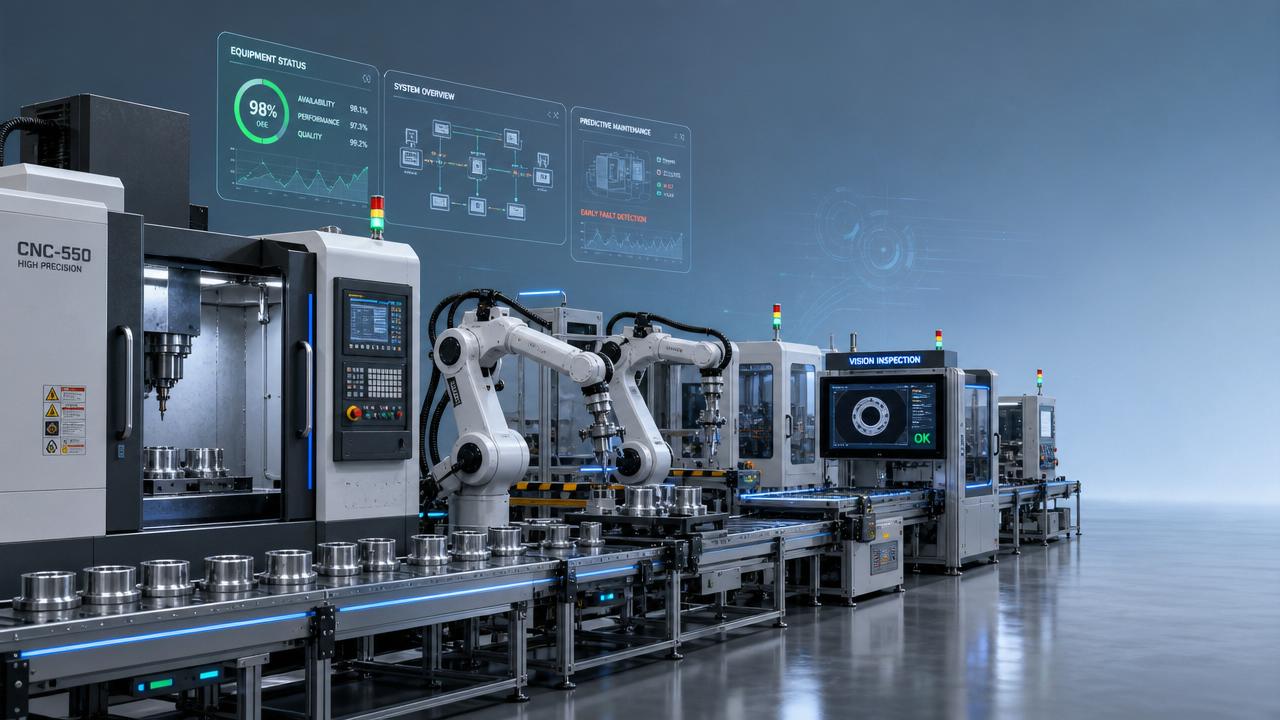
An Automated Production Line can fail early when hidden design flaws appear before volume production begins. In modern manufacturing, this problem is becoming more visible as lines grow faster, smarter, and more interconnected.
Across CNC machining, electronics, automotive, and energy equipment, early failure rarely comes from one broken machine. It usually starts with weak planning, unstable processes, poor integration, or maintenance gaps.
As smart factories expand, an Automated Production Line is expected to deliver precision, traceability, and uptime from day one. That expectation raises the cost of early mistakes and shortens the tolerance for preventable disruption.
Why early failure signals are appearing sooner in Automated Production Line projects
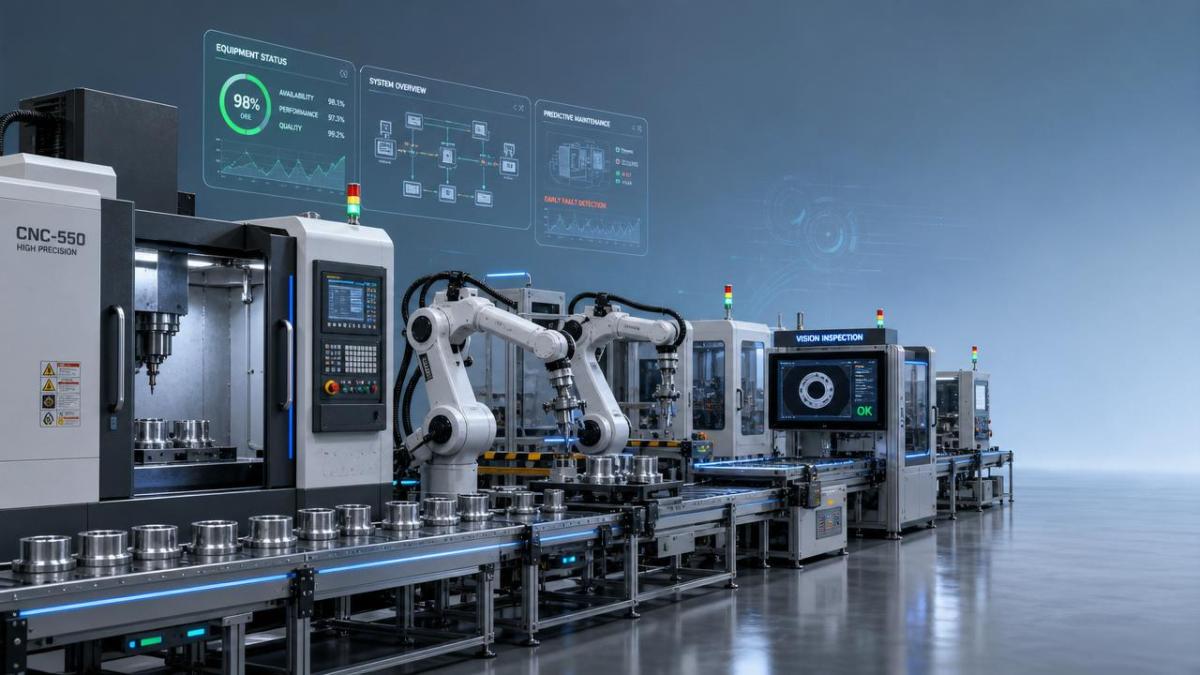
The industrial environment has changed. Production systems now connect CNC machines, robots, conveyors, tooling, sensors, software, and inspection stations within one synchronized operating chain.
That higher integration creates efficiency, but it also creates fragility. If one component is selected badly or tuned poorly, the entire Automated Production Line can lose rhythm quickly.
Another trend is shorter launch windows. Many companies push new lines into operation before process verification, operator training, and spare parts planning are fully complete.
Digital tools help, but they do not correct weak engineering decisions. Simulation, data collection, and dashboards only create value when the underlying process logic is sound.
The root causes behind why an Automated Production Line fails early
Early failure usually forms during project definition, not after commissioning. The most common drivers can be grouped into technical, operational, and organizational sources.
- Product design complexity often exceeds the real capability of the Automated Production Line.
- Fixture errors can create repeated dimensional drift in precision machining cells.
- Material variation can overload cutting conditions and shorten tool life unexpectedly.
- Utility instability, including air, coolant, or power issues, can trigger hidden line weakness.
- Changeovers are sometimes ignored during design, even when product mix is high.
How weak planning damages performance across the full manufacturing chain
An Automated Production Line does not operate in isolation. Its early failure affects upstream machining, downstream assembly, quality control, delivery planning, and customer confidence.
In CNC environments, unstable line flow can force machines into rushed setups or repeated interventions. That pressure increases scrap, disrupts tool management, and reduces spindle utilization.
When inspection data is delayed or inaccurate, defects travel further. A small process drift at one station can become a large batch problem across the Automated Production Line.
Digital reporting also suffers. If sensors, counters, or traceability systems are not aligned, decision-makers may see attractive dashboards while the real process keeps degrading.
- Production scheduling becomes reactive instead of controlled.
- Maintenance teams spend more time firefighting than preventing breakdowns.
- Quality teams face recurring deviation analysis with limited root cause clarity.
- Supply commitments become harder to maintain under unstable throughput conditions.
The warning signs that an Automated Production Line is likely to fail early
Most early failures announce themselves before a major shutdown happens. The problem is not a lack of signs, but a lack of disciplined interpretation.
Commissioning takes longer than planned
Repeated parameter changes, alarm bypasses, and temporary fixes usually mean the line architecture was not mature enough for launch.
Performance depends on a few experts
If only one technician can stabilize the Automated Production Line, knowledge has not been converted into robust operating control.
OEE looks acceptable, but output remains unstable
This often means metrics are too aggregated. Short stops, quality losses, and rework may be hidden inside average numbers.
Consumables degrade faster than expected
Tool wear, fixture damage, belt issues, and sensor contamination often indicate process load or access design was underestimated.
Small product changes create major disruption
A flexible Automated Production Line should absorb variation. If every change causes resets, retraining, or defect spikes, resilience is low.
What deserves close attention before launch and during ramp-up
A more reliable Automated Production Line starts with disciplined focus on a few non-negotiable control points. These points reduce hidden risk before volume pressure arrives.
- Verify takt time with realistic material flow, not only theoretical machine speed.
- Test process capability under full load, including changeovers and shift transitions.
- Confirm fixture repeatability, cutting stability, and thermal behavior in CNC stations.
- Map every digital interface between CNC, PLC, robot, MES, and inspection systems.
- Design maintenance access before installation, not after repeated service delays.
- Build spare parts lists based on failure criticality and supply lead time.
- Train operators on fault recognition, not only standard startup routines.
- Set escalation rules for recurring alarms, micro-stops, and quality drift.
In precision manufacturing, ramp-up quality should matter as much as long-term output. The first months often reveal whether an Automated Production Line was engineered for resilience or only for presentation.
A practical response path to prevent early Automated Production Line failure
Preventing early failure requires a structured response that connects engineering, operations, software, and maintenance decisions. Fast fixes alone rarely solve systemic weakness.
The best response is not simply adding more automation. It is aligning line architecture, machining capability, digital control, and maintenance readiness around actual production conditions.
If an Automated Production Line already shows early weakness, start with bottleneck mapping, downtime classification, and root cause ranking. Then fix the highest-impact instability first.
Strong automated manufacturing depends on more than advanced equipment. It depends on disciplined validation, realistic planning, and continuous control from installation through steady-state production.
Review the current line against these risk points, identify the earliest signs of instability, and act before minor losses become structural failure. That is how Automated Production Line investment stays productive.
PREVIOUS ARTICLE
NEXT ARTICLE
Recommended for You
 Why does Production Process planning decide delivery speed?CNC Machining Technology Center
 How do Shaft Parts defects start during machining?CNC Machining Technology Center
 Industrial Robotics costs are falling, but where is the risk?Manufacturing Market Research Center
 What makes an Automated Production Line fail early?Machine Tool Industry Editorial Team
 Is space-saving CNC manufacturing worth it for small factories?CNC Machining Technology Center
![]() Delta NC5 Series Gains TÜV SIL3 Certification, Enters BMW Production ValidationMachine Tool Industry Editorial Team
Delta NC5 Series Gains TÜV SIL3 Certification, Enters BMW Production ValidationMachine Tool Industry Editorial Team


Aris Katos
Future of Carbide Coatings
15+ years in precision manufacturing systems. Specialized in high-speed milling and aerospace grade alloy processing.
▶
What makes an Automated Production Line fail early?Machine Tool Industry Editorial Team▶
When an Automated Production Line becomes hard to maintainMachine Tool Industry Editorial Team▶
Why Industrial Robotics payback is shorter than many expectMachine Tool Industry Editorial Team▶
When an Automated Production Line becomes hard to maintainMachine Tool Industry Editorial Team▶
Industrial Automation mistakes that raise operating costsMachine Tool Industry Editorial Team
Mastering 5-Axis Workholding Strategies
Join our technical panel on Nov 15th to learn about reducing vibrations in thin-wall components.

Providing you with integrated sanding solutions
Before-sales and after-sales services
Comprehensive technical support