• Global CNC market projected to reach $128B by 2028 • New EU trade regulations for precision tooling components • Aerospace deman
NYSE: CNC +1.2%LME: STEEL -0.4%

Industrial Robotics costs are falling, but where is the risk?
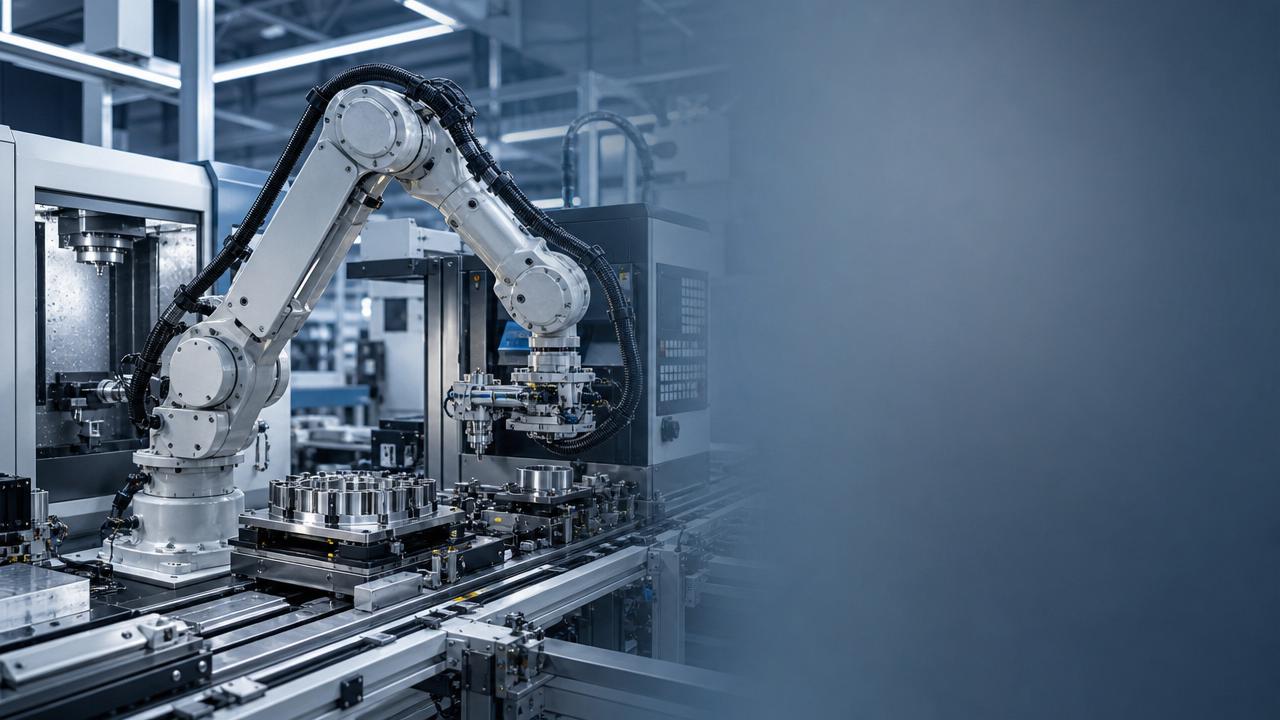
Industrial Robotics costs are falling fast, and that shift is changing investment logic across modern manufacturing.
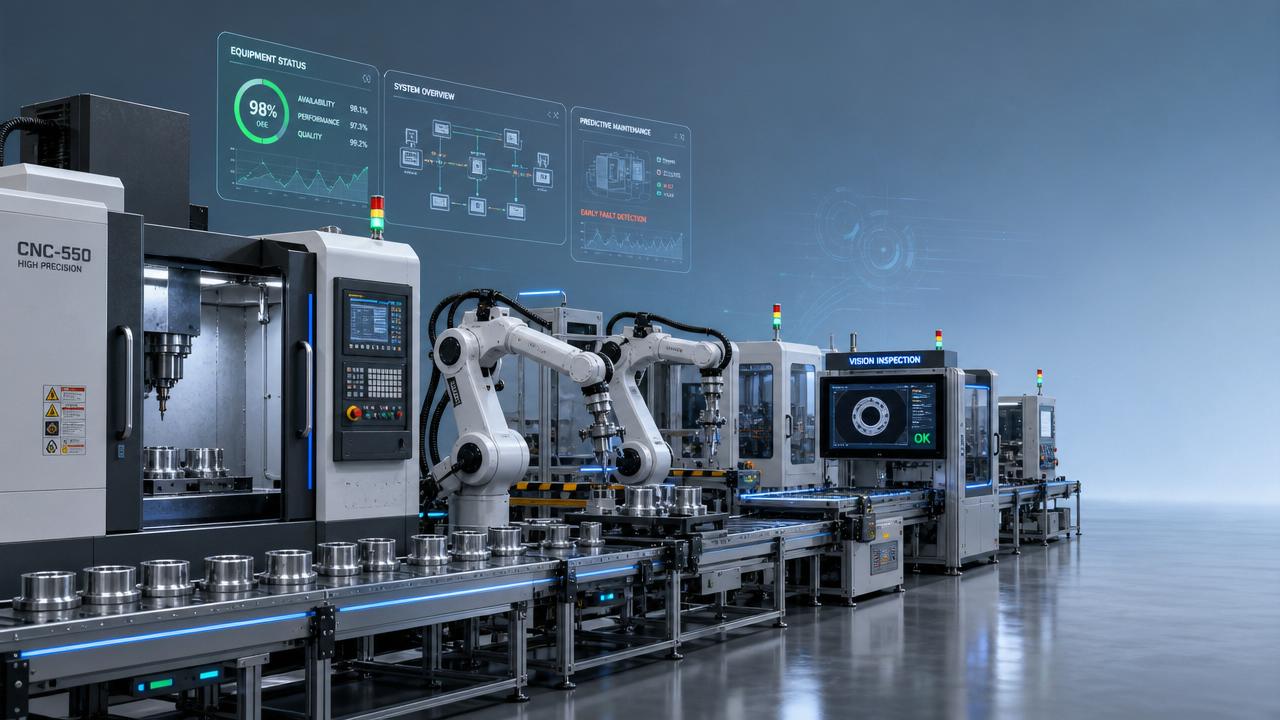
Lower robot prices improve access to automation, especially in CNC machining, precision production, and flexible assembly environments.
Yet lower acquisition cost does not remove execution risk.
Real exposure often appears after purchase, during integration, programming, maintenance, line balancing, and software coordination.
This matters in cross-industry manufacturing because Industrial Robotics now connects machine tools, material handling, inspection, and data systems.
The key question is no longer only “How much does a robot cost?”
A better question is “Where can Industrial Robotics create hidden cost, delay, or underperformance?”
Why are Industrial Robotics costs falling, and what does that really mean?
Industrial Robotics pricing has dropped because hardware supply has expanded and core components are becoming more standardized.
Servo systems, controllers, sensors, and collaborative designs now reach wider production scales than before.
Competition among global suppliers also pushes entry-level robot prices downward.
However, lower robot cost usually reflects only the visible equipment price.
It rarely includes grippers, guarding, end-of-arm tooling, safety systems, simulation, offline programming, and commissioning time.
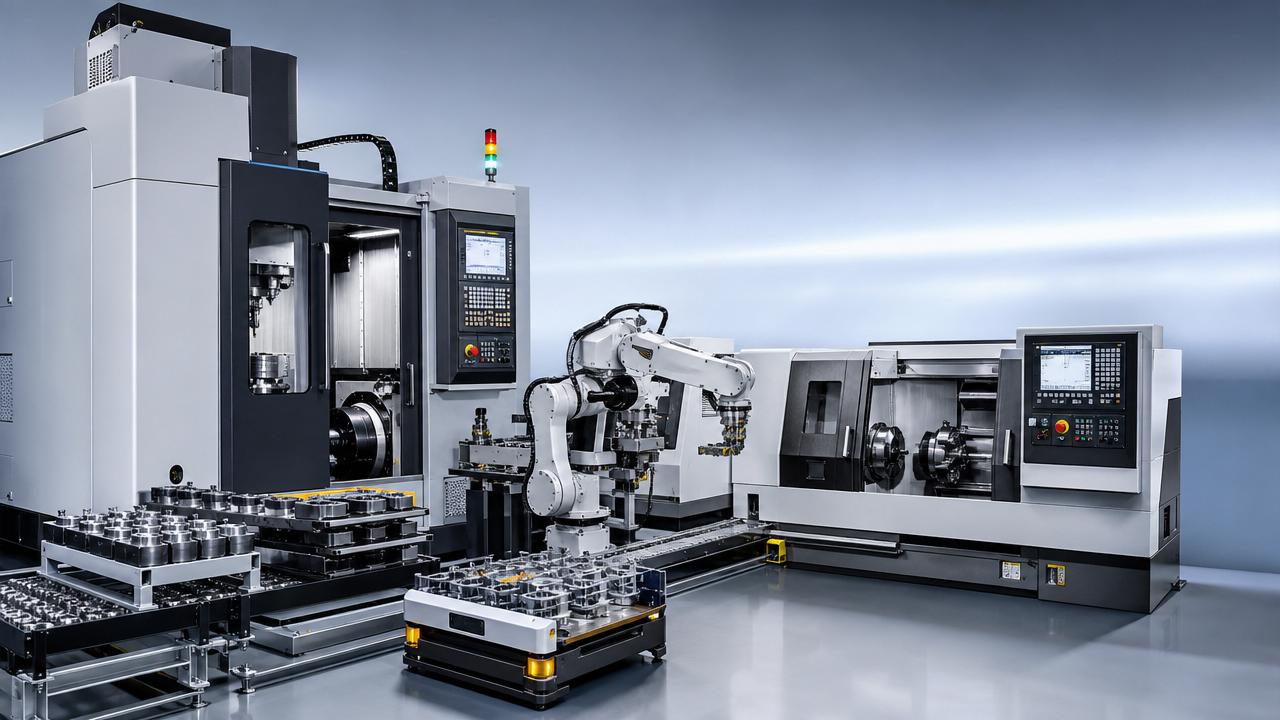
In CNC and precision manufacturing, the robot is only one element inside a larger automated cell.
A falling robot price can improve project feasibility, but it does not guarantee profitable automation.
That is why Industrial Robotics should be evaluated as a system investment, not as a standalone machine purchase.
Where do hidden costs appear after an Industrial Robotics project begins?
The first hidden cost often comes from integration engineering.
A robot may fit the task on paper, but the line may still need layout changes, fixtures, conveyors, sensors, and interface redesign.
The second hidden cost is tooling adaptation.
Precision parts vary in geometry, surface finish, tolerances, and weight.
That can require custom grippers or quick-change systems, increasing both capital and debugging effort.
The third cost appears in software compatibility.
Industrial Robotics often must communicate with CNC controls, MES platforms, vision systems, inspection units, and safety PLCs.
If protocols or data structures do not align, project timelines can expand quickly.
The fourth cost is production disruption during commissioning.
Even a technically sound project may reduce short-term output while operators, programmers, and maintenance teams adjust processes.
- Layout modification and utility relocation
- Custom end-of-arm tooling development
- Control system interface work
- Safety validation and certification
- Operator training and ramp-up losses
These factors explain why Industrial Robotics projects can exceed budget despite falling hardware prices.
Which operational risks matter most in CNC and precision manufacturing?
In CNC production, cycle time stability is critical.
If robot loading does not match machine rhythm, expensive spindles may wait idle.
That reduces the expected return from Industrial Robotics.
Precision manufacturing also depends on repeatability beyond robot motion alone.
Part orientation, clamping force, thermal drift, chip contamination, and tool wear can all affect final quality.
A robot may be accurate, yet the process may remain unstable.
Another risk involves maintenance readiness.
Industrial Robotics adds servos, reducers, cables, vision units, and safety devices that require preventive maintenance discipline.
When spare parts planning is weak, a minor failure can stop an entire cell.
Cyber and software risks are growing as well.
Connected robots exchange production data, recipes, alarms, and quality information across digital systems.
Poor version control or insecure remote access can create downtime and compliance issues.
Common risk signals before launch
- No clear benchmark for takt time or utilization
- Unfinished interface definition with CNC equipment
- No spare parts list for critical robot components
- Limited simulation of mixed product scenarios
- Training focused only on operators, not maintenance teams
How should ROI for Industrial Robotics be judged beyond the purchase price?
A useful ROI model should combine direct savings, production flexibility, and operational resilience.
Labor reduction is only one part of the picture.
Industrial Robotics may also improve spindle utilization, reduce scrap, extend unattended production hours, and stabilize output quality.
At the same time, ROI should include hidden burdens.
These include software licenses, service contracts, fixture updates, integration support, and line downtime during upgrades.
A project with a cheap robot can still deliver weak ROI if changeovers remain slow or programming remains dependent on external support.
Evaluation should use at least three scenarios.
A base case, a slower ramp-up case, and a lower utilization case give a more realistic decision framework.
How can Industrial Robotics risk be reduced before implementation?
Risk reduction starts with process selection, not robot selection.
Choose operations with stable part geometry, predictable cycle times, and measurable bottlenecks.
Industrial Robotics performs best where process variation is already controlled.
Next, map interfaces early.
Define communication with CNC machines, sensors, inspection stations, tool management, and traceability systems before procurement closes.
Simulation is also valuable.
Offline testing can reveal collision risks, reach limitations, and changeover problems before installation begins.
Support planning should not be delayed.
Document critical spare parts, recovery procedures, alarm response logic, and software backup routines in advance.
- Prioritize one repeatable application with clear baseline metrics.
- Confirm cell layout, safety logic, and utility requirements early.
- Validate robot payload, reach, and end-effector suitability.
- Test software interoperability before final acceptance.
- Create a training plan for operation, maintenance, and troubleshooting.
This structured approach helps Industrial Robotics move from attractive concept to reliable production asset.
What are the most common misconceptions about Industrial Robotics risk?
One common misconception is that lower price means lower project risk.
In reality, risk often shifts from capital cost toward implementation complexity.
Another misconception is that robot accuracy automatically ensures part quality.
Quality depends on the whole process chain, including fixturing, tooling, machine condition, and environmental control.
A third misconception is that one robot cell can easily handle every future product.
Industrial Robotics can be flexible, but flexibility still requires planning, programming effort, and compatible tooling architecture.
The final misconception is that maintenance can be outsourced without internal readiness.
External support helps, but response time during breakdowns still affects output and delivery reliability.
Quick FAQ summary
Industrial Robotics is becoming more affordable, and that is a major shift for global manufacturing.
Still, the central risk has not disappeared. It has simply moved deeper into execution.
For CNC machining, precision machine tools, and automated production lines, strong results depend on system fit, process discipline, and support readiness.
Before moving forward with Industrial Robotics, verify the full cost structure, model conservative ROI scenarios, and test integration assumptions carefully.
A lower robot price can open opportunity, but disciplined planning is what protects long-term value.
PREVIOUS ARTICLE
NEXT ARTICLE
Recommended for You
 Why does Production Process planning decide delivery speed?CNC Machining Technology Center
 How do Shaft Parts defects start during machining?CNC Machining Technology Center
 Industrial Robotics costs are falling, but where is the risk?Manufacturing Market Research Center
 What makes an Automated Production Line fail early?Machine Tool Industry Editorial Team
 Is space-saving CNC manufacturing worth it for small factories?CNC Machining Technology Center
![]() Delta NC5 Series Gains TÜV SIL3 Certification, Enters BMW Production ValidationMachine Tool Industry Editorial Team
Delta NC5 Series Gains TÜV SIL3 Certification, Enters BMW Production ValidationMachine Tool Industry Editorial Team


Aris Katos
Future of Carbide Coatings
15+ years in precision manufacturing systems. Specialized in high-speed milling and aerospace grade alloy processing.
▶
Industrial Robotics costs are falling, but where is the risk?Manufacturing Market Research Center▶
First Global CNC Machine Carbon Footprint Guide Released in ChineseManufacturing Market Research Center▶
What the Machine Tool Market signals for 2026 sourcingManufacturing Market Research Center▶
Where the Machine Tool Market is softening in 2026Manufacturing Market Research Center▶
Is the Machine Tool Market slowing or just shifting demand?Manufacturing Market Research Center
Mastering 5-Axis Workholding Strategies
Join our technical panel on Nov 15th to learn about reducing vibrations in thin-wall components.

Providing you with integrated sanding solutions
Before-sales and after-sales services
Comprehensive technical support