• Global CNC market projected to reach $128B by 2028 • New EU trade regulations for precision tooling components • Aerospace deman
NYSE: CNC +1.2%LME: STEEL -0.4%

Is space-saving CNC manufacturing worth it for small factories?
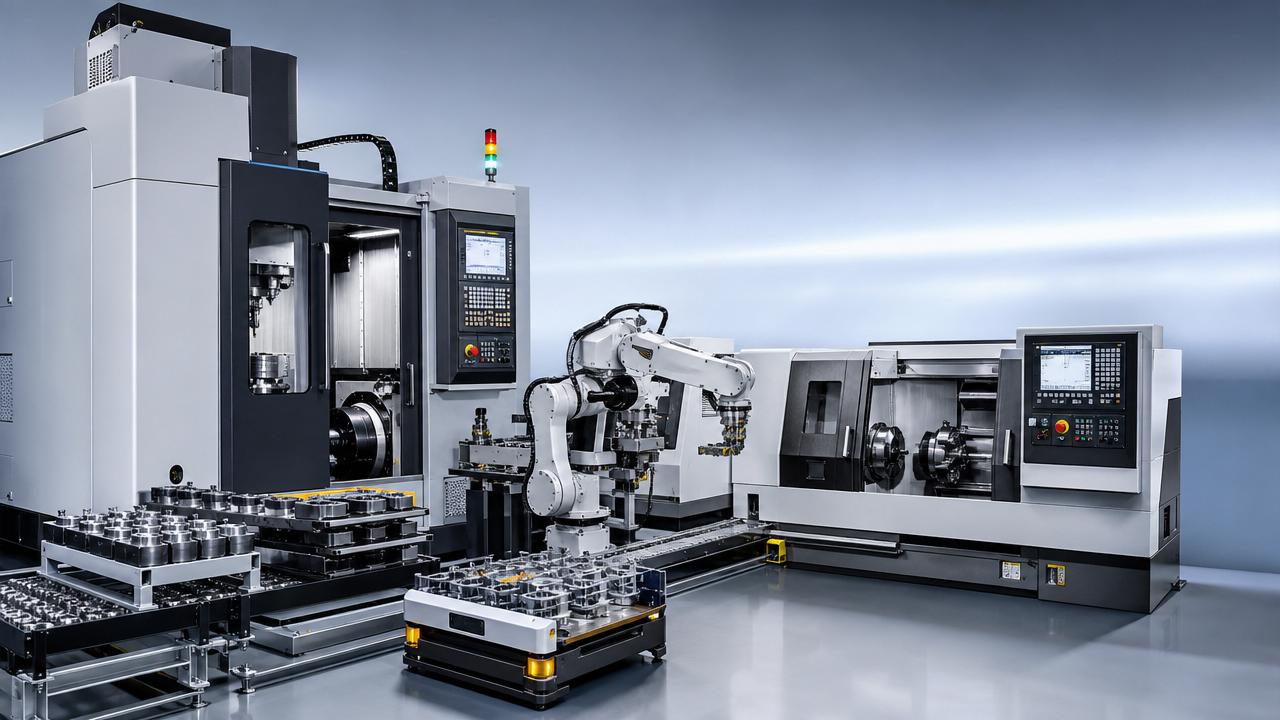
For small factories facing rising rent, labor pressure, and tighter delivery schedules, space-saving CNC manufacturing can look like an obvious upgrade. Yet the decision should not rest on floor area alone. Compact CNC layouts matter when they improve spindle utilization, shorten material flow, reduce setup losses, and delay building expansion. The real question is simple: does a smaller manufacturing footprint create measurable production value?
In modern machining, compact equipment, integrated automation, and flexible cells are becoming practical options across general manufacturing. From precision parts to short-run mixed production, a space-efficient CNC strategy can support output growth without adding square meters. Still, the investment only makes sense when machine capability, workflow, maintenance access, and order mix align.
Why a checklist matters before choosing space-saving CNC manufacturing
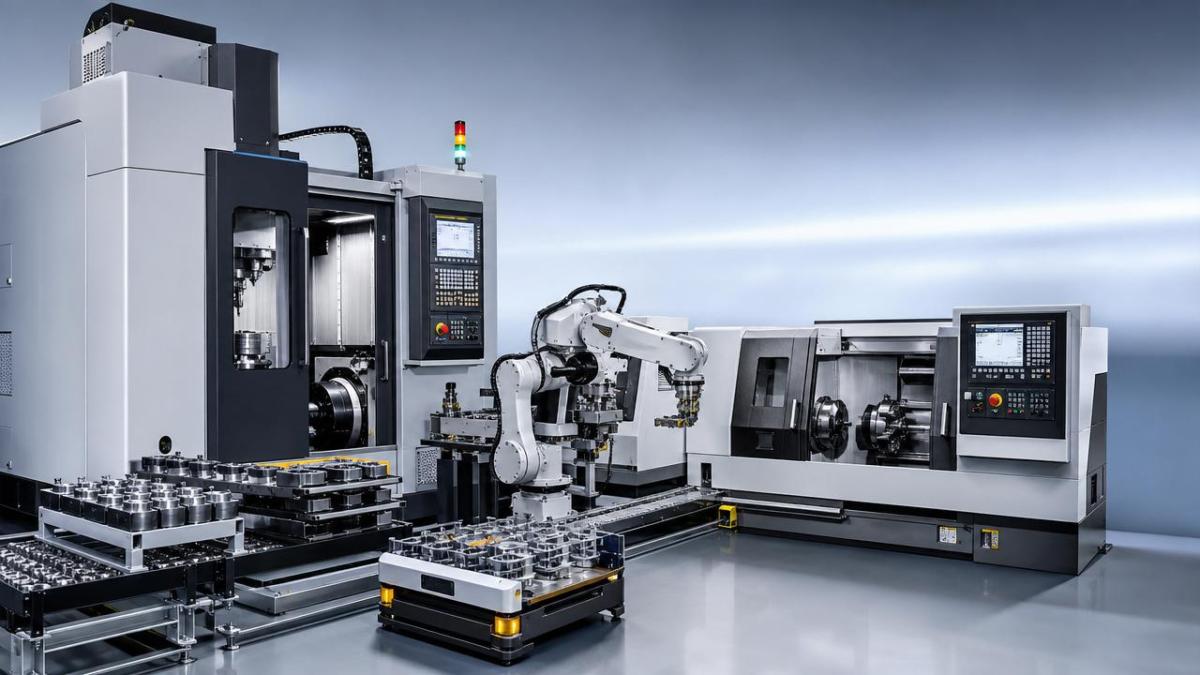
Compact machine tools often promise more than they can deliver in the wrong environment. A checklist prevents decisions based on brochure dimensions instead of production economics. It helps compare true throughput, staffing impact, tooling access, and future expansion limits.
This is especially important in the CNC machine tool industry, where high precision, automation, and digital integration shape competitiveness. A smaller cell can outperform a larger layout, but only if the entire process chain is engineered around it.
Use this checklist to judge whether space-saving CNC manufacturing is worth it
- Measure actual space pressure first. Compare current machine occupancy, aisle usage, material staging, and inspection areas before assuming compact CNC equipment is the best fix.
- Calculate output per square meter. Track monthly parts, spindle hours, and value-added time to see whether space-saving CNC manufacturing improves production density.
- Review part complexity carefully. Compact lathes or machining centers work best when common jobs fit their travel limits, tooling capacity, and automation options.
- Check setup frequency. Shops with many small batches benefit more when compact systems shorten changeovers through standardized fixtures and organized tool libraries.
- Verify chip removal and coolant management. Tight machine layouts fail quickly if swarf evacuation, coolant filtration, and cleaning access are compromised.
- Preserve maintenance clearance. Space-saving CNC manufacturing loses value if technicians cannot reach electrical panels, lubrication points, or spindle service zones.
- Test material flow paths. Reduced floor footprint should shorten handling distances between cutting, deburring, measuring, packing, and outgoing storage.
- Estimate labor impact. Compact CNC cells become more attractive when one operator can manage multiple machines or one automated line.
- Audit utility requirements. Confirm power supply, compressed air, coolant systems, and foundation conditions before selecting dense equipment arrangements.
- Plan digital connectivity. The best space-saving CNC manufacturing setups integrate monitoring, scheduling, and preventive maintenance instead of creating isolated machines.
- Compare full cost, not machine price. Include relocation, tooling, training, downtime, guarding, and software when judging return on investment.
- Reserve room for future change. A compact layout should still allow robot loading, bar feeders, pallet systems, or additional inspection stations later.
Where space-saving CNC manufacturing delivers the strongest value
High-rent urban workshops
When rent is expensive, every square meter needs to generate output. In this setting, space-saving CNC manufacturing often pays off faster because the avoided expansion cost is easy to quantify.
Compact vertical machining centers, twin-spindle lathes, or integrated turning-milling systems can reduce handoffs. That means more production inside the same lease footprint and lower internal transport waste.
Mixed-model, small-batch production
Factories handling many part numbers often lose more time in setup than cutting. Here, space-saving CNC manufacturing works best when paired with quick-change fixtures, preset tooling, and digital work instructions.
A smaller flexible cell can outperform a larger traditional line if it reduces queue time and work-in-progress. Shorter travel distances also help stabilize delivery performance.
Automation-led capacity upgrades
Some sites do not need more machines; they need better machine utilization. Compact CNC cells with robotic loading, pallet changers, or bar feeding can extend unattended runtime without expanding the building.
In these cases, the value of space-saving CNC manufacturing comes from labor efficiency and schedule stability, not just compact dimensions.
Precision part production with stable families
If the product mix includes repeat shaft parts, discs, housings, or compact structural components, a dense CNC layout is easier to standardize. Tooling, probes, and fixture systems can be optimized around recurring cycles.
That consistency improves takt predictability and supports better use of limited floor space. The result is a stronger return from compact manufacturing cells.
Commonly overlooked risks in space-saving CNC manufacturing
Ignoring operator ergonomics
A tight layout can save floor space while increasing fatigue. Door swing, loading height, control panel reach, and safe movement zones must be checked during layout design.
Underestimating heat, noise, and contamination
Dense machine clusters concentrate heat and airborne mist. Without proper ventilation and enclosure planning, dimensional stability, comfort, and maintenance conditions may decline.
Reducing flexibility by over-compressing the layout
An aggressive footprint reduction can lock the shop into one process path. If new orders require larger fixtures, secondary inspection, or robot access, the layout may become a constraint.
Focusing on machine count instead of flow
Adding more compact machines does not automatically raise capacity. Bottlenecks often move to tooling prep, programming, measuring, or packing unless the full process is balanced.
Skipping ROI validation with real data
The best compact CNC solution should be justified with current OEE, scrap rates, setup time, labor hours, and floor cost. Without baseline numbers, the investment case remains guesswork.
Practical steps to implement space-saving CNC manufacturing
- Map the existing process from raw material entry to shipping and mark every waiting, transport, and manual handling point.
- Rank machines by revenue contribution, utilization, and footprint to identify which assets deserve replacement or consolidation first.
- Simulate at least two compact layout options and compare maintenance access, operator walking distance, and safety clearances.
- Start with one pilot cell using repeat parts, then measure setup reduction, hourly output, and quality consistency for three months.
- Standardize fixtures, tool holders, gauges, and digital job instructions so the compact layout delivers repeatable performance.
- Add monitoring for spindle runtime, alarms, idle time, and tool life to validate the real effect of space-saving CNC manufacturing.
Is space-saving CNC manufacturing worth it?
Yes, but only under the right operating conditions. Space-saving CNC manufacturing is worth it when limited floor space is already hurting flow, when part families fit compact machines, and when the new layout improves output per square meter.
It is less compelling when the real problem is poor scheduling, weak tooling discipline, unstable demand, or low machine utilization. In those cases, layout compression alone will not create sustainable gains.
The most reliable next step is to run a measured pilot. Build a simple decision sheet covering footprint, throughput, setup time, labor use, maintenance access, and projected payback. If the numbers show better flow and stronger capacity without expansion, space-saving CNC manufacturing is not just worth it; it becomes a strategic advantage.
PREVIOUS ARTICLE
NEXT ARTICLE
Recommended for You
 Why does Production Process planning decide delivery speed?CNC Machining Technology Center
 How do Shaft Parts defects start during machining?CNC Machining Technology Center
 Industrial Robotics costs are falling, but where is the risk?Manufacturing Market Research Center
 What makes an Automated Production Line fail early?Machine Tool Industry Editorial Team
 Is space-saving CNC manufacturing worth it for small factories?CNC Machining Technology Center
![]() Delta NC5 Series Gains TÜV SIL3 Certification, Enters BMW Production ValidationMachine Tool Industry Editorial Team
Delta NC5 Series Gains TÜV SIL3 Certification, Enters BMW Production ValidationMachine Tool Industry Editorial Team


Aris Katos
Future of Carbide Coatings
15+ years in precision manufacturing systems. Specialized in high-speed milling and aerospace grade alloy processing.
▶
Is space-saving CNC manufacturing worth it for small factories?CNC Machining Technology Center▶
UL Tightens AI Failure Testing for CNC Systems Starting May 22, 2026CNC Machining Technology Center▶
How CNC Programming errors lead to scrap and reworkCNC Machining Technology Center▶
How CNC milling accuracy changes with material and setupCNC Machining Technology Center▶
Delta Launches NC5 CNC Series with RTCP & SIL2 CertificationCNC Machining Technology Center
Mastering 5-Axis Workholding Strategies
Join our technical panel on Nov 15th to learn about reducing vibrations in thin-wall components.

Providing you with integrated sanding solutions
Before-sales and after-sales services
Comprehensive technical support