• Global CNC market projected to reach $128B by 2028 • New EU trade regulations for precision tooling components • Aerospace deman
NYSE: CNC +1.2%LME: STEEL -0.4%

Why does Production Process planning decide delivery speed?
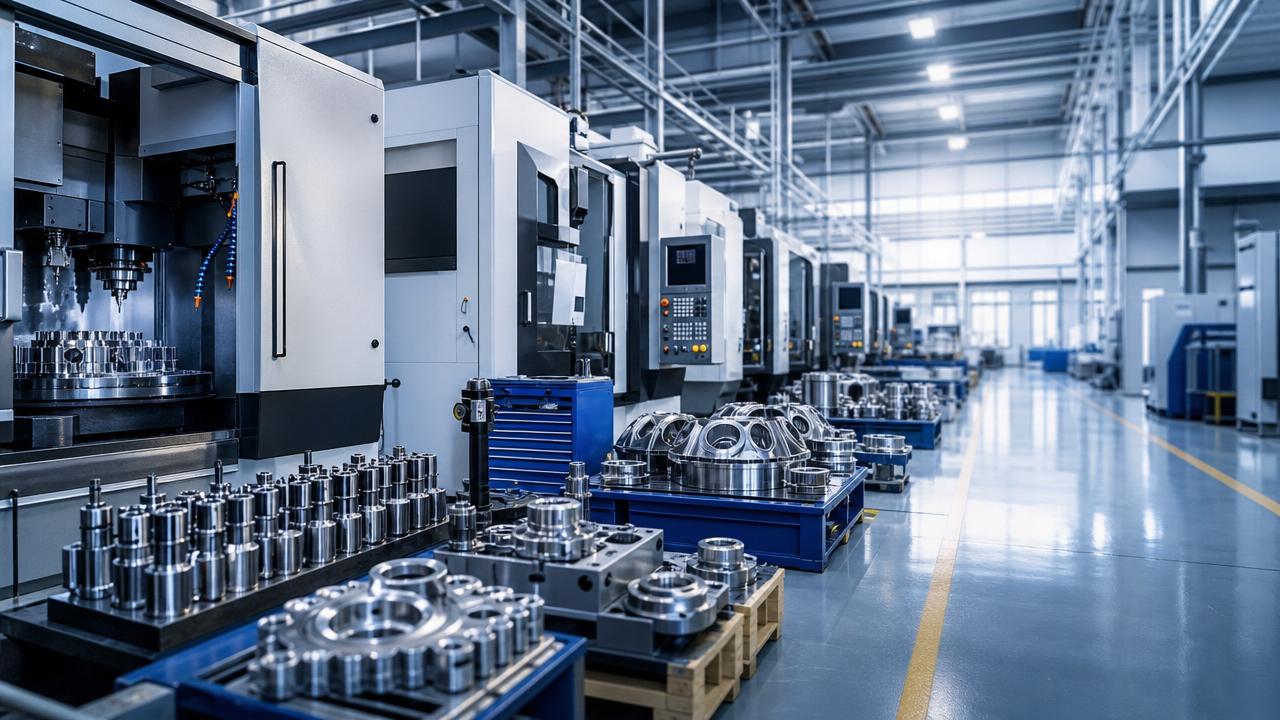
In CNC manufacturing, delivery speed is rarely determined by machine count alone. The real driver is Production Process planning: how well a supplier organizes materials, tooling, machining, inspection, scheduling, and handoffs before production even starts.
For procurement teams, this matters because late delivery often comes from process gaps rather than a lack of equipment. A supplier may own advanced machines, but without disciplined planning, lead times become unstable, costs rise, and urgent orders create bottlenecks.
In practical terms, Production Process planning decides whether an order moves smoothly from quotation to shipment, or gets delayed by missing materials, fixture changes, rework, queue conflicts, and unbalanced capacity. That is why buyers should evaluate planning capability, not just workshop size.
This article explains the core search question behind the topic: why Production Process planning has such a direct effect on delivery speed, what procurement professionals should examine, and how to identify suppliers that can promise fast delivery with lower risk.
Why procurement teams should look beyond machine capacity
Many buyers assume delivery speed depends mainly on how many CNC machines a supplier operates. Capacity is important, but it only tells part of the story. Machines create output only when the entire process is prepared, sequenced, and controlled correctly.
If raw materials arrive late, if cutting tools are unavailable, if the program is not finalized, or if first-article inspection takes too long, the machine sits idle. In that situation, a factory with strong equipment still cannot deliver quickly.
From a procurement perspective, the key issue is not theoretical production capacity but usable production capacity. Usable capacity depends on planning discipline. This includes process routing, setup reduction, load balancing, quality checkpoints, and communication between departments.
A supplier with fewer machines but better Production Process control may deliver faster than a larger competitor. This is especially common in mixed-product CNC environments, where complex parts require different fixtures, programs, tolerances, and inspection standards.
That is why delivery speed should be treated as a systems outcome. It reflects how the production process is designed and managed across the full order lifecycle, not merely how much cutting time a factory can offer.
What Production Process planning actually includes
Production Process planning is the structured preparation that determines how an order will be manufactured from start to finish. It converts drawings, specifications, quantities, and deadlines into an executable production path.
In CNC and precision manufacturing, this usually includes material planning, process route design, machine selection, tooling preparation, fixture planning, programming, operation sequencing, inspection planning, and packaging arrangements.
It also includes scheduling logic. A supplier must decide when the order enters production, which machines will run it, how setup time will be managed, and how the order will fit with existing work in progress.
For high-mix production, planning becomes even more critical. Different parts may compete for the same spindle time, operators, metrology resources, or heat treatment windows. Without a clear production process, queue time expands and delivery dates slip.
In short, Production Process planning is the bridge between sales promise and manufacturing reality. The stronger that bridge is, the faster and more reliable the delivery performance becomes.
How poor process planning slows delivery even in advanced factories
Delivery delays often look like shop-floor problems, but many begin earlier in planning. A supplier may start production without fully confirming material grades, tolerance priorities, or special process requirements. That creates downstream interruption.
One common issue is incomplete routing. If the order reaches machining before fixture design, surface treatment booking, or inspection readiness are confirmed, the part may pause between operations. These pauses are often invisible during quotation but costly during execution.
Another frequent problem is setup inefficiency. When similar jobs are not grouped well, machines spend excessive time on changeovers. The result is less productive machining time and slower order flow, especially for small and medium batch procurement projects.
Rework is another major source of delay. If process planning fails to define control points, machining allowance, or dimensional risk areas, quality problems are discovered too late. Rework then consumes machine hours that were supposed to support new orders.
There is also the issue of bottleneck concentration. A factory may have many machines overall, but only a few suitable for key operations such as five-axis machining, precision grinding, or tight-tolerance finishing. Poor planning overloads those assets quickly.
For buyers, the lesson is clear: delays are often built into the process long before the production deadline is missed. Evaluating planning quality early can reduce supply risk significantly.
Why process planning is especially important in CNC manufacturing
CNC production is not a simple linear activity. A single part may require several operations, different machines, specialized cutters, custom fixtures, in-process inspection, deburring, surface finishing, and final verification before shipping.
Each operation depends on preparation quality. If tool paths are not optimized, machining time increases. If clamping strategy is weak, accuracy suffers. If tolerance stacking is not understood, secondary operations may be added unexpectedly.
Complex components in aerospace, automotive, electronics, and energy sectors often have strict dimensional, material, and traceability requirements. In these cases, delivery speed depends heavily on whether the production process is engineered correctly at the beginning.
In addition, CNC suppliers often manage multiple customer orders simultaneously. Fast delivery requires not only technical capability but also process coordination across programming, setup, machining, inspection, subcontracting, and logistics.
This is why the best-performing suppliers treat Production Process planning as a core operational capability. It shortens lead time not by rushing production, but by reducing uncertainty and preventing avoidable interruption.
What procurement professionals should ask suppliers before placing orders
For procurement teams, the most useful question is not simply, “What is your lead time?” A better question is, “How is this lead time supported by your Production Process plan?” The answer reveals whether the supplier is promising or actually managing.
Start by asking how the supplier reviews new drawings and technical requirements. A strong supplier will explain its pre-production review process, including manufacturability assessment, risk identification, machine allocation, and quality planning.
Next, ask whether materials, tooling, fixtures, and programs are prepared before the order reaches the machine. If these elements are handled reactively, delays are more likely even if the quoted lead time appears competitive.
It is also useful to ask how the supplier manages bottlenecks. Which operations are most constrained? How are urgent jobs inserted? What happens if a key machine goes down? These questions show whether the supplier has resilience in its process planning.
Procurement teams should also examine inspection flow. If critical parts wait too long for CMM availability or approval, shipment can be delayed after machining is complete. Fast production means little if final release becomes the hidden bottleneck.
Finally, ask for examples of similar parts delivered on time. Real case evidence is often more valuable than generic statements about efficiency, automation, or smart factory capability.
How good Production Process planning reduces procurement risk
Procurement performance is not measured only by purchase price. It is also measured by continuity, predictability, and the ability to support internal production or customer commitments. Strong Production Process planning directly improves these outcomes.
First, it improves lead-time reliability. Buyers can plan inventory, assembly schedules, and customer delivery more confidently when supplier processes are stable. Predictability often creates more business value than a slightly lower quoted unit price.
Second, it lowers expediting costs. When suppliers manage production flow properly, procurement teams spend less time chasing updates, handling schedule changes, or arranging emergency alternatives. Internal coordination becomes simpler and less reactive.
Third, it reduces quality-related delay. Good process planning integrates quality control into the routing, which means issues are found earlier. Early detection protects both delivery speed and total supply cost.
Fourth, it supports scaling. When a project moves from pilot batch to regular volume, suppliers with mature Production Process systems can expand output with fewer disruptions. That is essential for buyers sourcing long-term manufacturing programs.
In this sense, process planning is not just an operational issue inside the factory. It is a procurement risk-control factor with direct impact on service level, cost stability, and customer satisfaction.
Signs that a supplier’s delivery speed is truly process-driven
Buyers often hear suppliers claim they can deliver fast, but procurement decisions improve when those claims are tied to visible process indicators. Several signs usually suggest that delivery performance is based on real planning capability.
One sign is structured engineering review before order release. Suppliers that define routing, tooling, and inspection requirements early usually experience fewer mid-process changes and fewer schedule disruptions.
Another sign is transparency. Reliable suppliers can explain where time is spent: material lead time, programming, setup, machining, outsourced treatment, inspection, and packing. They do not treat lead time as a vague estimate.
A third sign is controlled work-in-progress. When too many jobs are released without scheduling discipline, everything becomes urgent and nothing moves quickly. Good suppliers limit congestion and keep workflow visible.
You should also look for coordination between production and quality teams. If machining finishes but inspection, documentation, or traceability records lag behind, delivery is still delayed. True speed includes the full release process.
Lastly, improvement mindset matters. Suppliers that actively reduce setup time, digitize scheduling, standardize fixtures, and analyze delay causes are more likely to maintain fast delivery over time rather than only during low-load periods.
How buyers can use this understanding in supplier selection
When comparing suppliers, procurement teams should score delivery capability using more than headline lead time. A balanced evaluation should include planning maturity, capacity realism, quality integration, communication discipline, and historical on-time performance.
For critical projects, request a simple process breakdown during the quotation stage. Ask what drives the total lead time and which stages carry the highest risk. This often reveals whether the supplier understands its own production process in detail.
For repeat sourcing, monitor actual performance against committed milestones, not just final ship date. Delays in material release, first-article approval, or intermediate inspection often predict later delivery problems and help buyers intervene earlier.
It is also wise to segment suppliers by order type. A factory that performs well on stable, repeat parts may struggle with urgent prototypes or high-complexity components. Delivery speed depends on whether the Production Process matches the sourcing scenario.
By using process-based evaluation, procurement professionals can make stronger sourcing decisions, reduce surprises after purchase order release, and build a more resilient supplier base.
Conclusion: delivery speed is a planning outcome before it becomes a production result
The central answer to the question is straightforward: Production Process planning decides delivery speed because it determines whether manufacturing resources are converted into smooth, predictable output or wasted through waiting, rework, and bottlenecks.
In CNC and precision manufacturing, fast delivery is created upstream through process design, preparation, sequencing, and control. Machine capacity matters, but without planning discipline, capacity alone cannot protect lead time.
For procurement professionals, this means supplier evaluation should go deeper than equipment lists and quoted promises. The suppliers most likely to deliver on time are those that can clearly show how their Production Process supports stable execution.
When buyers understand this link, they make better sourcing decisions, reduce delivery risk, and strengthen supply continuity. In competitive manufacturing environments, that knowledge is not just useful. It is a practical procurement advantage.
PREVIOUS ARTICLE
NEXT ARTICLE
Recommended for You
 Why does Production Process planning decide delivery speed?CNC Machining Technology Center
 How do Shaft Parts defects start during machining?CNC Machining Technology Center
 Industrial Robotics costs are falling, but where is the risk?Manufacturing Market Research Center
 What makes an Automated Production Line fail early?Machine Tool Industry Editorial Team
 Is space-saving CNC manufacturing worth it for small factories?CNC Machining Technology Center
![]() Delta NC5 Series Gains TÜV SIL3 Certification, Enters BMW Production ValidationMachine Tool Industry Editorial Team
Delta NC5 Series Gains TÜV SIL3 Certification, Enters BMW Production ValidationMachine Tool Industry Editorial Team


Aris Katos
Future of Carbide Coatings
15+ years in precision manufacturing systems. Specialized in high-speed milling and aerospace grade alloy processing.
▶
Why does Production Process planning decide delivery speed?CNC Machining Technology Center▶
Where the Production Process slows down and how to fix itCNC Machining Technology Center▶
A stable Production Process starts with fewer handoffsCNC Machining Technology Center▶
A weak Production Process often hides in these 5 signalsCNC Machining Technology Center▶
Which Production Process delays usually ruin delivery plans?CNC Machining Technology Center
Mastering 5-Axis Workholding Strategies
Join our technical panel on Nov 15th to learn about reducing vibrations in thin-wall components.

Providing you with integrated sanding solutions
Before-sales and after-sales services
Comprehensive technical support