• Global CNC market projected to reach $128B by 2028 • New EU trade regulations for precision tooling components • Aerospace deman
NYSE: CNC +1.2%LME: STEEL -0.4%

CNC metal lathe buying questions that prevent overspec investment
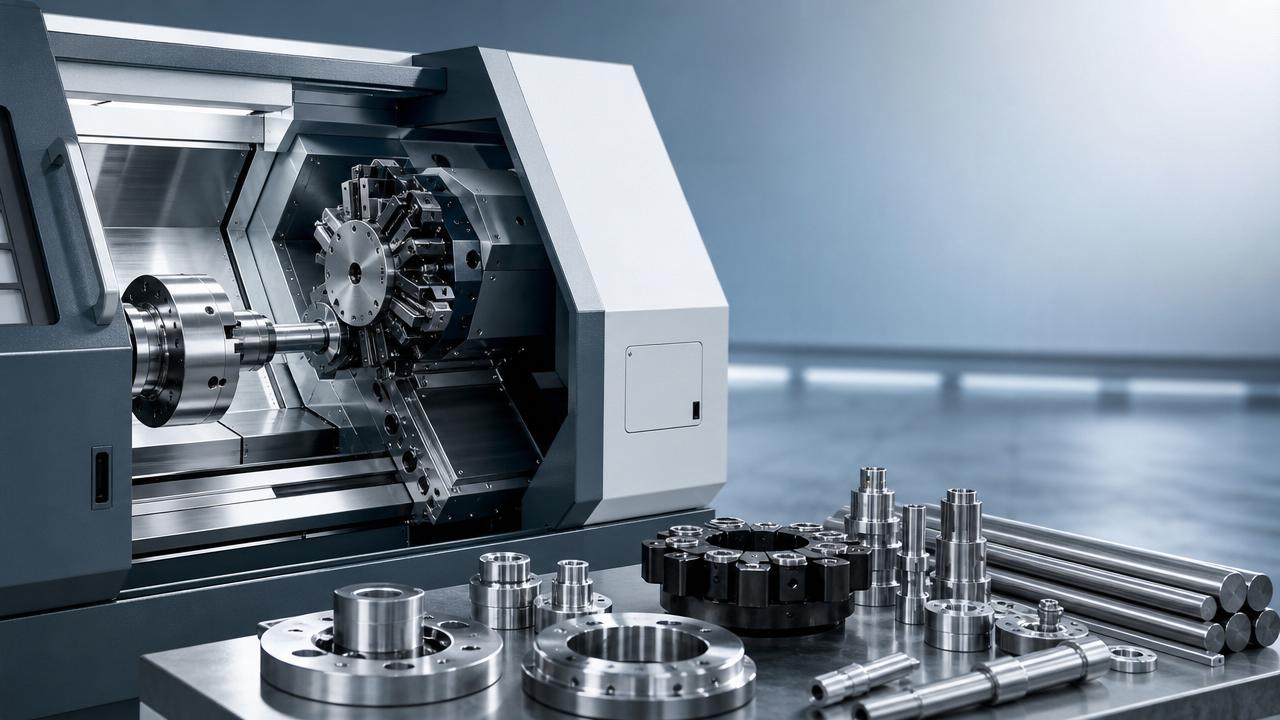
Buying a CNC metal lathe is not just about choosing more power, more axes, or tighter tolerances. For procurement teams, the real challenge is asking the right questions before investing, so machine capacity matches actual production needs, budget, and long-term ROI. This guide highlights the key buying questions that help prevent overspec investment while supporting efficient, scalable manufacturing decisions.
Why do buyers overspec a CNC metal lathe in the first place?
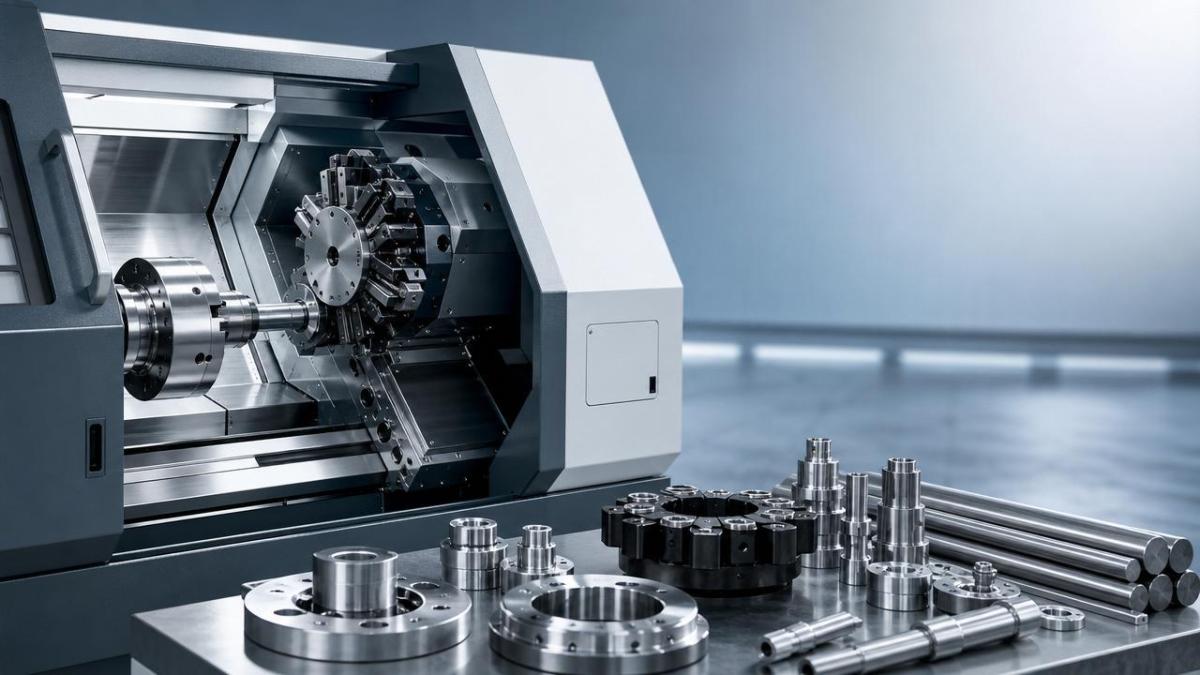
In the global machine tool market, overspec purchasing often starts with a reasonable concern: no buyer wants a machine that becomes a bottleneck after installation. But in practice, many procurement teams buy a CNC metal lathe based on worst-case assumptions, sales language centered on maximum capability, or internal pressure to “future-proof” the investment without validating actual part mix, volume, and tolerance requirements.
This is especially common in mixed manufacturing environments serving automotive, energy equipment, electronics, contract machining, and industrial component production. A plant may process shafts, sleeves, flanges, threaded parts, and short-run custom jobs. Because the work is varied, buyers may assume they need a larger spindle bore, more turret stations, live tooling, Y-axis, sub-spindle, or higher precision grades than daily production really demands.
The result is not only a higher purchase price. An overspecified CNC metal lathe can also bring higher tooling costs, more demanding maintenance, longer operator training time, more difficult programming, greater floor space needs, and lower utilization if the machine is too complex for the actual workflow.
- Forecasting production based on rare parts rather than the 80% of recurring jobs.
- Confusing machine capability with production efficiency, even when cycle time depends more on tooling, fixturing, and setup discipline.
- Assuming tighter machine accuracy automatically improves product quality, despite material variation and process control limits elsewhere in the line.
- Ignoring integration costs such as bar feeders, chip conveyors, probing, automation interfaces, and after-sales support.
What should procurement clarify before requesting CNC metal lathe quotations?
Before comparing suppliers, buyers should define the production reality in measurable terms. A clear RFQ for a CNC metal lathe should not begin with brand preference or axis count. It should begin with part families, material conditions, annual volume, dimensional range, target tolerances, secondary operations, and labor assumptions. This creates a specification based on manufacturing demand rather than abstract machine features.
Core questions that prevent overspec investment
- What are the top 10 part numbers by annual volume, and what percentage of output do they represent?
- What is the real maximum turning diameter and turning length used in routine production, not occasional exceptions?
- Do the parts truly require live tooling, Y-axis milling, or sub-spindle back-working, or can these operations remain on another machine?
- What tolerances are required at the drawing level, and which of them are critical-to-function?
- Is the planned machine intended for high-mix, low-volume flexibility or stable batch production?
- How many shifts will run, and what level of operator skill is available on each shift?
- What is the expected delivery window, and how much downtime risk can the production plan absorb?
These questions matter because the right CNC metal lathe for a one-shift precision job shop may be the wrong choice for a three-shift component supplier. Procurement cannot separate machine selection from staffing, maintenance maturity, and upstream or downstream process layout.
Which CNC metal lathe features are essential, and which are often overbought?
Buyers often struggle to separate must-have capability from attractive optionality. The table below helps procurement teams evaluate whether common CNC metal lathe features are essential, conditional, or frequently overbought in typical industrial purchasing scenarios.
For many buyers, the decision should focus on process consolidation versus machine simplicity. A more advanced CNC metal lathe can reduce setups, but only when those reduced setups occur frequently enough to pay back the higher investment, integration effort, and training burden.
How do part mix, material, and tolerance affect CNC metal lathe selection?
A CNC metal lathe should be selected around the part envelope and the cutting reality. Procurement teams sometimes compare spindle power, rapid rates, or turret capacity first, yet material removal behavior often matters more. Stainless steel, alloy steel, brass, aluminum, titanium, and cast materials create very different cutting loads, heat profiles, and chip control needs.
Questions to align machine size with actual production
- Is the dominant workload short shaft parts, thin-wall rings, threaded connectors, hydraulic fittings, or heavier flanges?
- Do materials generate long chips that require strong chip evacuation and stable coolant delivery?
- Are tolerances driven by diameter control, concentricity, surface finish, or positional features created by live tooling?
- Will the machine mostly use bar feed, chucking, or a mix of both?
In many cases, buyers discover that a mid-range CNC metal lathe with stronger process discipline delivers better overall output than a more complex machine used below its capability. This is particularly true when recurring jobs have moderate tolerances and stable dimensions but frequent changeovers.
What cost categories should buyers compare beyond machine price?
Machine price is only one line in the investment equation. Procurement should compare total cost of ownership over several years, especially in industries where uptime, spare parts access, and production continuity matter more than list price alone. A lower-cost CNC metal lathe can become expensive if support response is slow, critical components are hard to source, or setup complexity reduces effective capacity.
The following table gives a practical framework for evaluating the hidden cost impact of a CNC metal lathe purchase.
A disciplined cost review helps buyers avoid a common mistake: paying for a premium CNC metal lathe while still planning production around old methods, separate setups, or insufficient training. If the organization cannot absorb the complexity, the extra specification becomes stranded value.
How should procurement compare suppliers and technical proposals?
When multiple suppliers offer a CNC metal lathe that appears technically similar, procurement should compare proposal quality, not just brochure specifications. Serious suppliers usually respond with application-based comments on your parts, suggested tooling logic, workholding considerations, cycle time assumptions, and realistic delivery commitments.
A practical supplier evaluation checklist
- Did the supplier ask for drawings, material grades, tolerance zones, and annual demand before finalizing the offer?
- Are quoted cycle times linked to actual tooling assumptions, bar feeding, and loading method?
- Is the control system familiar to your operators and programmers?
- Can the supplier support installation, commissioning, training, and post-warranty service in your region?
- Are wear parts, chuck components, and electrical replacements available with acceptable lead times?
- Does the proposal identify utility requirements, foundation expectations, and integration limitations?
For international sourcing, these points are even more important. A competitively priced CNC metal lathe from a global manufacturing hub may be a strong investment if technical communication is clear and support planning is concrete. Without that clarity, low purchase price can translate into long commissioning delays or uncertain service response.
What standards, documentation, and risk checks matter before placing the order?
Buyers should confirm the documentation package as early as the quotation stage. For a CNC metal lathe, important items may include electrical documentation, operating manuals, maintenance schedules, foundation or installation requirements, lubrication diagrams, control documentation, and acceptance criteria. If the machine will be installed in a regulated industrial environment, compliance expectations should be clarified before contract signing.
Risk checks that are often missed
- Define machine acceptance conditions, including sample part criteria, run-off scope, and who supplies tooling and material for testing.
- Confirm utility compatibility such as voltage, air supply, coolant method, and chip handling arrangement.
- Check whether guarding, interlocks, and emergency stop design align with your local safety expectations and plant standards.
- Review spare parts recommendations for the first year to reduce startup downtime risk.
These are not administrative details. They are commercial protections. A CNC metal lathe that matches your production requirement on paper can still create avoidable problems if acceptance, service scope, and startup responsibilities remain vague.
Common buying mistakes and FAQ for CNC metal lathe procurement
Is a multi-axis CNC metal lathe always a better long-term investment?
Not always. A multi-axis CNC metal lathe is valuable when part geometry repeatedly benefits from in-cycle milling, off-center features, or back-side processing. If most jobs are straight turning with moderate complexity, a simpler machine may deliver faster payback, easier training, and higher utilization.
How much future capacity should buyers plan for?
Plan for realistic growth, not speculative extremes. A common approach is to size the CNC metal lathe for the current production mix plus a measured growth buffer, while identifying what exceptional jobs could be outsourced or routed to another process. This reduces capital lock-in and keeps the machine aligned with actual demand.
Should procurement prioritize tighter machine accuracy than the drawing requires?
Only with a clear process reason. For many industrial parts, part quality depends on material stability, tooling condition, thermal control, fixturing, and inspection method as much as on machine accuracy. Buying an ultra-precision CNC metal lathe for standard tolerance work can raise cost without proportional production benefit.
What delivery questions should be asked before awarding the order?
Ask about production lead time, shipping scope, installation support, commissioning duration, training schedule, spare parts package, and the earliest date for stable production. For a CNC metal lathe in a time-sensitive project, delivery readiness often matters as much as technical capability.
Why informed sourcing decisions matter more as manufacturing becomes smarter
Modern manufacturing is moving toward digital integration, flexible production, and tighter cost control. In this environment, the right CNC metal lathe is not necessarily the biggest or most feature-rich machine. It is the one that fits your production logic, integrates with your workflow, supports reliable quality, and delivers usable capacity at the lowest practical total cost.
Across sectors such as automotive components, aerospace support manufacturing, electronics hardware, industrial equipment, and energy-related parts, procurement teams are under pressure to balance precision, budget, lead time, and scalability. That is why the best buying decision starts with disciplined questions, cross-functional review, and a supplier conversation based on real parts rather than assumptions.
Why choose us for CNC metal lathe sourcing support?
We focus on the global CNC machining and precision manufacturing industry, with close attention to machine tool applications, production requirements, market developments, and international sourcing realities. This allows us to support procurement teams with practical information instead of generic product claims.
If you are evaluating a CNC metal lathe, you can contact us to discuss key purchase questions in concrete terms, including part and material matching, parameter confirmation, machine configuration trade-offs, estimated delivery cycles, custom solution scope, documentation expectations, and quotation comparison logic.
- Need help reviewing whether live tooling, Y-axis, or sub-spindle is truly necessary?
- Need support comparing machine proposals against your drawings, annual volume, and tolerance targets?
- Need to confirm delivery timing, sample support expectations, spare parts planning, or commissioning scope?
- Need a more cost-aware CNC metal lathe selection path that avoids paying for unused capability?
Share your part range, production goals, and sourcing priorities, and we can help you narrow the shortlist, identify overspec risk, and move toward a machine investment that supports both current output and future manufacturing flexibility.
PREVIOUS ARTICLE
NEXT ARTICLE
Recommended for You
![]() Five Ministries Launch Joint Enforcement on EV Battery RecyclingManufacturing Policy Research Center
Five Ministries Launch Joint Enforcement on EV Battery RecyclingManufacturing Policy Research Center![]() Top 10 Future Industries Roadmap 2026 ReleasedManufacturing Market Research Center
Top 10 Future Industries Roadmap 2026 ReleasedManufacturing Market Research Center![]() Global Methanol-Electric Ecosystem Alliance LaunchedManufacturing Market Research Center
Global Methanol-Electric Ecosystem Alliance LaunchedManufacturing Market Research Center![]() ISO 23218-3:2026 Enters Force: CNC Digital Twin Interoperability Standard Goes GlobalCNC Machining Technology Center
ISO 23218-3:2026 Enters Force: CNC Digital Twin Interoperability Standard Goes GlobalCNC Machining Technology Center![]() ANVISA New Rule: Portuguese Biocompatibility Labels for Medical CNC EquipmentManufacturing Policy Research Center
ANVISA New Rule: Portuguese Biocompatibility Labels for Medical CNC EquipmentManufacturing Policy Research Center![]() KATS Updates KC Certification: CNC Cybersecurity Modules Must Comply with IEC 62443-4-2Manufacturing Policy Research Center
KATS Updates KC Certification: CNC Cybersecurity Modules Must Comply with IEC 62443-4-2Manufacturing Policy Research Center


Aris Katos
Future of Carbide Coatings
15+ years in precision manufacturing systems. Specialized in high-speed milling and aerospace grade alloy processing.
▶
CNC metal lathe buying questions that prevent overspec investmentGlobal Machine Tool Trade Research Center▶
What to check before buying CNC production equipmentGlobal Machine Tool Trade Research Center▶
EMO Hannover 2027 Booth Booking Opens: China AI-Machining Pavilion LaunchesGlobal Machine Tool Trade Research Center▶
What to compare before buying CNC production equipmentGlobal Machine Tool Trade Research Center▶
EMO Hannover 2027 Booth Booking Opens: China AI-Machining Pavilion LaunchesGlobal Machine Tool Trade Research Center
Mastering 5-Axis Workholding Strategies
Join our technical panel on Nov 15th to learn about reducing vibrations in thin-wall components.

Providing you with integrated sanding solutions
Before-sales and after-sales services
Comprehensive technical support