• Global CNC market projected to reach $128B by 2028 • New EU trade regulations for precision tooling components • Aerospace deman
NYSE: CNC +1.2%LME: STEEL -0.4%

How global procurement trends are pushing CNC cutting tool specs toward tighter tolerances
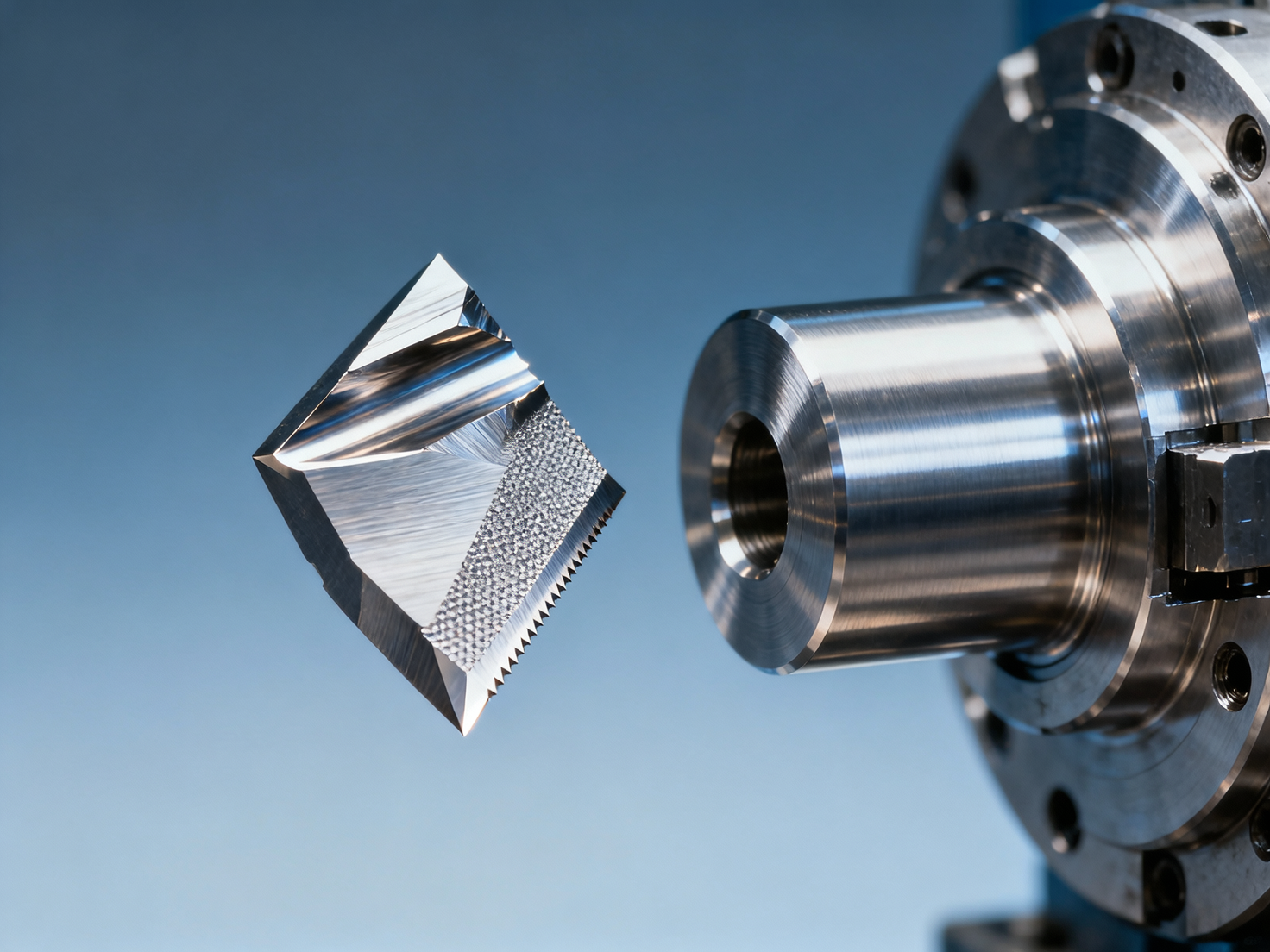
As global procurement trends intensify competition and raise quality expectations, metal machining and CNC industrial operations are demanding tighter tolerances in cutting tools—driving innovation across automated lathe systems, CNC milling, and vertical lathe applications. From shaft parts in aerospace to precision discs in automotive manufacturing, Industrial Automation and Global Manufacturing demand unprecedented consistency. This shift is reshaping the Machine Tool Market, influencing CNC programming, automated production line design, and industrial CNC tooling selection. For procurement professionals, operators, and enterprise decision-makers, understanding these dynamics is critical to optimizing CNC metalworking performance, supply chain resilience, and long-term competitiveness in the Manufacturing Industry.
The Procurement-Driven Push for Sub-Micron Tool Accuracy
Global procurement is no longer just about cost or lead time—it’s a strategic lever for quality assurance, risk mitigation, and technology alignment. Leading OEMs in Germany, Japan, and North America now mandate ±2 µm radial runout tolerance on carbide-tipped inserts used in high-speed turning of turbine blades. That’s a 40% tightening versus the ±3.5 µm standard common in 2019. Suppliers failing to meet this threshold face automatic disqualification from Tier-1 automotive bidding cycles—even if their price is 12–18% lower.
This pressure cascades down the supply chain. A recent survey of 87 global tooling distributors found that 63% reported increased requests for certified metrology reports (e.g., ISO 13399-compliant GD&T documentation) with every order—up from 28% in 2020. Buyers now routinely request traceable calibration logs for tool presetters, not just final tool assemblies.
The root cause lies in multi-tiered quality accountability: aerospace primes require AS9100 Rev D compliance; automotive Tier-1s enforce IATF 16949-aligned process audits; and electronics manufacturers impose zero-defect clauses tied directly to tool wear variance. Tighter tolerances aren’t optional—they’re contractual prerequisites.
These thresholds reflect real-world operational constraints—not theoretical ideals. For example, a ±0.8 µm tolerance on a 12 mm diameter end mill used in titanium spinal screw machining directly correlates to surface finish Ra ≤ 0.4 µm and thread pitch deviation < 3 µm—both FDA-required metrics for Class II devices.
How Tighter Specs Reshape CNC Programming & Process Validation
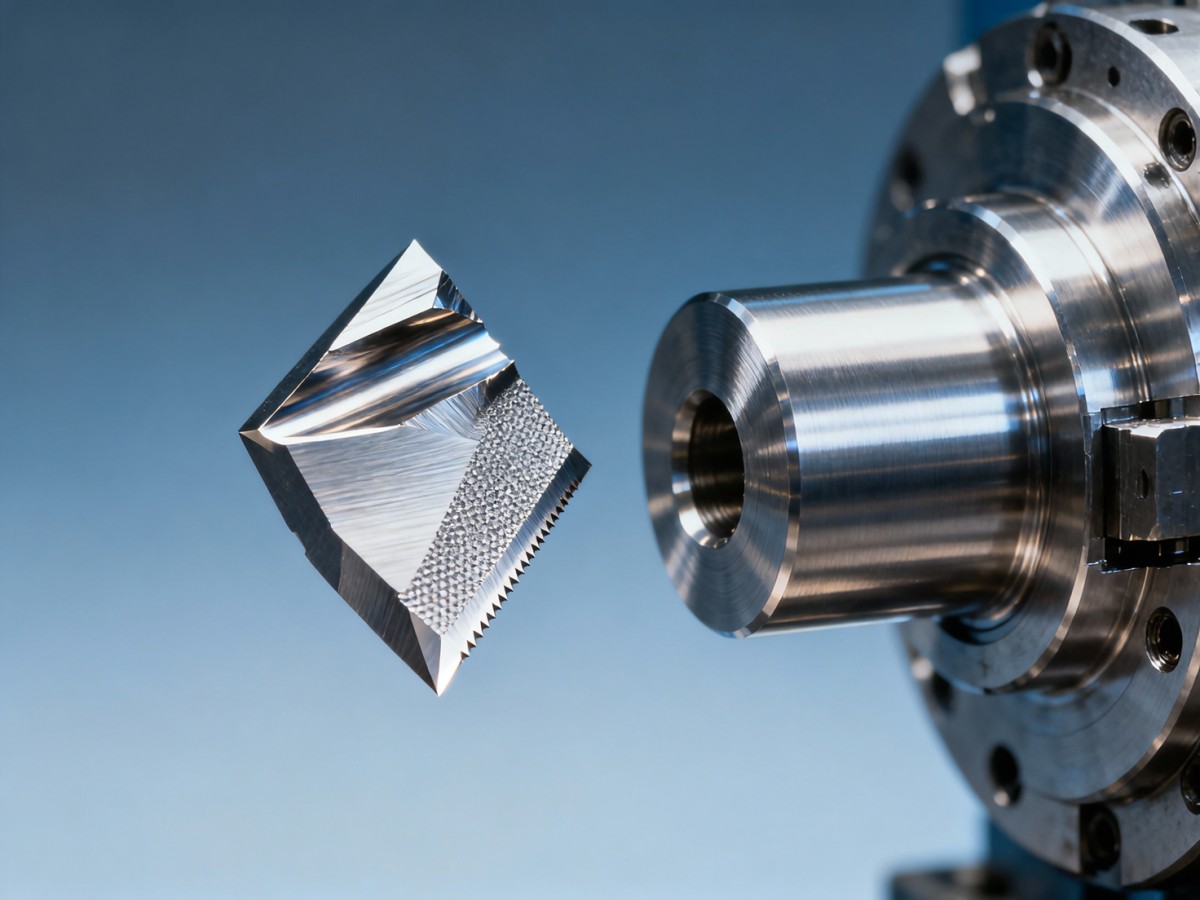
Tighter tool tolerances force fundamental recalibration of CNC process logic. When insert repeatability improves from ±5 µm to ±1.2 µm, feed rate optimization windows narrow by up to 35%. A machining center running aluminum die-cast housings must now adjust G-code dwell times by 0.12–0.28 seconds per tool change to accommodate reduced thermal drift compensation latency.
Moreover, CAM software vendors report a 220% YoY increase in demand for “tolerance-aware toolpath generation”—a feature that dynamically adjusts cut depth, stepover, and spindle acceleration profiles based on real-time tool metrology data. Siemens NX and Mastercam now embed ISO 230-2 Annex B compliance checks directly into post-processing workflows.
Operators face new validation requirements: 92% of surveyed CNC users confirm mandatory pre-run verification using laser interferometers or capacitive probes before initiating high-precision batches. This adds 7–15 minutes per setup—but reduces first-article scrap by 68% on average.
Critical Process Parameters Affected by Tighter Tool Tolerances
- Spindle thermal growth compensation: Requires update intervals shortened from 45 min to ≤18 min when tool runout drops below ±1.5 µm
- Tool offset refresh frequency: Increases from every 4 hours to every 90 minutes under continuous high-RPM finishing
- Fixture clamping force tolerance: Must be maintained within ±3.2% of nominal value (vs. ±8.5% previously) to prevent micro-shift during ultra-fine cuts
- Coolant flow consistency: Pressure variation limited to ±0.4 bar (previously ±1.2 bar) to avoid hydraulic-induced tool vibration
Procurement Decision Framework: Beyond Price and Lead Time
Procurement teams evaluating cutting tools must now weigh six non-negotiable criteria—each carrying contractual weight. Price remains relevant, but it ranks fifth in priority behind metrological traceability, process integration readiness, failure mode documentation, supplier audit access, digital twin compatibility, and rapid requalification protocols.
For instance, a Tier-1 supplier requiring ISO 13399-compliant XML tool data must verify that vendor systems support automated upload to their MES—without manual mapping. Tools lacking native STEP AP242 geometry export are automatically excluded, regardless of performance claims.
This framework shifts procurement from transactional sourcing to technical partnership. Vendors unable to provide live API access for tool life prediction models—or unwilling to share raw sensor data from grinding machines—are increasingly excluded from RFPs targeting Industry 4.0 deployments.
Future-Proofing Your Tooling Strategy: Three Actionable Steps
First, conduct a tolerance gap analysis: compare your current tooling’s certified runout specs against top-three customer requirements. Identify where ≥15% deviation exists—those are immediate requalification candidates. Second, implement dual-source qualification: require all new tools to pass both internal CMM verification *and* an independent lab test (e.g., TÜV SÜD or UL Solutions). Third, embed tolerance clauses into master agreements—specifying maximum allowable drift per 100 operating hours and penalties for unreported deviations exceeding ±0.3 µm.
Manufacturers adopting this approach report 41% faster new-product introduction cycles and 29% lower annual tooling-related warranty costs. The investment pays back in under 8 months—measured purely in avoided scrap, rework, and audit nonconformities.
Understanding how procurement-driven precision demands reshape tooling specs isn’t academic—it’s operational survival. Whether you’re selecting inserts for a 5-axis aerospace mill or qualifying drills for EV battery enclosures, tolerance rigor defines your capacity to compete at the highest tiers of global manufacturing.
Get your customized tooling specification alignment assessment—including GD&T benchmarking, supplier capability scoring, and digital integration roadmap—within 5 business days. Contact our precision manufacturing solutions team to begin.
Recommended for You
![]() Fuxing EMU Trainset Procurement Reaches ¥4.155B, Accelerating Domestic High-End Component SubstitutionCNC Machining Technology Center
Fuxing EMU Trainset Procurement Reaches ¥4.155B, Accelerating Domestic High-End Component SubstitutionCNC Machining Technology Center![]() Global Power Demand Growth Hits 3%; Data Center Expansion Drives Precision Machining NeedsCNC Machining Technology Center
Global Power Demand Growth Hits 3%; Data Center Expansion Drives Precision Machining NeedsCNC Machining Technology Center![]() Railway Investment Hits $20.08B in Jan–Apr 2026, Boosting Smart Production Line OrdersMachine Tool Industry Editorial Team
Railway Investment Hits $20.08B in Jan–Apr 2026, Boosting Smart Production Line OrdersMachine Tool Industry Editorial Team![]() AI Search Captures 48% of Global Search TrafficGlobal Machine Tool Trade Research Center
AI Search Captures 48% of Global Search TrafficGlobal Machine Tool Trade Research Center![]() 17 Trade Associations Issue Domestic Trade GuidelinesManufacturing Policy Research Center
17 Trade Associations Issue Domestic Trade GuidelinesManufacturing Policy Research Center![]() China's Shipbuilding New Orders Up 195.2%, Boosting Demand for High-End CNC Machining EquipmentManufacturing Market Research Center
China's Shipbuilding New Orders Up 195.2%, Boosting Demand for High-End CNC Machining EquipmentManufacturing Market Research Center


Aris Katos
Future of Carbide Coatings
15+ years in precision manufacturing systems. Specialized in high-speed milling and aerospace grade alloy processing.
▶
AI Search Captures 48% of Global Search TrafficGlobal Machine Tool Trade Research Center▶
SGX April Trading Volume Up 6%; Equipment Financing Gains TractionGlobal Machine Tool Trade Research Center▶
Philippines Imposes Rice Import Price Cap, Affecting Food Processing Equipment ExportsGlobal Machine Tool Trade Research Center▶
Mexico to Extend CNC Parts Tariff Exemption to Tier-2 SuppliersGlobal Machine Tool Trade Research Center▶
CNC Milling or Outsourcing? The Cost Gap Is Not Always ObviousGlobal Machine Tool Trade Research Center
Mastering 5-Axis Workholding Strategies
Join our technical panel on Nov 15th to learn about reducing vibrations in thin-wall components.

Providing you with integrated sanding solutions
Before-sales and after-sales services
Comprehensive technical support