• Global CNC market projected to reach $128B by 2028 • New EU trade regulations for precision tooling components • Aerospace deman
NYSE: CNC +1.2%LME: STEEL -0.4%

Why Industrial Robotics is changing factory ROI
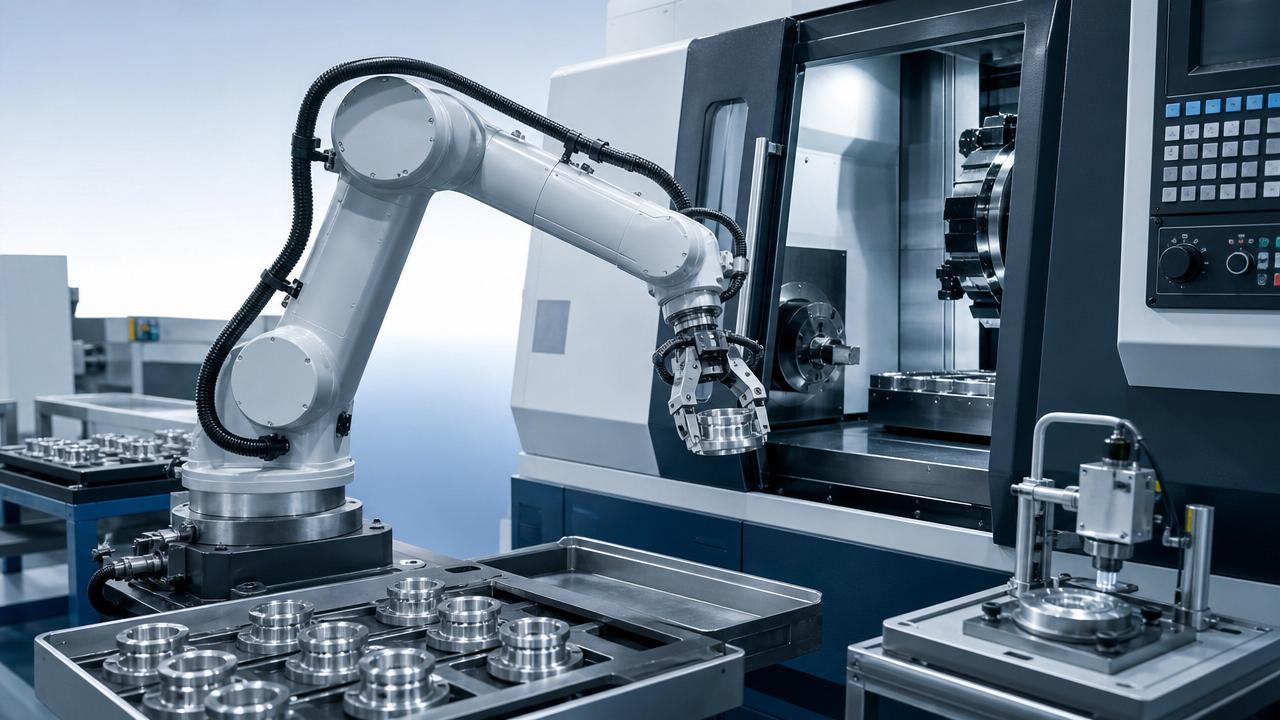
Industrial Robotics is reshaping how factories calculate return on investment. In CNC machining, precision manufacturing, and smart production, automation now supports growth, resilience, and measurable operational improvement.
Instead of viewing robots only as capital expense, many facilities now connect Industrial Robotics to throughput, quality stability, labor flexibility, and digital visibility. That shift is changing factory ROI across multiple industrial scenarios.
Why Industrial Robotics delivers different ROI in different factory scenarios
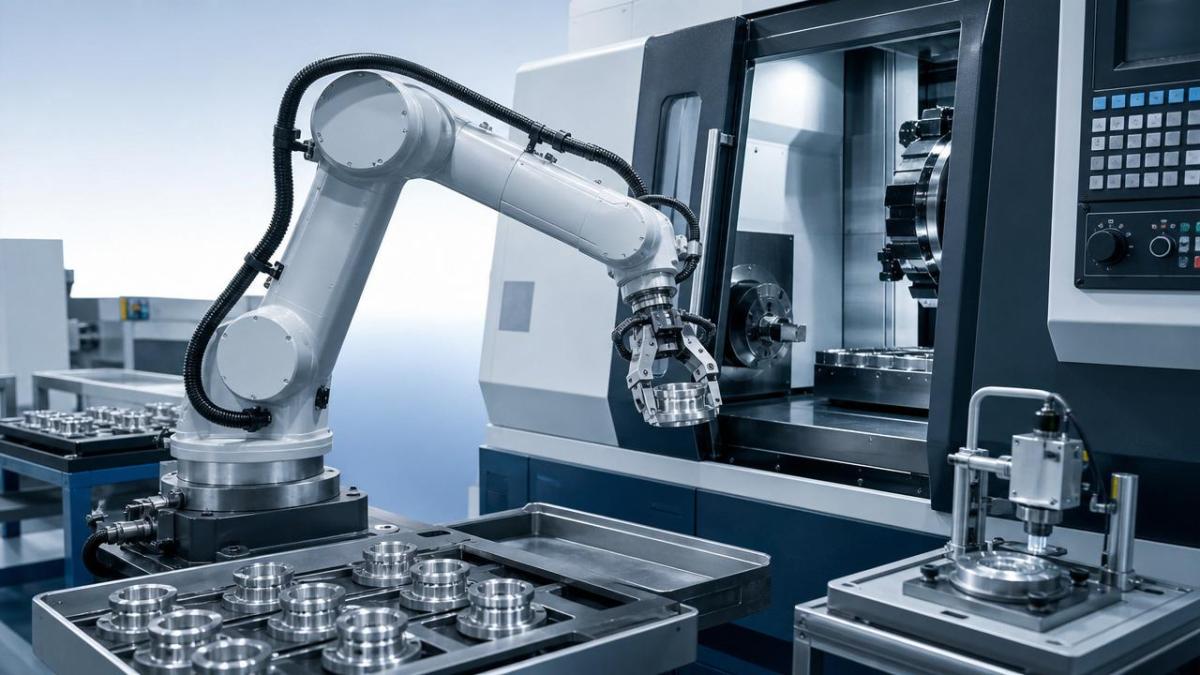
ROI from Industrial Robotics is not identical in every production environment. A high-mix CNC workshop needs flexibility. A mass production line needs repeatability. An energy equipment plant may prioritize safety and uptime.
This matters because robotics value often appears in different places. One factory gains from shorter cycle time. Another benefits more from lower scrap, fewer injuries, or better spindle utilization.
In the broader machine tool industry, robots increasingly work beside CNC lathes, machining centers, inspection cells, and automated material systems. Their economic impact grows when they match the production scenario correctly.
Scenario 1: CNC machine tending where labor gaps reduce spindle utilization
Machine tending is one of the clearest Industrial Robotics use cases. In many CNC environments, expensive machines wait for loading, unloading, deburring, or simple handling tasks.
When robots feed parts continuously, spindle idle time falls. The result is often a stronger ROI than expected, because output rises without adding another machining center.
Core judgment points in this scenario
- Frequent waiting time between machining cycles
- Night shift staffing pressure
- Stable part geometry and repeat handling steps
- Need for unattended or lights-out production
For CNC shops, Industrial Robotics can turn underused capacity into billable capacity. This is especially relevant in automotive parts, hydraulic components, and precision shaft production.
Scenario 2: Precision manufacturing where quality consistency matters more than headline speed
Some factories pursue ROI through quality, not only output. Aerospace parts, electronics housings, and precision discs often require repeatable loading, positioning, and transfer without damage or contamination.
Industrial Robotics improves consistency by reducing variation in part placement, clamping sequence, and handling force. Over time, this can lower scrap, reduce rework, and improve on-time delivery confidence.
Core judgment points in this scenario
- High cost of defective parts
- Strict tolerance and traceability requirements
- Frequent quality losses during manual transfer
- Need to integrate inspection into the production flow
In these environments, Industrial Robotics supports quality-centered ROI. The savings may be less visible than labor replacement, but they often protect margin and customer retention.
Scenario 3: Flexible production lines where product mix changes frequently
High-mix, low-to-medium volume operations need a different robotics strategy. Fixed automation may struggle here, but Industrial Robotics with tooling changes, vision systems, and programmable workflows can improve flexibility.
This scenario appears in contract machining, electronics components, medical parts, and specialized industrial assemblies. ROI depends on reducing setup friction without sacrificing utilization.
Core judgment points in this scenario
- Frequent part changeovers
- Small batch production with strict lead times
- Need to reassign labor quickly
- Pressure to standardize mixed equipment cells
Here, Industrial Robotics improves ROI when programming time, gripper design, and fixture compatibility are planned early. Flexibility is profitable only when changeover is manageable.
Scenario 4: Heavy, hazardous, or difficult handling where safety drives payback
Not every robotics project starts with labor cost. In energy equipment, cast components, forged parts, and large machine tool applications, the strongest ROI may come from safety and process stability.
Industrial Robotics reduces exposure to hot surfaces, sharp edges, repetitive lifting, and enclosed machining zones. It also improves process continuity when manual handling causes stoppages.
Core judgment points in this scenario
- High injury risk in material movement
- Large or awkward workpieces
- Difficult environmental conditions
- Need for stable handling around expensive machines
In such cases, factory ROI includes fewer disruptions, lower ergonomic pressure, and stronger equipment protection. These gains are strategic even when cycle time changes are moderate.
How Industrial Robotics needs differ by factory scenario
Practical ways to match Industrial Robotics to ROI goals
A robotics project performs better when its business target is specific. Broad automation goals often create weak payback models and poor deployment choices.
- Measure current idle time, scrap, handling steps, and labor bottlenecks.
- Select one dominant ROI target for each cell.
- Check part variation, fixture logic, and shift patterns.
- Plan integration with CNC machines, sensors, and quality systems.
- Estimate ramp-up time, not just full-speed output.
Industrial Robotics works best when linked to data. OEE, cycle records, downtime codes, and traceability systems help prove whether automation is improving actual factory ROI.
Common mistakes that weaken Industrial Robotics payback
One common error is copying a successful robotics cell from another plant without checking production mix, part flow, or machine utilization. Similar equipment does not guarantee similar ROI.
Another mistake is judging Industrial Robotics only by headcount reduction. In advanced manufacturing, payback often comes from output stability, schedule reliability, and lower quality loss.
- Underestimating gripper and fixture design complexity
- Ignoring maintenance access and spare parts planning
- Missing operator training during ramp-up
- Automating unstable processes too early
Industrial Robotics cannot fix a broken process alone. If machining variation, poor tooling life, or inconsistent part supply remain unresolved, automation may only hide deeper inefficiency.
What to do next when evaluating Industrial Robotics for factory ROI
Start with one production scenario where the economic loss is easy to measure. CNC machine tending, precision transfer, or hazardous handling are often practical first steps.
Then compare the current state against a robotics-ready workflow. Focus on machine utilization, quality loss, changeover time, and labor dependency rather than headline automation trends.
Industrial Robotics is changing factory ROI because it aligns capital investment with real operational pressure points. In modern manufacturing, the best returns come from scenario fit, not automation for its own sake.
For companies tracking the global CNC machining and precision manufacturing sector, this means one clear priority: evaluate robotics where demand, process discipline, and digital integration can convert capability into measurable return.
Recommended for You
![]() China's Energy Storage Sector Faces 'Advanced Shortage, Outdated Surplus'Machine Tool Industry Editorial Team
China's Energy Storage Sector Faces 'Advanced Shortage, Outdated Surplus'Machine Tool Industry Editorial Team![]() Top 50 Cosmetics Brands’ Retail Sales Up 11.56%, Boosting Demand for High-Precision CNC EquipmentManufacturing Market Research Center
Top 50 Cosmetics Brands’ Retail Sales Up 11.56%, Boosting Demand for High-Precision CNC EquipmentManufacturing Market Research Center![]() Home Service Skills Hub Launches, Boosting Robot Export TrainingMachine Tool Industry Editorial Team
Home Service Skills Hub Launches, Boosting Robot Export TrainingMachine Tool Industry Editorial Team![]() Steel Structure Mezzanine Tech Moves Beyond 'Adequate'CNC Machining Technology Center
Steel Structure Mezzanine Tech Moves Beyond 'Adequate'CNC Machining Technology Center![]() Fireproof Cable Tray Industry Shifts to High-Performance CompositesManufacturing Policy Research Center
Fireproof Cable Tray Industry Shifts to High-Performance CompositesManufacturing Policy Research Center![]() Foil Winding Machines Shift to Digital Servo DrivesMachine Tool Industry Editorial Team
Foil Winding Machines Shift to Digital Servo DrivesMachine Tool Industry Editorial Team


Aris Katos
Future of Carbide Coatings
15+ years in precision manufacturing systems. Specialized in high-speed milling and aerospace grade alloy processing.
▶
China's Energy Storage Sector Faces 'Advanced Shortage, Outdated Surplus'Machine Tool Industry Editorial Team▶
20 Stores Open Simultaneously: Sam's Club, Hema Accelerate Community Retail ExpansionMachine Tool Industry Editorial Team▶
What to check before building an Automated Production LineMachine Tool Industry Editorial Team▶
Why Industrial Robotics is changing factory ROIMachine Tool Industry Editorial Team▶
Railway Investment Hits $20.08B in Jan–Apr 2026, Boosting Smart Production Line OrdersMachine Tool Industry Editorial Team
Mastering 5-Axis Workholding Strategies
Join our technical panel on Nov 15th to learn about reducing vibrations in thin-wall components.

Providing you with integrated sanding solutions
Before-sales and after-sales services
Comprehensive technical support