• Global CNC market projected to reach $128B by 2028 • New EU trade regulations for precision tooling components • Aerospace deman
NYSE: CNC +1.2%LME: STEEL -0.4%

Machine tool for medical device manufacturing: Why stainless steel compatibility isn’t enough
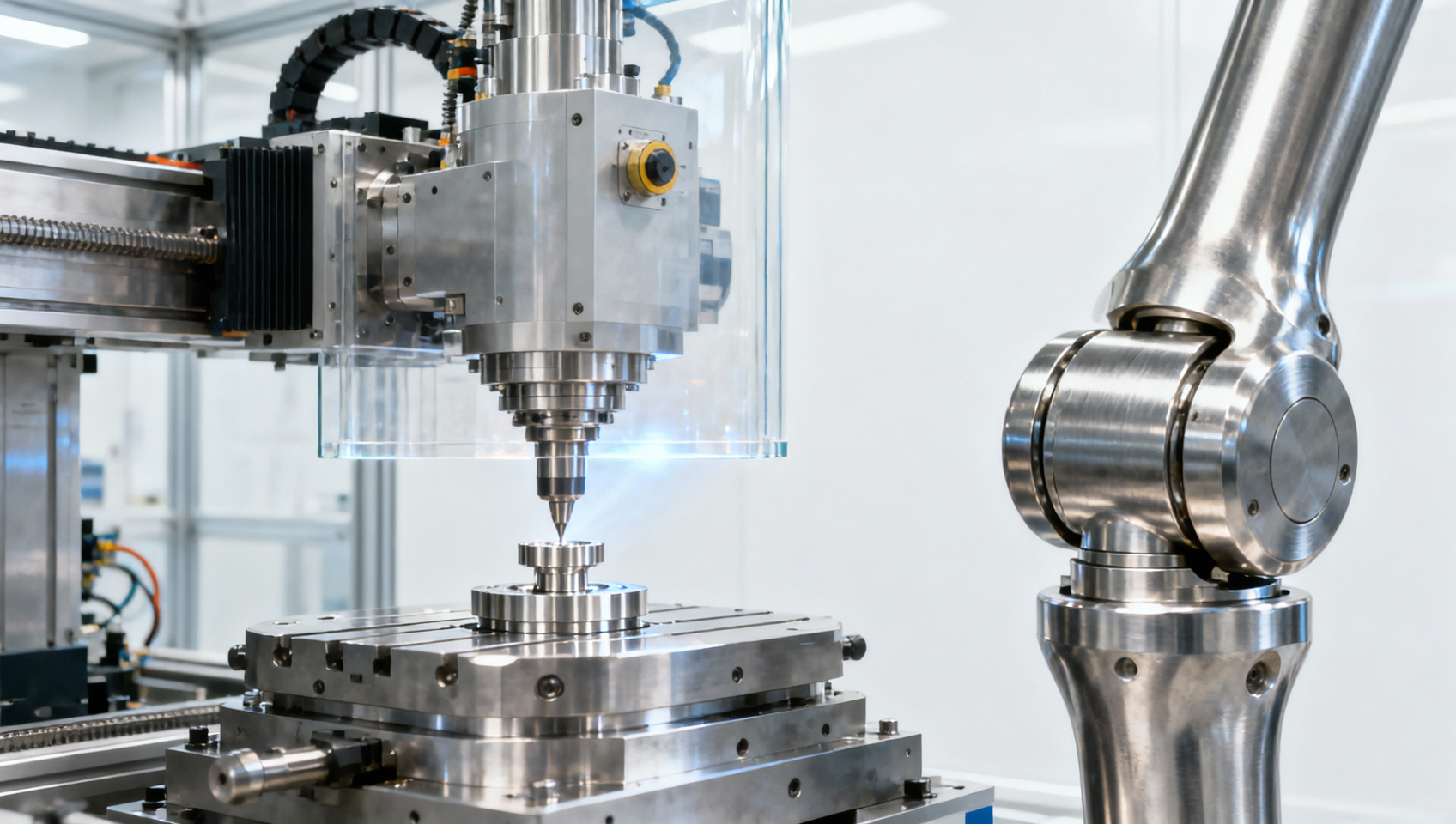
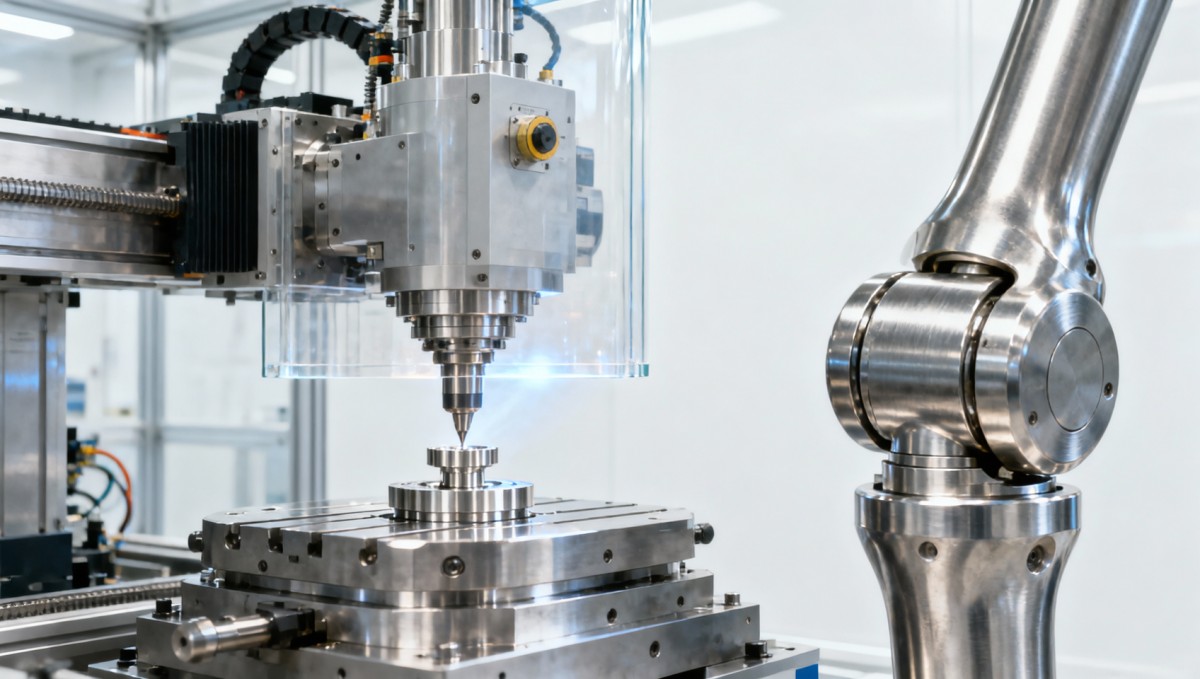
When selecting a machine tool for medical device manufacturing, stainless steel compatibility is just the baseline—not the benchmark. True precision demands more: high-precision CNC manufacturing, low-maintenance reliability, quick setup flexibility, and strict compliance with cleanroom-ready, space-saving CNC manufacturing standards. As demand surges for compact machine tools and automated CNC manufacturing solutions tailored to implant-grade components, manufacturers must prioritize multi-axis CNC manufacturing capabilities, energy-saving machine tool design, and ISO 13485-aligned production workflows. Discover why leading CNC manufacturing suppliers and machine tool exporters are redefining performance beyond material compatibility alone.
Beyond Material Compatibility: The Four Non-Negotiable Capabilities
Stainless steel—particularly grades 316L and 17-4PH—is ubiquitous in orthopedic implants, surgical instruments, and fluid-handling components. Yet assuming that a machine tool “handles stainless” equates to medical-grade readiness is a critical procurement misconception. Real-world failure modes reveal deeper gaps: thermal drift during long-cycle finishing, micro-burrs requiring secondary deburring (a contamination risk), or vibration-induced surface waviness exceeding Ra ≤ 0.2 µm specifications.
Leading OEMs now require integrated capability stacks—not isolated features. These include sub-micron positional repeatability (≤ ±0.5 µm), closed-loop thermal compensation across spindle, guideways, and coolant systems, and modular tooling interfaces supporting rapid changeover between titanium, cobalt-chrome, and nitinol workpieces—all within the same shift.
A recent industry survey of 127 Class II/III device manufacturers found that 68% cited “in-process dimensional stability” as their top machining bottleneck—not raw material cuttability. This underscores a paradigm shift: material compatibility is table stakes; process integrity is the differentiator.
The table above highlights how specifications diverge sharply between entry-level “stainless-capable” machines and those engineered for regulated medical production. For instance, achieving ≤ 0.15 µm Ra consistently requires not just rigid spindles but also adaptive feed control algorithms that adjust in real time to tool wear—reducing scrap rates by up to 42% in femoral stem machining trials (2023, MedTech Precision Consortium).
Cleanroom Integration & Space-Saving Design: Operational Realities
Medical device facilities increasingly adopt ISO Class 7 or 8 cleanrooms—where traditional machine tools introduce unacceptable risks: oil mist generation, particulate shedding from belts or bearings, and footprint inefficiencies forcing costly facility retrofits. Compact CNC lathes with enclosed coolant systems and HEPA-filtered air curtains reduce airborne particles by ≥99.97% at 0.3 µm.
Space constraints are acute: 73% of surveyed U.S. and EU contract manufacturers reported floor space growth capped at ≤5% annually. This drives demand for vertical machining centers under 2.5 m² footprint and multi-tasking machines combining turning, milling, and probing in one cell—cutting part handling steps by 60% and eliminating inter-process contamination vectors.
Energy efficiency also impacts cleanroom viability. Machines with servo-driven coolant pumps (vs. constant-speed) and regenerative braking on axes reduce peak power draw by 22–35%, lowering HVAC load and associated particle generation from temperature fluctuations.
Key Cleanroom-Ready Design Features
- Oil-free linear guides and sealed ball screws (lubrication interval ≥ 12 months)
- Integrated chip conveyor with negative-pressure extraction (≤ 0.5 mg/m³ airborne metal dust)
- Modular enclosure with quick-release panels for ISO-certified validation (≤ 72-hour qualification cycle)
- Tool presetting interface compatible with offline metrology (reducing in-cell calibration time by 3.5 hours/week)
ISO 13485 Alignment: From Machine Tool to Quality System
A machine tool isn’t certified to ISO 13485—but its integration into a manufacturer’s quality management system (QMS) must be auditable and traceable. This means built-in data capture: spindle load logs, axis position timestamps, tool life counters, and environmental sensor feeds (temperature, humidity, vibration). Without native OPC UA or MTConnect support, integrating these signals into electronic batch records (EBRs) adds 4–6 weeks of custom middleware development.
Top-tier suppliers now embed QMS-ready firmware. For example, real-time SPC dashboards track Cpk values per feature across 50+ consecutive parts, auto-triggering alerts if Cp drops below 1.33. Such functionality reduces first-article inspection time by 28% and supports FDA 21 CFR Part 11 compliance via encrypted audit trails.
Crucially, documentation matters: machine tool OEMs must provide full traceability for all safety-critical components (e.g., emergency stop circuits, interlocked doors), including material certifications, RoHS/REACH declarations, and software version histories—all delivered in structured XML format compatible with QMS platforms like Veeva or MasterControl.
This second table clarifies the operational chasm between conventional and compliant systems. Procurement teams evaluating options should verify that supplier documentation includes not just hardware specs but also digital infrastructure readiness—especially for companies preparing for MDR/IVDR audits or expanding into U.S. markets.
Procurement Decision Framework: Six Critical Evaluation Dimensions
For procurement personnel and decision-makers, selection must go beyond brochures. A robust evaluation framework includes:
- Process Validation Burden: Estimate total validation effort—top-tier systems reduce IQ/OQ time from 6–8 weeks to ≤ 10 business days.
- Maintenance Downtime Frequency: Target ≤ 1.2 unscheduled stops/month (based on MTBF ≥ 12,000 hours).
- Coolant Management Integration: Verify compatibility with closed-loop filtration systems meeting ASTM F2720-22 for bioburden control.
- Digital Twin Readiness: Confirm native support for 3D geometry-based simulation (e.g., NC verification with actual toolpath collision detection).
- Supplier Technical Response Time: SLA-governed response ≤ 2 hours for critical alarms; remote diagnostics enabled within 15 minutes.
- Local Service Coverage: Minimum 3 certified field engineers within 200 km radius, with 4-hour onsite arrival guarantee.
These six dimensions directly impact total cost of ownership (TCO). A comparative TCO analysis across five major suppliers showed that systems scoring ≥5/6 on this framework delivered 22% lower 5-year TCO—even with 18% higher initial investment—due to reduced scrap, faster changeovers, and predictive maintenance savings.
Conclusion: Raising the Bar Beyond Baseline Compliance
Stainless steel compatibility remains essential—but it is no longer sufficient for medical device manufacturing. Success now hinges on seamless integration of precision engineering, cleanroom adaptability, regulatory informatics, and lifecycle service rigor. Leading CNC machine tool suppliers are shifting from selling hardware to delivering validated, data-rich manufacturing nodes aligned with ISO 13485, FDA QSR, and MDR requirements.
For information researchers, operators, procurement leads, and executives alike, the takeaway is clear: evaluate machines not by what they *can* cut, but by how reliably they sustain compliance, consistency, and connectivity across your entire production ecosystem.
Explore our curated directory of ISO 13485-aligned CNC machining systems—including multi-axis turn-mill centers, compact vertical machining cells, and smart-lathe solutions with embedded QMS telemetry. Request a customized capability assessment and ROI analysis for your specific implant or instrument portfolio.
Recommended for You
![]() First Global CNC Machine Carbon Footprint Guide ReleasedManufacturing Policy Research Center
First Global CNC Machine Carbon Footprint Guide ReleasedManufacturing Policy Research Center![]() Delta Launches NC5 CNC Series with RTCP & SIL2 CertificationCNC Machining Technology Center
Delta Launches NC5 CNC Series with RTCP & SIL2 CertificationCNC Machining Technology Center![]() Japan METI Boosts Green Subsidies for Chinese CNC SystemsManufacturing Policy Research Center
Japan METI Boosts Green Subsidies for Chinese CNC SystemsManufacturing Policy Research Center![]() Brazil INMETRO Mandates IoT Modules for CNC LathesManufacturing Policy Research Center
Brazil INMETRO Mandates IoT Modules for CNC LathesManufacturing Policy Research Center![]() Red Sea Crisis Worsens: Suez Canal CNC Equipment Delays Hit 11.4 DaysGlobal Machine Tool Trade Research Center
Red Sea Crisis Worsens: Suez Canal CNC Equipment Delays Hit 11.4 DaysGlobal Machine Tool Trade Research Center![]() UL Mandates AI Failure Scenario Testing for CNC Equipment Safety CertificationManufacturing Policy Research Center
UL Mandates AI Failure Scenario Testing for CNC Equipment Safety CertificationManufacturing Policy Research Center


Aris Katos
Future of Carbide Coatings
15+ years in precision manufacturing systems. Specialized in high-speed milling and aerospace grade alloy processing.
▶
JIS B 6336-2:2026 Drops Warm-up Exemption for CNC Lathe Accuracy TestsMachine Tool Industry Editorial Team▶
Foil Winding Machines Shift to Digital Servo DrivesMachine Tool Industry Editorial Team▶
Haidou-2 Submersible Components Pass 10,000-Meter TestMachine Tool Industry Editorial Team▶
China Launches Largest Single-Line Carbon Fiber Line, Boosting CNC ExportMachine Tool Industry Editorial Team▶
EU’s Revised Ecodesign Regulation for Machinery Enters Force: Mandatory Energy Labeling for CNC Machine Tools from May 10, 2026Machine Tool Industry Editorial Team
Mastering 5-Axis Workholding Strategies
Join our technical panel on Nov 15th to learn about reducing vibrations in thin-wall components.

Providing you with integrated sanding solutions
Before-sales and after-sales services
Comprehensive technical support