• Global CNC market projected to reach $128B by 2028 • New EU trade regulations for precision tooling components • Aerospace deman
NYSE: CNC +1.2%LME: STEEL -0.4%

Manufacturing Industry pressure points that affect expansion plans

Expansion in the Manufacturing Industry is no longer shaped by demand alone. Growth plans now depend on how well businesses manage inflation in materials and energy, respond to supply chain disruptions, secure technical talent, and adopt digital capabilities without losing operational discipline. In CNC machining, precision manufacturing, and automated production, these pressures are especially visible because even small delays or quality deviations can disrupt output across automotive, aerospace, electronics, and energy supply chains. This article answers the most important questions behind expansion decisions and explains what the current pressure points mean in practical terms.
What are the main pressure points slowing Manufacturing Industry expansion?
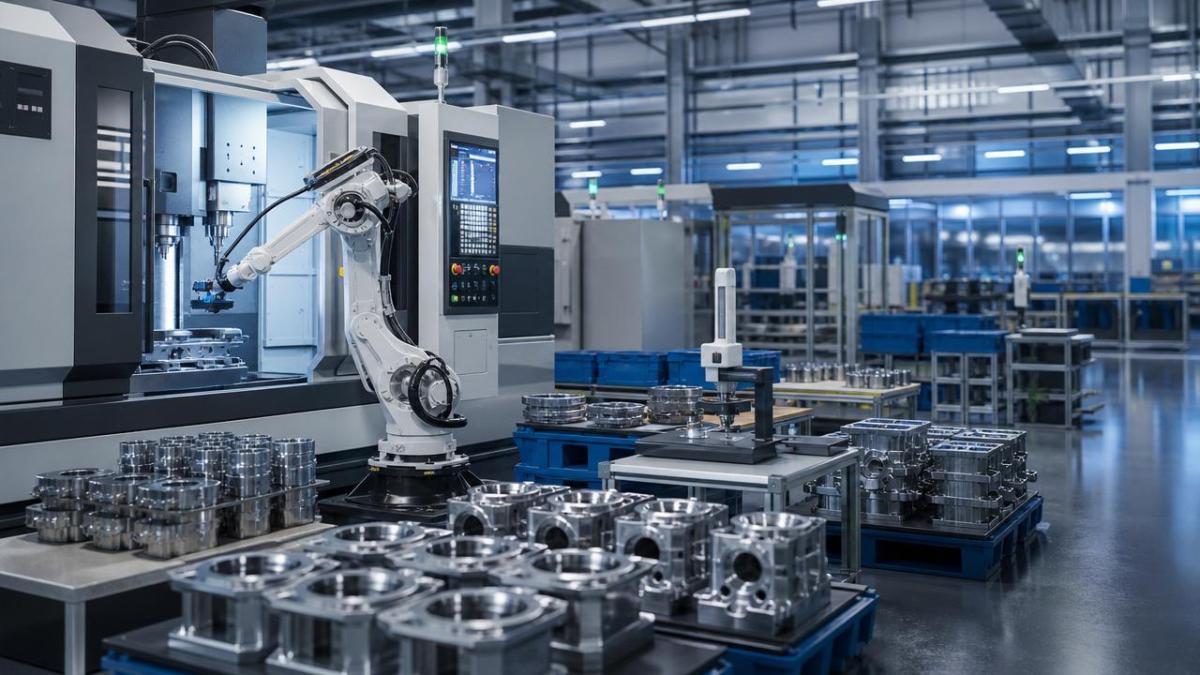
The biggest constraints affecting the Manufacturing Industry today are cost volatility, supply chain instability, labor shortages, financing pressure, and the rising complexity of digital transformation. These issues do not act independently. In many cases, one pressure point amplifies another. For example, delayed machine components can increase project timelines, which then raises labor costs and weakens cash flow assumptions behind a plant upgrade or capacity expansion.
Within the global CNC machine tool and precision manufacturing sector, expansion often requires major investment in machining centers, multi-axis systems, tooling, automation cells, quality inspection, and software integration. When steel, electronics, servo systems, or control components become more expensive or harder to source, investment models become less predictable. That uncertainty makes it more difficult to scale with confidence.
Another key issue is margin compression. The Manufacturing Industry faces pressure to shorten lead times, maintain quality, and absorb fluctuating logistics costs while customers continue to expect stable pricing. In high-precision sectors, rework, downtime, and delayed commissioning can turn a profitable expansion project into a slow-return asset.
Why do rising costs affect expansion plans more than many expected?
Cost pressure in the Manufacturing Industry is broader than raw materials. It includes energy, transport, industrial land, compliance, software licensing, maintenance, and borrowing costs. For advanced machine tool operations, energy consumption alone can materially affect the economics of adding shifts, installing large-capacity machining systems, or expanding heat treatment and finishing capabilities.
The challenge is not only that costs are high, but that they are unstable. Expansion planning depends on forecasts. When component pricing moves rapidly, businesses may postpone equipment purchases, phase projects into smaller stages, or redesign plant layouts to preserve capital. That can protect cash in the short term, but it may also delay market entry or reduce the speed advantage that expansion was supposed to create.
In the CNC and automation segment of the Manufacturing Industry, hidden cost escalation is common during implementation. A new automated line may require additional safety systems, tool management software, coolant handling, metrology upgrades, and operator training. These secondary costs are often underestimated early in the project. A disciplined total-cost model is therefore essential before approving expansion.
What should be included in a realistic cost review?
- Equipment, installation, tooling, and commissioning costs
- Energy, utilities, and environmental compliance
- Software, cybersecurity, and data integration expenses
- Training, recruitment, and retention costs for technical staff
- Working capital tied to inventory and longer lead times
How is supply chain volatility changing Manufacturing Industry growth decisions?
Supply chain volatility has become one of the most decisive expansion barriers in the Manufacturing Industry. It affects machine builders, parts suppliers, system integrators, and production facilities alike. Expansion projects rely on synchronized delivery of controllers, bearings, motors, sensors, castings, tooling, and electronic components. A delay in one category can idle an entire installation schedule.
This has changed the way capacity growth is evaluated. Instead of assuming that inputs will arrive on predictable timelines, more businesses are modeling disruption scenarios before committing to expansion. They want to understand whether a new site, production line, or export strategy can remain viable if shipping times double or if a key supplier faces regional restrictions.
For the global Manufacturing Industry, diversification now matters as much as price. Single-source dependence may reduce procurement complexity, but it increases operational fragility. In precision manufacturing, where tolerances are tight and part qualification is critical, switching suppliers is not always fast. That is why resilient expansion planning increasingly includes dual sourcing, regional stock buffers, and stronger supplier visibility systems.
What does a stronger supply chain strategy look like?
A more resilient approach combines practical controls with selective investment. That may include qualifying alternative suppliers early, standardizing components where possible, improving inventory segmentation, and using digital tracking to monitor supplier performance. In machine tool expansion, it can also mean designing production capacity around modular equipment so output can grow in stages rather than through one large, high-risk leap.
How do labor shortages and skills gaps limit scale in the Manufacturing Industry?
The Manufacturing Industry is expanding into more automated, software-driven, and precision-focused operations, but skilled labor pipelines have not always kept pace. CNC programmers, maintenance technicians, process engineers, automation specialists, and quality experts remain difficult to replace quickly. Expansion plans that look solid on paper can stall if the required technical capability is missing on the shop floor.
Labor shortages affect more than staffing numbers. They influence quality stability, machine utilization, preventive maintenance, and the speed of new product introduction. In complex machining environments, advanced equipment does not automatically deliver higher output if operators and engineers are not fully prepared to optimize tooling strategies, cycle times, and process reliability.
This is why automation alone is not a complete answer. In the Manufacturing Industry, automation reduces repetitive work and improves consistency, but it also increases the need for integration, troubleshooting, data interpretation, and cross-functional process control. Smart expansion therefore combines equipment upgrades with workforce planning, structured training, and retention incentives for critical roles.
Is digital transformation a growth accelerator or an added burden?
For the Manufacturing Industry, digital transformation is both an opportunity and a source of pressure. It can improve machine visibility, predictive maintenance, production scheduling, quality traceability, and energy management. In CNC machining and automated production, digital systems help connect machine tools, robots, inspection equipment, and enterprise software into a more responsive operating model.
However, digital expansion can become burdensome when it is pursued without clear operational goals. Investing in dashboards, sensors, or smart factory software does not guarantee measurable results. If data is fragmented, standards are inconsistent, or teams are not trained to act on insights, digital projects may add cost without improving throughput or reducing downtime.
The most effective digital strategies in the Manufacturing Industry start with a bottleneck. That might be scrap reduction, tool life monitoring, machine utilization, setup time, or order traceability. When digital tools are linked to a specific expansion objective, they are more likely to support scalable growth rather than create another layer of complexity.
How can expansion plans be evaluated more accurately under current conditions?
A stronger evaluation model for the Manufacturing Industry should test three things: financial resilience, operational readiness, and strategic flexibility. Financial resilience means checking whether the project still works under higher input costs, slower customer ramp-up, or delayed equipment delivery. Operational readiness means verifying process capability, staffing, supplier qualification, and implementation capacity. Strategic flexibility means ensuring the project can be adjusted in phases if market conditions change.
A phased expansion model is often more practical than a full-scale rollout. In precision manufacturing, adding a pilot cell, modular automation island, or selective machining capacity can validate assumptions before larger capital commitments are made. This reduces execution risk while preserving growth momentum.
Quick answers to common expansion questions
Does bigger capacity always lower unit cost? Not necessarily. In the Manufacturing Industry, underutilized assets can increase unit cost if demand, staffing, or supply chain stability is weaker than expected.
Should expansion wait until conditions improve? Delaying can reduce immediate risk, but it may also mean lost market share or slower response to customer demand. A phased approach often provides a better balance.
Is automation enough to solve labor problems? No. Automation supports efficiency, but successful scaling in the Manufacturing Industry still depends on programming, maintenance, process control, and change management skills.
What is the most overlooked risk in expansion? Poor alignment between capital investment and operational execution. Even the right equipment can underperform if implementation timing, supplier readiness, and training are weak.
The Manufacturing Industry still offers strong growth potential, especially in CNC machining, precision components, automated production lines, and smart factory upgrades. Yet expansion success now depends less on ambition alone and more on disciplined preparation. Cost control, supplier resilience, technical capability, and focused digital investment must be evaluated together rather than in isolation.
A practical next step is to review any planned expansion against current pressure points using a structured checklist: validate total project cost, test supply chain exposure, assess workforce readiness, and define one or two digital priorities tied directly to output or quality. In the Manufacturing Industry, the businesses most likely to expand successfully are those that build flexibility into their plans before volatility forces it on them.
PREVIOUS ARTICLE
NEXT ARTICLE
Recommended for You
![]() Five Ministries Launch Joint Enforcement on EV Battery RecyclingManufacturing Policy Research Center
Five Ministries Launch Joint Enforcement on EV Battery RecyclingManufacturing Policy Research Center![]() Top 10 Future Industries Roadmap 2026 ReleasedManufacturing Market Research Center
Top 10 Future Industries Roadmap 2026 ReleasedManufacturing Market Research Center![]() Global Methanol-Electric Ecosystem Alliance LaunchedManufacturing Market Research Center
Global Methanol-Electric Ecosystem Alliance LaunchedManufacturing Market Research Center![]() ISO 23218-3:2026 Enters Force: CNC Digital Twin Interoperability Standard Goes GlobalCNC Machining Technology Center
ISO 23218-3:2026 Enters Force: CNC Digital Twin Interoperability Standard Goes GlobalCNC Machining Technology Center![]() ANVISA New Rule: Portuguese Biocompatibility Labels for Medical CNC EquipmentManufacturing Policy Research Center
ANVISA New Rule: Portuguese Biocompatibility Labels for Medical CNC EquipmentManufacturing Policy Research Center![]() KATS Updates KC Certification: CNC Cybersecurity Modules Must Comply with IEC 62443-4-2Manufacturing Policy Research Center
KATS Updates KC Certification: CNC Cybersecurity Modules Must Comply with IEC 62443-4-2Manufacturing Policy Research Center


Aris Katos
Future of Carbide Coatings
15+ years in precision manufacturing systems. Specialized in high-speed milling and aerospace grade alloy processing.
▶
Manufacturing Industry pressure points that affect expansion plansManufacturing Market Research Center▶
Where the Manufacturing Industry is adding capacity in 2026Manufacturing Market Research Center▶
When industrial CNC investment starts paying back fasterManufacturing Market Research Center▶
Manufacturing Industry trends that may reshape equipment budgetsManufacturing Market Research Center▶
Manufacturing Industry trends that may reshape equipment budgetsManufacturing Market Research Center
Mastering 5-Axis Workholding Strategies
Join our technical panel on Nov 15th to learn about reducing vibrations in thin-wall components.

Providing you with integrated sanding solutions
Before-sales and after-sales services
Comprehensive technical support