• Global CNC market projected to reach $128B by 2028 • New EU trade regulations for precision tooling components • Aerospace deman
NYSE: CNC +1.2%LME: STEEL -0.4%

Is the Machine Tool Market slowing or just shifting demand?
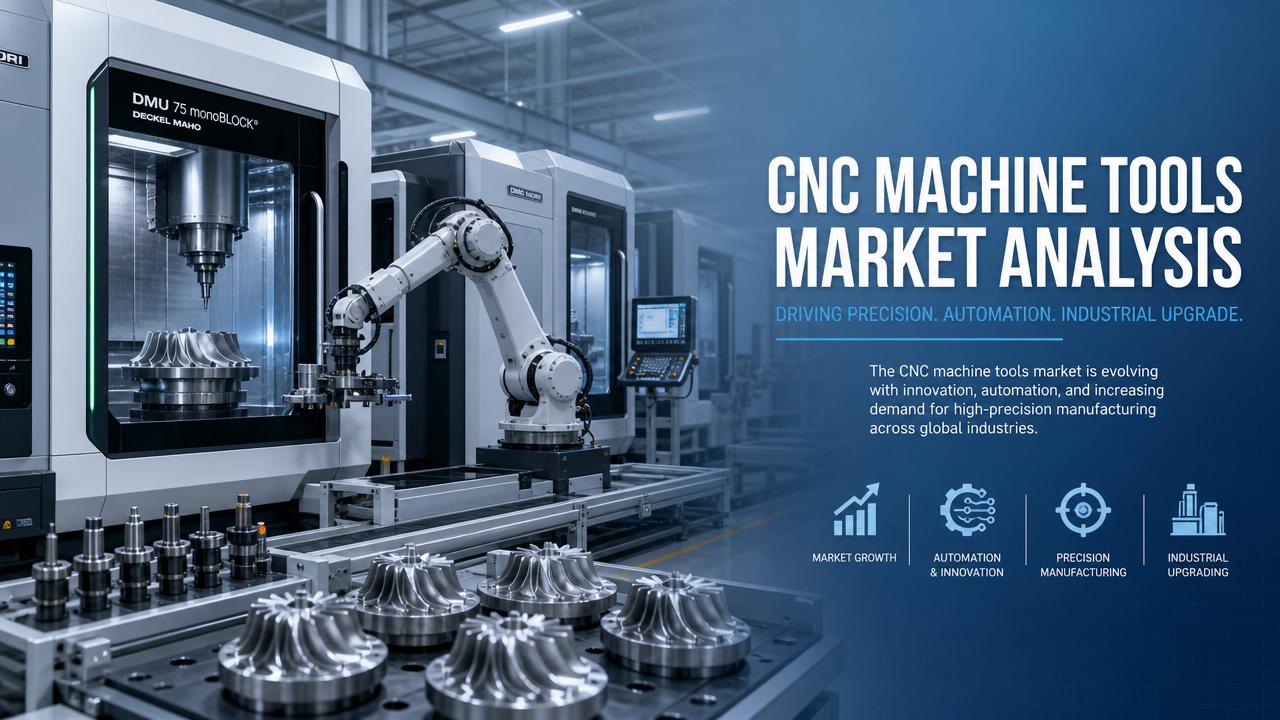
Is the Machine Tool Market truly slowing, or is demand moving into more advanced categories? Recent signals suggest both forces are active at the same time.
Traditional machine tool orders have softened in several regions. Yet investment in CNC automation, multi-axis systems, digital controls, and precision machining remains resilient.
That means the Machine Tool Market is not simply shrinking. It is being reshaped by new production priorities, tighter margins, labor pressure, and industrial modernization.
For business evaluation, the key issue is not only volume. It is where capital spending is flowing, which machine categories gain share, and which end-use industries recover first.
Machine Tool Market definition and current demand structure
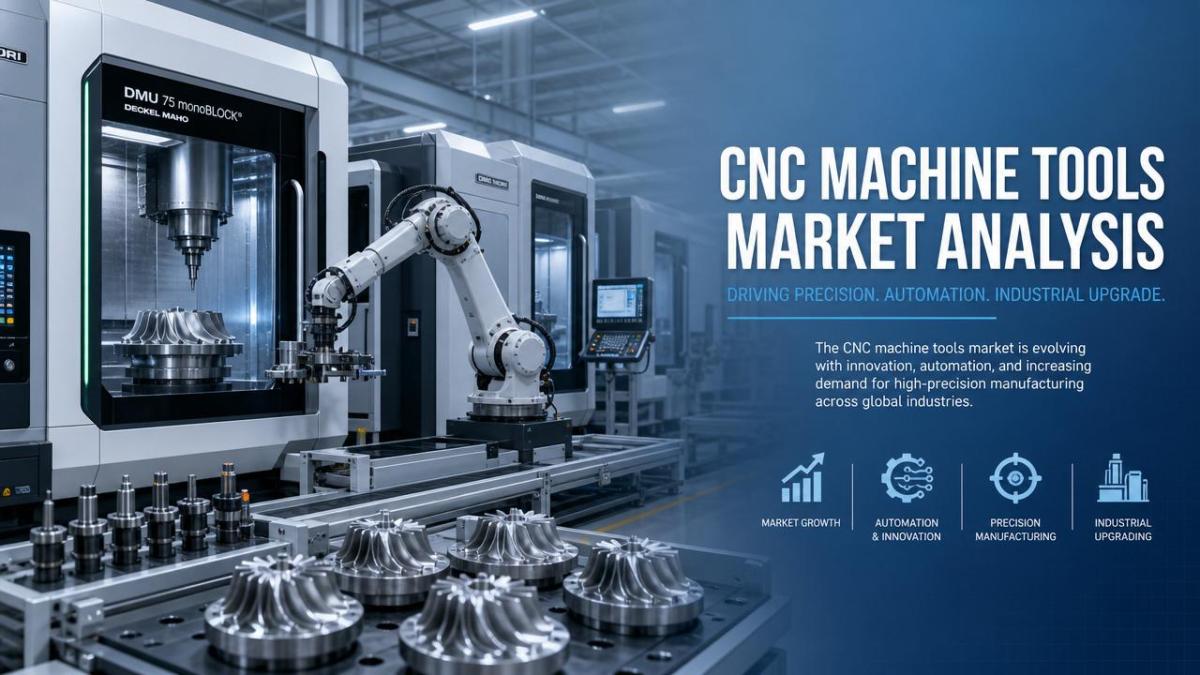
The Machine Tool Market covers CNC lathes, machining centers, grinders, milling systems, cutting equipment, fixtures, tooling, and integrated automation solutions.
It also includes software, control systems, robotic loading, measurement devices, and flexible production line components linked to precision manufacturing.
Historically, demand tracked broad industrial output. When automotive, electronics, or heavy equipment slowed, machine tool purchasing often fell quickly.
Today, demand is more segmented. Basic replacement cycles may weaken, while high-specification equipment gains attention because it improves productivity and part accuracy.
This structural split explains why headline data can look soft even when premium CNC and smart factory projects continue moving forward.
Industry signals behind the shifting Machine Tool Market
Several short-term indicators point to slower activity. However, those indicators do not capture the full direction of the Machine Tool Market.
- Longer approval cycles for capital equipment purchases
- Cautious spending on standard three-axis and entry-level machines
- Inventory adjustments after previous expansion periods
- Regional weakness in construction-linked and general metalworking segments
- Stronger demand for automation-ready, higher precision, and energy-efficient equipment
These mixed signals show a market rotation rather than a uniform decline. Spending is becoming more selective and more closely tied to measurable production gains.
In many factories, the purchase decision now depends on labor savings, cycle-time reduction, traceability, and integration with digital production systems.
Key forces changing purchase behavior
Why demand is shifting toward higher-value machine tool segments
The strongest part of the Machine Tool Market is increasingly linked to value creation, not simple machine count expansion.
A factory replacing one aging machine may now choose one advanced cell instead of several conventional units. That lowers unit volume but raises order value.
This matters across automotive parts, aerospace structures, energy components, electronics housings, and precision industrial assemblies.
Complex parts need fewer setups, tighter tolerances, and better consistency. Multi-axis machining centers and integrated CNC systems address those requirements directly.
At the same time, digital monitoring reduces downtime. Predictive maintenance and process visibility help justify premium equipment investment.
As a result, the Machine Tool Market is increasingly defined by capability density. Buyers seek more output, more precision, and more flexibility from each asset.
Regional patterns shaping the Machine Tool Market
Regional conditions remain important because machine tools sit at the center of national manufacturing competitiveness.
China continues to influence global volume through broad industrial capacity, localization programs, and ongoing investment in advanced manufacturing infrastructure.
Germany remains associated with premium engineering, precision systems, and export-oriented industrial technology. Japan and South Korea sustain strength in high-performance equipment and components.
Other regions are gaining relevance through reshoring, nearshoring, and sector-specific industrial policy. This trend favors flexible, scalable production equipment.
Therefore, the Machine Tool Market may look uneven by country while still showing healthy long-term opportunities in strategic manufacturing corridors.
Representative regional demand themes
- Asia: capacity expansion, localization, electronics, EV supply chains
- Europe: precision upgrades, energy efficiency, aerospace, industrial automation
- North America: reshoring, labor substitution, digital production cells
- Emerging markets: selective investment in versatile CNC platforms
Business value of reading the Machine Tool Market correctly
A correct reading of the Machine Tool Market helps clarify whether softer sales indicate weakness, transition, or delayed expansion.
That distinction affects investment timing, product positioning, channel strategy, and partnership decisions across the manufacturing value chain.
If demand is shifting, then success depends on alignment with advanced machining, digital integration, and application-specific performance.
If decision-makers treat all categories as equal, they may overestimate weakness in the market and underestimate opportunities in premium segments.
The better approach is to separate cyclical softness from structural migration. One affects timing. The other affects long-term competitiveness.
Typical demand scenarios across the Machine Tool Market
Different production environments respond to economic pressure in different ways. The table below shows how demand often shifts by scenario.
Practical evaluation points for current market conditions
To judge whether the Machine Tool Market is slowing or shifting, several practical indicators deserve close attention.
- Track order mix, not only total order count.
- Compare standard machine demand with automation-ready system demand.
- Watch end-use sectors such as EVs, aerospace, electronics, and energy equipment.
- Measure software, tooling, and integration revenue alongside machine sales.
- Review replacement demand driven by efficiency and compliance goals.
These points help reveal whether softness is broad or whether money is simply moving toward higher-return machine tool investments.
Next-step perspective on the Machine Tool Market
The Machine Tool Market is showing signs of moderation in some traditional categories. Yet the deeper trend is a reallocation of demand.
Growth is shifting toward precision, automation, digital integration, and flexible production systems that support modern manufacturing strategies.
That means current market softness should be interpreted carefully. Lower volume does not always mean lower strategic value.
A useful next step is to map machine demand by technology level, end-use segment, and regional investment trend before drawing conclusions.
When viewed through that lens, the Machine Tool Market appears less like a simple slowdown and more like a market entering its next industrial phase.
PREVIOUS ARTICLE
NEXT ARTICLE
Recommended for You
![]() Vietnam Suspends CNC Equipment Import Licenses Amid New Tech RulesManufacturing Policy Research Center
Vietnam Suspends CNC Equipment Import Licenses Amid New Tech RulesManufacturing Policy Research Center![]() First Global CNC Machine Carbon Footprint Guide ReleasedManufacturing Policy Research Center
First Global CNC Machine Carbon Footprint Guide ReleasedManufacturing Policy Research Center![]() Japan METI Launches CNC Green Upgrade SubsidyManufacturing Market Research Center
Japan METI Launches CNC Green Upgrade SubsidyManufacturing Market Research Center![]() Brazil INMETRO Mandates IoT Modules for CNC Lathes from July 2026Manufacturing Policy Research Center
Brazil INMETRO Mandates IoT Modules for CNC Lathes from July 2026Manufacturing Policy Research Center![]() EU Launches Anti-Subsidy Investigation on Chinese Laser Cutting Heads and High-Power Fiber LasersManufacturing Policy Research Center
EU Launches Anti-Subsidy Investigation on Chinese Laser Cutting Heads and High-Power Fiber LasersManufacturing Policy Research Center![]() Red Sea Crisis Deepens: Suez Canal CNC Ship Delays Hit 11.4 DaysGlobal Machine Tool Trade Research Center
Red Sea Crisis Deepens: Suez Canal CNC Ship Delays Hit 11.4 DaysGlobal Machine Tool Trade Research Center


Aris Katos
Future of Carbide Coatings
15+ years in precision manufacturing systems. Specialized in high-speed milling and aerospace grade alloy processing.
▶
Is the Machine Tool Market slowing or just shifting demand?Manufacturing Market Research Center▶
Where is the Machine Tool Market cooling off this year?Manufacturing Market Research Center▶
What is changing the Machine Tool Market in 2026?Manufacturing Market Research Center▶
The Machine Tool Market is shifting, so what matters now?Manufacturing Market Research Center▶
What the Machine Tool Market signals for 2026Manufacturing Market Research Center
Mastering 5-Axis Workholding Strategies
Join our technical panel on Nov 15th to learn about reducing vibrations in thin-wall components.

Providing you with integrated sanding solutions
Before-sales and after-sales services
Comprehensive technical support