• Global CNC market projected to reach $128B by 2028 • New EU trade regulations for precision tooling components • Aerospace deman
NYSE: CNC +1.2%LME: STEEL -0.4%

Industrial Robotics adoption is rising but payback still varies
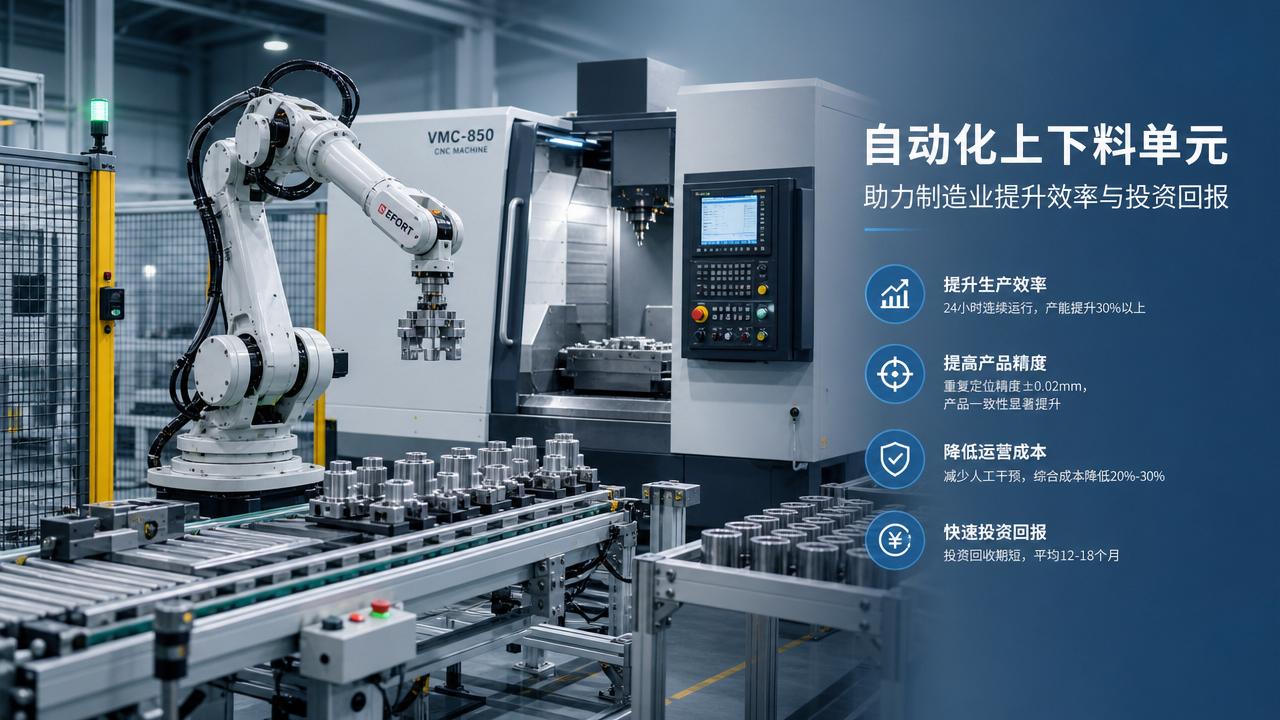
Industrial Robotics adoption is accelerating across manufacturing, but the real investment question is not how quickly robots can be installed. It is how quickly they can pay back. In CNC machining, precision manufacturing, and broader automated production, the return on Industrial Robotics can vary dramatically from one facility to another. A robot that delivers a strong business case in a high-volume machining cell may underperform in a mixed-model workshop with unstable part flow, frequent changeovers, or poor upstream data. That is why a structured evaluation matters before approving capital spending.
For companies operating CNC lathes, machining centers, multi-axis systems, and connected production lines, Industrial Robotics can improve machine utilization, reduce repetitive labor dependency, stabilize part quality, and support smarter factory operations. Yet integration cost, tooling changes, floor layout, operator retraining, and maintenance readiness all influence payback. A practical checklist helps decision-making stay grounded in real production conditions rather than automation hype.
Why Industrial Robotics adoption needs a structured payback review
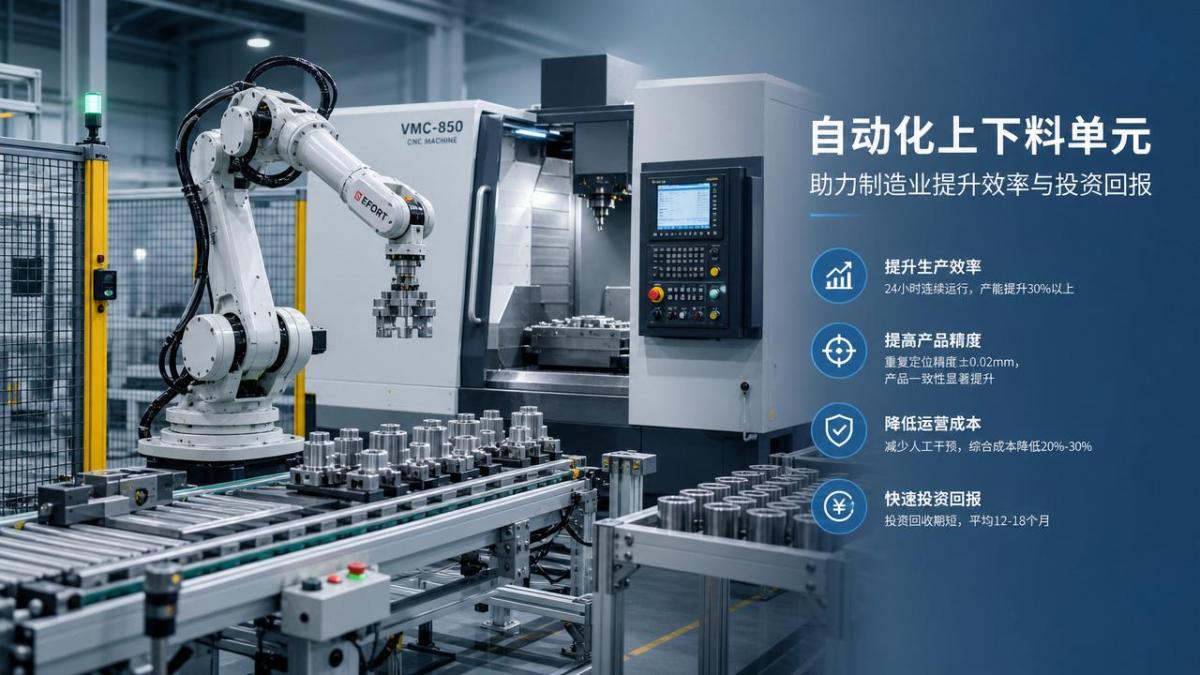
Industrial Robotics is no longer limited to automotive assembly or very large factories. It now appears in CNC machine tending, automated loading and unloading, inspection transfer, palletizing, deburring, welding, and flexible production cells across many industries. However, rising adoption does not automatically mean uniform returns. Precision manufacturing environments differ widely in product mix, spindle hours, scrap sensitivity, labor cost pressure, and scheduling discipline.
A checklist-based review reduces the risk of overestimating labor savings while underestimating integration complexity. It also helps compare Industrial Robotics projects on a like-for-like basis. Instead of focusing only on robot price, companies can assess the full value stream: machine uptime, throughput gain, quality consistency, safety improvements, night-shift capacity, and digital traceability. In many CNC applications, the best robotics decision comes from matching the automation level to actual bottlenecks rather than automating the most visible task.
Core checks before investing in Industrial Robotics
The following points provide a practical framework for evaluating whether Industrial Robotics will produce a strong and realistic payback in machining and precision production.
- Confirm whether the targeted process is a true bottleneck, because automating a non-constraint step may add cost without increasing total output or improving delivery performance.
- Measure current machine utilization by shift, including idle time, waiting time, and manual loading delays, to estimate the real capacity gain from Industrial Robotics.
- Review part variety, changeover frequency, and fixture complexity, since high-mix environments often require more flexible grippers, programming time, and operator support.
- Calculate full integration cost, not just robot hardware, including guarding, vision, conveyors, end-of-arm tooling, PLC work, software, and commissioning.
- Check whether upstream and downstream processes can absorb higher output, because Industrial Robotics may shift congestion to inspection, washing, assembly, or packaging.
- Evaluate labor impact carefully by separating direct headcount reduction from labor reallocation, overtime reduction, absenteeism risk, and night-shift staffing relief.
- Assess part quality drivers, especially loading consistency, orientation accuracy, and handling damage, to determine whether robotics can reduce scrap or rework.
- Verify compatibility with existing CNC machine tools, controllers, interfaces, and floor space to avoid expensive retrofits or disruptive layout changes.
- Estimate maintenance readiness, spare parts availability, and in-house troubleshooting capability, since weak support can extend downtime and delay payback.
- Include ramp-up time in the financial model, because Industrial Robotics usually reaches full performance after debugging, operator learning, and process adjustment.
- Define performance metrics before launch, such as OEE, spindle uptime, parts per hour, scrap rate, and payback period, so post-installation results remain measurable.
- Test whether the automation cell can support future digital integration, including production monitoring, traceability, and smart factory data exchange.
How payback varies across common Industrial Robotics applications
CNC machine tending
Machine tending is one of the most common Industrial Robotics applications in the CNC sector because loading and unloading are repetitive, time-sensitive, and easy to standardize when part families are stable. Payback is usually stronger where cycle times are consistent, machine stoppages are mostly manual, and unattended operation can extend spindle hours into breaks or night shifts.
The key checks are gripper flexibility, raw material presentation, fixture repeatability, and machine interface stability. If each part change requires lengthy robot adjustment, payback weakens quickly. In contrast, high-volume shaft, disc, and structural part production often sees faster returns because Industrial Robotics directly improves machine utilization.
Deburring, polishing, and secondary finishing
Industrial Robotics can create value in finishing operations where manual work is labor intensive, ergonomically difficult, or inconsistent. The financial return often depends less on labor elimination alone and more on repeatable quality, reduced operator fatigue, and more predictable cycle times.
Important review points include force control, tool wear management, dust handling, and consistency targets. If the finishing standard is highly subjective or product geometry changes often, implementation becomes more complex. A pilot cell is often the best way to validate assumptions before scaling.
Inspection handling and part transfer
In precision manufacturing, Industrial Robotics is increasingly used to move parts between machining, washing, gauging, marking, and packaging stations. The payback case here often comes from lower handling damage, better process traceability, and smoother line balancing rather than dramatic headcount reduction.
The critical checks are part orientation accuracy, barcode or data integration, measurement system timing, and takt alignment. If metrology remains the actual bottleneck, adding robotics to transfer alone may have limited impact on throughput.
Flexible production cells for mixed manufacturing
Mixed-model factories are often attracted to Industrial Robotics because flexibility is strategically valuable. Yet this is also where payback varies the most. A flexible cell may support many SKUs, but extra programming, vision setup, tooling changes, and exception handling can extend the return period.
The best evaluation method is to compare the cost of flexibility against the cost of current inefficiency. When demand volatility is high and labor availability is uncertain, Industrial Robotics may still justify investment even with a longer payback, provided the strategic value is clearly documented.
Commonly overlooked factors that distort Industrial Robotics ROI
One frequent mistake is assuming that labor savings will be immediate and complete. In reality, many installations reassign labor rather than remove it. Operators may move into cell supervision, setup, quality checks, or exception handling. This still creates value, but the financial model should reflect the real labor outcome.
Another overlooked issue is unstable process capability. If the CNC process itself has frequent tool breakage, inconsistent raw materials, or unreliable workholding, Industrial Robotics may simply automate interruption. Robots perform best when core process conditions are already under control.
Software and integration risk also deserves more attention. Communication between robot, CNC controller, sensors, and manufacturing systems can affect startup time significantly. Delays in programming, safety validation, or interface debugging often explain why projected payback slips beyond the original timeline.
A further hidden factor is utilization discipline. Industrial Robotics only generates strong returns when scheduling, material supply, preventive maintenance, and quality routines are mature enough to keep the automated cell running. Poor execution can turn a high-potential asset into an underused investment.
Practical steps to improve payback from Industrial Robotics
- Start with a clearly bounded use case, such as one CNC machine family or one repetitive handling task, instead of trying to automate an entire line at once.
- Build the business case using current production data, including actual downtime reasons, labor patterns, scrap cost, and part mix variability.
- Request a process simulation or pilot test where possible, especially for high-mix parts, fragile components, or applications involving vision and gauging.
- Standardize fixtures, infeed presentation, and machine interfaces before deployment, because process simplification often shortens robotics commissioning time.
- Plan operator and maintenance training early so the organization can support Industrial Robotics without relying entirely on external integrators.
- Review the project in phases after startup, comparing expected and actual cycle time, uptime, quality performance, and intervention frequency.
Frequently asked questions about Industrial Robotics payback
How fast should Industrial Robotics pay back in manufacturing?
There is no single benchmark. Some high-volume CNC tending cells may return in less than two years, while flexible automation projects can take longer. The right answer depends on output gain, labor conditions, quality impact, and strategic resilience.
Is Industrial Robotics only worthwhile for large-scale production?
No. Smaller or medium-volume operations can also benefit, especially when labor is hard to secure, quality consistency matters, or machine uptime is constrained by manual attendance. The key is selecting the right process and integration level.
What is the biggest cause of weak ROI in Industrial Robotics projects?
A common cause is automating around a poorly understood process. If bottlenecks, product variation, and support requirements are not accurately mapped, the project may deliver less value than expected even when the robot itself performs well.
Conclusion and next actions
Industrial Robotics adoption is rising because the long-term direction of manufacturing is clear: higher automation, stronger digital integration, and more resilient production systems. But rising adoption should not create pressure for rushed investment. In CNC machining, precision production, and broader industrial operations, payback still varies because production realities vary.
The most reliable way to evaluate Industrial Robotics is to use a disciplined checklist that connects equipment choices with actual throughput constraints, quality needs, labor structure, and integration readiness. Start with one high-value process, validate assumptions using plant data, include full implementation cost, and define measurable success metrics before launch. That approach turns Industrial Robotics from a promising technology purchase into a practical manufacturing investment with a clearer path to return.
PREVIOUS ARTICLE
NEXT ARTICLE
Recommended for You
![]() Five Ministries Launch Joint Enforcement on EV Battery RecyclingManufacturing Policy Research Center
Five Ministries Launch Joint Enforcement on EV Battery RecyclingManufacturing Policy Research Center![]() Top 10 Future Industries Roadmap 2026 ReleasedManufacturing Market Research Center
Top 10 Future Industries Roadmap 2026 ReleasedManufacturing Market Research Center![]() Global Methanol-Electric Ecosystem Alliance LaunchedManufacturing Market Research Center
Global Methanol-Electric Ecosystem Alliance LaunchedManufacturing Market Research Center![]() ISO 23218-3:2026 Enters Force: CNC Digital Twin Interoperability Standard Goes GlobalCNC Machining Technology Center
ISO 23218-3:2026 Enters Force: CNC Digital Twin Interoperability Standard Goes GlobalCNC Machining Technology Center![]() ANVISA New Rule: Portuguese Biocompatibility Labels for Medical CNC EquipmentManufacturing Policy Research Center
ANVISA New Rule: Portuguese Biocompatibility Labels for Medical CNC EquipmentManufacturing Policy Research Center![]() KATS Updates KC Certification: CNC Cybersecurity Modules Must Comply with IEC 62443-4-2Manufacturing Policy Research Center
KATS Updates KC Certification: CNC Cybersecurity Modules Must Comply with IEC 62443-4-2Manufacturing Policy Research Center


Aris Katos
Future of Carbide Coatings
15+ years in precision manufacturing systems. Specialized in high-speed milling and aerospace grade alloy processing.
▶
Global Methanol-Electric Ecosystem Alliance LaunchedManufacturing Market Research Center▶
Industrial Robotics adoption is rising but payback still variesManufacturing Market Research Center▶
Global Manufacturing shifts that are reshaping machine demandManufacturing Market Research Center▶
Global Manufacturing shifts that are changing machine demandManufacturing Market Research Center▶
Global Manufacturing shifts that are changing machine demandManufacturing Market Research Center
Mastering 5-Axis Workholding Strategies
Join our technical panel on Nov 15th to learn about reducing vibrations in thin-wall components.

Providing you with integrated sanding solutions
Before-sales and after-sales services
Comprehensive technical support