• Global CNC market projected to reach $128B by 2028 • New EU trade regulations for precision tooling components • Aerospace deman
NYSE: CNC +1.2%LME: STEEL -0.4%

What is changing in the Manufacturing Industry in 2026?
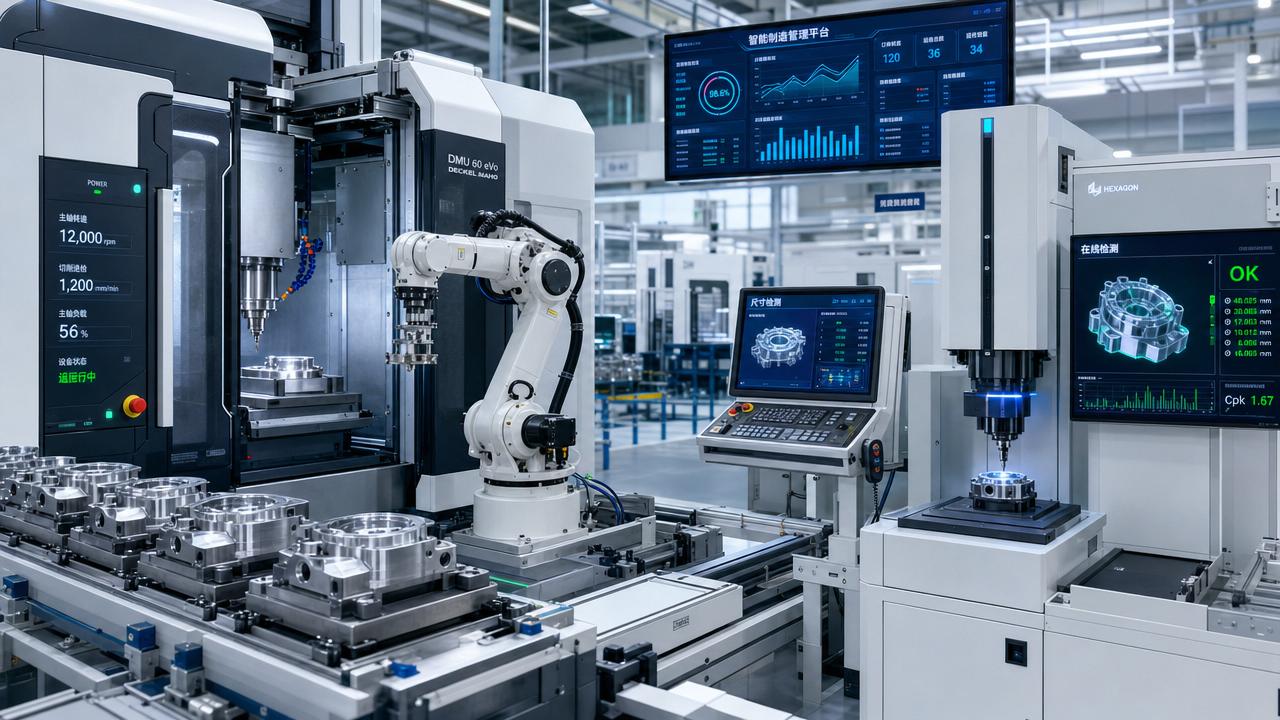
The Manufacturing Industry is entering 2026 with faster digital transformation, rising automation, and stronger demand for precision, flexibility, and resilience.
From CNC machine tools and smart factories to robotics and supply chain shifts, the Manufacturing Industry is adjusting to new technologies and tighter operating conditions.
This matters across automotive, aerospace, electronics, energy equipment, and precision engineering.
The key question is not whether change is coming.
It is how fast businesses can adapt their equipment, processes, skills, and sourcing strategies without losing competitiveness.
What is changing in the Manufacturing Industry in 2026?
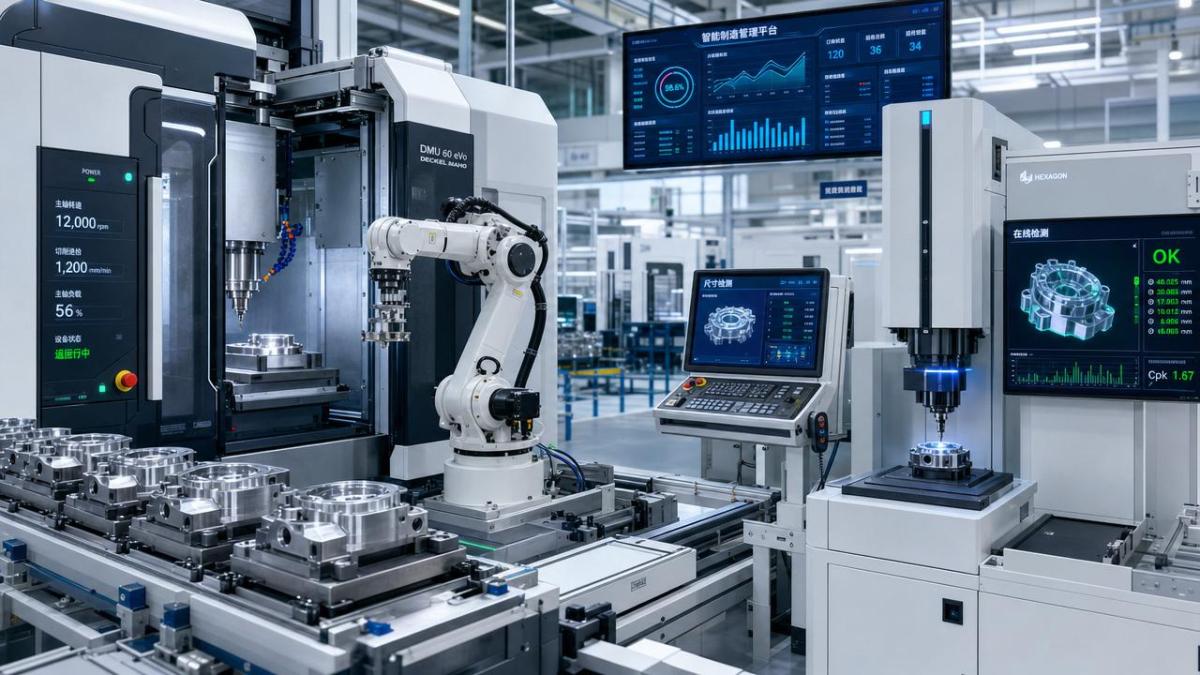
The biggest shift in the Manufacturing Industry is convergence.
Machines, software, tooling, inspection systems, and supply data are becoming more connected than before.
In 2026, production is moving away from isolated machines and toward integrated systems that support real-time decisions.
For CNC machining, this means tighter links between machine tools, CAD/CAM platforms, tool management, sensors, and quality control.
Factories are also investing in flexibility.
Demand is less predictable, product cycles are shorter, and customized parts are increasing.
As a result, machining centers, multi-axis systems, robotic loading, and automated cells are being deployed to improve changeover speed.
Another major change is visibility.
The Manufacturing Industry now expects better tracking of machine uptime, scrap rates, tool wear, energy use, and delivery risks.
That visibility supports better planning and fewer production surprises.
Why are automation and CNC technologies becoming more important?
Automation is no longer only about reducing labor steps.
In the Manufacturing Industry, automation now supports consistency, traceability, and higher throughput under tighter tolerances.
CNC lathes, machining centers, and multi-axis machine tools are central to this shift.
They can produce complex shafts, discs, housings, and structural parts with strong repeatability.
When combined with industrial robots, pallet systems, and automated measurement, the result is faster and more stable output.
The Manufacturing Industry is also facing pressure from rising quality expectations.
Sectors such as aerospace and electronics require precision that manual processes often cannot maintain at scale.
Advanced tooling, fixtures, and digital process control help solve that problem.
In practical terms, automation becomes more valuable when production includes:
- High-mix, medium-volume parts
- Tight geometric tolerances
- Frequent repeat orders
- Demand for overnight or lights-out machining
- Strict inspection and traceability requirements
How will smart factories reshape the Manufacturing Industry?
A smart factory is not simply a workshop with more screens.
In the Manufacturing Industry, it means data-driven production where machines, operators, and planning systems share useful information.
By 2026, more factories are using connected platforms to monitor spindle load, vibration, tool life, queue status, and maintenance intervals.
This improves scheduling and helps prevent unplanned downtime.
Smart factories also support energy control.
Power-intensive equipment can be tracked by process, machine, or shift.
That creates opportunities to lower waste without sacrificing output.
The Manufacturing Industry is increasingly interested in these capabilities:
- Predictive maintenance for CNC and robot cells
- Digital twins for process validation
- In-line inspection with automatic feedback
- MES and ERP integration for production planning
- Remote diagnostics for service and support
The benefit is not only efficiency.
It is faster response when orders, designs, or supply conditions change.
Which risks and misconceptions should be watched in 2026?
One common misconception is that more automation always guarantees lower total cost.
In the Manufacturing Industry, poorly matched automation can create bottlenecks, training gaps, and expensive underuse.
Another risk is focusing on equipment while ignoring process design.
A high-end CNC machine cannot fix weak fixture design, unstable material quality, or poor programming discipline.
Cybersecurity is another growing concern.
As the Manufacturing Industry becomes more connected, machine networks and production software become more exposed to disruption.
Supply risk also remains important.
Critical components such as controllers, bearings, spindles, servos, and cutting tools may still face lead-time volatility.
Key warning signs include:
- Automation added without clear throughput targets
- Software systems that do not communicate
- Weak maintenance planning for high-value machines
- Limited operator training on new digital tools
- Single-source dependence for critical machine components
How should businesses judge where to invest first?
The best investment path in the Manufacturing Industry depends on production complexity, order stability, tolerance demands, and existing equipment maturity.
Many operations should begin with visibility before expansion.
If uptime, scrap, and tool consumption are not measured well, larger automation projects become harder to justify.
A practical sequence often looks like this:
- Stabilize core machining processes and fixtures
- Improve tool management and inspection consistency
- Connect machines for basic production data collection
- Add robotic handling or pallet automation where repeatability is strong
- Scale toward flexible cells or smart factory integration
This reduces risk and supports clearer returns.
The Manufacturing Industry in 2026 rewards disciplined upgrades more than rushed transformation.
What does the global shift mean for supply chains and competition?
The Manufacturing Industry is becoming more regionalized, but not less global.
Countries such as China, Germany, Japan, and South Korea remain influential in machine tools, automation systems, and precision components.
At the same time, buyers increasingly want supply chains that are more resilient and easier to diversify.
This encourages dual sourcing, local service support, and closer evaluation of logistics reliability.
Competition is also shifting from machine price alone to total production value.
Service response, software compatibility, spare parts access, and process know-how now carry more weight.
That change affects the entire Manufacturing Industry, especially where precision uptime is critical.
Quick FAQ table: key 2026 Manufacturing Industry decisions
The Manufacturing Industry in 2026 is changing through connected production, advanced CNC capability, stronger automation, and more strategic supply chain planning.
The most meaningful progress will come from linking precision equipment with practical data, skilled implementation, and flexible operations.
The next step is to review current machining capacity, digital readiness, and sourcing exposure, then prioritize upgrades that improve both resilience and output quality.
Recommended for You
![]() Vietnam Suspends CNC Equipment Import Licenses Amid New Tech RulesManufacturing Policy Research Center
Vietnam Suspends CNC Equipment Import Licenses Amid New Tech RulesManufacturing Policy Research Center![]() First Global CNC Machine Carbon Footprint Guide ReleasedManufacturing Policy Research Center
First Global CNC Machine Carbon Footprint Guide ReleasedManufacturing Policy Research Center![]() Japan METI Launches CNC Green Upgrade SubsidyManufacturing Market Research Center
Japan METI Launches CNC Green Upgrade SubsidyManufacturing Market Research Center![]() Brazil INMETRO Mandates IoT Modules for CNC Lathes from July 2026Manufacturing Policy Research Center
Brazil INMETRO Mandates IoT Modules for CNC Lathes from July 2026Manufacturing Policy Research Center![]() EU Launches Anti-Subsidy Investigation on Chinese Laser Cutting Heads and High-Power Fiber LasersManufacturing Policy Research Center
EU Launches Anti-Subsidy Investigation on Chinese Laser Cutting Heads and High-Power Fiber LasersManufacturing Policy Research Center![]() Red Sea Crisis Deepens: Suez Canal CNC Ship Delays Hit 11.4 DaysGlobal Machine Tool Trade Research Center
Red Sea Crisis Deepens: Suez Canal CNC Ship Delays Hit 11.4 DaysGlobal Machine Tool Trade Research Center


Aris Katos
Future of Carbide Coatings
15+ years in precision manufacturing systems. Specialized in high-speed milling and aerospace grade alloy processing.
▶
Global Manufacturing is moving faster than many firms expectManufacturing Market Research Center▶
What is changing in the Manufacturing Industry in 2026?Manufacturing Market Research Center▶
World's First 800V HVDC Compute-Power Co-Verification Platform OperationalManufacturing Market Research Center▶
What is reshaping Global Manufacturing beyond labor costs?Manufacturing Market Research Center▶
Why is the Manufacturing Industry still struggling to hire?Manufacturing Market Research Center
Mastering 5-Axis Workholding Strategies
Join our technical panel on Nov 15th to learn about reducing vibrations in thin-wall components.

Providing you with integrated sanding solutions
Before-sales and after-sales services
Comprehensive technical support