• Global CNC market projected to reach $128B by 2028 • New EU trade regulations for precision tooling components • Aerospace deman
NYSE: CNC +1.2%LME: STEEL -0.4%

Why CNC production delays often start before machining begins
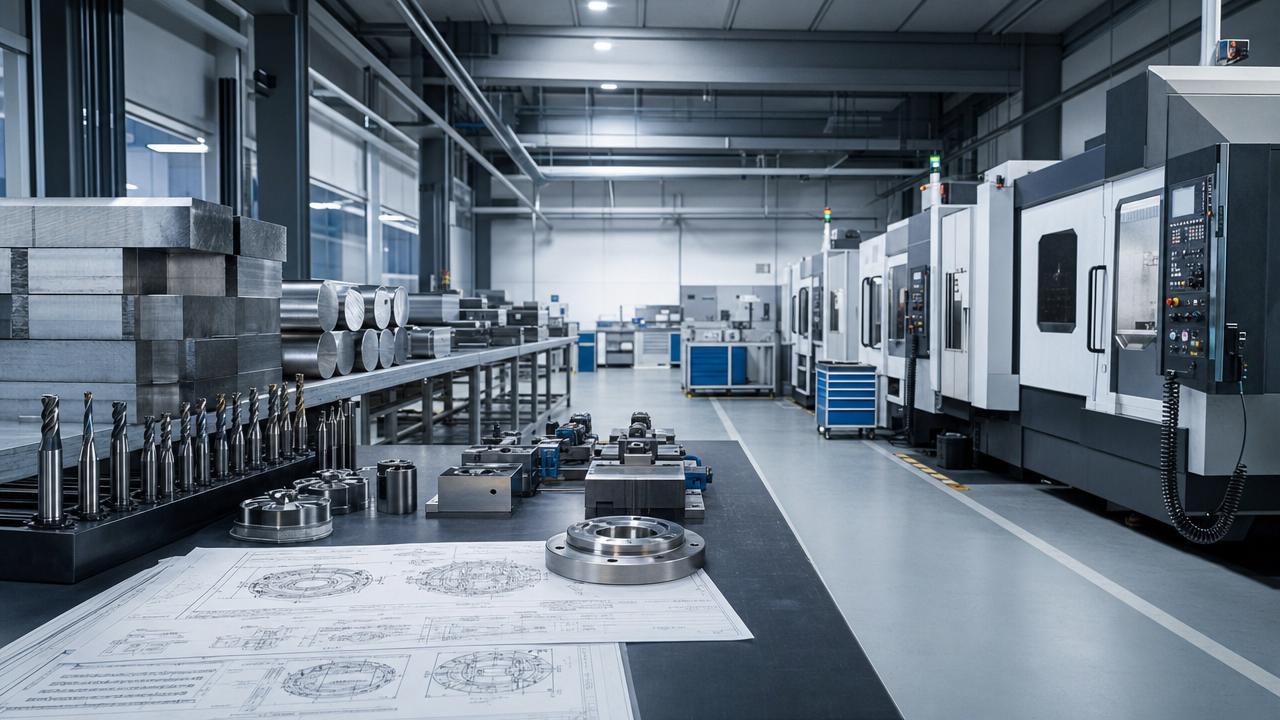
Many CNC production delays are blamed on machine availability, yet the real causes often appear much earlier—during quoting, design review, tooling selection, material planning, or communication between teams. For project managers, the practical takeaway is clear: if a job arrives at the machine with unresolved assumptions, incomplete data, or unstable planning, the schedule is already at risk. In most cases, machining does not create the delay. It simply exposes problems that were introduced upstream.
That matters because pre-machining issues are harder to see than a broken spindle or an overloaded shop floor. They sit inside RFQs, revision histories, sourcing decisions, CAM preparation, and approval loops. When they are missed, the impact reaches beyond lead time. Costs rise through rework, premium freight, expedited purchasing, setup loss, and unplanned engineering hours. Delivery confidence also drops, which is often the bigger problem for project leaders managing customer commitments and internal milestones.
For engineering and project teams, understanding where CNC production delays truly begin is not just an operational detail. It is a decision advantage. The earlier risks are identified, the easier they are to fix without disrupting schedules, margins, or customer expectations. The most reliable way to improve on-time delivery is often not adding machine capacity, but strengthening the decisions made before the first chip is cut.
Why project managers should look upstream before blaming the shop floor
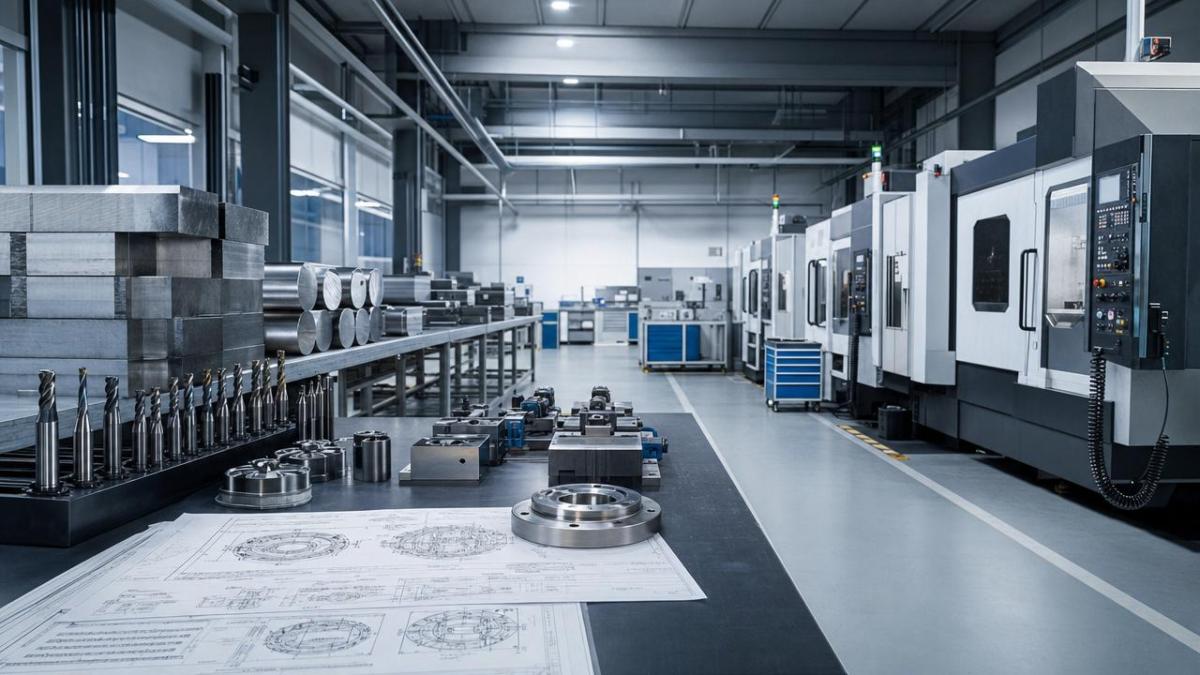
When a CNC job misses its target date, the visible symptom usually appears in production: setup takes longer than expected, the first article fails, material is missing, or an operator is waiting for tooling. Because these problems occur near the machine, teams often assume the delay started there. In reality, the machine stage is where hidden planning weaknesses become impossible to ignore.
For project managers, this distinction is critical. A machine bottleneck can sometimes be solved with scheduling changes, subcontracting, or overtime. But if the root cause is an unclear drawing, unrealistic quotation assumptions, poor fixture strategy, or late material release, then expediting the shop floor will not solve the real problem. It may even make performance worse by forcing teams to start work before the process is ready.
Upstream control is especially important in CNC production because precision manufacturing depends on coordination across multiple functions. Sales must quote correctly. Engineering must release manufacturable data. Purchasing must secure the right raw material and special tools. CAM programmers must define stable machining strategies. Quality teams must understand inspection requirements. If any of these steps are weak, production inherits uncertainty.
This is why the best-run suppliers and internal manufacturing teams treat pre-machining readiness as a measurable stage gate, not an informal handoff. They know that schedule protection starts long before the machine cycle starts.
The quoting stage is often the first hidden source of delay
Many delays begin when a job is quoted too quickly or on incomplete information. In competitive markets, suppliers are often pressured to respond fast, and buyers may focus on price and nominal lead time. But a quote built on assumptions instead of validated inputs creates downstream risk. If a supplier has not fully reviewed geometry complexity, tolerance stacks, material availability, tool access, heat treatment needs, or secondary operations, the quoted schedule may already be unrealistic.
For project managers, the warning sign is a quote that looks precise but has weak technical grounding. An attractive lead time can hide unresolved questions such as whether a part requires custom fixturing, whether thin walls will distort after roughing, or whether inspection of critical features needs specialized metrology. These details are not minor. They directly affect setup planning, process sequence, and actual delivery dates.
Another common problem is quoting from outdated files or uncontrolled revisions. If the commercial team prices Rev A while engineering is already discussing Rev C, delay becomes almost inevitable. Even when the mismatch is found early, the job may need to be requoted, reprogrammed, or even rescheduled around new tooling and material requirements.
The practical response is to treat quotation as an early risk review, not just a pricing exercise. Project leaders should ask whether the promised lead time is based on confirmed manufacturability, verified material options, realistic setup assumptions, and known inspection requirements. A slightly longer but better-validated quote is often less risky than an aggressive promise that collapses after order release.
Design review gaps create expensive surprises later
Design for manufacturability remains one of the biggest influences on CNC production performance. Even high-quality part designs can generate delays if the manufacturing implications are not reviewed early enough. Features such as deep pockets, tight internal radii, complex 5-axis access, thin ribs, difficult surface finish requirements, and extremely tight positional tolerances may be technically feasible while still creating avoidable schedule risk.
Project managers do not need to become machining specialists, but they do need to know whether manufacturability concerns have been surfaced and resolved. If the design review is shallow, production teams may discover later that standard tools cannot reach certain features, that part clamping distorts key dimensions, or that one tolerance drives multiple extra setups and inspection steps. Those discoveries rarely happen without cost or delay.
Another issue is incomplete definition in the technical package. Drawings may omit datum logic, call out conflicting tolerances, leave material condition ambiguous, or fail to clearly specify cosmetic surfaces and burr requirements. CAD data may also differ from 2D drawing intent. When suppliers must stop and ask basic clarification questions after order release, lead time starts slipping before material is even loaded.
The strongest preventive measure is a formal pre-production design review that includes engineering, manufacturing, quality, and sourcing perspectives. The goal is not just to approve the drawing, but to confirm that the part can move through CNC production with a stable method, realistic inspection plan, and no unresolved technical ambiguity.
Tooling and fixturing decisions can delay machining before setup begins
Teams often think of tooling as a shop-floor concern, but many tooling-related delays are locked in much earlier. If a part requires special cutters, custom soft jaws, dedicated fixtures, probing cycles, or modular workholding, these items must be identified and prepared before production is scheduled. When they are not, the machine may be technically available but practically unusable for the job.
This issue becomes more serious in high-mix or precision work. A new part may require a fixture design that takes several days, a custom tool that has a long procurement lead time, or trial cuts to validate process stability. If these steps are ignored in planning, the production schedule becomes optimistic by definition.
There is also a cost-versus-speed decision here that project managers should understand. Some teams try to avoid upfront tooling investment to protect margin, only to lose more time later through unstable setups, repeated adjustments, or low first-pass yield. In many cases, the right fixture or tool package shortens total project duration and reduces quality risk, even if it raises initial preparation cost.
A useful management question is simple: what has to exist before this part can run consistently? If the answer includes non-standard tools, fixture design, prove-out time, or operator-specific know-how, those elements need to be planned as part of lead time, not discovered during setup.
Material planning is a schedule risk multiplier
Raw material problems are one of the most common reasons CNC production starts late. The issue is not always outright shortage. It can also involve incorrect grade selection, mill-cert delays, oversized stock that affects machining time, undersized stock that makes the part impossible to produce, or long lead times for forged, cast, or heat-treated blanks.
For project managers, the challenge is that material risk often appears “under control” until a hidden detail surfaces. A buyer may have secured aluminum bar quickly, but not in the required temper. Stainless stock may be available locally, but not with the documentation needed for regulated industries. A near-net blank may reduce machining time, but only if the supplier can hold consistent geometry and delivery dates.
Imported material adds another layer of uncertainty through customs, logistics disruption, and supplier communication gaps. In global manufacturing networks, a one-week delay in specialty alloy procurement can cascade into missed setup windows, rescheduling of downstream operations, and pressure on final assembly timelines.
Good planning means confirming not just that material has been ordered, but that the exact form, grade, size, condition, traceability, and release timing align with the actual machining route. Material readiness should be treated as a gated requirement for production start, especially for complex or regulated parts.
Programming, process planning, and revision control quietly shape lead time
CAM programming is another area where delays begin before machining. A part may look straightforward in a planning meeting, then require far more programming effort because of multi-axis toolpaths, collision avoidance, feature sequencing, or surface finish optimization. If programmers receive incomplete models, late revisions, or unstable process assumptions, release to the machine can stall even when material and machine time are available.
Revision control is particularly dangerous because it creates rework that is not always visible in project dashboards. A model update may force toolpath regeneration, fixture changes, updated inspection plans, and new setup sheets. If this happens after material is cut or tooling is prepared, the project absorbs both time loss and wasted cost.
From a management perspective, the key question is whether process planning is frozen at the right time. If engineering changes continue after procurement and programming have started, then every downstream function becomes vulnerable. This does not mean changes should never happen. It means they should be governed with clear impact assessment on CNC production timing, cost, and quality.
Strong teams reduce this risk by enforcing document control, using structured release milestones, and making revision impact visible across engineering, purchasing, quality, and production planning. The goal is not bureaucracy. It is schedule integrity.
Communication gaps between teams are often the real root cause
In many delayed projects, no single technical problem is large enough to explain the result. The real failure is fragmented communication. Sales assumes engineering reviewed the part. Engineering assumes purchasing knows the critical material specification. Purchasing assumes production can use an equivalent stock size. Quality assumes inspection can be done with standard equipment. Each assumption seems minor, but together they create delay.
This is especially common when companies scale quickly, work across multiple sites, or manage international supplier networks. Handoffs become faster, but not always clearer. Information gets passed through email threads, spreadsheets, chat messages, and ERP comments, with no single source of truth. By the time an issue becomes visible, it is already affecting production.
For project managers, one of the highest-value actions is to improve cross-functional visibility before launch. That means defining ownership, documenting assumptions, and ensuring that open risks are explicit rather than buried in informal communication. If a supplier is waiting on a tolerance clarification, that should be visible. If a fixture is still being designed, that should be visible. If material substitution has been proposed but not approved, that should be visible.
Better communication does not mean more meetings. It means fewer hidden assumptions and clearer readiness criteria.
How project managers can assess pre-machining readiness more effectively
The most practical way to prevent delays is to establish a pre-machining readiness review. This should happen before final production scheduling and should focus on risk, not just status. A useful review includes six questions: Is the technical package complete? Is manufacturability confirmed? Are tooling and fixtures ready? Is the exact material secured? Is programming released? Are quality requirements and inspection methods defined?
If any answer is uncertain, the project should not be treated as machine-ready. This is where many schedules become misleading. Jobs are often shown as “in production” when they are actually waiting for engineering clarification or procurement completion. That creates false confidence and makes late recovery much harder.
Another helpful practice is to classify jobs by pre-machining complexity. Repeat parts with stable routings may need only a light review. New product introductions, aerospace parts, tight-tolerance components, or jobs involving multi-axis machining should trigger deeper checks and earlier cross-functional involvement. Not every job carries the same preparation risk, and project controls should reflect that reality.
Project managers should also track upstream delay indicators, not just machine utilization or output. Useful indicators include quote-to-release changes, engineering clarification cycles, tooling procurement lead time, material exception rates, and programming release adherence. These metrics show where CNC production reliability is being won or lost before machining begins.
What strong suppliers and internal teams do differently
The most reliable CNC operations do not simply react faster on the shop floor. They create better launch conditions. They challenge incomplete RFQs, escalate manufacturability concerns early, align procurement with actual process needs, and refuse to treat unresolved issues as production-ready. Their advantage is not just technical skill. It is process discipline before execution.
They also understand that schedule accuracy matters as much as schedule speed. A realistic lead time supported by verified planning is more valuable than an aggressive promise that depends on everything going perfectly. For buyers and project leaders, this is an important supplier evaluation criterion. The right manufacturing partner is often the one that asks sharper questions before accepting the job.
Internally, strong teams create feedback loops from production back to quoting, design, and sourcing. If a part repeatedly causes setup trouble, the learning is captured. If a material source creates frequent delays, the sourcing strategy is updated. If revisions often arrive too late for stable programming, release governance is tightened. In other words, they treat every delay as evidence about the upstream system.
Conclusion: the fastest way to improve CNC production is often before production starts
For project managers and engineering leaders, the central lesson is straightforward: many CNC production delays are not machining problems in the narrow sense. They are preparation problems that become visible only when the job reaches the machine. Quoting shortcuts, weak design review, late tooling decisions, material uncertainty, unstable programming inputs, and poor communication all create risk long before setup begins.
That is why schedule control in precision manufacturing should start upstream. The earlier a team validates manufacturability, secures material, confirms tooling, controls revisions, and aligns communication, the more predictable the production outcome becomes. Better pre-machining readiness improves lead time, cost control, first-pass quality, and customer confidence at the same time.
If a project keeps slipping in CNC production, the most useful question may not be “What happened at the machine?” but “What was still unresolved before the machine ever started?” In many cases, that is where the true answer—and the best opportunity for improvement—can be found.
Recommended for You
![]() Haidou-2 Submersible Components Pass 10,000-Meter TestMachine Tool Industry Editorial Team
Haidou-2 Submersible Components Pass 10,000-Meter TestMachine Tool Industry Editorial Team![]() Ningxia's Green Power + Compute Convergence Powers Cloud CNC ExportMachine Tool Industry Editorial Team
Ningxia's Green Power + Compute Convergence Powers Cloud CNC ExportMachine Tool Industry Editorial Team![]() China's First Tri-Mix Gas System for Shield Tunneling DebutsMachine Tool Industry Editorial Team
China's First Tri-Mix Gas System for Shield Tunneling DebutsMachine Tool Industry Editorial Team![]() SAMR to Advance 1,800+ Standard Revisions in 2026, CNC Machine Tool Mandatory Standards AcceleratedManufacturing Policy Research Center
SAMR to Advance 1,800+ Standard Revisions in 2026, CNC Machine Tool Mandatory Standards AcceleratedManufacturing Policy Research Center![]() ‘Low-Altitude+’ Smart Inspection Safeguards Beihai MangrovesMachine Tool Industry Editorial Team
‘Low-Altitude+’ Smart Inspection Safeguards Beihai MangrovesMachine Tool Industry Editorial Team![]() HarmonyOS Adapts to Leading CNC ControllersGlobal Machine Tool Trade Research Center
HarmonyOS Adapts to Leading CNC ControllersGlobal Machine Tool Trade Research Center


Aris Katos
Future of Carbide Coatings
15+ years in precision manufacturing systems. Specialized in high-speed milling and aerospace grade alloy processing.
▶
Guangdong-Shanghai 'Green Transport Pass' Zero-Carbon Trucking Corridor LaunchedManufacturing Market Research Center▶
Shanghai Port Launches Green Clearance Channel for High-End EquipmentManufacturing Market Research Center▶
Why CNC production delays often start before machining beginsManufacturing Market Research Center▶
Shanghai Port Launches Green Clearance for CNC EquipmentManufacturing Market Research Center▶
Shanghai Port Launches Green Clearance Channel for CNC EquipmentManufacturing Market Research Center
Mastering 5-Axis Workholding Strategies
Join our technical panel on Nov 15th to learn about reducing vibrations in thin-wall components.

Providing you with integrated sanding solutions
Before-sales and after-sales services
Comprehensive technical support