• Global CNC market projected to reach $128B by 2028 • New EU trade regulations for precision tooling components • Aerospace deman
NYSE: CNC +1.2%LME: STEEL -0.4%

Industrial Automation projects fail when integration is underestimated
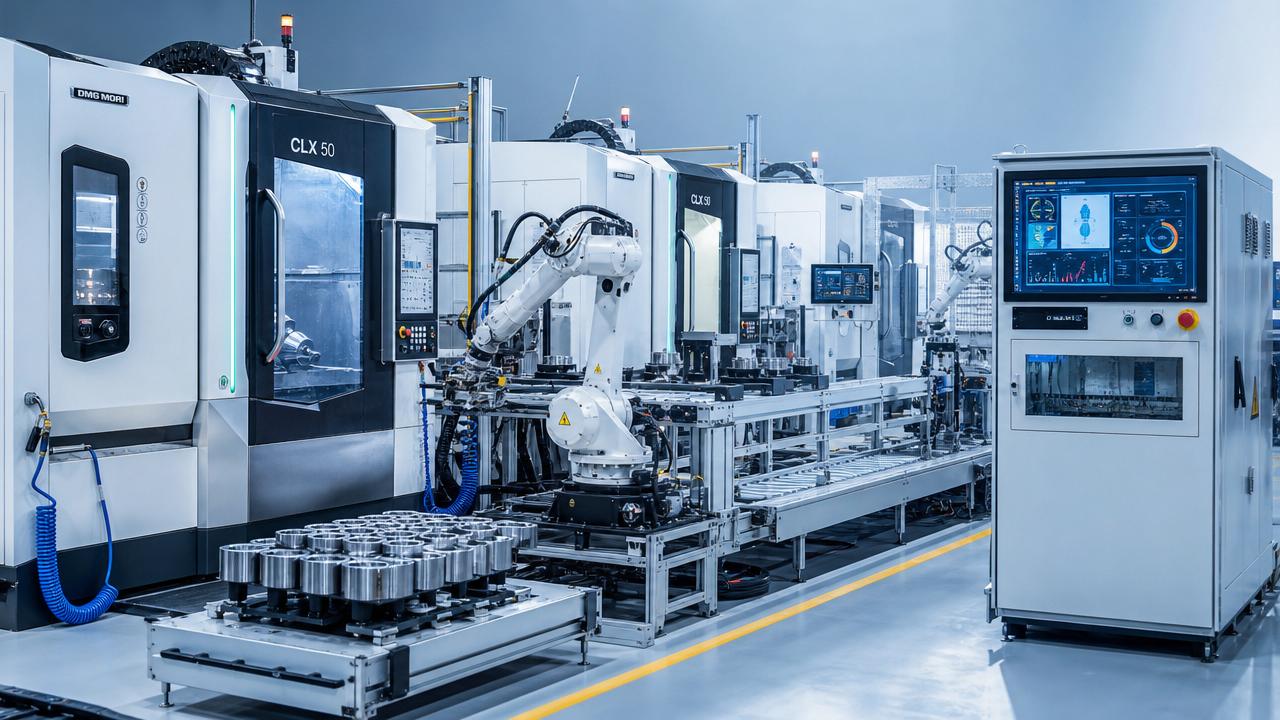
Industrial Automation projects fail when integration is underestimated because the real challenge is rarely the individual machine, robot, or software package. In modern CNC machining, precision manufacturing, and automated production lines, value is created only when controls, data flows, mechanical systems, and supplier responsibilities work together as one operating environment. When integration planning is weak, even advanced equipment can create downtime, unstable output, long commissioning cycles, and poor return on investment. In sectors such as automotive, aerospace, energy equipment, and electronics production, understanding where integration risk appears first is essential to building scalable and competitive operations.
When does Industrial Automation integration become the real project risk?
Industrial Automation risk increases sharply when a project includes multiple CNC machines, robotic loading, vision systems, MES or ERP connectivity, automated inspection, and cross-border equipment supply. In these environments, project teams often assume that if each subsystem works on its own, the full line will also perform well. That assumption is one of the main reasons Industrial Automation projects fail.
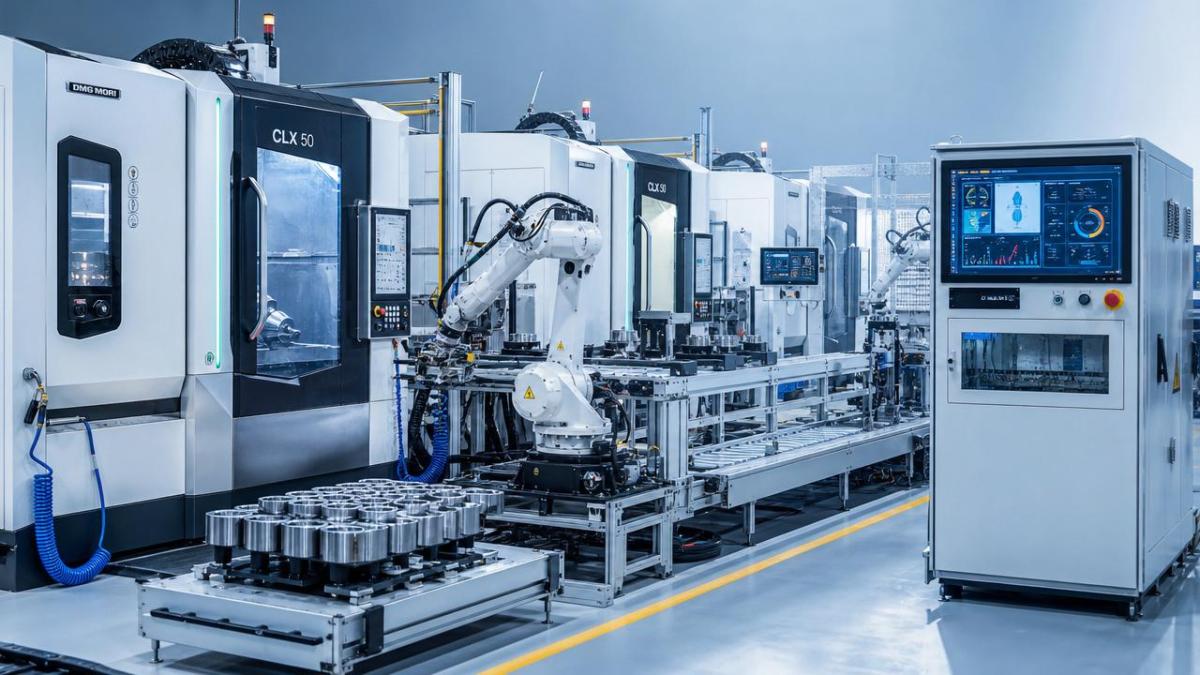
The background is simple: different production scenarios demand different integration depth. A standalone CNC lathe with a bar feeder has a very different requirement from a flexible machining cell linked to robots, conveyors, tool management software, and quality traceability systems. The more systems involved, the more important integration architecture, communication standards, safety logic, cycle balancing, and supplier coordination become. This is especially true in precision manufacturing, where tolerance, uptime, and traceability are tightly connected.
Industrial Automation should therefore be evaluated by scenario rather than by equipment count alone. A small line with many data dependencies may be harder to integrate than a large line with simple process steps. The most reliable projects define interfaces early, assign ownership clearly, and validate real production workflows before installation begins.
Which production scenarios are most vulnerable when integration is underestimated?
High-mix CNC machining cells with robotic handling
This scenario is common in precision parts manufacturing, where different workpieces, fixtures, tool offsets, and cycle times must be handled in one cell. Industrial Automation failure often starts when teams focus on robot reach, spindle speed, or fixture design, but ignore part identification, changeover logic, alarm handling, and job scheduling between machines and software. If integration between CNC controls, robot programs, and upstream order data is incomplete, the cell may run only in a narrow ideal condition.
The core judgment point is variability. If product mix changes frequently, integration must support recipe management, part traceability, and rapid recovery after interruption. Without that, the system may demonstrate well in testing but perform poorly in daily production.
Automated production lines for automotive and component manufacturing
Automotive-related lines often combine machining centers, transfer systems, torque tools, in-line gauging, and plant-wide data exchange. Here, Industrial Automation projects fail when line balancing and interface timing are not engineered as carefully as the machines themselves. One fast machine cannot compensate for a slow buffer strategy, unstable transfer logic, or delayed quality feedback.
The key question is whether the line is designed for synchronized throughput or isolated equipment efficiency. If every supplier optimizes only its own station, the integrated line may miss takt targets, create bottlenecks, and generate hidden scrap.
Aerospace and high-precision manufacturing with strict traceability
In aerospace and other regulated precision sectors, Industrial Automation requires deeper digital integration because process records, quality data, tooling status, and operator actions may all need to be linked. A machine can cut accurately, yet the project can still fail if serial number tracking, inspection data capture, or revision control are not integrated into the workflow.
The core judgment point here is compliance sensitivity. If a project depends on verifiable process history, then data integration is not an optional future phase. It is part of the operational capability from day one.
Smart factory upgrades across legacy and new equipment
Many Industrial Automation initiatives fail during digital transformation because old machine tools, new CNC systems, industrial robots, and plant software were never designed to communicate in the same way. Legacy PLCs may lack modern protocols. Existing layouts may not support sensors or material flow changes. Operators may depend on manual workarounds that are undocumented but operationally critical.
The judgment point is compatibility depth. If the upgrade must connect legacy assets with new automation, the integration plan should include protocol mapping, retrofit limits, downtime windows, cybersecurity, and fallback operating modes. Without this, Industrial Automation becomes a disconnected collection of technologies rather than a working production system.
How do integration needs differ across Industrial Automation scenarios?
Different Industrial Automation scenarios require different priorities. A practical comparison helps reveal why a standard project template often fails in advanced manufacturing.
This comparison shows that Industrial Automation success depends on matching system design to the production scenario. The integration layer is not identical across industries, even when similar machines are used.
What project actions improve Industrial Automation fit before installation starts?
A stronger Industrial Automation outcome usually starts with decisions made before equipment arrives. The following actions reduce the gap between technical promise and production reality:
- Map every interface between CNC machines, robots, conveyors, sensors, software, and quality systems.
- Define one integration owner for each signal, data object, alarm path, and safety function.
- Use real production scenarios for FAT and SAT, including changeovers, error recovery, and partial line stops.
- Check communication standards early, including PLC protocols, CNC data access, OPC UA, MES links, and cybersecurity rules.
- Model throughput with realistic buffers, maintenance events, and quality loops rather than ideal cycle times only.
- Plan operator interaction, manual overrides, spare parts, and service access as part of the automation design.
These actions matter across the broader machine tool industry because automation value increasingly depends on digital integration. In global CNC and precision manufacturing, competitive advantage is shifting from machine ownership alone toward system reliability, data visibility, and flexible production control.
Which Industrial Automation mistakes are most often ignored until failure appears?
Several common errors repeatedly weaken Industrial Automation projects. The first is treating integration as a commissioning task instead of a design discipline. By the time equipment is on site, architectural mistakes are expensive to fix. The second is assuming suppliers will naturally coordinate with each other. In reality, boundaries between mechanical scope, controls scope, software scope, and plant infrastructure must be actively managed.
Another overlooked issue is incomplete exception handling. Many systems run correctly only in normal conditions. But production lines are judged by how they respond to tool wear, missing parts, measurement drift, barcode errors, robot faults, and network interruptions. If Industrial Automation logic does not define these responses in advance, downtime grows quickly.
A final blind spot is the gap between demonstration performance and sustained output. A CNC line can pass acceptance tests and still fail commercially if traceability is unreliable, changeovers are too slow, or maintenance teams cannot diagnose cross-system faults. This is why Industrial Automation should always be reviewed as an operational system, not a collection of installed assets.
How should the next Industrial Automation step be planned?
The next step is to assess the production scenario first, then build the integration strategy around it. Start by identifying where value depends on coordination: machine-to-robot handoff, CNC-to-MES communication, in-line quality feedback, multi-supplier controls, or legacy equipment connectivity. Then rank each interface by business impact, not by technical visibility alone.
For any Industrial Automation initiative in CNC machining, automated production lines, or smart factory upgrades, create a practical review list covering interfaces, ownership, protocols, exception logic, throughput assumptions, and traceability requirements. That single discipline can prevent many of the delays and cost overruns that damage automation returns. When integration is treated as the core of the project rather than an afterthought, Industrial Automation becomes more reliable, scalable, and ready for real manufacturing growth.
PREVIOUS ARTICLE
NEXT ARTICLE
Recommended for You
![]() Five Ministries Launch Joint Enforcement on EV Battery RecyclingManufacturing Policy Research Center
Five Ministries Launch Joint Enforcement on EV Battery RecyclingManufacturing Policy Research Center![]() Top 10 Future Industries Roadmap 2026 ReleasedManufacturing Market Research Center
Top 10 Future Industries Roadmap 2026 ReleasedManufacturing Market Research Center![]() Global Methanol-Electric Ecosystem Alliance LaunchedManufacturing Market Research Center
Global Methanol-Electric Ecosystem Alliance LaunchedManufacturing Market Research Center![]() ISO 23218-3:2026 Enters Force: CNC Digital Twin Interoperability Standard Goes GlobalCNC Machining Technology Center
ISO 23218-3:2026 Enters Force: CNC Digital Twin Interoperability Standard Goes GlobalCNC Machining Technology Center![]() ANVISA New Rule: Portuguese Biocompatibility Labels for Medical CNC EquipmentManufacturing Policy Research Center
ANVISA New Rule: Portuguese Biocompatibility Labels for Medical CNC EquipmentManufacturing Policy Research Center![]() KATS Updates KC Certification: CNC Cybersecurity Modules Must Comply with IEC 62443-4-2Manufacturing Policy Research Center
KATS Updates KC Certification: CNC Cybersecurity Modules Must Comply with IEC 62443-4-2Manufacturing Policy Research Center


Aris Katos
Future of Carbide Coatings
15+ years in precision manufacturing systems. Specialized in high-speed milling and aerospace grade alloy processing.
▶
Industrial Automation projects fail when integration is underestimatedCNC Machining Technology Center▶
Industrial Automation projects fail when handoff is poorly plannedCNC Machining Technology Center▶
Industrial Robotics adoption problems hidden in early planningCNC Machining Technology Center▶
Industrial Automation projects that underperform after launchCNC Machining Technology Center▶
Industrial Robotics adoption problems hidden in early planningCNC Machining Technology Center
Mastering 5-Axis Workholding Strategies
Join our technical panel on Nov 15th to learn about reducing vibrations in thin-wall components.

Providing you with integrated sanding solutions
Before-sales and after-sales services
Comprehensive technical support