• Global CNC market projected to reach $128B by 2028 • New EU trade regulations for precision tooling components • Aerospace deman
NYSE: CNC +1.2%LME: STEEL -0.4%

Production Process bottlenecks that do not show up in basic KPIs
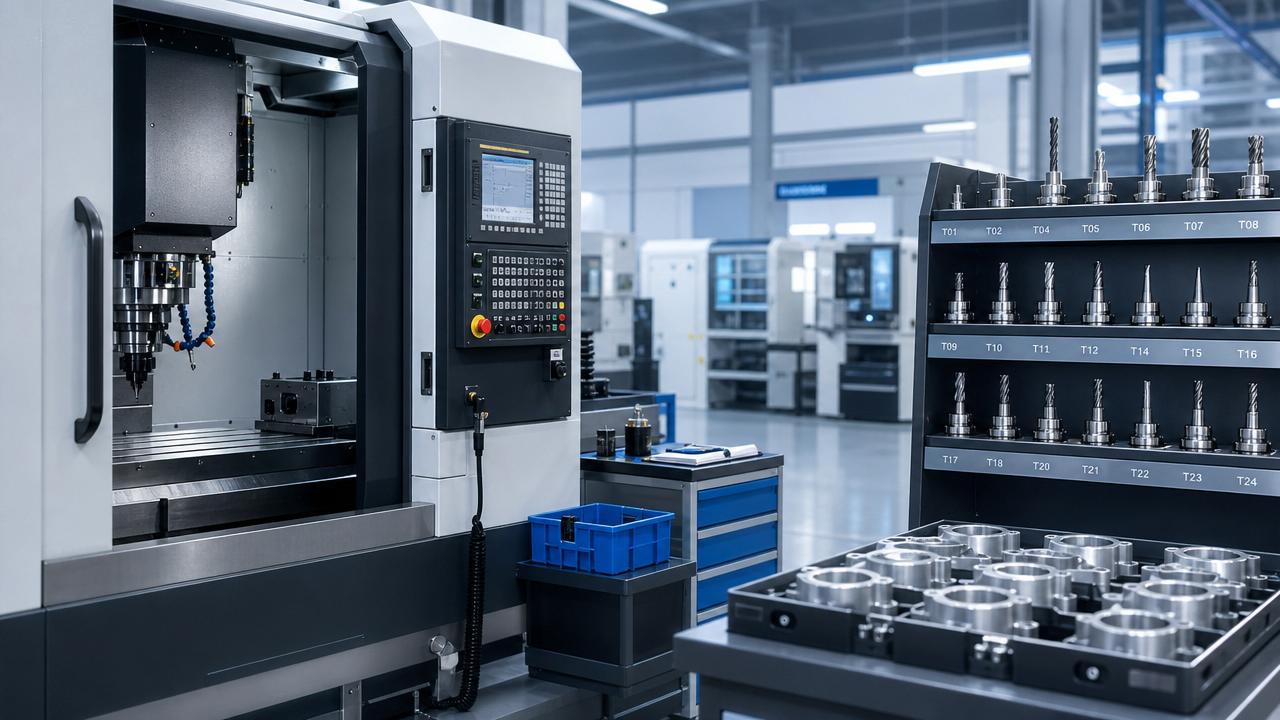
Many Production Process bottlenecks never appear in basic KPIs like output, uptime, or defect rate, yet they quietly erode capacity, delay delivery, and raise hidden costs. In CNC machining and precision manufacturing, these invisible constraints often stem from setup changes, tool management, workflow imbalance, and data gaps. Understanding where standard metrics fall short is the first step toward building a faster, smarter, and more resilient operation.
For information researchers, sourcing teams, plant managers, and manufacturing planners, this issue matters because a line can show 85% machine availability and still miss delivery windows by 2–5 days. In global CNC machining, where tolerances may reach ±0.005 mm and customer schedules run on weekly or even daily release cycles, hidden friction inside the Production Process often does more damage than visible downtime.
In machine tool operations serving automotive, aerospace, electronics, and energy equipment, the most expensive losses are not always spindle failure or scrap spikes. They can be 12-minute setup overruns repeated 20 times per shift, tool presetting delays between batches, or programming revisions that wait 6 hours for approval. These losses rarely stand out in basic dashboards, yet they directly reduce throughput and planning stability.
Why basic KPIs miss critical Production Process constraints
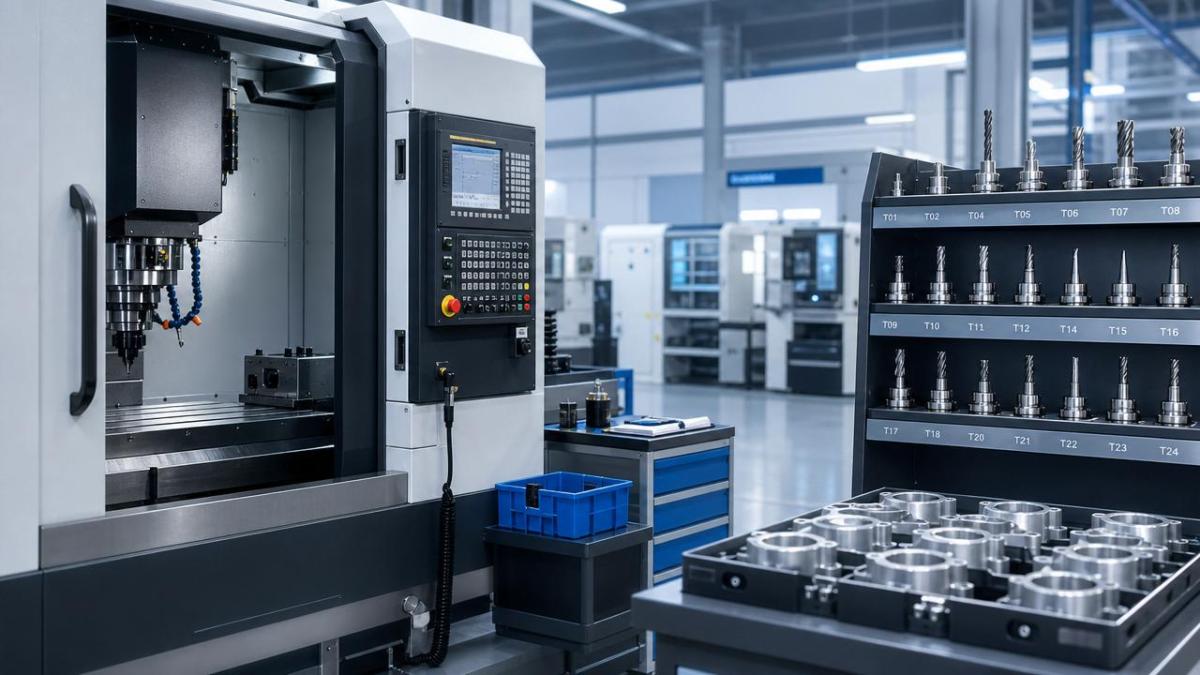
Basic KPIs are useful, but they simplify reality. Output per shift, uptime percentage, and defect rate mainly show what happened at the machine level. They do not always reveal what happened before cutting, between operations, or after a part leaves one work center and waits for the next. In precision manufacturing, these hidden intervals can consume 10%–30% of the total lead time.
The difference between visible loss and hidden loss
Visible loss includes machine alarm time, rejected parts, and unplanned stoppages. Hidden loss includes queue time, micro-delays, manual data entry, search time for fixtures, and mismatched priorities between planning and shop-floor execution. A machining center may run for 7.2 hours in an 8-hour shift, yet if parts wait 90 minutes for tool verification and 45 minutes for in-process inspection release, the Production Process is still constrained.
Common blind spots in CNC environments
- Setup transitions across small-batch orders with 5–15 part numbers per day
- Tool life uncertainty in multi-axis machining and difficult materials
- Fixture availability conflicts between urgent and planned orders
- Program revision loops between CAM, quality, and production teams
- Manual handoff delays in first-article approval or final inspection
These issues often stay invisible because they are distributed across departments. A planner sees schedule drift, a setup technician sees queue buildup, and a quality engineer sees approval backlog. No single KPI captures the full loss path unless the Production Process is measured as an end-to-end flow instead of only a machine utilization problem.
The table below highlights how conventional indicators can look acceptable while deeper flow metrics reveal operational friction in CNC and precision manufacturing plants.
The practical conclusion is clear: a healthy dashboard does not always mean a healthy Production Process. Manufacturers that rely only on 3–4 basic indicators often underestimate hidden capacity losses by one full shift per week or more across a multi-machine cell.
Invisible bottlenecks that frequently affect CNC and precision manufacturing
In modern machine tool operations, bottlenecks are no longer limited to spindle power, axis speed, or machine count. As factories move toward flexible production, smaller batch sizes, and higher part complexity, the Production Process becomes more sensitive to coordination quality. Below are the hidden constraints most often found in machining centers, CNC lathes, robotic cells, and mixed-model production lines.
Setup variation and changeover instability
A setup planned for 25 minutes may actually take 32, 40, or 55 minutes depending on fixture readiness, program validation, and operator experience. When a shop changes over 8 times per day, even a 10-minute average overrun removes 80 minutes of productive time. In high-mix CNC environments, this may reduce weekly output by 6%–12% without triggering a major downtime alert.
Typical causes
- Incomplete setup instructions or outdated tooling lists
- Shared fixtures stored in multiple locations
- First-off approval delays from quality or engineering
- Program edits made at the machine instead of upstream in CAM control
Tool management drift
Tool-related delays are often underestimated because each event looks minor. An operator may spend 4 minutes locating a replacement insert, 6 minutes confirming remaining tool life, or 8 minutes checking offset history after chatter appears. In isolation, these are not severe incidents. Across 15 machines and 2 shifts, they can accumulate into several lost production hours every day.
This is especially important in titanium, hardened steel, and precision aluminum work, where tool wear changes quickly under different cutting paths. If the Production Process has no live visibility into preset inventory, expected tool life bands, and breakage history, planning becomes reactive and machining time gets padded with unnecessary safety margins.
Workflow imbalance between upstream and downstream operations
A bottleneck may not sit at the slowest machine. It can emerge where work-in-progress builds up due to mismatched cycle times. For example, rough machining may process a part in 9 minutes, while downstream deburring, washing, and CMM inspection require 14–18 minutes. The machining cell appears efficient, but the overall Production Process slows because parts accumulate between stages and release to shipping is delayed.
Data gaps and poor event granularity
Many systems record only major statuses such as run, stop, and alarm. They do not classify micro-stoppages under 5 minutes, waiting for material, fixture searching, NC program confirmation, or pending supervisor approval. Without event granularity, teams may review monthly performance and still fail to identify why on-time delivery dropped from 96% to 89% over a 6-week period.
How to detect hidden Production Process bottlenecks before they affect delivery
Detecting hidden constraints requires measuring flow, not just activity. For information researchers evaluating manufacturing partners or internal improvement projects, the most useful approach is to combine machine data, process observation, and scheduling evidence. A reliable review can often be completed in 2–4 weeks for one value stream if the scope is clearly defined.
Track lead time by stage, not only by order
Instead of asking only whether an order shipped on time, break the route into 5–7 stages: material release, setup, machining, secondary processing, inspection, packing, and dispatch. Once stage-level timing is visible, waiting time often becomes the largest block. In many plants, actual cutting accounts for only 20%–40% of total order lead time for small and medium batches.
Measure changeover consistency
Average setup time is not enough. Track the range and frequency. A process with a 28-minute average but a 14–52 minute spread is less stable than a process with a 31-minute average and a 29–34 minute spread. The wider spread makes planning unreliable, and unreliable planning is itself a Production Process bottleneck.
Audit hidden waiting categories
A structured audit should identify at least 6 waiting categories: waiting for tools, material, fixture, program, inspection, and dispatch instruction. If any category exceeds 30 minutes per shift on a regular basis, it deserves root-cause review. Repeated short waits usually indicate systemic coordination failure rather than operator performance issues.
The following framework can help buyers, engineers, and operations teams assess where hidden Production Process delays are likely to exist and what signals to monitor first.
This type of review turns hidden delay into visible evidence. It also supports better sourcing decisions when comparing suppliers, because delivery reliability depends on process stability, not only machine brand or installed capacity.
Practical improvement priorities for a stronger Production Process
Once hidden bottlenecks are identified, improvement should focus on control points with the highest repeat frequency. In most CNC and precision manufacturing environments, three priorities deliver faster gains than broad transformation projects: standardize setup, digitize tool and routing visibility, and rebalance support processes around actual takt and batch patterns.
1. Standardize setup at the document and physical level
Use one controlled setup package that includes tooling list, fixture map, jaw dimensions, offset strategy, first-part checkpoints, and revision status. If setup information exists across paper notes, local folders, and operator memory, the Production Process becomes highly variable. Even reducing setup variation by 15% can free meaningful capacity without buying another machine.
2. Build tool visibility around consumption and replacement timing
A practical system does not need to be complex. It should at least show current stock, tool location, approved substitutes, preset status, and expected life range by material group. For example, if one insert family normally lasts 45–70 parts in alloy steel but only 20–30 parts in stainless steel, scheduling and replenishment logic should reflect that reality.
3. Balance inspection and support operations with machining output
If machining productivity rises but quality release, washing, or assembly support remains fixed, the bottleneck simply moves downstream. Review labor coverage, equipment access, and queue limits across all linked steps. Many operations improve overall lead time more by adding 1 inspection shift or revising release rules than by increasing spindle hours alone.
A simple 4-step implementation path
- Map one product family over a 2-week period
- Capture all waiting events above 3 minutes
- Rank losses by frequency and total minutes per week
- Pilot 2–3 fixes before scaling across the shop
This approach is effective because it connects data to action. Instead of launching a large digital project first, teams improve the Production Process where recurring loss is already measurable and commercially significant.
What buyers and manufacturing decision-makers should evaluate
For procurement teams, OEMs, and technical sourcing managers, invisible bottlenecks matter when assessing supplier capability. A shop with advanced 5-axis machines and low quoted unit cost may still underperform if its Production Process depends on manual scheduling, unstable setups, or overloaded inspection resources. Delivery confidence should be reviewed as carefully as machining capability.
Questions worth asking a supplier or internal plant
- How is setup time measured: average only, or average plus variation range?
- How are tooling shortages and substitute approvals controlled?
- What is the standard response time for first-article inspection release?
- How many urgent schedule changes can be absorbed per week without affecting normal orders?
- Is routing visibility updated by stage or only at order completion?
These questions reveal whether the Production Process is robust under real commercial pressure. In sectors such as aerospace components, EV systems, electronics housings, and energy equipment, the ability to absorb volatility is often more valuable than nominal capacity alone.
Red flags during capability review
Watch for repeated reliance on verbal coordination, missing process ownership between departments, and weak traceability for setup or tool history. Another warning sign is when delivery performance is explained mainly by overtime rather than by process control. Overtime can solve short-term peaks, but it rarely fixes the underlying Production Process bottleneck.
Production Process performance is shaped by far more than output, uptime, and defect rate. In CNC machining and precision manufacturing, the biggest losses often come from setup instability, fragmented tool control, stage imbalance, and missing event-level data. These factors reduce effective capacity, extend lead time, and weaken delivery predictability even when headline KPIs look acceptable.
For manufacturers, sourcing professionals, and industry researchers, the most reliable path forward is to evaluate flow at the stage level, quantify waiting categories, and prioritize fixes that remove recurring friction. A stronger Production Process delivers better schedule confidence, lower hidden cost, and more scalable performance across high-mix and high-precision production environments.
If you want to assess machining capacity, supplier resilience, or process improvement opportunities in greater depth, contact us to discuss your production scenario, request a tailored evaluation framework, or learn more about practical solutions for CNC and precision manufacturing operations.
PREVIOUS ARTICLE
NEXT ARTICLE
Recommended for You
![]() Five Ministries Launch Joint Enforcement on EV Battery RecyclingManufacturing Policy Research Center
Five Ministries Launch Joint Enforcement on EV Battery RecyclingManufacturing Policy Research Center![]() Top 10 Future Industries Roadmap 2026 ReleasedManufacturing Market Research Center
Top 10 Future Industries Roadmap 2026 ReleasedManufacturing Market Research Center![]() Global Methanol-Electric Ecosystem Alliance LaunchedManufacturing Market Research Center
Global Methanol-Electric Ecosystem Alliance LaunchedManufacturing Market Research Center![]() ISO 23218-3:2026 Enters Force: CNC Digital Twin Interoperability Standard Goes GlobalCNC Machining Technology Center
ISO 23218-3:2026 Enters Force: CNC Digital Twin Interoperability Standard Goes GlobalCNC Machining Technology Center![]() ANVISA New Rule: Portuguese Biocompatibility Labels for Medical CNC EquipmentManufacturing Policy Research Center
ANVISA New Rule: Portuguese Biocompatibility Labels for Medical CNC EquipmentManufacturing Policy Research Center![]() KATS Updates KC Certification: CNC Cybersecurity Modules Must Comply with IEC 62443-4-2Manufacturing Policy Research Center
KATS Updates KC Certification: CNC Cybersecurity Modules Must Comply with IEC 62443-4-2Manufacturing Policy Research Center


Aris Katos
Future of Carbide Coatings
15+ years in precision manufacturing systems. Specialized in high-speed milling and aerospace grade alloy processing.
▶
Production Process bottlenecks that do not show up in basic KPIsCNC Machining Technology Center▶
Production Process gaps that create hidden delivery riskCNC Machining Technology Center▶
Production Process bottlenecks that software alone cannot fixCNC Machining Technology Center▶
Metal machining costs that are easy to miss during quotingCNC Machining Technology Center▶
Production Process bottlenecks that software alone cannot fixCNC Machining Technology Center
Mastering 5-Axis Workholding Strategies
Join our technical panel on Nov 15th to learn about reducing vibrations in thin-wall components.

Providing you with integrated sanding solutions
Before-sales and after-sales services
Comprehensive technical support