• Global CNC market projected to reach $128B by 2028 • New EU trade regulations for precision tooling components • Aerospace deman
NYSE: CNC +1.2%LME: STEEL -0.4%

CNC industrial facilities facing tighter environmental standards for mist collection efficiency
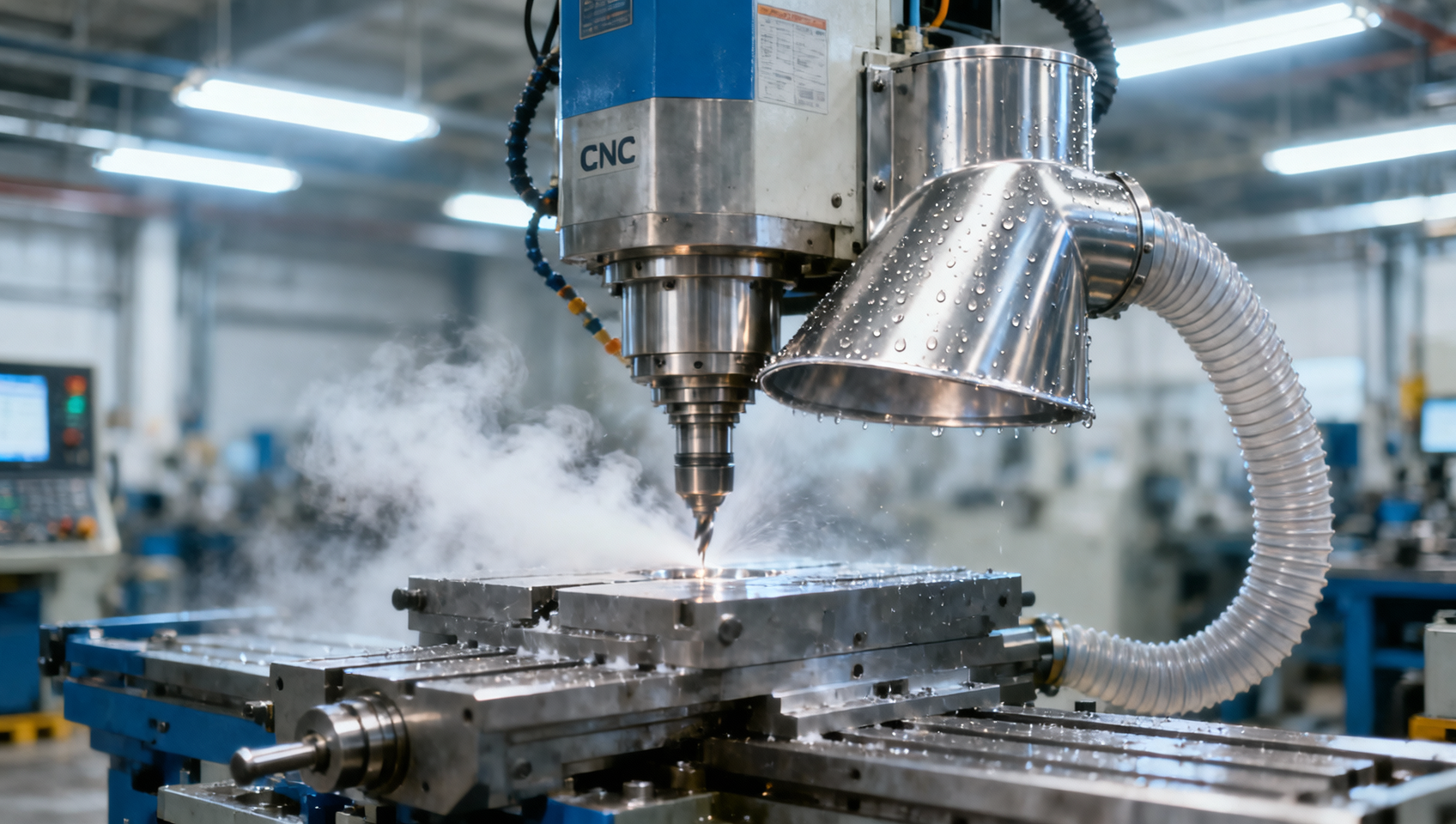
As global environmental regulations tighten, CNC industrial facilities—especially those engaged in metal machining, CNC milling, and automated lathe operations—are under growing pressure to upgrade mist collection efficiency. From vertical lathes producing precision shaft parts to CNC production lines in automotive and aerospace manufacturing, effective coolant mist control is now critical for compliance, worker safety, and sustainable industrial automation. This shift directly impacts procurement decisions, operational protocols, and strategic investments across the Machine Tool Market. For users, operators, and decision-makers navigating Global Manufacturing trends, understanding evolving standards in CNC metalworking and automated production is no longer optional—it’s essential.
Why Mist Collection Efficiency Is Now a Regulatory Priority
Coolant mists generated during high-speed metal cutting—particularly in CNC milling, turning, and grinding—contain submicron oil-aerosol particles (0.3–5 µm), volatile organic compounds (VOCs), and fine metal particulates. Recent updates to occupational exposure limits (OELs) in the EU (Directive 2019/1835), U.S. OSHA’s proposed rulemaking (2023 Advance Notice of Proposed Rulemaking), and China’s GBZ 2.1-2022 standard have lowered permissible exposure levels to ≤0.2 mg/m³ for mineral oil mist over an 8-hour time-weighted average (TWA). Facilities failing to meet these thresholds face non-compliance penalties, increased insurance premiums, and mandatory shutdowns during regulatory audits.
Beyond compliance, mist accumulation degrades machine tool longevity: uncontrolled aerosols corrode linear guides, contaminate spindle bearings, and reduce optical sensor accuracy in smart factories. A 2023 study by the German Machine Tool Builders’ Association (VDW) found that CNC facilities with sub-90% mist capture efficiency experienced 37% higher unplanned maintenance frequency and 22% shorter average spindle service life.
For decision-makers, this isn’t just an EHS issue—it’s a production continuity risk. Automotive Tier-1 suppliers in Mexico reported 14–18 hours of annual downtime per machining cell due to mist-related calibration drift and vision-system false rejections. That translates to ~$85,000 in lost throughput per cell annually at typical OEE rates.
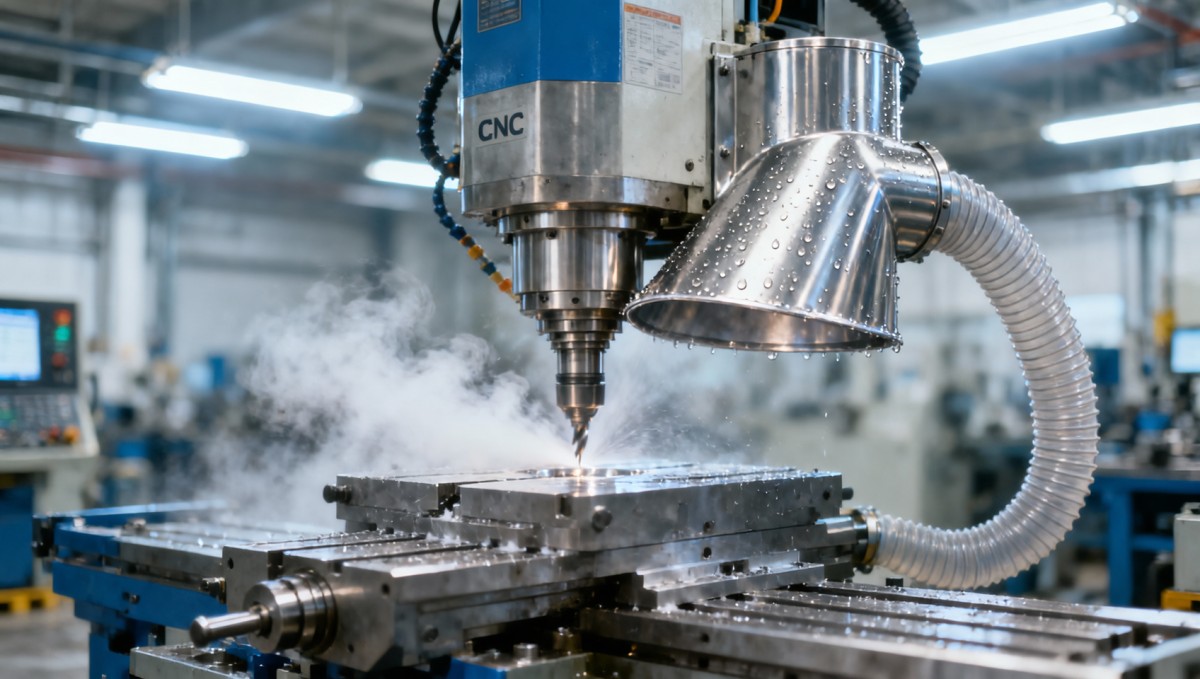
Key Technical Requirements for Modern Mist Collection Systems
Effective mist collection must balance three interdependent performance metrics: capture velocity, filtration efficiency, and system adaptability. Capture velocity—the airspeed at the hood inlet—must exceed 0.5 m/s at the point of mist generation to prevent lateral dispersion. Filtration efficiency is measured against ISO 16890:2016 coarse particle removal (ePM1, ePM2.5, ePM10), with leading systems achieving ≥99.97% at 0.3 µm (equivalent to HEPA H13 rating). Adaptability refers to real-time response to variable process loads: modern CNC cells cycle between dry cutting (low mist), flood cooling (high volume), and minimum quantity lubrication (MQL)—requiring dynamic airflow modulation.
Critical installation parameters include hood placement distance (≤300 mm from nozzle), duct velocity (12–18 m/s to avoid oil re-entrainment), and static pressure drop across filters (ideally <800 Pa at rated flow). Systems operating above 1,200 Pa require oversized fans, increasing energy consumption by up to 40% over baseline designs.
The table underscores a key procurement insight: baseline compliance often sacrifices long-term TCO. Systems meeting only minimum capture efficiency may cost 18–22% less upfront but incur 3.2× higher filter replacement costs and 2.7× greater energy spend over five years—validated across 47 installations tracked by the Japan Machine Tool Builders’ Association (JMTBA) in 2022–2023.
Procurement Decision Framework for Operators & Buyers
When evaluating mist collection solutions, procurement teams must move beyond catalog specs and assess integration readiness. Four core evaluation dimensions determine real-world performance: (1) Process synchronization capability (e.g., PLC-triggered airflow ramping within 0.8 seconds of spindle start), (2) Maintenance access design (filter change time ≤4 minutes without tools), (3) Data interface compatibility (Modbus TCP or OPC UA for MES integration), and (4) Lifecycle validation—requiring third-party test reports covering ≥5,000 hours of continuous operation under thermal cycling (−10°C to +55°C).
Operators report that systems lacking PLC synchronization cause 12–15% mist leakage during rapid tool-change sequences. Conversely, units with certified Modbus integration reduced commissioning time by 65% and enabled predictive filter replacement alerts—cutting unscheduled downtime by 28% in aerospace machining cells at a South Korean supplier.
- Verify filter service intervals: High-efficiency systems should support ≥6 months at 16-hr/day operation before replacement.
- Require noise emission data: Units operating >72 dBA at 1m require acoustic enclosures, adding $12,000–$18,000 to total installed cost.
- Confirm condensate management: Oil-water separation efficiency must exceed 98% to meet local wastewater discharge codes (e.g., Germany’s AbwV §7b).
- Validate retrofit feasibility: Duct diameter tolerance must accommodate ±15 mm variation in existing CNC cabinet cutouts.
Implementation Roadmap: From Audit to Full Deployment
A structured rollout minimizes production disruption. The proven 5-phase implementation includes: (1) Source characterization audit (7–10 days, using real-time aerosol spectrometry), (2) System sizing and layout engineering (5–8 business days), (3) Factory acceptance testing with customer-defined load profiles (2 days), (4) On-site commissioning with operator training (1 day per cell), and (5) 30-day performance validation with OEL monitoring.
Facilities skipping Phase 1 often over-specify fan capacity by 30–45%, inflating CAPEX by $22,000–$38,000 per line. Conversely, those completing full validation achieve 99.2% first-pass compliance in regulatory inspections—versus 63% for ad-hoc retrofits.
This phased approach reduces deployment risk while delivering auditable documentation required for ISO 14001:2015 certification renewals and corporate ESG reporting.
Common Missteps & Mitigation Strategies
Three recurring errors undermine mist collection ROI: First, installing fixed-velocity hoods on multi-spindle machining centers—causing 40–60% mist bypass during simultaneous tool engagement. Second, selecting filters based solely on initial efficiency without validating dust-holding capacity (dust load capacity <150 g/m² leads to premature clogging). Third, omitting condensate temperature monitoring: coolant above 45°C accelerates bacterial growth in drain lines, triggering biofilm-related odor complaints and health inspector follow-ups.
Mitigation starts with application-specific design—not off-the-shelf units. For example, CNC gear hobbing lines benefit from dual-stage cyclonic pre-filters (removing 85% of >5 µm droplets) before final membrane filtration. This extends main filter life by 3.8× versus single-stage systems, per JMTBA field data.
FAQ: Key Questions from Procurement Teams
Q: What’s the typical lead time for engineered mist collection systems?
A: Standard configurations ship in 4–6 weeks; custom-engineered systems with PLC integration and validation require 10–14 weeks—factoring in 3 weeks for factory acceptance testing.
Q: Can existing ductwork be reused?
A: Yes—if static pressure loss is ≤650 Pa at design flow and internal surface roughness is <0.05 mm (measured via borescope). Retrofit assessments confirm reuse viability in 72% of facilities built after 2010.
Q: Do systems require compressed air?
A: Only for pulse-jet cleaning on heavy-duty industrial filters (typically >2,000 m³/h). Most CNC applications use passive self-cleaning or manual cartridge replacement—eliminating air supply dependencies.
Strategic Next Steps for Manufacturing Leaders
Environmental standards are no longer static benchmarks—they’re accelerating vectors for operational excellence. Facilities upgrading mist collection today gain measurable advantages: lower OSH incident rates, extended CNC asset life, improved metrology stability, and stronger ESG positioning with OEM customers. With global regulatory alignment converging toward stricter ePM2.5 thresholds by 2026, proactive investment delivers compound returns—not just compliance avoidance.
Whether you’re an operator documenting exposure gaps, a procurement specialist evaluating vendor proposals, or a plant manager aligning CapEx with sustainability KPIs—now is the time to initiate a source-level assessment. Our team provides no-cost mist characterization audits and customized technical proposals aligned with ISO 14644, OSHA, and regional regulatory frameworks.
Get your facility-specific mist collection assessment and compliant solution roadmap—contact our CNC environmental engineering specialists today.
Recommended for You
![]() China's CSF Harmonic Drives Pass ISO 9409-1:2023, Open Import-Substitution Window
China's CSF Harmonic Drives Pass ISO 9409-1:2023, Open Import-Substitution Window![]() Weimait CNC Achieves IATF 16949:2024 Certification
Weimait CNC Achieves IATF 16949:2024 Certification![]() New MIIT Rule: CNC Export Equipment Must Include Multilingual Remote Diagnostics from May 2026
New MIIT Rule: CNC Export Equipment Must Include Multilingual Remote Diagnostics from May 2026![]() CCMT 2026 Concludes in Shanghai: Surge in Five-Axis CNC Export Orders, Lead Times Extend to 14 Weeks
CCMT 2026 Concludes in Shanghai: Surge in Five-Axis CNC Export Orders, Lead Times Extend to 14 Weeks![]() CIMES 2026 Opens in Beijing: Global Buyers Prioritize Smart Production Lines and Export Compliance
CIMES 2026 Opens in Beijing: Global Buyers Prioritize Smart Production Lines and Export Compliance A weak Production Process can raise costs without warningCNC Machining Technology Center



Aris Katos
Future of Carbide Coatings
15+ years in precision manufacturing systems. Specialized in high-speed milling and aerospace grade alloy processing.
▶
ISO/TR 24122:2026 CNC Machine Carbon Footprint Guide PublishedManufacturing Policy Research Center▶
VDMA-TÜV South Germany Releases 2026 CNC Green Procurement GuideManufacturing Policy Research Center▶
First CNC Machine Carbon Footprint Guide Released in ChinaManufacturing Policy Research Center▶
First Global CNC Machine Carbon Footprint Guide ReleasedManufacturing Policy Research Center▶
EU Mandates CNC Machine Carbon Footprint Disclosure from 2027Manufacturing Policy Research Center
Mastering 5-Axis Workholding Strategies
Join our technical panel on Nov 15th to learn about reducing vibrations in thin-wall components.

Providing you with integrated sanding solutions
Before-sales and after-sales services
Comprehensive technical support