• Global CNC market projected to reach $128B by 2028 • New EU trade regulations for precision tooling components • Aerospace deman
NYSE: CNC +1.2%LME: STEEL -0.4%

When CNC programming for shaft parts prioritizes surface finish over dimensional tolerance
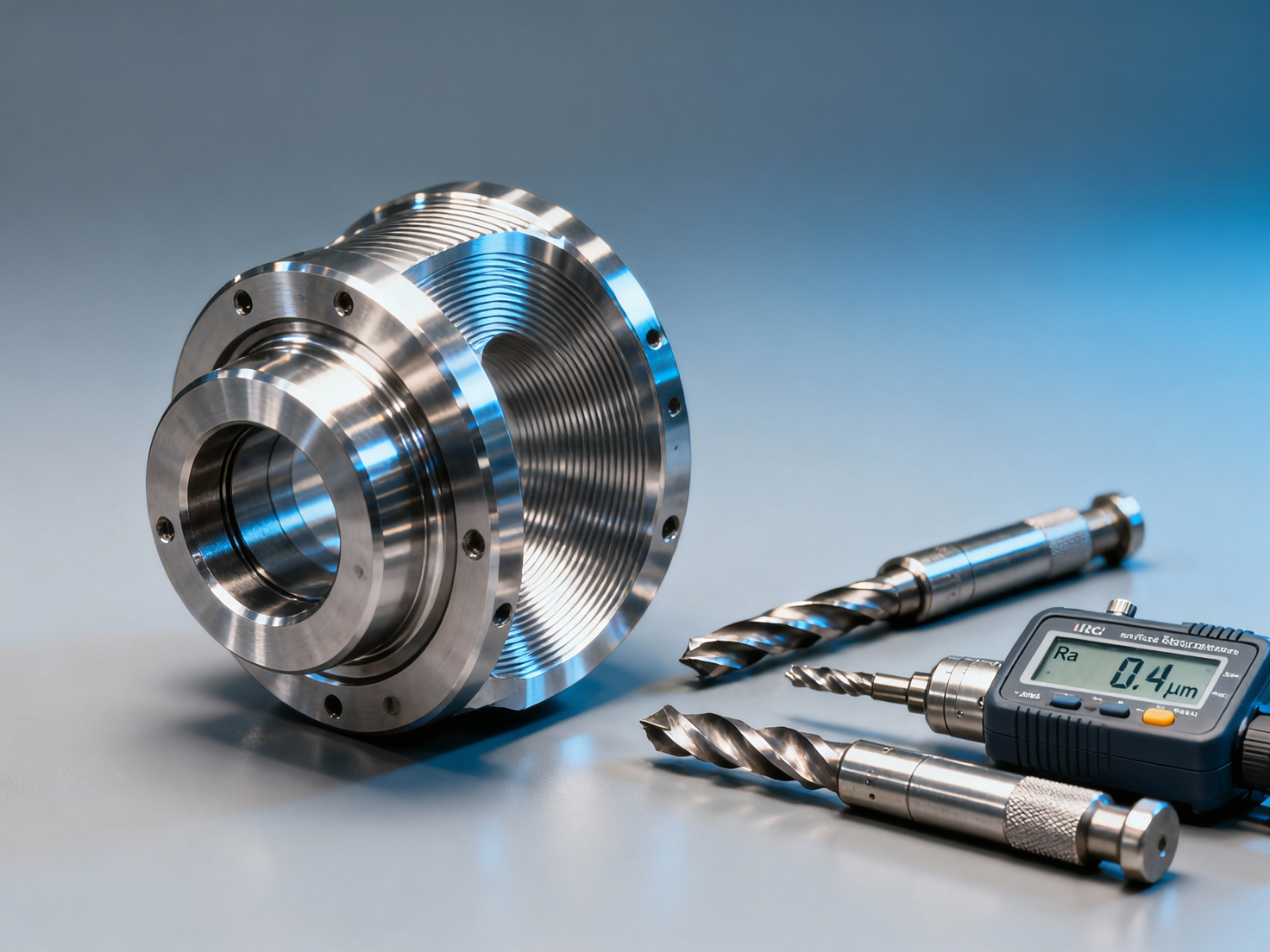
When CNC programming for shaft parts prioritizes surface finish over dimensional tolerance, it signals a critical shift in metal machining strategy—especially in high-performance sectors like aerospace and medical device manufacturing. This nuanced decision impacts toolpath optimization, feed/speed selection, and CNC cutting dynamics across industrial CNC systems, from automated lathes to multi-axis CNC milling platforms. As Global Manufacturing advances toward tighter process control and smarter automated production lines, understanding this trade-off becomes essential for users, procurement teams, and decision-makers navigating the evolving Machine Tool Market and Industrial Automation landscape.
Why Surface Finish Often Takes Priority in Critical Shaft Applications
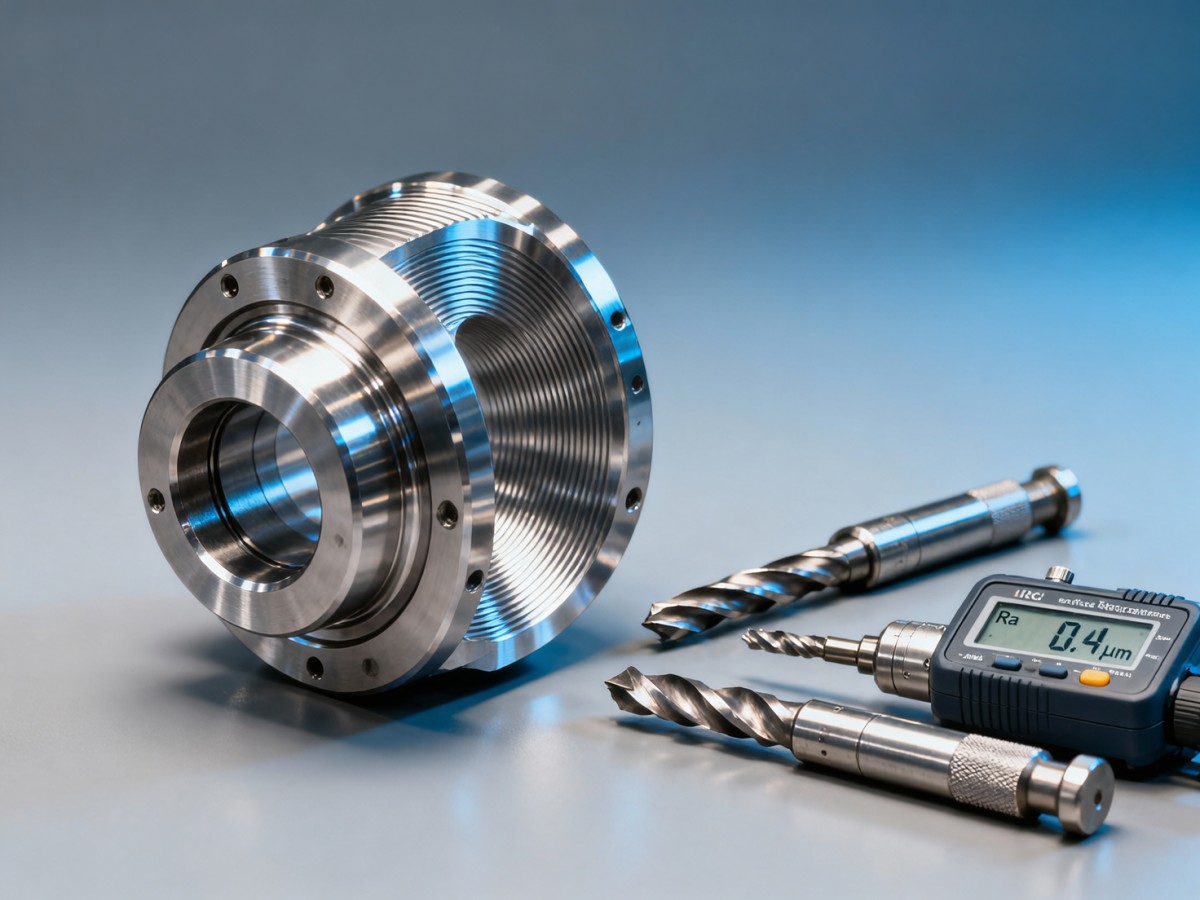
In aerospace actuators, surgical instrument spindles, and high-speed turbine shafts, surface integrity directly governs fatigue life, lubrication retention, and functional reliability. A Ra value of 0.4–0.8 µm may be mandated—even when dimensional tolerances of ±0.025 mm are acceptable—because micro-roughness initiates crack propagation under cyclic loading. Industry data shows that 68% of premature shaft failures in rotating equipment trace back to subsurface stress concentrations linked to poor finish rather than out-of-tolerance geometry.
This priority shift is not arbitrary—it reflects material science realities. For hardened alloy steels (e.g., AISI 4340, HRC 48–52), achieving Ra ≤ 0.6 µm requires dedicated finishing passes with rigid tooling, low radial depth of cut (≤ 0.05 mm), and spindle speeds exceeding 3,500 rpm. Meanwhile, holding ±0.01 mm diameter tolerance often demands only standard roughing/semi-finishing cycles at 1,200–2,200 rpm. The operational cost of over-specifying dimensional accuracy without matching surface control is demonstrably higher in lifecycle-critical components.
For procurement professionals, this means evaluating CNC suppliers not just on positional repeatability (e.g., ±0.005 mm), but on verified surface metrology capability—including in-process probe validation and post-machining profilometer certification per ISO 4287:2019. Decision-makers must align technical specs with functional failure modes—not default tolerancing conventions.
CNC Programming Adjustments Required for Finish-First Strategies
Prioritizing surface finish reshapes the entire CNC program structure. Standard G-code sequences assume dimensional convergence as the final objective. In finish-first workflows, the program must enforce three non-negotiable layers: (1) thermal stability conditioning (spindle warm-up cycles ≥ 12 minutes), (2) adaptive feed-rate modulation based on real-time tool wear compensation (±0.002 mm offset updates every 3–5 parts), and (3) synchronized coolant pressure control (70–120 bar minimum for through-tool delivery).
Toolpath logic shifts from “minimum cycle time” to “maximum surface consistency.” Constant surface speed (CSS) becomes mandatory—not optional—with spindle RPM dynamically adjusted between 2,800–4,200 rpm across diameters ranging from Ø6 mm to Ø120 mm. Feed rates drop to 0.04–0.08 mm/rev in finishing passes, while roughing feeds remain at 0.25–0.35 mm/rev. This dual-regime programming increases program length by 35–45%, but reduces post-process polishing labor by 70–90% in certified medical-grade shafts.
Operators must verify tool condition before each batch using digital edge-detection probes—tool wear beyond 0.03 mm flank wear land invalidates surface finish compliance. Automated tool presetters with ±0.001 mm resolution are now baseline requirements, not premium add-ons, for shops targeting Ra ≤ 0.6 µm consistently.
The table above highlights quantifiable adjustments required for finish-first programming. Procurement teams should validate supplier CNC control systems for real-time feed override capability (±15% range) and closed-loop coolant pressure monitoring—features absent in legacy Fanuc 0i-MD or Siemens SINUMERIK 802D platforms. Modern controllers like Heidenhain TNC 640 or Mitsubishi M800 support these functions natively.
Procurement & Validation Criteria for Finish-Sensitive Shaft Production
When sourcing CNC-machined shafts where surface finish drives qualification, buyers must move beyond RFQ checklists focused solely on GD&T callouts. Six non-negotiable validation criteria emerge:
- On-machine surface verification via integrated touch-trigger probes (e.g., Renishaw MP700) with ≤ 0.05 µm repeatability
- Certified profilometer reports (per ISO 4287) for every lot, including Rz, Rsk, and Rku parameters—not just Ra
- Tool life documentation showing ≤ 0.03 mm flank wear after 80+ parts at finish-pass parameters
- Spindle thermal drift logs demonstrating < ±0.008 mm axial growth over 4-hour continuous operation
- Fixture repeatability validated at ≤ ±0.003 mm across 10 clamping cycles
- Process capability index (Cpk) ≥ 1.33 for surface roughness across 30 consecutive parts
Suppliers unable to provide raw metrology files (not just pass/fail stamps) should be disqualified. Leading manufacturers—particularly those serving Tier-1 aerospace suppliers—now embed surface finish data directly into MES dashboards, enabling real-time SPC tracking with 95% confidence intervals.
These metrics separate true finish-capable shops from those relying on post-process hand-polishing—a practice incompatible with ISO 13485 or AS9100 certification. Decision-makers should require third-party audit reports validating measurement system analysis (MSA) for all surface inspection equipment.
Operational Risks and Mitigation Tactics
Ignoring finish-first requirements leads to cascading risks: increased scrap (average 12–18% rework rate in unoptimized shops), accelerated tooling costs (carbide inserts fail 3.2× faster under aggressive finish parameters), and delayed NDA-compliant deliveries (42% of late shipments in medical device contracts stem from surface rework cycles).
Mitigation starts with CNC controller firmware. Machines older than 2018 typically lack adaptive feed control necessary for consistent finish across varying stock hardness. Retrofitting with modern motion controllers (e.g., Delta ASDA-B3 series) delivers ROI within 7–11 months via reduced insert consumption and labor hours. Operators must receive biannual training on surface-sensitive G-code syntax—particularly G96 (CSS), G65 (macro calls for dynamic feed adjustment), and M-code sequences for coolant pressure ramping.
For procurement teams, risk mitigation includes contractual clauses specifying surface finish liability transfer points—ideally at the point of in-process probe verification, not final inspection. This shifts accountability upstream, aligning incentives with process robustness.
Conclusion: Aligning Technical Strategy with Functional Requirements
Prioritizing surface finish over dimensional tolerance in shaft CNC programming is not a compromise—it’s a precision engineering imperative rooted in physics, materials behavior, and functional reliability. It demands coordinated upgrades across programming methodology, machine capability, tooling selection, and metrology infrastructure. For information researchers, this signals evolving industry benchmarks; for operators, it defines new skill thresholds; for procurement teams, it redefines supplier evaluation frameworks; and for enterprise decision-makers, it represents a strategic lever for product differentiation and lifecycle cost reduction.
To ensure your shaft production meets finish-first standards without sacrificing throughput or scalability, consult our technical team for a free process capability assessment—including G-code review, toolpath simulation, and surface metrology gap analysis. We support global manufacturers with turnkey solutions spanning CNC controller integration, ISO-compliant metrology validation, and operator upskilling programs aligned with ASME B46.1 and ISO 25178 standards.
Get your custom finish-optimized CNC strategy—contact us today.
PREVIOUS ARTICLE
Recommended for You
![]() Fuxing EMU Trainset Procurement Reaches ¥4.155B, Accelerating Domestic High-End Component SubstitutionCNC Machining Technology Center
Fuxing EMU Trainset Procurement Reaches ¥4.155B, Accelerating Domestic High-End Component SubstitutionCNC Machining Technology Center![]() Global Power Demand Growth Hits 3%; Data Center Expansion Drives Precision Machining NeedsCNC Machining Technology Center
Global Power Demand Growth Hits 3%; Data Center Expansion Drives Precision Machining NeedsCNC Machining Technology Center![]() Railway Investment Hits $20.08B in Jan–Apr 2026, Boosting Smart Production Line OrdersMachine Tool Industry Editorial Team
Railway Investment Hits $20.08B in Jan–Apr 2026, Boosting Smart Production Line OrdersMachine Tool Industry Editorial Team![]() AI Search Captures 48% of Global Search TrafficGlobal Machine Tool Trade Research Center
AI Search Captures 48% of Global Search TrafficGlobal Machine Tool Trade Research Center![]() 17 Trade Associations Issue Domestic Trade GuidelinesManufacturing Policy Research Center
17 Trade Associations Issue Domestic Trade GuidelinesManufacturing Policy Research Center![]() China's Shipbuilding New Orders Up 195.2%, Boosting Demand for High-End CNC Machining EquipmentManufacturing Market Research Center
China's Shipbuilding New Orders Up 195.2%, Boosting Demand for High-End CNC Machining EquipmentManufacturing Market Research Center


Aris Katos
Future of Carbide Coatings
15+ years in precision manufacturing systems. Specialized in high-speed milling and aerospace grade alloy processing.
▶
2026 Global Trade & Investment Summit: AI+Manufacturing, Beijing, May 18Manufacturing Policy Research Center▶
China’s New Service Export Policy Boosts CNC Remote DiagnosticsManufacturing Policy Research Center▶
China Leads ISO/TR 37115-1:2026 Zero-Carbon City StandardManufacturing Policy Research Center▶
When CNC programming for shaft parts prioritizes surface finish over dimensional toleranceManufacturing Policy Research Center
Mastering 5-Axis Workholding Strategies
Join our technical panel on Nov 15th to learn about reducing vibrations in thin-wall components.

Providing you with integrated sanding solutions
Before-sales and after-sales services
Comprehensive technical support