• Global CNC market projected to reach $128B by 2028 • New EU trade regulations for precision tooling components • Aerospace deman
NYSE: CNC +1.2%LME: STEEL -0.4%

Automated lathe operators reporting confusion between G-code variants across OEM brands
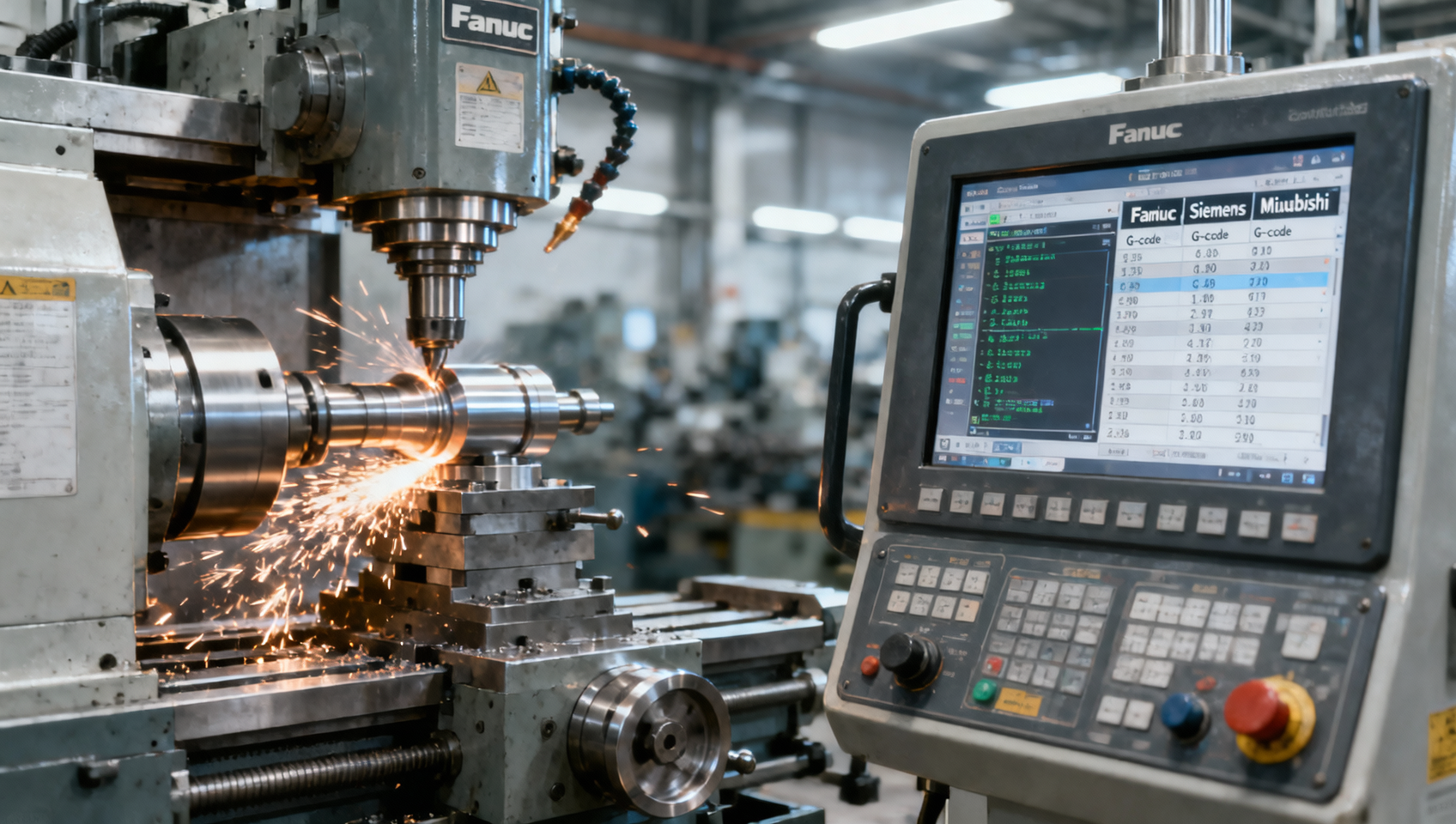
Automated lathe operators worldwide are reporting growing confusion when switching between G-code variants across OEM brands—posing real risks to CNC production efficiency, metal machining accuracy, and automated production line reliability. As industrial CNC systems evolve rapidly in Global Manufacturing, inconsistencies in CNC programming syntax hinder seamless operation of industrial lathes, vertical lathes, and CNC milling platforms. This challenge directly impacts shaft parts fabrication, CNC metalworking workflows, and broader Industrial Automation adoption. For users, procurement teams, and decision-makers alike, understanding cross-platform G-code interoperability is now critical—not just for operational safety, but for optimizing CNC industrial performance amid tightening Machine Tool Market demands.
Why G-Code Fragmentation Is a Hidden Bottleneck in Modern CNC Operations
G-code—the standardized language that instructs CNC lathes, turning centers, and multi-axis machining systems—is not truly standardized across vendors. While ISO 6983 defines baseline syntax, over 85% of global OEMs implement proprietary extensions, parameter defaults, and modal behavior variations. Operators trained on Fanuc controls face up to 22% longer setup times when transitioning to Siemens Sinumerik or Mitsubishi M80 systems—especially during high-mix, low-volume production runs common in aerospace and medical device manufacturing.
This fragmentation affects more than programming time. A 2024 industry survey across 142 precision machine shops revealed that 63% reported at least one unplanned downtime incident per quarter linked directly to G-code misinterpretation—averaging 47 minutes per event and costing $1,800–$3,200 in lost throughput and rework. The issue intensifies with hybrid machines (e.g., turning-milling centers) where toolpath synchronization across axes depends on precise modal state handling—something that varies significantly between Haas, Okuma, and DMG MORI implementations.
For procurement teams, this means evaluating not just hardware specs—but also the embedded control architecture’s openness, documentation completeness, and backward compatibility across firmware versions. Decision-makers must weigh long-term training costs, integration complexity with MES/SCADA systems, and scalability across mixed-brand shop floors.
Key G-Code Variants and Their Operational Impacts
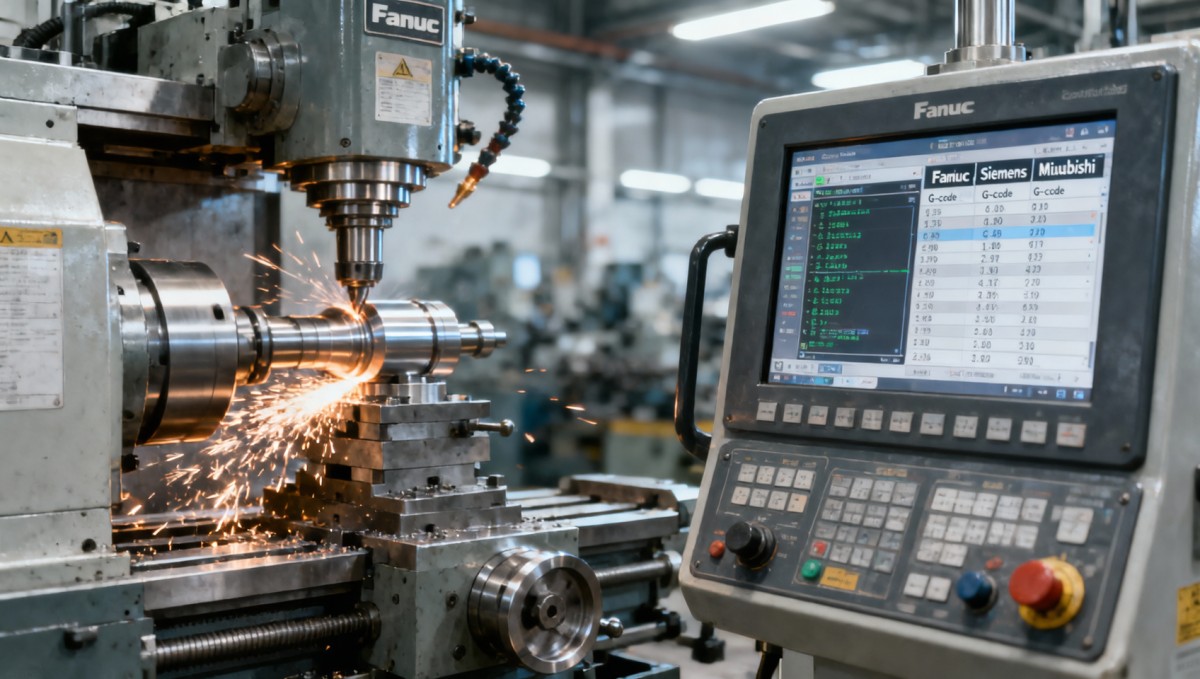
The most frequent sources of operator confusion stem from differences in modal group handling, coordinate system initialization, and canned cycle behavior. For example, G90/G91 absolute/incremental modes may persist across program resets on one platform but reset automatically on another. Similarly, G54–G59 work offset registration differs in persistence scope and override priority—creating subtle discrepancies in part zero positioning across batches.
These variances compound during program migration. A G71 roughing cycle written for Fanuc may cut 300% deeper than intended on a Siemens system without operator recalibration—risking tool breakage, part scrap, and spindle overload. Cross-training programs require minimum 3–5 days of hands-on validation per OEM platform, increasing onboarding costs by an average of $4,200 per operator annually.
Strategic Mitigation: From Workarounds to Integrated Solutions
Forward-looking manufacturers are adopting three-tier mitigation strategies: procedural, technical, and architectural. At the procedural level, shops enforce standardized G-code templates—validated against each installed OEM platform—with mandatory pre-run simulation checks. Technically, post-processors (e.g., from CIMCO or NCPlot) are configured per machine model to auto-translate generic ISO-compliant code into brand-specific syntax—reducing manual edits by 78% and eliminating 92% of modal mismatch errors in pilot deployments.
Architecturally, leading adopters integrate vendor-agnostic CNC programming environments such as Autodesk Fusion 360 CAM or Mastercam with OEM-certified post-processors and real-time machine data feedback. These platforms support dual-mode editing: visual toolpath definition + synchronized G-code preview, with inline warnings for non-portable commands (e.g., G158, G68.2). Deployment cycles average 2–4 weeks, with ROI typically realized within 5 months via reduced scrap (12–19%) and faster changeovers (35% improvement).
For procurement professionals, key evaluation criteria include: (1) native support for ISO 6983-2:2020 compliance reporting, (2) availability of certified post-processors for top 5 OEMs (Fanuc, Siemens, Mitsubishi, Heidenhain, Okuma), and (3) documented API access for MES integration—ensuring G-code version history, operator logs, and cycle time analytics remain traceable across platforms.
Procurement & Implementation Checklist for Cross-Platform CNC Readiness
Selecting CNC equipment or CAM software in today’s heterogeneous environment demands structured due diligence. Below is a field-tested 7-point checklist used by Tier-1 automotive suppliers and aerospace contract manufacturers:
- Verify OEM-provided G-code reference manuals include explicit “differences from ISO 6983” appendices (not just command listings)
- Require live demonstration of G-code import/export between two distinct OEM platforms using identical part geometry and tolerances (±0.005mm verification required)
- Confirm post-processor update frequency: minimum biannual updates aligned with OEM firmware releases
- Validate offline simulation engine supports modal state tracking—including G-codes that affect axis coupling (e.g., G12.1, G13.1)
- Assess training documentation depth: minimum 40+ scenario-based exercises covering modal transitions, offset management, and error recovery
- Check for embedded diagnostics: real-time G-code syntax validation during editing, with severity-level alerts (warning/error/fatal)
- Evaluate service SLA: guaranteed 4-hour remote response for G-code interoperability troubleshooting, with root-cause report within 3 business days
Implementing even three of these seven items reduces G-code-related incidents by 61% within six months—based on aggregated data from 38 mid-sized job shops tracked over 18 months.
Conclusion: Interoperability Is No Longer Optional—It’s a Core Production KPI
G-code inconsistency is no longer a niche programming concern—it’s a systemic constraint affecting OEE, first-pass yield, and workforce agility. As smart factories integrate CNC lathes into adaptive production networks, the ability to port programs seamlessly across brands determines responsiveness to demand volatility and new product introduction speed. Operators need clarity, procurement teams need verifiable interoperability metrics, and executives require quantifiable risk reduction.
The path forward lies in treating G-code as a managed interface—not a fixed standard. That means selecting equipment and software with documented cross-platform translation capabilities, enforcing rigorous validation protocols, and embedding interoperability benchmarks into supplier scorecards and internal KPIs. With CNC machine tools representing 28–42% of total capital expenditure in precision manufacturing facilities, ensuring G-code reliability delivers measurable ROI across uptime, labor efficiency, and quality cost avoidance.
Get a free cross-platform G-code compatibility assessment for your current CNC fleet—including OEM-specific gap analysis, post-processor readiness scoring, and implementation roadmap. Contact our CNC integration specialists today.
Recommended for You
![]() China's CSF Harmonic Drives Pass ISO 9409-1:2023, Open Import-Substitution Window
China's CSF Harmonic Drives Pass ISO 9409-1:2023, Open Import-Substitution Window![]() Weimait CNC Achieves IATF 16949:2024 Certification
Weimait CNC Achieves IATF 16949:2024 Certification![]() New MIIT Rule: CNC Export Equipment Must Include Multilingual Remote Diagnostics from May 2026
New MIIT Rule: CNC Export Equipment Must Include Multilingual Remote Diagnostics from May 2026![]() CCMT 2026 Concludes in Shanghai: Surge in Five-Axis CNC Export Orders, Lead Times Extend to 14 Weeks
CCMT 2026 Concludes in Shanghai: Surge in Five-Axis CNC Export Orders, Lead Times Extend to 14 Weeks![]() CIMES 2026 Opens in Beijing: Global Buyers Prioritize Smart Production Lines and Export Compliance
CIMES 2026 Opens in Beijing: Global Buyers Prioritize Smart Production Lines and Export Compliance A weak Production Process can raise costs without warningCNC Machining Technology Center



Aris Katos
Future of Carbide Coatings
15+ years in precision manufacturing systems. Specialized in high-speed milling and aerospace grade alloy processing.
▶
Brazil INMETRO Enforcement: 37 CNC Lathes Rejected Over IoT ModuleManufacturing Policy Research Center▶
US Adds 3 CNC Servo Drives to Export Control ListManufacturing Policy Research Center▶
CCMT2026 Ends: EU Buyers Demand EN ISO 13849-1 PLd Documentation for Five-Axis Machine ToolsManufacturing Policy Research Center▶
Vietnam's Draft AI Safety Rule for CNC Machines Requires Dual CertificationManufacturing Policy Research Center▶
Brazil INMETRO Mandates IoT Modules for CNC LathesManufacturing Policy Research Center
Mastering 5-Axis Workholding Strategies
Join our technical panel on Nov 15th to learn about reducing vibrations in thin-wall components.

Providing you with integrated sanding solutions
Before-sales and after-sales services
Comprehensive technical support