• Global CNC market projected to reach $128B by 2028 • New EU trade regulations for precision tooling components • Aerospace deman
NYSE: CNC +1.2%LME: STEEL -0.4%

KATS Adds AI Voice Interaction Safety Testing to KC Certification for CNC Equipment

On May 10, 2026, the Korean Agency for Technology and Standards (KATS) issued Technical Notice KATS-TN-2026-017, mandating new safety testing requirements for CNC equipment with AI-powered voice control functions—including HMI voice commands and voice-activated emergency stop features. The update affects manufacturers and exporters targeting the South Korean market, particularly those in industrial automation, precision machining, and smart factory solution sectors, as it introduces a concrete compliance threshold with direct implications for product certification timelines and market access.
Event Overview
On May 10, 2026, KATS published Technical Notice KATS-TN-2026-017, requiring all CNC equipment incorporating AI voice interaction capabilities to undergo safety evaluation per Annex G of IEC 62368-1:2023. Affected products must demonstrate a Korean-language voice false-trigger rate of less than 0.3%, verified by an accredited laboratory test report. The requirement takes effect on July 1, 2026, and applies to all new KC certification applications submitted on or after that date.
Industries Affected by This Update
Manufacturers of CNC machines and integrated control systems
These companies are directly responsible for product design, firmware integration, and certification submission. The addition of Annex G testing introduces new validation steps—particularly around speech recognition robustness under real-world acoustic conditions—and may necessitate iterative hardware-software co-testing before final KC application.
Exporters and trade compliance teams serving the Korean market
For firms exporting CNC equipment to South Korea, this notice changes the pre-market verification checklist. Products previously certified under earlier editions of IEC 62368-1 or KC standards may no longer qualify without re-evaluation—especially if voice functionality was added post-certification or updated via firmware.
Suppliers of embedded voice modules and HMI components
Voice interface vendors supplying OEMs with off-the-shelf ASR (automatic speech recognition) modules or voice-enabled HMIs must now ensure their components support Korean-language command sets and meet the <0.3% false-trigger performance benchmark—not only in lab conditions but as integrated into the full CNC system architecture.
Third-party testing laboratories and KC certification bodies
Labs authorized for KC certification will need to validate their capability to perform Annex G assessments—including acoustic environment simulation, Korean phoneme coverage, and statistical false-trigger measurement protocols. Capacity readiness and reporting format alignment with KATS expectations may affect turnaround times for applicants.
What Relevant Enterprises or Practitioners Should Focus On and How to Respond
Monitor official KATS guidance on Annex G implementation details
KATS-TN-2026-017 references IEC 62368-1:2023 Annex G but does not specify test setup parameters (e.g., background noise profiles, speaker distance, vocabulary scope). Analysis shows that clarification on these points is likely to be issued through supplementary notices or KC certification body bulletins in Q2 2026—making proactive monitoring essential.
Prioritize verification for models with newly added or upgraded voice features
Observably, legacy CNC equipment without voice control remains unaffected. However, any model where voice functionality was introduced—or significantly enhanced—after initial KC certification will require reassessment. Companies should audit their product portfolios to identify candidates needing Annex G testing ahead of the July 1, 2026 deadline.
Distinguish between regulatory signal and operational readiness
This notice constitutes a formal regulatory amendment—not a draft proposal. From an industry perspective, it signals that KATS has moved from evaluating AI voice features as optional enhancements to treating them as integral safety-critical subsystems. Businesses should treat this as binding technical policy, not a preliminary recommendation.
Prepare documentation and lab coordination early
Given the specialized nature of Annex G testing, lead times for laboratory booking and report generation may extend beyond standard KC timelines. Current more appropriate action is to initiate dialogue with accredited labs now—even before finalizing firmware versions—to confirm Korean-language test capability and align on reporting formats acceptable to KATS-recognized certification bodies.
Editorial Perspective / Industry Observation
This update is better understood as a targeted regulatory calibration rather than a broad-based AI regulation rollout. Analysis shows KATS is applying existing functional safety frameworks (IEC 62368-1) to a newly prevalent interface modality—voice—rather than introducing novel AI-specific rules. Observably, the focus remains narrowly on preventing hazardous misoperation (e.g., unintended emergency stop activation), not on data privacy, model transparency, or training data provenance. As such, it reflects a pragmatic, risk-based approach aligned with international trends in human-machine interface safety—but one that demands precise, language-specific validation.
From an industry standpoint, this notice signals growing regulatory attention toward AI-augmented industrial controls—not as futuristic concepts, but as deployed, safety-relevant components. It also underscores that regional markets like South Korea are advancing domain-specific AI governance at the product level, independent of broader national AI strategies.
It is not yet indicative of harmonized global requirements; however, it may inform similar updates in other jurisdictions reviewing IEC 62368-1 adoption or developing machine safety guidelines for voice interfaces.
Conclusion
This KATS notice represents a procedural tightening—not a paradigm shift—in how voice-enabled CNC equipment gains market access in South Korea. Its significance lies in its specificity: it defines a measurable, language-bound safety threshold (<0.3% false trigger in Korean) tied to a recognized international standard. For affected stakeholders, the priority is not conceptual adaptation but operational alignment—ensuring test readiness, documentation accuracy, and supply chain coordination well ahead of the July 2026 enforcement date. It is more appropriately interpreted as a near-term compliance milestone than a long-term strategic inflection point.
Source Attribution
Main source: Korean Agency for Technology and Standards (KATS), Technical Notice KATS-TN-2026-017, issued May 10, 2026.
Ongoing observation required for: Official interpretation documents or supplementary guidance on Annex G test methodology, expected from KATS or KC-accredited certification bodies in Q2 2026.
PREVIOUS ARTICLE
Recommended for You
 Zero-Point Clamping or Modular Fixtures? Choosing a Faster CNC Changeover SystemCNC Machining Technology Center
 How to Cut CNC Fixture Changeover Time Without Sacrificing Part AccuracyCNC Machining Technology Center
 When Does CNC Turning Pay Off? A Break-Even Guide by Annual Part VolumeMachine Tool Industry Editorial Team
 Machine Tool Standards by Country: What Importers Must Verify Before PurchaseManufacturing Policy Research Center
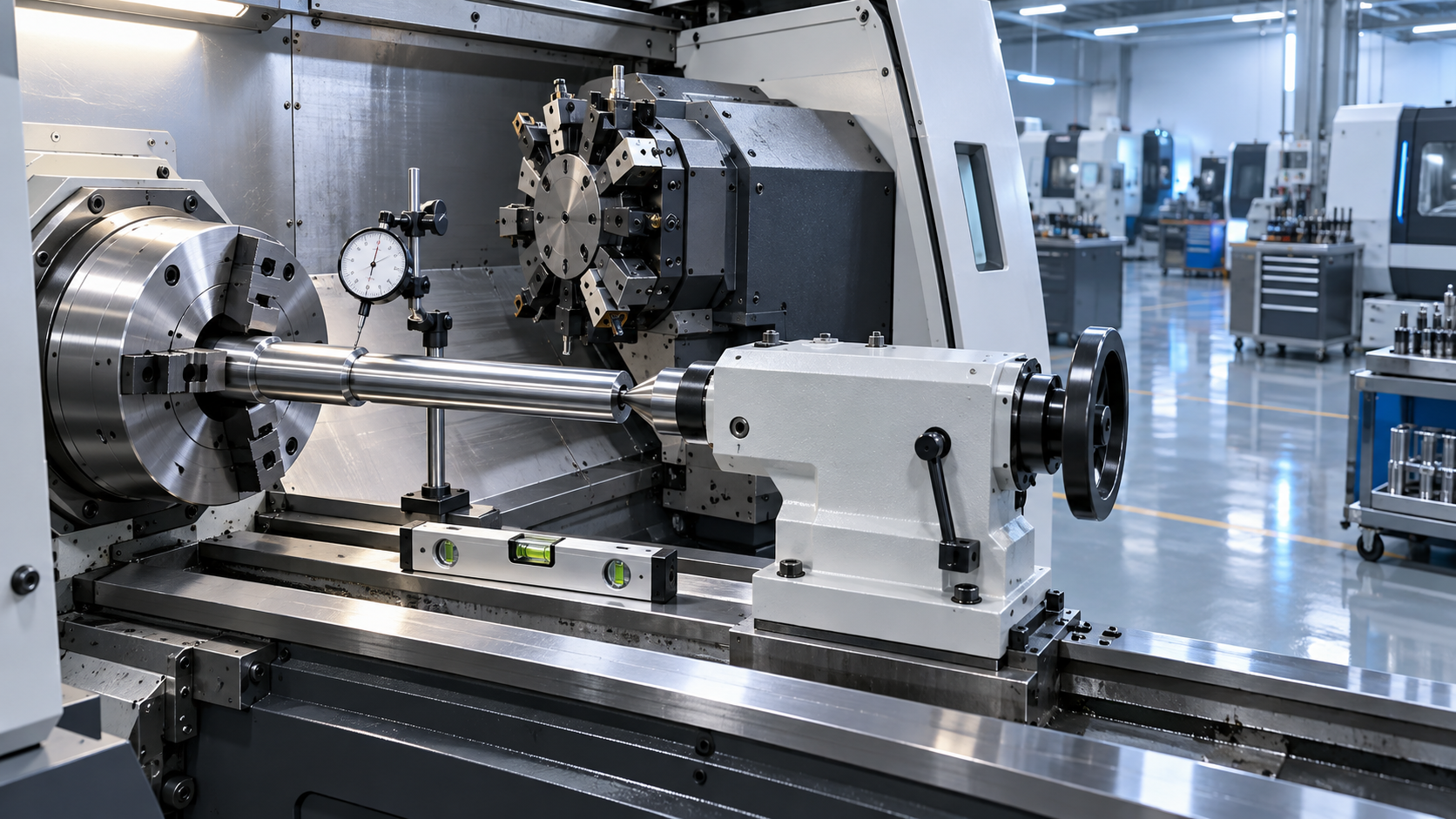
 CNC Lathe Quick Installation Guide: Alignment Checks Before First Production RunCNC Machining Technology Center
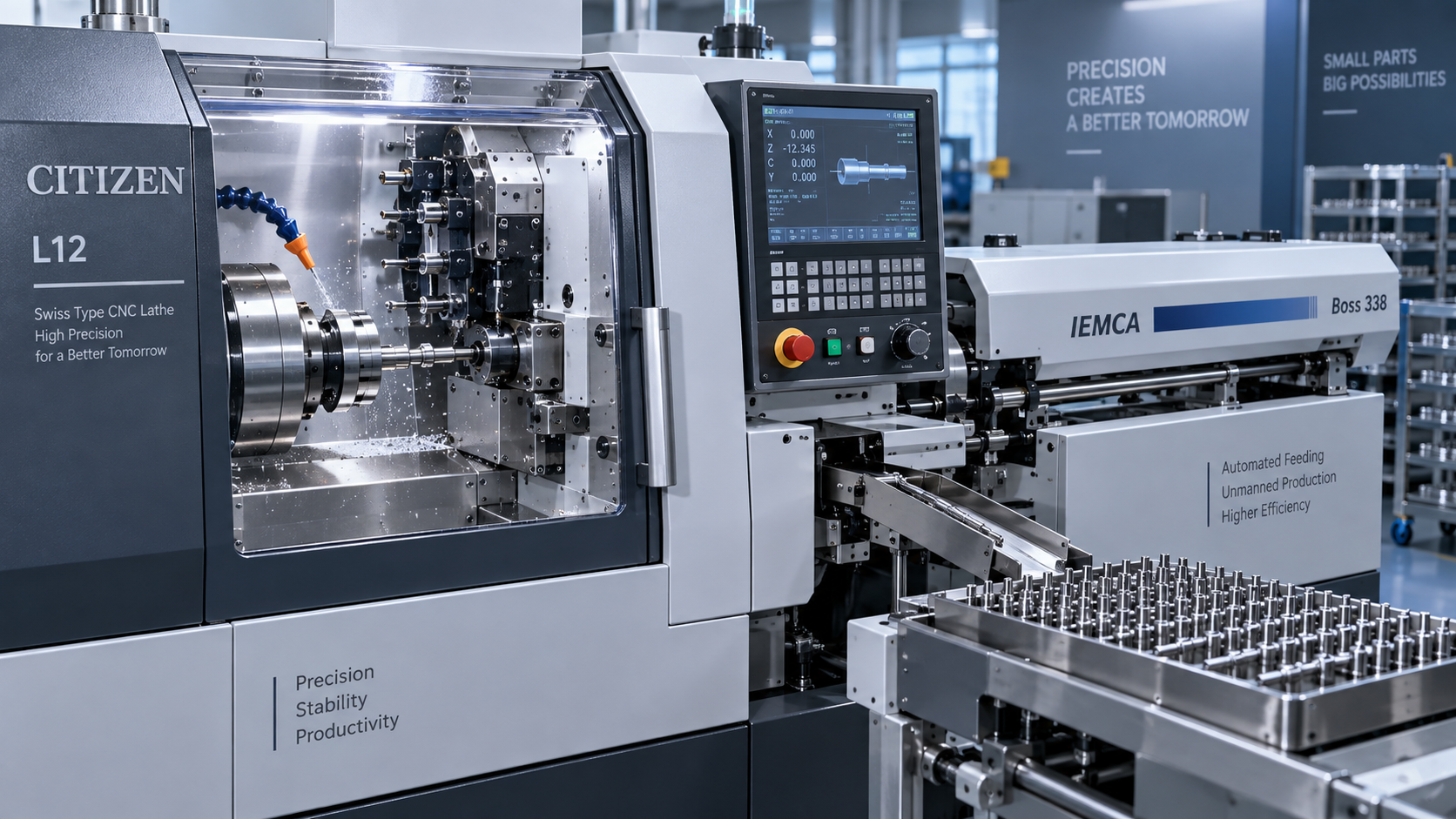
 How to Select a CNC Lathe for Small Parts Without Sacrificing Accuracy or Cycle TimeCNC Machining Technology Center

Aris Katos
Future of Carbide Coatings
15+ years in precision manufacturing systems. Specialized in high-speed milling and aerospace grade alloy processing.
▶
When Does CNC Turning Pay Off? A Break-Even Guide by Annual Part VolumeMachine Tool Industry Editorial Team▶
How to Compare CNC Metal Lathe Brands ObjectivelyMachine Tool Industry Editorial Team▶
CNC Lathe Quick Installation Guide: How to Avoid Alignment and Wiring MistakesMachine Tool Industry Editorial Team▶
CNC Lathe Quick Installation Guide: Common Setup Mistakes and How to Avoid ThemMachine Tool Industry Editorial Team▶
CNC Lathe Lead Times Reach 22 WeeksMachine Tool Industry Editorial Team
Mastering 5-Axis Workholding Strategies
Join our technical panel on Nov 15th to learn about reducing vibrations in thin-wall components.

Providing you with integrated sanding solutions
Before-sales and after-sales services
Comprehensive technical support