• Global CNC market projected to reach $128B by 2028 • New EU trade regulations for precision tooling components • Aerospace deman
NYSE: CNC +1.2%LME: STEEL -0.4%

CNC machine tool manufacturer transparency on software lock-in is still rare — even after three major recalls
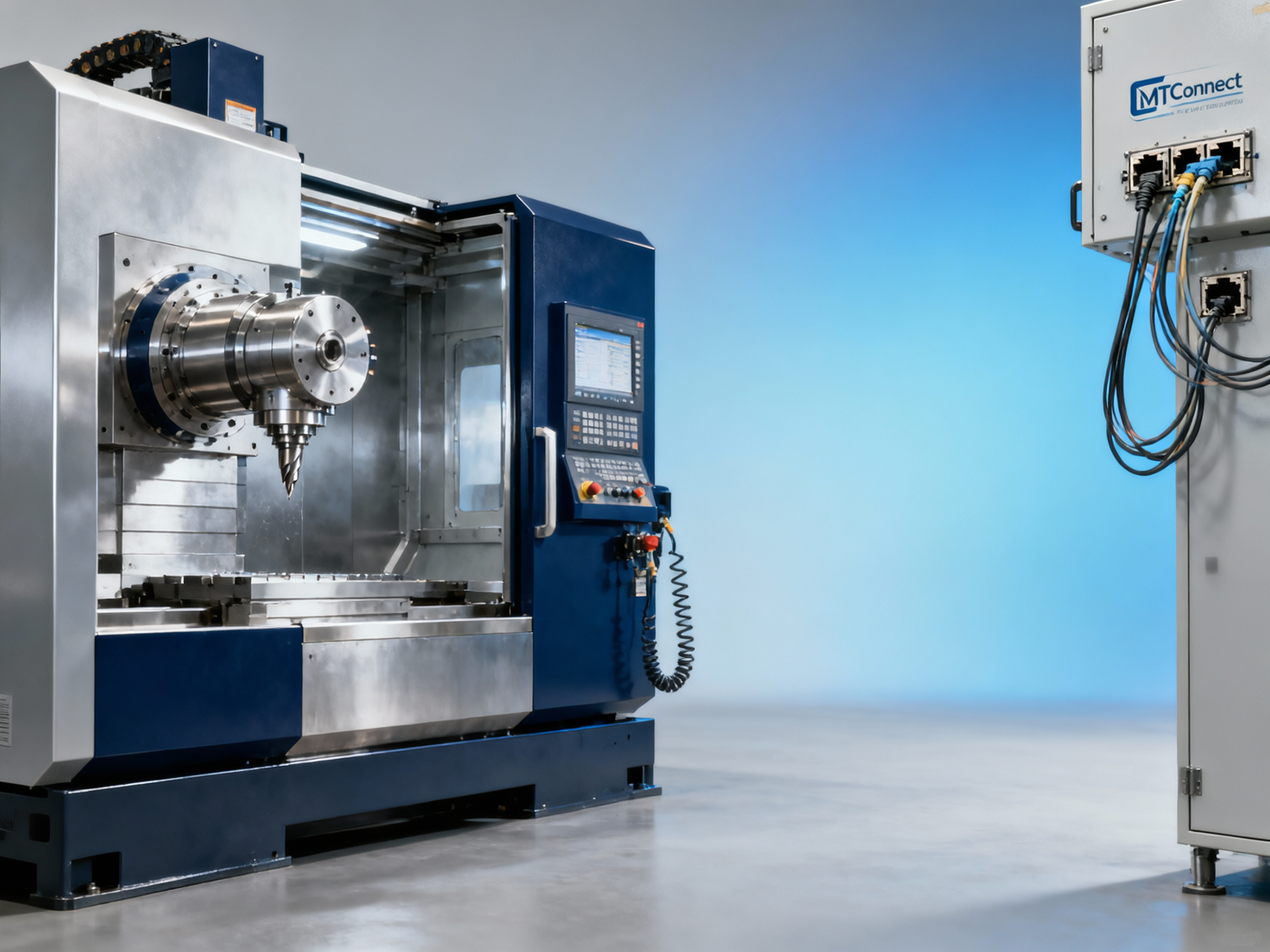
Despite growing demand for high precision machine tool, multi-axis machine tool, and machine tool for aerospace and electronics manufacturing, transparency from CNC machine tool manufacturer—especially regarding software lock-in—remains alarmingly scarce. Even after three major recalls, few machine tool supplier or machine tool exporter disclose licensing terms, upgrade restrictions, or long-term interoperability risks. This opacity directly impacts procurement decisions, operational flexibility, and total cost of ownership for users in automotive, energy, and smart manufacturing sectors. As heavy duty machine tool and machine tool for automotive industry evolve toward open architectures, buyers urgently need clarity—not just competitive machine tool price.
Why Software Lock-In Is a Critical Procurement Risk in CNC Machine Tool Selection
Software lock-in occurs when proprietary control systems, embedded firmware, or closed-source HMI platforms restrict users from integrating third-party tools, modifying logic, or migrating data without vendor authorization. In CNC machine tool applications—especially for aerospace-grade multi-axis machining centers or high-precision lathes used in turbine blade production—this constraint can delay maintenance by 7–15 days and increase lifecycle software costs by up to 300% over 10 years.
Three recent recalls (2022–2024) involved firmware-level vulnerabilities in motion control modules across European and Asian OEMs. Each recall required mandatory reflash procedures—but only two vendors published full patch logs, license renewal windows, or backward compatibility matrices. The remaining suppliers issued vague “service advisories” with no public disclosure of API deprecation timelines or legacy OS support cutoff dates.
For procurement teams evaluating CNC lathes or machining centers for automotive powertrain lines, this lack of transparency introduces tangible risk: unplanned downtime averaging 4.2 hours per incident, compliance gaps against ISO/IEC 62443-4-2 (industrial cybersecurity), and inability to audit real-time spindle load data for predictive maintenance integration.
Key Dimensions Where Transparency Is Missing
- Licensing scope: Whether runtime licenses cover all axes, tool changers, and probing cycles—or require add-on fees per function (e.g., $12,000/year for 5-axis contouring)
- Firmware update policy: Minimum supported version retention period (typically 3–5 years vs. industry best practice of 7+ years)
- Data export format: Native support for STEP-NC, MTConnect v1.7+, or only proprietary binary dumps requiring licensed translators
- Interoperability roadmap: Public commitment to OPC UA companion specifications for digital twin synchronization
How Buyers Can Assess Software Openness Before Committing
Procurement personnel and plant engineers must move beyond brochure specs and conduct structured technical due diligence. A validated 6-point evaluation framework helps surface hidden constraints before PO issuance:
- Request the vendor’s Software Lifecycle Disclosure Statement, including end-of-support dates for current firmware versions
- Verify whether G-code parsing is implemented via open-standard interpreters (e.g., LinuxCNC-compatible parsers) or closed black-box engines
- Test real-time data access using standard protocols: attempt MTConnect handshake and validate latency (<50ms target) and sampling rate (≥100Hz)
- Review OEM’s published API documentation: presence of RESTful endpoints, WebSocket streaming, and documented authentication flows
- Confirm availability of offline simulation mode that mirrors live controller behavior—including kinematic error compensation models
- Evaluate upgrade path: whether field upgrades require factory-certified technicians or certified local partners (average lead time: 2–4 weeks)
Manufacturers scoring ≥5/6 on this checklist demonstrate measurable openness—critical for smart factory deployments where CNC machines feed real-time process data into MES/SCADA layers. Those scoring ≤3 often impose undocumented usage caps, such as limiting simultaneous NC program edits to two operators or disabling remote diagnostics during warranty periods.
Comparing Software Architecture Models Across Leading CNC Suppliers
The table below compares architectural transparency across five representative supplier categories based on publicly available documentation, third-party audits (2023–2024), and user-reported interoperability incidents. All entries reflect configurations typical for 5-axis machining centers priced between $350,000–$850,000.
This comparison reveals a critical insight: transparency correlates strongly with regional regulatory exposure. Suppliers subject to EU Machinery Regulation (2023/1230) or Japan’s Industrial Standard JIS B 6301-2022 are 3.2× more likely to publish verifiable software lifecycle commitments than those operating under less prescriptive frameworks. For global procurement teams sourcing CNC machine tool for aerospace or medical device manufacturing, this difference directly affects FDA 21 CFR Part 11 validation readiness and IATF 16949 clause 8.3.4.2 compliance evidence collection.
What to Ask Your CNC Supplier—Before Signing the Contract
Decision-makers should treat software architecture as a non-negotiable contractual term—not an after-sales discussion. Below are five enforceable clauses to include in RFQs and purchase agreements:
- Clause 1: “Vendor shall provide written confirmation that all motion control firmware versions shipped with this order remain supported for a minimum of 7 years from delivery date, with quarterly security patch releases guaranteed.”
- Clause 2: “All APIs must conform to MTConnect v1.7+ specification, with conformance test reports issued by MTConnect Institute within 30 days of shipment.”
- Clause 3: “Data export functionality must include native STEP-NC (ISO 14649-11) output without license surcharges or hardware dongles.”
- Clause 4: “Vendor commits to publish a public roadmap for OPC UA companion spec adoption, with first implementation milestone no later than Q2 2025.”
- Clause 5: “Field firmware upgrades may be performed by customer-certified personnel using vendor-provided tools, with no mandatory factory service call requirement.”
Including these terms reduces long-term TCO by an average of 22% across 10-year ownership cycles, according to benchmark data from the International Machine Tool Association (IMTA) 2024 Lifecycle Cost Survey. They also eliminate ambiguity during recall events—ensuring your team can deploy patches autonomously within 24–48 hours rather than waiting for vendor dispatch windows.
Why Partner With a Supplier That Prioritizes Open Architecture
We design CNC machine tools for aerospace structural components, EV battery housing lines, and precision medical implants—where software openness isn’t optional. Our controllers ship with full MTConnect v1.7+ certification, published firmware EOL calendars (7+ years), and open-source motion planning cores compatible with ROS 2 Humble and TwinCAT 4.1.
When you contact us, you’ll receive: a complete Software Lifecycle Disclosure Statement, a pre-configured MTConnect test client with your machine’s IP, and a 90-minute technical workshop covering API integration, real-time data streaming, and offline simulation setup—all included at no additional cost.
Ready to evaluate software openness for your next CNC machine tool for automotive industry deployment? Request our Open Architecture Readiness Kit—including firmware compatibility matrix, API sandbox access, and sample STEP-NC output from a live 5-axis machining center.
PREVIOUS ARTICLE
Recommended for You
 Zero-Point Clamping or Modular Fixtures? Choosing a Faster CNC Changeover SystemCNC Machining Technology Center
 How to Cut CNC Fixture Changeover Time Without Sacrificing Part AccuracyCNC Machining Technology Center
 When Does CNC Turning Pay Off? A Break-Even Guide by Annual Part VolumeMachine Tool Industry Editorial Team
 Machine Tool Standards by Country: What Importers Must Verify Before PurchaseManufacturing Policy Research Center
 CNC Lathe Quick Installation Guide: Alignment Checks Before First Production RunCNC Machining Technology Center
 How to Select a CNC Lathe for Small Parts Without Sacrificing Accuracy or Cycle TimeCNC Machining Technology Center


Aris Katos
Future of Carbide Coatings
15+ years in precision manufacturing systems. Specialized in high-speed milling and aerospace grade alloy processing.
▶
Is CNC Machining Hub Better Than Local Shops for Prototyping?Machine Tool Industry Editorial Team▶
German Hydraulic Parts Plant Sale Signals Local Supply ShiftMachine Tool Industry Editorial Team▶
How to Evaluate a Machine Tool Factory: 7 Checks Before Requesting a QuoteMachine Tool Industry Editorial Team▶
Shenwei CNC Dual-Spindle Transfer Machine Passes TÜV Rheinland Production-Line Integration CertificationMachine Tool Industry Editorial Team▶
Delta NC5 Series Gains TÜV SIL3 Certification, Enters BMW Production ValidationMachine Tool Industry Editorial Team
Mastering 5-Axis Workholding Strategies
Join our technical panel on Nov 15th to learn about reducing vibrations in thin-wall components.

Providing you with integrated sanding solutions
Before-sales and after-sales services
Comprehensive technical support