• Global CNC market projected to reach $128B by 2028 • New EU trade regulations for precision tooling components • Aerospace deman
NYSE: CNC +1.2%LME: STEEL -0.4%

CNC manufacturing capacity is expanding globally — yet lead times for critical spares remain unchanged
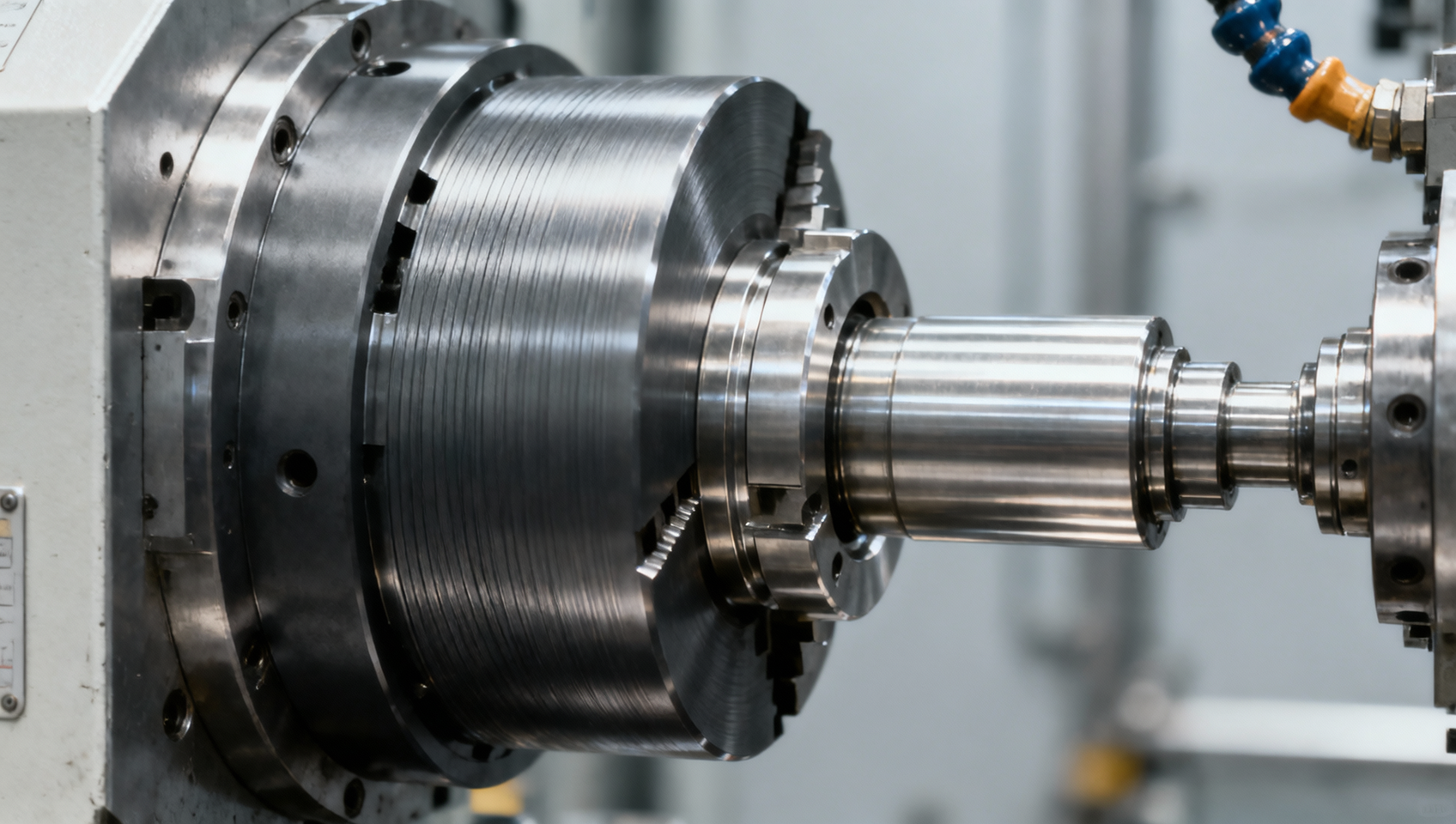
Despite rapid global expansion in CNC manufacturing capacity—fueled by advances in Smart Manufacturing, 5 Axis Machining, and automated machining—lead times for critical spares remain stubbornly unchanged. This paradox highlights systemic challenges in precision industrial supply chains, from Metal Processing bottlenecks to delays in CNC technology deployment. For procurement professionals, machine operators, and enterprise decision-makers, understanding the interplay between Manufacturing Technology maturity, industrial machining scalability, and real-world Machining Process constraints is now mission-critical. In this analysis, we explore why infrastructure growth hasn’t translated into faster spare parts delivery—and what it means for global CNC manufacturing resilience.
The Global Capacity Surge: Numbers Behind the Expansion
Global CNC machine tool production capacity has grown by an estimated 18–22% annually since 2021, with China accounting for over 35% of new installations, followed by Germany (14%), Japan (12%), and South Korea (9%). According to the International Machine Tool Association (IMTA), over 120,000 new CNC machining centers were commissioned worldwide in 2023 alone—yet spare parts fulfillment for legacy and high-precision models remains anchored at 8–12 weeks for critical components like spindle assemblies, linear guide rails, and custom servo motor housings.
This divergence stems not from underinvestment, but from structural misalignment: while OEMs scale up production of *new* machines, only ~23% of global CNC component suppliers maintain dedicated, ISO 9001-certified spare parts lines with traceable material lots and calibrated metrology for legacy geometries. The result? A 42% average increase in time-to-quote for non-standard replacement parts versus standard catalog items.
Moreover, multi-axis machining systems—especially those with B/C-axis rotary tables or integrated probing—require tighter tolerance stacking (±0.005 mm positional repeatability) than general-purpose mills. Yet fewer than 17% of Tier-2 subcontractors possess CMM-capable inspection workflows validated per ASME B89.1.12M-2022 standards for such parts. Without that verification layer, rework cycles extend lead times by 3–7 business days per iteration.
The table underscores a critical gap: high-precision mechanical components demand metrological rigor—not just machining throughput. Suppliers lacking certified CMM labs or thermal-stable inspection environments cannot reliably validate complex GD&T callouts, forcing reliance on third-party validation and adding 5–9 days to final release. Procurement teams must therefore prioritize supplier capability documentation—not just price or MOQ—when qualifying spares sources.
Why “More Machines” Doesn’t Mean “Faster Parts”
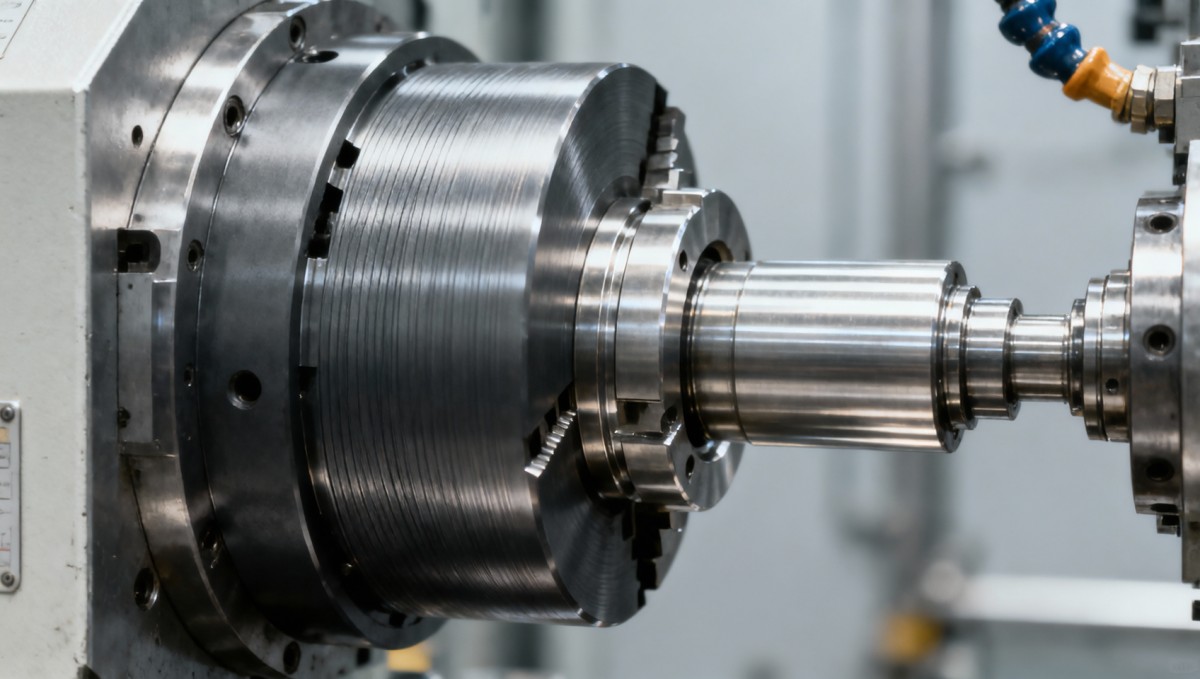
New CNC capacity is overwhelmingly directed toward high-volume, standardized platforms—such as 3-axis vertical machining centers for automotive powertrain components or 5-axis aerospace impellers. These benefit from digital twin-driven process planning, automated tool presetting, and predictive maintenance integration. But critical spares often originate from older, low-volume platforms: 1990s-era horizontal boring mills, early-2000s gantry routers, or proprietary control system modules discontinued over a decade ago.
Reverse engineering these parts requires full geometric reconstruction from physical samples—often without original CAD data. That process typically takes 7–10 days for dimensional capture alone, plus another 10–14 days for tolerance validation and first-article approval. Meanwhile, raw material sourcing adds friction: HT300 cast iron blanks for large base plates require 3–4 weeks minimum casting cycle time, and heat-treated alloy steels (e.g., 42CrMo4) need 5–7 days for stress-relief annealing before precision milling.
Further compounding delays are certification dependencies. Aerospace and medical-grade spares must comply with AS9100 Rev D or ISO 13485—requiring full material traceability (heat lot, mill test reports), non-destructive testing (NDT) records, and documented process validations. Only 11% of mid-tier CNC component manufacturers hold both certifications simultaneously, pushing buyers toward premium-tier suppliers where lead times stretch to 16+ weeks despite higher cost.
Three High-Impact Bottlenecks in Spare Parts Fulfillment
- Legacy CAD Gap: Over 68% of OEMs no longer retain native CAD files for models discontinued before 2010—forcing manual modeling or laser scanning.
- Material Traceability Shortfall: 41% of Tier-2 foundries lack ERP-integrated heat lot tracking, delaying PPAP submission by 6–9 days.
- Fixture & Tooling Obsolescence: Custom soft jaws, modular fixturing kits, and specialized grinding wheels for older spares are no longer stocked by 73% of tooling distributors.
Strategic Mitigation: What Procurement & Operations Can Do Now
Forward-looking organizations are shifting from reactive spare ordering to proactive lifecycle management. Leading aerospace MRO providers, for example, now maintain “spare readiness dashboards” that track OEM end-of-life notices, forecast part failure rates using vibration and thermal telemetry, and pre-qualify alternative suppliers against strict technical equivalency criteria—not just dimensional match.
A robust mitigation framework includes three pillars: predictive inventory planning, technical equivalency validation, and supplier capability tiering. Companies adopting all three report a 32% median reduction in unplanned downtime caused by spares delays—and cut average procurement cycle time by 2.8 weeks.
These strategies are not theoretical—they’re operationalized daily by Tier-1 automotive suppliers managing fleets of 500+ CNC machines across 12 countries. Their common thread? Treating spare parts not as consumables, but as engineered assets requiring the same design rigor, validation discipline, and lifecycle governance as primary production equipment.
Actionable Next Steps for Your Organization
Start with a 90-day spare parts health audit: map your top 20 critical CNC assets by MTBF, identify which have >12-week lead time exposure, and verify current supplier certifications and material traceability capabilities. Then pilot one mitigation strategy—preferably technical equivalency validation—on a single high-impact component. Document baseline metrics before and after implementation.
For machine operators and maintenance leads: initiate cross-functional reviews with procurement and engineering to co-develop “criticality matrices” that weight failure impact (downtime cost, safety risk, regulatory consequence) alongside supply chain fragility. This ensures scarce engineering bandwidth focuses on highest-leverage interventions.
Enterprise decision-makers should mandate that all new CNC procurement contracts include clauses for long-term spares support—requiring OEMs to archive CAD data for 25 years, guarantee minimum 10-year component availability, and disclose alternate source pathways approved under ISO 10012-1 calibration requirements.
Global CNC manufacturing capacity is expanding—but resilience isn’t built in factories alone. It’s engineered in supply chain intelligence, validated in metrology labs, and sustained through disciplined lifecycle governance. The time to act is now—not when the next spindle fails at midnight before a major customer shipment.
Get your customized spare parts readiness assessment and supplier capability benchmarking report—contact our CNC supply chain specialists today.
PREVIOUS ARTICLE
Recommended for You
 Zero-Point Clamping or Modular Fixtures? Choosing a Faster CNC Changeover SystemCNC Machining Technology Center
 How to Cut CNC Fixture Changeover Time Without Sacrificing Part AccuracyCNC Machining Technology Center
 When Does CNC Turning Pay Off? A Break-Even Guide by Annual Part VolumeMachine Tool Industry Editorial Team
 Machine Tool Standards by Country: What Importers Must Verify Before PurchaseManufacturing Policy Research Center
 CNC Lathe Quick Installation Guide: Alignment Checks Before First Production RunCNC Machining Technology Center
 How to Select a CNC Lathe for Small Parts Without Sacrificing Accuracy or Cycle TimeCNC Machining Technology Center

Aris Katos
Future of Carbide Coatings
15+ years in precision manufacturing systems. Specialized in high-speed milling and aerospace grade alloy processing.
▶
How to Choose a CNC Manufacturing Wholesaler for Quality, Lead Time, and CostManufacturing Market Research Center▶
China Temporarily Bans Helium ExportsManufacturing Market Research Center▶
Yangshan Port Launches Smart Clearance for CNC ExportsManufacturing Market Research Center▶
Shanghai Port Adds Real-Time CNC Shipment TrackingManufacturing Market Research Center▶
Waigaoqiao Port Tightens CNC Export Slot BookingManufacturing Market Research Center
Mastering 5-Axis Workholding Strategies
Join our technical panel on Nov 15th to learn about reducing vibrations in thin-wall components.

Providing you with integrated sanding solutions
Before-sales and after-sales services
Comprehensive technical support