• Global CNC market projected to reach $128B by 2028 • New EU trade regulations for precision tooling components • Aerospace deman
NYSE: CNC +1.2%LME: STEEL -0.4%

Global Manufacturing orders are shifting toward regional sourcing
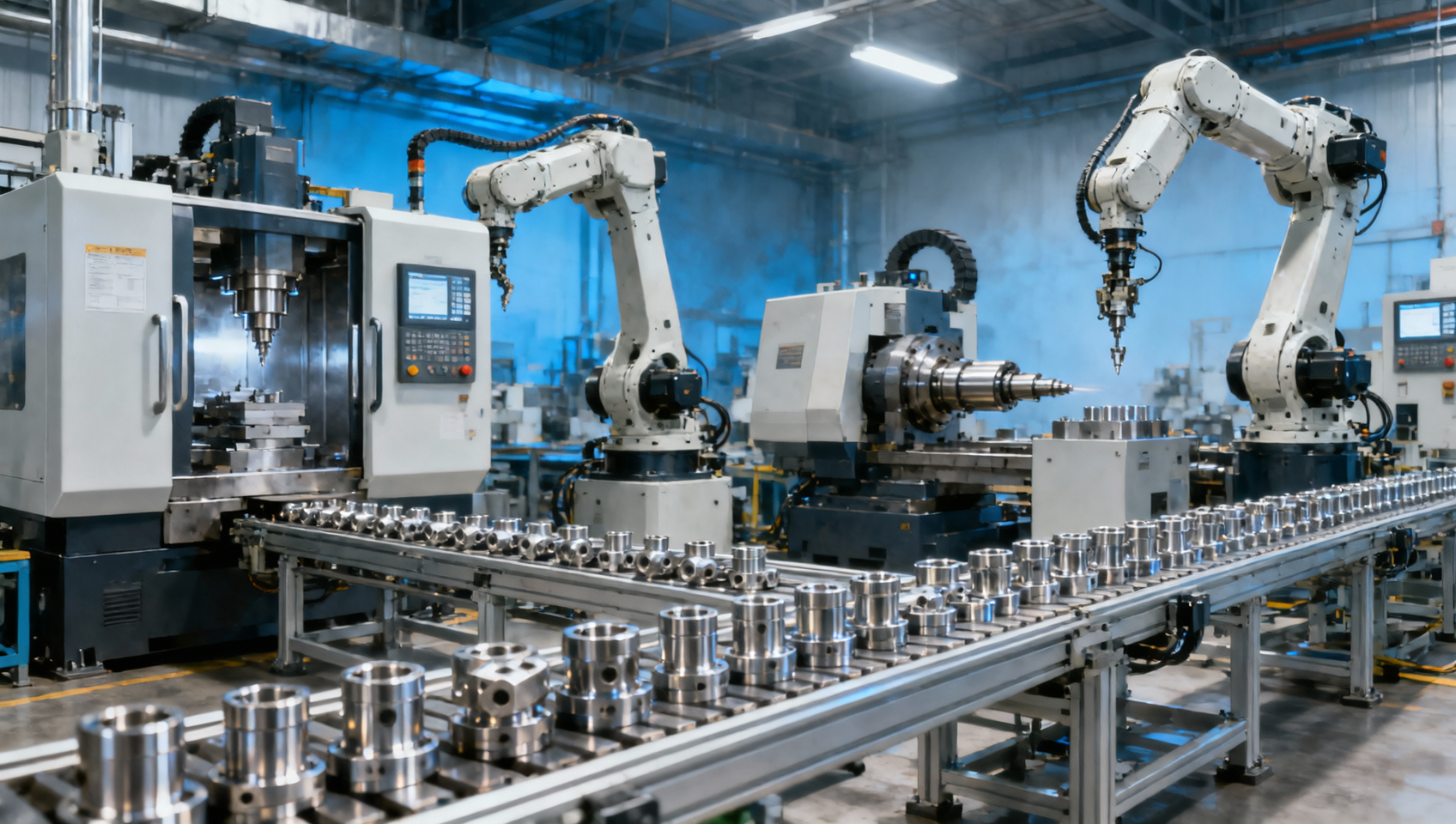
As Global Manufacturing orders shift toward regional sourcing, the Machine Tool Market is being reshaped by industrial CNC, automated production, and smarter Production Process strategies. From metal machining and CNC milling to automated lathe systems and Industrial Automation, manufacturers, buyers, and decision-makers are rethinking speed, resilience, and cost in the evolving Manufacturing Industry.
For CNC machine tool suppliers, contract manufacturers, and industrial buyers, this shift is more than a logistics trend. It affects equipment selection, supplier qualification, lead-time planning, plant layout, and long-term capital allocation. Regional sourcing is changing how companies evaluate machining centers, CNC lathes, multi-axis systems, tooling, automation cells, and after-sales service capacity.
The most immediate concern for many organizations is balance: how to reduce supply risk without losing cost competitiveness, machining accuracy, or production flexibility. For research-oriented readers, this means understanding why regional sourcing is accelerating. For operators and users, it means adapting production processes to shorter runs and faster changeovers. For procurement teams and executives, it means building a sourcing model that protects output while supporting growth.
Why regional sourcing is accelerating in the machine tool market
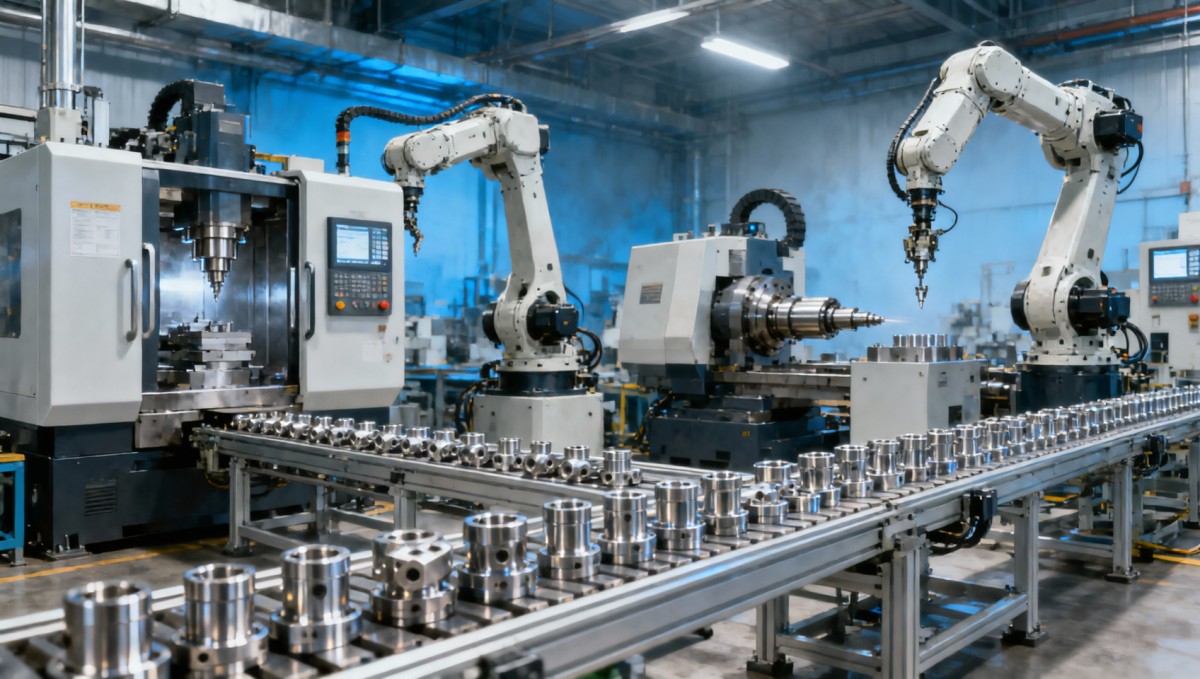
Regional sourcing has gained momentum because manufacturers now place greater value on continuity, responsiveness, and inventory control. In many sectors, a delay of 2–6 weeks in machine components, spindles, controllers, ball screws, or tooling can disrupt production schedules across multiple lines. As a result, buyers are increasingly favoring suppliers that can support local or near-market delivery, installation, and service.
In the CNC machine tool industry, lead time is not limited to the machine itself. A standard CNC lathe may require 6–12 weeks for delivery depending on configuration, while a more complex 5-axis machining center or automated production cell can take 12–24 weeks, especially if custom fixtures, probing systems, or robot integration are included. Regional suppliers can often shorten communication cycles, reduce customs uncertainty, and improve spare parts responsiveness.
Another driver is the growing need for production resilience. Automotive, aerospace, electronics, and energy equipment manufacturers are moving away from single-region dependency. Instead of relying on one distant source, they are dividing orders among 2 or 3 regional partners to reduce exposure to transport disruption, policy shifts, and currency volatility. This is especially relevant where tolerance requirements fall within ±0.01 mm to ±0.005 mm and downtime costs are high.
Operational forces behind the shift
The shift is also tied to changing production patterns. More manufacturers are handling smaller batch sizes, frequent model changes, and compressed launch schedules. A plant that previously ran long, stable orders may now need to switch between 10, 20, or 50-part batches with different materials and process routes. This raises the importance of machine flexibility, digital setup support, and local technical assistance.
For buyers comparing global and regional sourcing, the decision is rarely based on unit price alone. The table below highlights how sourcing models differ when machine tool procurement, commissioning, and lifecycle support are included in the analysis.
The key takeaway is that regional sourcing usually improves control over delivery, service, and process coordination. It does not automatically replace global sourcing, but it changes the evaluation criteria. In many machine tool projects, the lowest initial quote can become more expensive if startup support, maintenance delays, and production interruptions are not considered from the beginning.
How sourcing shifts affect CNC equipment selection and production planning
When manufacturing orders move closer to end markets, machine tool requirements also change. Companies increasingly need equipment that can support mixed production, faster setup, and better compatibility with local supply chains. Instead of buying purely for maximum output, many factories now prioritize flexibility across 3 dimensions: part variety, automation readiness, and service accessibility.
For example, a high-volume automotive supplier may still invest in dedicated lines, but a regionalized operation serving multiple customers often prefers CNC machining centers, turning centers, or mill-turn systems that can handle frequent changeovers. Features such as tool magazines with 24–60 positions, automatic pallet change, in-process measurement, and remote diagnostics become more important when production windows are tight and labor availability is inconsistent.
Key equipment priorities in a regionalized production model
Industrial users and production managers usually focus on whether a machine can maintain precision and uptime while adapting to fluctuating order volumes. That means evaluating spindle speed range, repeatability, axis travel, control system compatibility, and tooling ecosystem support. A machine that performs well in a single standardized program may not be the best choice for a regional plant processing steel, aluminum, and alloy parts in short cycles.
- Repeatability targets often need to stay within ±0.003 mm to ±0.01 mm depending on the component category.
- Setup reduction of even 10–20 minutes per changeover can significantly improve utilization in multi-product environments.
- Automation interfaces for robots, bar feeders, conveyors, or vision systems are increasingly required at the purchase stage rather than added later.
- Controller familiarity matters because operator retraining can take 2–8 weeks depending on software complexity and team skill level.
Production process implications
Regional sourcing also affects production planning. Plants closer to customers are expected to react faster to engineering changes, urgent orders, and delivery revisions. That pushes companies to standardize fixtures, reduce unnecessary manual steps, and improve tool management. In many cases, digital work instructions and MES connectivity are becoming just as important as raw machine power.
Procurement teams should therefore assess not just machine specifications, but also whether the supplier can support integration into automated production lines, predictive maintenance routines, and spare part availability. A lower-cost machine without local service backing may create hidden losses if an unscheduled shutdown lasts 48–72 hours.
In practical terms, equipment selection is becoming a cross-functional task involving production engineering, operators, maintenance teams, purchasing, and senior management. The most successful projects usually define performance expectations before RFQ release, including target takt time, acceptable scrap rate, maintenance intervals, and digital connectivity requirements.
What procurement teams should evaluate before choosing regional machine tool partners
As sourcing strategies become more regional, supplier screening needs to go deeper than price and brochure specifications. A qualified machine tool partner should be evaluated across technical capability, delivery reliability, service responsiveness, and long-term expansion support. This is especially important when purchasing CNC lathes, machining centers, automated loading systems, and precision tooling for mission-critical production.
One common mistake is assuming that regional location alone guarantees lower risk. In reality, buyers should verify assembly capability, control system support, spare parts stocking policy, installation resources, and application engineering strength. If a supplier can deliver a machine in 8 weeks but cannot provide operator training, process optimization, or troubleshooting support within the first 30 days of launch, the sourcing advantage is limited.
A practical procurement checklist
The following comparison framework helps procurement teams and decision-makers review suppliers in a structured way. It is useful for capital equipment projects, production line upgrades, and distributed manufacturing expansion plans.
This checklist shows why procurement decisions should include both purchasing and production data. A machine tool supplier should not only meet technical specifications, but also fit the buyer’s ramp-up timeline, workforce capability, and regional service structure.
Questions buyers should ask before issuing a PO
- Can the supplier support installation, trial cutting, and operator training within a defined 2–4 week launch window?
- Are critical spare parts stocked locally, and what is the replenishment cycle for motors, drives, tool holders, and wear components?
- Does the machine architecture support future upgrades such as robotic loading, pallet systems, or digital monitoring?
- What acceptance criteria will be used for geometry, repeatability, surface finish, and production output?
For enterprise leaders, these questions reduce the risk of underutilized assets. For operators and maintenance staff, they also ensure the equipment arriving on the shop floor can be supported in real production conditions, not just in a sales presentation.
Implementation challenges, risk control, and service planning
Regional sourcing creates opportunities, but it also introduces operational complexity. Companies that split manufacturing across multiple regions may face differences in labor skill, utility stability, supplier maturity, and production discipline. A CNC system that runs efficiently in one plant may underperform in another if tooling practices, coolant management, fixture quality, or preventive maintenance routines are inconsistent.
This is why implementation planning should begin before equipment arrives. Site readiness checks usually need to cover floor load, power requirements, compressed air, coolant systems, chip handling, safety interlocks, and network connectivity. Missing one basic item can delay startup by several days or even 1–2 weeks.
Common risk points during regional deployment
The most common project failures are not caused by the machine alone. They come from poor coordination between procurement, engineering, and operations. In regional projects, faster delivery expectations often compress validation time, which increases the chance of process instability after installation.
- Insufficient application testing before shipment, resulting in post-installation adjustments that add 3–10 days.
- Operator training limited to basic control functions, without enough focus on tooling, offsets, and alarm recovery.
- Spare parts lists not finalized before commissioning, causing downtime when wear parts fail early.
- Automation interfaces not clearly defined, leading to compatibility issues with robots, loaders, or line control systems.
A 5-step rollout approach
A structured rollout reduces commissioning risk and helps regional manufacturing sites reach stable output faster. The sequence below is widely applicable for CNC machine tools, automated cells, and precision machining lines.
- Define part mix, cycle time, tolerance, and output targets before final equipment approval.
- Confirm installation conditions at least 2–3 weeks ahead of delivery.
- Run acceptance checks for geometry, repeatability, and sample part machining.
- Complete operator and maintenance training during the first launch phase.
- Track uptime, scrap, and tool life for the first 30–90 days to stabilize the process.
Service planning is equally important. For many regional buyers, the best machine tool partner is the one that combines application engineering with practical support after handover. Clear service response windows, remote diagnostic capability, and consumable planning often have a stronger effect on long-term output than headline spindle speed or axis travel alone.
Regional sourcing trends and what they mean for future smart manufacturing investment
Looking ahead, regional sourcing is likely to accelerate investment in flexible automation, digital monitoring, and modular machine tool platforms. As factories bring production closer to customers, they need systems that can scale without rebuilding the entire line. That favors CNC equipment designed for integration with industrial robots, machine vision, digital twins, and real-time production dashboards.
This trend is particularly important in sectors where quality traceability and delivery responsiveness are both non-negotiable. Aerospace, medical components, electronics enclosures, precision automotive parts, and energy equipment all benefit from local or regional machining capacity supported by smart production controls. In these applications, data from spindle load, vibration, tool wear, and cycle-time history can help reduce scrap and improve scheduling accuracy.
Where investment priorities are moving
Instead of choosing between labor savings and quality improvement, manufacturers increasingly expect both. That means future procurement projects will likely focus on a combined value model: precision, automation compatibility, serviceability, and digital connectivity. Machines that support predictive maintenance or remote diagnostics may reduce troubleshooting time from several hours to less than 1 hour in certain fault scenarios.
Another visible trend is the rise of hybrid sourcing structures. Many companies will continue using global supply for selected components, while building regional capacity for final machining, urgent orders, customization, and aftermarket support. This blended model allows buyers to keep cost options open while protecting critical delivery commitments.
FAQ for buyers and plant managers
How long does a regional CNC machine tool project usually take?
For standard equipment, procurement to installation may take 6–12 weeks. If the project includes custom fixtures, robot loading, or process validation for complex parts, the timeline often extends to 12–24 weeks. Site preparation should begin early to avoid startup delays.
Which companies benefit most from regional sourcing?
Companies with volatile order patterns, strict delivery windows, or high downtime costs benefit the most. This includes automotive suppliers, electronics producers, aerospace machining shops, and manufacturers handling multiple part variants across 2 or more customer programs.
What should operators and users pay attention to?
Operators should focus on controller usability, tool offset management, changeover efficiency, alarm handling, and maintenance accessibility. A machine that is technically advanced but difficult to operate can reduce effective output, especially during the first 30 days after launch.
Global manufacturing orders are shifting toward regional sourcing because manufacturers need more than low purchase cost. They need shorter response cycles, better service access, stable production processes, and machine tool solutions that align with modern industrial automation. In this environment, CNC lathes, machining centers, automated production systems, and smart factory tools are becoming strategic assets rather than simple equipment purchases.
For information researchers, the message is clear: regional sourcing is reshaping the machine tool market at both the supply chain and factory level. For operators and users, it raises the value of flexible, serviceable, and digitally connected equipment. For procurement teams and business leaders, it requires a broader decision model that includes delivery risk, lifecycle support, and future automation needs.
If you are evaluating CNC machining solutions, automated production lines, or regional equipment sourcing strategies, now is the right time to review your requirements in detail. Contact us to discuss product specifications, compare sourcing options, and get a tailored solution for your manufacturing application.
Recommended for You
![]() Iranian LNG Vessels Breach U.S. Strait Blockade; Shanghai Crude Surges 4%Manufacturing Market Research Center
Iranian LNG Vessels Breach U.S. Strait Blockade; Shanghai Crude Surges 4%Manufacturing Market Research Center![]() Pakistan Launches CNC Localization Tender for CPEC II Smart Manufacturing ParkGlobal Machine Tool Trade Research Center
Pakistan Launches CNC Localization Tender for CPEC II Smart Manufacturing ParkGlobal Machine Tool Trade Research Center![]() NVIDIA Joins $1T Club; AI-Driven CNC Digital Twin Gains Global TractionCNC Machining Technology Center
NVIDIA Joins $1T Club; AI-Driven CNC Digital Twin Gains Global TractionCNC Machining Technology Center![]() World's First 5-Axis Middle-Grade Wire EDM Machine Enters Mass ProductionMachine Tool Industry Editorial Team
World's First 5-Axis Middle-Grade Wire EDM Machine Enters Mass ProductionMachine Tool Industry Editorial Team![]() China’s CNC Machine Tool Export Prices Up 11.3% in Q1 2026Global Machine Tool Trade Research Center
China’s CNC Machine Tool Export Prices Up 11.3% in Q1 2026Global Machine Tool Trade Research Center![]() Saudi Energy Security Boosts CNC Import Efficiency in Middle EastGlobal Machine Tool Trade Research Center
Saudi Energy Security Boosts CNC Import Efficiency in Middle EastGlobal Machine Tool Trade Research Center


Aris Katos
Future of Carbide Coatings
15+ years in precision manufacturing systems. Specialized in high-speed milling and aerospace grade alloy processing.
▶
Iran Tightens Hormuz Strait Control, CNC Equipment Shipping Delays ExpectedGlobal Machine Tool Trade Research Center▶
U.S.-Iran Strait of Hormuz Clash Raises Oil Prices, Impacts Precision Manufacturing LogisticsGlobal Machine Tool Trade Research Center▶
Global Manufacturing Lead Times Improve but Not EverywhereGlobal Machine Tool Trade Research Center▶
Global Manufacturing Risks Are Reshaping Source StrategiesGlobal Machine Tool Trade Research Center▶
Global Manufacturing orders are shifting toward regional sourcingGlobal Machine Tool Trade Research Center
Mastering 5-Axis Workholding Strategies
Join our technical panel on Nov 15th to learn about reducing vibrations in thin-wall components.

Providing you with integrated sanding solutions
Before-sales and after-sales services
Comprehensive technical support