• Global CNC market projected to reach $128B by 2028 • New EU trade regulations for precision tooling components • Aerospace deman
NYSE: CNC +1.2%LME: STEEL -0.4%

Global Manufacturing Lead Times Improve but Not Everywhere
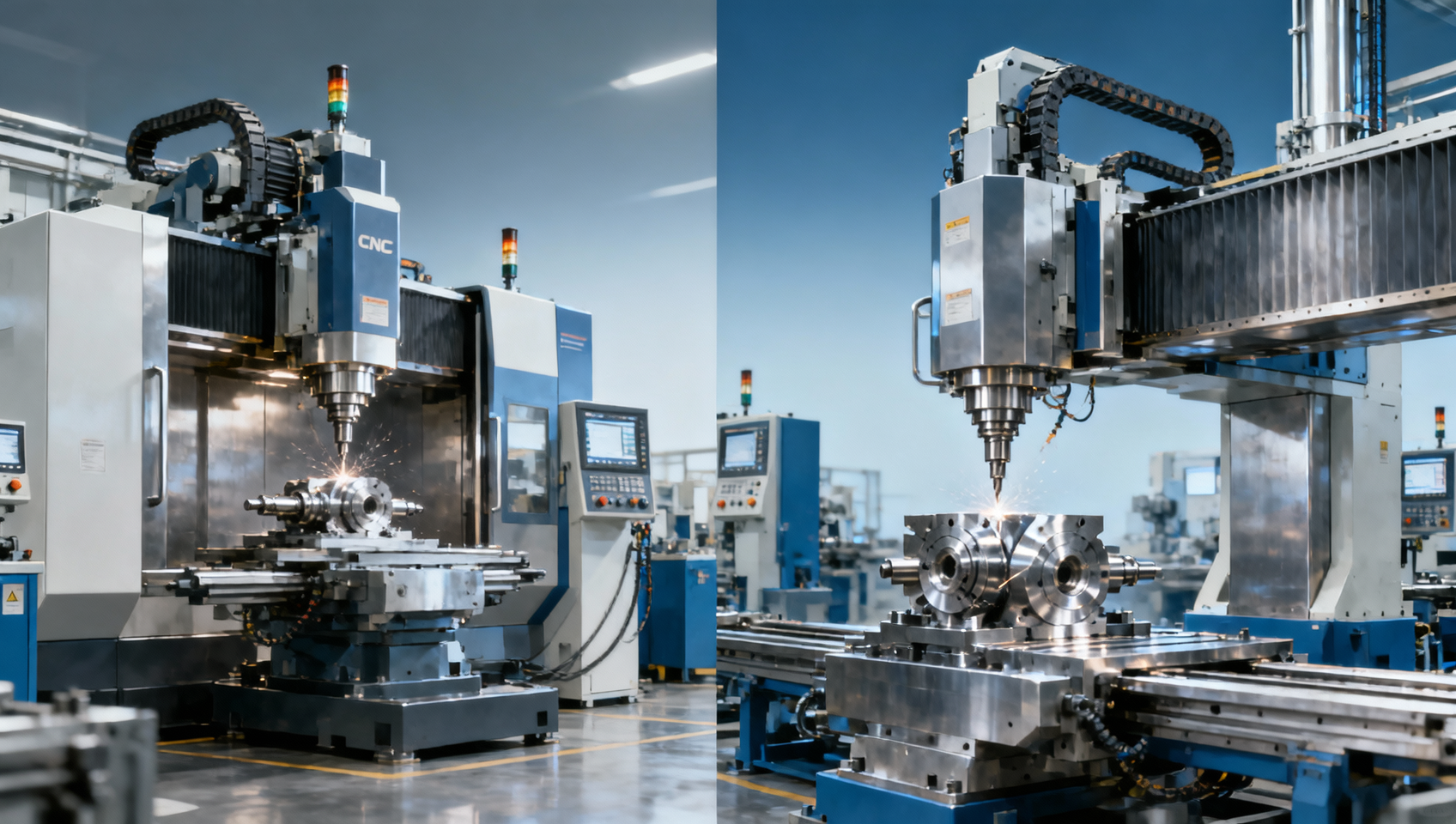
Global manufacturing lead times are improving, but recovery remains uneven across regions and sectors. For companies in metal machining, industrial CNC, and automated production, these shifts are reshaping sourcing, capacity planning, and the broader Machine Tool Market. This article explores what the latest changes mean for the Manufacturing Industry, from CNC production and CNC milling to industrial automation and more resilient production process strategies.
Why shorter lead times do not mean lower supply risk
In the global Manufacturing Industry, improving lead times are often read as a sign that pressure has eased. That conclusion is only partly correct. For buyers of CNC machines, spindles, linear guides, tool holders, controllers, and automation modules, quoted delivery windows may move from 20–30 weeks to 8–16 weeks, yet the real procurement risk can still remain high. A shorter promise on paper does not automatically solve component bottlenecks, logistics disruptions, or commissioning delays at the plant level.
This matters especially in the Machine Tool Market, where one delayed subsystem can hold back an entire production process. A machining center may be mechanically complete, but if the servo package, CNC control unit, or probing system arrives late, the line cannot start. In practice, many manufacturers now see mixed conditions: standard machine configurations recover first, while customized multi-axis systems, high-precision assemblies, and integrated automated production cells still require longer planning horizons.
For information researchers, the key question is not simply whether lead times improve, but where, for what products, and under which sourcing conditions. For operators and users, the issue is whether spare parts and maintenance windows align with production demand. For procurement teams, the focus is supplier stability, technical interchangeability, and delivery reliability. For decision-makers, the concern is how these variables affect output, margins, and investment timing over the next 2–4 quarters.
In CNC production and CNC milling environments, timing risk spreads across three layers: equipment acquisition, production ramp-up, and aftermarket support. If any one of these layers remains unstable, a factory can still experience missed shipment dates, excess inventory, or underused capacity. That is why a disciplined review of lead times must go beyond headline improvements and examine regional supply strength, application complexity, and the resilience of the supplier network.
Three reasons recovery remains uneven
- Standardized products recover faster than engineered systems. A common 3-axis machining center may return to a 6–10 week window, while a large 5-axis machine with automation can still require 16–32 weeks.
- Regional industrial clusters recover at different speeds. Availability in China, Germany, Japan, or South Korea may differ depending on controls, castings, motors, and export scheduling.
- End-user sectors have different urgency levels. Aerospace, energy equipment, automotive, and electronics each place different demands on precision machining, traceability, and changeover speed.
For companies evaluating sourcing options, this means procurement strategy should be based on application-critical parts, not only on average delivery claims. In industrial automation, one missing sensor module or drive package can create a much larger delay than a longer but predictable machine delivery window. Predictability now often matters more than simple speed.
Where lead time improvement is visible in the Machine Tool Market
Lead time normalization is most visible in categories with stronger standardization, broader supplier coverage, and less engineering customization. These include selected CNC lathes, vertical machining centers, general-purpose cutting tools, standard fixtures, and replacement wear parts. In many cases, suppliers have improved forecasting, expanded safety stock, and rebalanced production schedules after several volatile years. As a result, more buyers can once again plan routine machine replacement or moderate capacity expansion with less uncertainty.
However, improvement is less consistent in products that combine high precision, software integration, and specialized application engineering. Multi-axis machining systems, automated loading cells, robotic tending systems, and high-spec spindle assemblies still face delivery fluctuations. The same pattern appears in advanced electronics production and aerospace machining, where tolerance expectations, qualification procedures, and process validation may extend implementation by another 4–12 weeks even after physical delivery.
The table below helps compare where buyers are more likely to see meaningful recovery in lead times and where they should still expect caution. These are industry-typical ranges rather than fixed guarantees, and actual timing depends on configuration depth, export documentation, and factory workload.
The practical takeaway is clear: the Machine Tool Market is recovering in layers, not as a single wave. General-purpose equipment usually returns first, while integrated, high-value, and customized solutions recover later. Buyers who align sourcing plans with this pattern can reduce idle time, especially in shops that depend on CNC milling, automated loading, and flexible production lines.
What this means for different buyer groups
Information researchers should compare lead times by machine class, not only by country. Operators should ask whether tool magazines, coolant systems, and maintenance kits will arrive in parallel with the base machine. Procurement managers should separate critical-path items from optional upgrades. Senior management should review whether capital expenditure should be phased into 2 stages rather than released as one large equipment order.
This layered approach is especially relevant for precision manufacturing plants serving automotive, energy, and electronics customers. In these sectors, delivery reliability is often tied to production contracts, quality audits, and supplier performance ratings. Even a 2-week delay in one subsystem can affect a quarter’s output plan.
How manufacturers should adjust sourcing and capacity planning
When lead times start to improve, many companies make the mistake of returning immediately to old purchasing habits. In the current Manufacturing Industry environment, that is risky. Procurement and operations teams should instead use the recovery phase to build more resilient sourcing models. The aim is not only to secure a machine faster, but to reduce the chance of interruption across the full production process, from order confirmation to commissioning and spare-part support.
For CNC production lines, a good planning rule is to separate demand into 3 buckets: urgent replacement, scheduled expansion, and strategic automation investment. Urgent replacement often requires the fastest available standard machine. Scheduled expansion can accept a broader supplier comparison over 8–16 weeks. Strategic projects such as flexible cells, robotics integration, or smart factory retrofits usually need a 3-stage plan covering specification, validation, and implementation.
Capacity planning should also account for ramp-up time after delivery. In many metal machining projects, physical arrival is only one milestone. Installation may take 3–7 days for a standard machine, while process validation, tooling setup, and operator training can add another 1–4 weeks. If the factory depends on complex fixtures or first-article approval, the effective lead time is longer than the supplier quotation suggests.
The checklist below is useful for procurement teams that need to align equipment sourcing with output targets, maintenance schedules, and automation planning. It is designed for buyers balancing budget control with production continuity.
A 5-point sourcing checklist for CNC and automation buyers
- Confirm the full critical path. Ask for timing on the machine, control system, tooling package, spare parts kit, and site commissioning support, not just the base equipment.
- Classify specifications into must-have and optional items. This helps reduce delays caused by non-essential upgrades such as special probing, branded accessories, or custom enclosures.
- Review interchangeability. Check whether alternative motors, controllers, or fixture interfaces can be accepted without changing process capability or compliance requirements.
- Include after-sales timing. Spare parts response, remote diagnostics, and field service availability are often as important as the initial machine shipment.
- Model the real production start date. Add transport, customs, installation, programming, and trial-run time so management can plan cash flow and customer commitments more accurately.
Companies that follow these steps usually gain better control over both direct cost and hidden cost. Hidden cost appears when a factory rents outside capacity, holds excess buffer stock, or runs overtime because a machine or subsystem arrives late. In precision manufacturing, these indirect losses can quickly outweigh the price difference between two competing suppliers.
When dual sourcing makes sense
Dual sourcing is not always practical for a full machine, but it can work well for tools, fixtures, wear parts, coolant accessories, and some automation peripherals. For plants with high machine utilization, dual sourcing can reduce downtime risk, especially where replacement cycles are measured in days rather than months. The best candidates are parts with clear technical specifications, stable quality requirements, and low requalification burden.
In contrast, highly integrated CNC systems or precision spindle assemblies may require a primary supplier model with stronger forecasting and service agreements. Here, the focus should be on early booking, technical alignment, and support readiness rather than price-only comparison.
What procurement teams should compare before placing an order
In periods of uneven recovery, selecting a supplier based only on list price can create long-term problems. Procurement teams in the Machine Tool Market should compare at least 6 dimensions: delivery reliability, technical fit, installation readiness, service response, spare-part availability, and total cost over the first 12–24 months. This is especially important for industrial CNC buyers serving demanding sectors such as aerospace, automotive, and electronics, where line stoppage has a direct revenue effect.
A practical comparison matrix helps teams avoid emotional or incomplete decisions. It also supports internal alignment between engineering, production, finance, and management. The table below can be used during supplier shortlisting for CNC machines, machining centers, or automated production line components.
This comparison framework is useful because it shifts the conversation from unit price to business impact. In many procurement projects, a supplier with a slightly longer but stable 10-week schedule may be safer than one offering 6 weeks without confirmed subsystem readiness. In industrial automation, consistency is often worth more than aggressive quoting.
Procurement teams should also verify documentation requirements early. Depending on destination market and application, buyers may need electrical documentation, safety documents, inspection records, or material traceability for certain assemblies. These documents do not always extend the manufacturing lead time, but they can delay shipment release if they are requested too late.
Common purchasing mistakes in an improving market
- Assuming all suppliers recover at the same pace and reducing safety planning too early.
- Comparing machine price without comparing startup time, training, and spare-part readiness.
- Ordering automation hardware before confirming site layout, utility conditions, and guarding requirements.
- Treating custom configurations as if they followed the same lead time as standard catalog models.
Avoiding these mistakes can make the difference between a smooth installation and a delayed capital project. For enterprise decision-makers, that difference directly affects cash conversion, customer confidence, and expansion timing.
How uneven recovery affects operators, users, and plant managers
Lead time shifts are not just a purchasing issue. They change daily work inside the factory. Operators and production managers must adapt maintenance planning, fixture readiness, tool inventory, and programming schedules based on what equipment actually arrives and when. In CNC milling and turning environments, this often means balancing current machine utilization against future installation windows so the plant does not lose output during the changeover period.
For example, a factory replacing an older machining center may need to maintain parallel production for 2–6 weeks while the new machine is installed, tested, and brought to target tolerance. If the new equipment includes automatic pallet handling or robot loading, setup complexity increases. This impacts staffing, floor space, and training. A machine delivered on time but introduced without process planning can still reduce short-term productivity.
Operators should therefore be involved earlier in purchasing and implementation discussions. Their feedback on chip evacuation, tool access, part clamping, alarm recovery, and preventive maintenance often exposes issues that are invisible in a quotation sheet. In automated production, user experience also matters because real cycle stability depends on the interaction between machine tool, tooling, fixtures, robot motion, and operator oversight.
Plant managers should measure recovery using operational indicators, not only supplier announcements. Three useful indicators are schedule adherence, machine uptime in the first 30 days, and time to stable output. If these metrics do not improve, shorter quoted lead times may be creating false confidence rather than real resilience.
A practical implementation sequence
A well-managed CNC or automation project usually follows 4 implementation steps. First comes specification lock, including part drawings, tolerances, batch size, and expected cycle time. Second comes pre-delivery coordination, covering foundation, utilities, transport access, and acceptance criteria. Third comes installation and trial production. Fourth comes stabilization, where the team fine-tunes programs, tools, fixtures, and operator routines over 1–3 production cycles.
When manufacturers skip one of these steps because they want faster deployment, they often lose more time later. That is why resilient capacity planning should treat implementation lead time and manufacturing lead time as connected, not separate, decisions.
What to track after the machine arrives
- First-pass qualification time, especially for precision parts with tight tolerance or finish requirements.
- Tool life stability during the first 50–200 parts, depending on batch size and material.
- Alarm frequency, restart time, and remote support effectiveness during early production.
- Actual cycle time versus quoted cycle time under normal shop-floor conditions.
These operational checks help users convert procurement success into production success. In the broader Machine Tool Market, the most competitive factories are not those that simply buy faster, but those that integrate faster and more predictably.
FAQ: key questions buyers ask about manufacturing lead times and CNC sourcing
How long is a typical lead time for CNC machines today?
A typical lead time depends on machine type and configuration. Standard CNC lathes and vertical machining centers often fall in the 6–14 week range, while more complex 5-axis systems or automated cells may still require 16–32 weeks. Buyers should also add transport, customs clearance, installation, and trial production, which can extend the real start-of-production date by another 1–6 weeks.
Why are lead times improving in some regions but not everywhere?
Recovery differs because industrial clusters do not rely on the same component mix, labor availability, export schedules, or customer sectors. A region strong in standard machine builds may recover earlier than one focused on advanced automation or precision systems. In addition, sectors such as aerospace and energy equipment often require more validation and documentation, which keeps project timelines longer even when base manufacturing improves.
What should procurement teams ask suppliers before placing an order?
At minimum, ask for 5 items: confirmed build schedule, critical component status, delivery scope, installation support timing, and spare-part availability after startup. If the project includes industrial automation, also ask about interface compatibility, safety validation, and on-site commissioning requirements. These questions reduce the risk of receiving a machine that cannot enter production on time.
Is it better to wait for prices to soften as lead times improve?
Not always. In the Machine Tool Market, lower demand pressure can improve negotiation conditions, but waiting may also expose buyers to capacity shifts, exchange-rate changes, or renewed component shortages. If a machine is linked to a confirmed production contract or a maintenance replacement deadline, the better approach is often to lock the right configuration and lead time first, then optimize commercial terms around payment, service, and accessory scope.
Why choose us for market insight, sourcing support, and next-step planning
In a market where global manufacturing lead times improve but not evenly, companies need more than general news. They need practical guidance that connects the Machine Tool Market with real purchasing decisions, factory timelines, and production process risk. Our platform focuses on global CNC machining and precision manufacturing, covering machine tools, industrial CNC, automation trends, sourcing developments, and international trade updates relevant to day-to-day business decisions.
For information researchers, we help translate market movement into usable signals. For operators and users, we highlight what supply changes mean for uptime, maintenance, and implementation. For procurement teams, we support supplier comparison, specification review, and delivery-risk evaluation. For enterprise decision-makers, we provide a clearer view of where to invest, when to phase orders, and how to align equipment planning with output goals.
You can contact us for specific discussions on CNC machine selection, machining center configuration, automation project timing, lead time comparison by product category, spare-parts planning, and sourcing options across major manufacturing regions. If you are evaluating standard equipment versus customized systems, we can also help organize the decision around application needs, expected delivery windows, and implementation complexity.
If your team is preparing for a purchase, an expansion project, or a supplier review, reach out with your target machine type, production scenario, expected delivery window, and technical requirements. We can help you clarify configuration priorities, compare sourcing paths, discuss certification or documentation concerns, assess sample or trial support, and structure a more reliable quotation and project timeline.
PREVIOUS ARTICLE
NEXT ARTICLE
Recommended for You
 Global Manufacturing Lead Times Improve but Not EverywhereGlobal Machine Tool Trade Research Center
 Machine Tool Market Inventory Pressure Is Building AgainGlobal Machine Tool Trade Research Center
 Metal Lathe vs CNC Milling for Low Volume Round PartsCNC Machining Technology Center
 CNC Cutting Gas Choice Affects More Than Edge FinishCNC Machining Technology Center
 CNC Metalworking Shops Face New Pressure on TraceabilityManufacturing Policy Research Center
 Automated Lathe Cycle Time Gains Can Hide Quality LossesCNC Machining Technology Center



Aris Katos
Future of Carbide Coatings
15+ years in precision manufacturing systems. Specialized in high-speed milling and aerospace grade alloy processing.
▶
Global Manufacturing Lead Times Improve but Not EverywhereGlobal Machine Tool Trade Research Center▶
Global Manufacturing Risks Are Reshaping Source StrategiesGlobal Machine Tool Trade Research Center▶
Ningbo Huaxiang's PEEK Production Line Trial: Domestic High-Performance Plastics Prices May Drop 25%Global Machine Tool Trade Research Center▶
Cloud Warehouse Winery Launches Grand Cru Division: China's Premium Wine Supply Chain Aligns with Bordeaux AOC & Napa Valley AVA StandardsGlobal Machine Tool Trade Research Center▶
Machine tool price volatility: How rare-earth magnet supply chains affect servo motor costsGlobal Machine Tool Trade Research Center
Mastering 5-Axis Workholding Strategies
Join our technical panel on Nov 15th to learn about reducing vibrations in thin-wall components.

Providing you with integrated sanding solutions
Before-sales and after-sales services
Comprehensive technical support