• Global CNC market projected to reach $128B by 2028 • New EU trade regulations for precision tooling components • Aerospace deman
NYSE: CNC +1.2%LME: STEEL -0.4%

How Supply Chain Delays Impact CNC Equipment Delivery
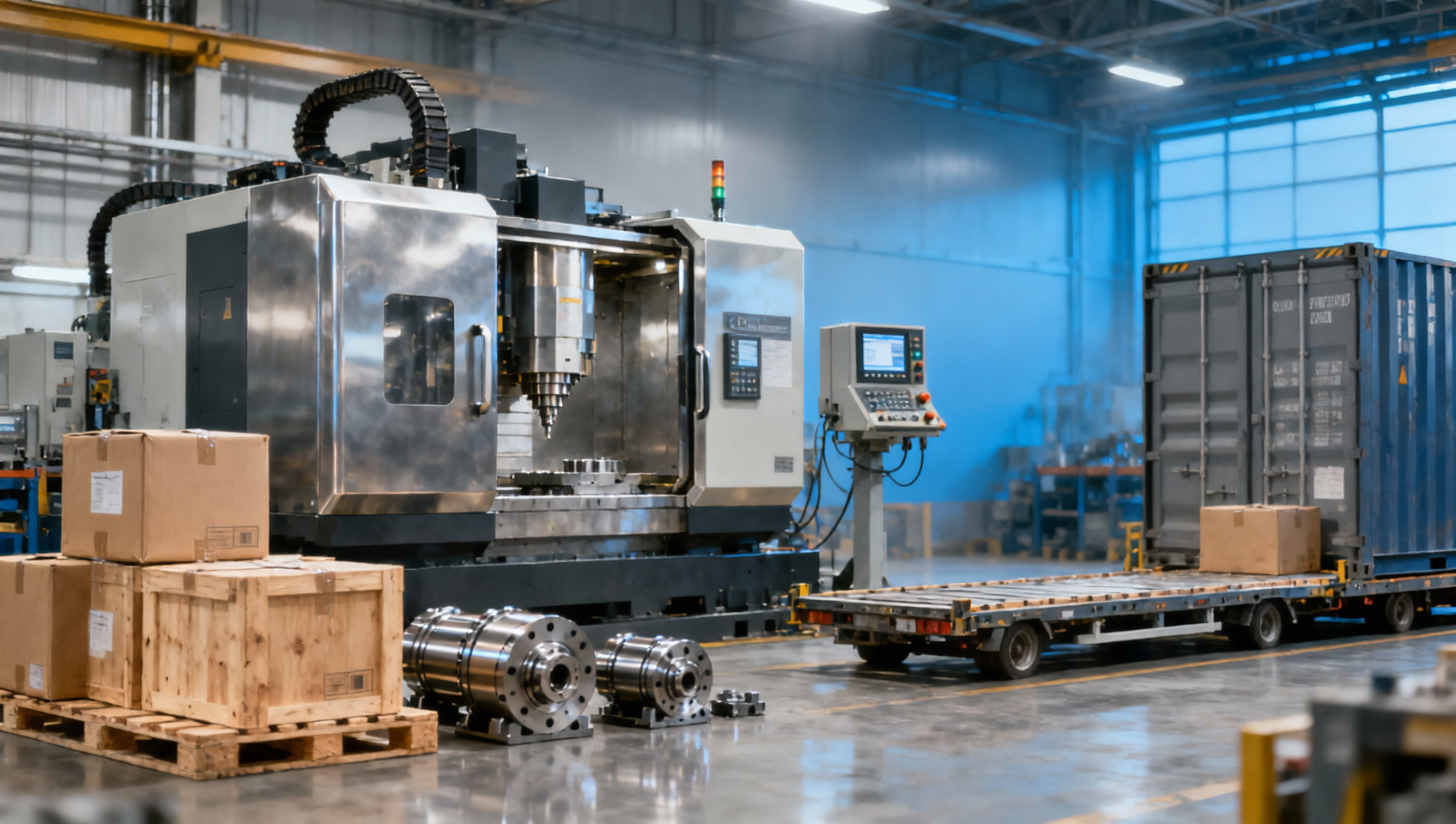
Supply chain disruptions are no longer a short-term issue for CNC buyers and manufacturers. They now directly affect delivery schedules, installation planning, production launches, and capital investment decisions across the global manufacturing sector. For companies sourcing CNC lathes, machining centers, CNC milling systems, or automated production equipment, the key question is not simply whether delays happen, but how those delays affect cost, capacity, and operational risk—and what practical steps can reduce the impact.
In most cases, supply chain delays impact CNC equipment delivery in four major ways: longer lead times, less predictable delivery dates, higher total procurement costs, and more pressure on production planning. For procurement teams, operators, and business evaluators, the most useful response is a structured approach: identify the sources of delay, understand which components are most vulnerable, and build purchasing and scheduling strategies around realistic rather than ideal timelines.
What buyers are really affected by when CNC equipment delivery is delayed
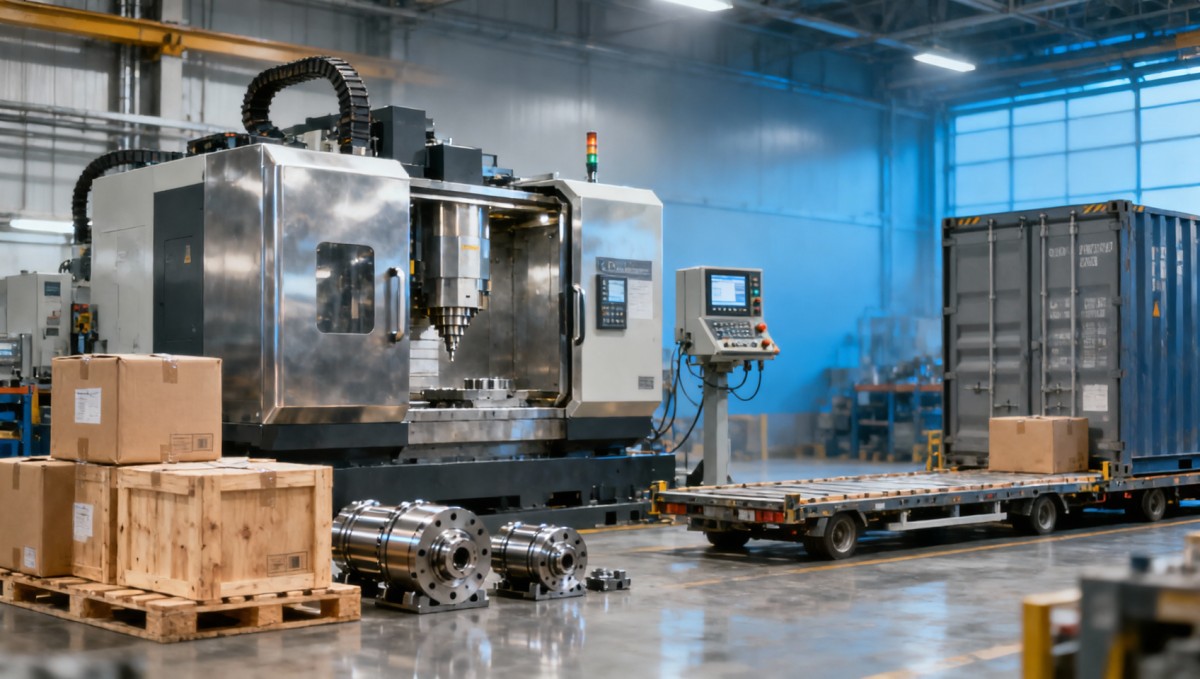
When a CNC machine delivery is postponed, the problem goes far beyond waiting a few extra weeks for equipment to arrive. In many factories, delayed delivery can interrupt an entire production roadmap. A machining center that arrives late may hold up tooling validation, worker training, software setup, fixture preparation, and final customer production commitments.
For different target readers, the impact shows up in different ways:
- Information researchers want to understand the broader machine tool market and why delivery cycles have become unstable.
- Operators and users need to know how delays affect installation, commissioning, spare parts readiness, and production ramp-up.
- Procurement teams focus on lead time reliability, supplier credibility, contract terms, and total landed cost.
- Business evaluators care about ROI timing, capacity expansion risk, and whether a delayed CNC investment still supports business goals.
In practical terms, delayed CNC equipment delivery often creates hidden costs that are larger than the transport delay itself. These may include idle labor, postponed new product introduction, missed customer shipments, higher temporary outsourcing costs, and reduced utilization of planned automated production lines.
Why supply chain delays are happening in the CNC machine tool industry
The CNC machine tool industry depends on a deeply interconnected global supply network. A finished CNC system may require castings, linear guides, ball screws, servo motors, spindles, controllers, electrical components, hydraulic systems, cutting tool interfaces, sensors, sheet metal enclosures, and specialized software integration. If even one critical part is delayed, final assembly and shipment can be pushed back.
Several factors are driving longer and less predictable lead times:
- Electronic component shortages: CNC controllers, drives, PLCs, and industrial sensors often rely on global electronics supply chains that remain vulnerable.
- Longer sourcing cycles for precision components: Spindles, guideways, bearings, and high-accuracy motion parts are not easily replaced with generic alternatives.
- Shipping and logistics instability: Port congestion, freight rate volatility, customs delays, and route disruptions can slow international delivery.
- Regional manufacturing concentration: Many key machine tool parts come from a limited number of industrial clusters in China, Germany, Japan, and South Korea.
- Rising demand for automation: Increased global investment in smart manufacturing, industrial robots, and flexible production lines has put extra pressure on equipment makers and their suppliers.
- Supplier capacity constraints: Even established machine builders may face bottlenecks in fabrication, assembly, testing, and export scheduling.
For buyers, the lesson is clear: CNC equipment delivery is affected not just by the machine manufacturer, but by the resilience of the entire component and logistics ecosystem behind it.
Which CNC equipment categories are most vulnerable to delivery disruption
Not all CNC equipment faces the same level of supply chain risk. Standardized, lower-complexity machines are usually easier to deliver on time than highly customized or automation-linked systems.
The most delay-prone categories often include:
- Multi-axis machining centers that require advanced control systems, high-performance spindles, and complex testing
- Customized CNC production cells designed around specific part families or manufacturing workflows
- Automated production lines that depend on robots, conveyors, fixtures, software integration, and inter-machine communication
- High-precision CNC lathes and grinding systems with tight accuracy requirements and specialized components
- Machines bundled with turnkey services such as tooling packages, post-process automation, and digital monitoring systems
By contrast, standard vertical machining centers or more common CNC cutting systems may have shorter lead times if suppliers maintain inventory or modular production capacity. However, even standard machines can face delays if key imported electronics or motion-control parts are unavailable.
How delayed delivery affects procurement, operations, and ROI
For procurement teams, a delayed CNC purchase changes the real economics of the project. A machine quoted at an attractive base price may become less competitive if repeated schedule shifts force the buyer to continue using outdated equipment, outsource overflow work, or postpone revenue-generating production.
Operationally, delays can create a chain reaction:
- Plant layout preparation may be completed too early, leaving space unused
- Operator training schedules may need to be moved or repeated
- Tooling and fixtures may arrive before the machine and sit idle
- Customer delivery commitments may need revision
- Automation integration projects may be stalled at the commissioning stage
For business evaluation, the most important point is that delivery timing directly affects payback period. If a CNC machine or automated line was expected to improve throughput, reduce labor dependence, or support a new product launch, every month of delay pushes those benefits further into the future. That means the real ROI should be evaluated based on expected operational start date, not purchase order date.
What buyers should ask suppliers before placing a CNC equipment order
One of the best ways to reduce delivery risk is to ask sharper questions during supplier selection. Many delays are not completely avoidable, but some are predictable if buyers request enough detail early in the process.
Useful supplier questions include:
- What is the current confirmed lead time, and what assumptions is it based on?
- Which components have the highest supply risk in this machine configuration?
- Are controller, spindle, servo, and electrical parts already secured?
- Is the quoted delivery schedule based on standard build or custom engineering?
- How often does the supplier update production and shipping milestones?
- What percentage of recent deliveries were shipped on time?
- Can the supplier offer alternative component brands or configurations if shortages occur?
- What are the terms for schedule changes, partial shipment, or penalty clauses?
These questions help buyers move beyond optimistic sales timelines and assess actual execution reliability. In today’s machine tool market, schedule transparency is often as important as technical specification.
Practical strategies to reduce CNC delivery risk
Companies that manage CNC procurement well usually treat delivery risk as part of the investment decision, not as a separate logistics issue. The most effective strategies are both commercial and operational.
Consider the following actions:
- Order earlier than traditional planning cycles: Especially for custom or automation-heavy projects, historical lead times may no longer apply.
- Prioritize critical-path equipment: Machines that determine launch timing should be sourced first.
- Choose modular or standardized configurations where possible: This can reduce dependency on rare components.
- Build timeline buffers into plant launch plans: Avoid planning installation and customer production start too tightly.
- Qualify backup suppliers or alternative brands: Particularly for tooling, fixtures, and peripheral systems.
- Request milestone visibility: Buyers should track engineering release, component readiness, assembly, testing, and shipment stages.
- Align internal teams early: Procurement, engineering, operations, and finance should use the same delivery assumptions.
For operators and plant managers, it is also helpful to prepare parallel workstreams during the waiting period, such as electrical readiness, compressed air layout, tooling setup, operator skill development, and digital integration planning. This reduces lost time after the machine finally arrives.
How supply chain delays are changing the CNC market long term
Beyond short-term scheduling challenges, ongoing supply chain disruption is changing how companies buy CNC equipment. Many buyers are placing greater value on supplier stability, regional service support, spare parts availability, and transparent communication. Price is still important, but it is no longer the only deciding factor.
Several long-term market shifts are becoming more visible:
- More buyers are diversifying suppliers rather than relying on a single source
- Regional manufacturing and localized assembly are gaining attention
- Suppliers with stronger inventory planning and digital tracking systems are becoming more competitive
- Procurement teams are evaluating lifecycle support, not just machine purchase price
- Automation projects are being planned with greater risk control and phased implementation
For the global manufacturing industry, this means CNC equipment purchasing is becoming more strategic. Delivery reliability, service infrastructure, and supply chain resilience now influence purchasing decisions almost as much as cutting performance, precision, or machine speed.
Conclusion: delivery delays matter most when buyers fail to plan for them
Supply chain delays impact CNC equipment delivery by increasing lead times, reducing schedule certainty, raising indirect costs, and putting pressure on production planning. For buyers in the CNC machine tool industry, the biggest risk is not simply a late machine—it is making investment, capacity, and customer commitments based on unrealistic timing assumptions.
The most effective response is practical and informed: understand where delays come from, identify the most vulnerable equipment types, evaluate suppliers on delivery transparency as well as technical capability, and plan operations around realistic lead times. For procurement teams, operators, and business decision-makers, this approach turns supply chain uncertainty from a surprise into a manageable part of modern manufacturing strategy.
Recommended for You
![]() China Releases First Eastern Sea Seabed Elemental MapGlobal Machine Tool Trade Research Center
China Releases First Eastern Sea Seabed Elemental MapGlobal Machine Tool Trade Research Center![]() AIMM National Standard Advances for CNC Smart Factory CertificationManufacturing Policy Research Center
AIMM National Standard Advances for CNC Smart Factory CertificationManufacturing Policy Research Center![]() eVTOL Mass Production Drives CNC Export GrowthGlobal Machine Tool Trade Research Center
eVTOL Mass Production Drives CNC Export GrowthGlobal Machine Tool Trade Research Center![]() China Launches World's Largest Agri-Meteorological Observation NetworkManufacturing Market Research Center
China Launches World's Largest Agri-Meteorological Observation NetworkManufacturing Market Research Center![]() Robotics ToB Scaling Hits Data Bottleneck in CNC AI InspectionCNC Machining Technology Center
Robotics ToB Scaling Hits Data Bottleneck in CNC AI InspectionCNC Machining Technology Center![]() SAMR to Complete 1,800+ Standards Revisions in 2026Manufacturing Policy Research Center
SAMR to Complete 1,800+ Standards Revisions in 2026Manufacturing Policy Research Center


Aris Katos
Future of Carbide Coatings
15+ years in precision manufacturing systems. Specialized in high-speed milling and aerospace grade alloy processing.
▶
China Releases First Eastern Sea Seabed Elemental MapGlobal Machine Tool Trade Research Center▶
How Supply Chain Delays Impact CNC Equipment DeliveryGlobal Machine Tool Trade Research Center▶
Iran Tightens Hormuz Strait Control, CNC Equipment Shipping Delays ExpectedGlobal Machine Tool Trade Research Center▶
U.S.-Iran Strait of Hormuz Clash Raises Oil Prices, Impacts Precision Manufacturing LogisticsGlobal Machine Tool Trade Research Center▶
Global Manufacturing Lead Times Improve but Not EverywhereGlobal Machine Tool Trade Research Center
Mastering 5-Axis Workholding Strategies
Join our technical panel on Nov 15th to learn about reducing vibrations in thin-wall components.

Providing you with integrated sanding solutions
Before-sales and after-sales services
Comprehensive technical support