• Global CNC market projected to reach $128B by 2028 • New EU trade regulations for precision tooling components • Aerospace deman
NYSE: CNC +1.2%LME: STEEL -0.4%

What Trade Statistics Say About Machine Tool Demand
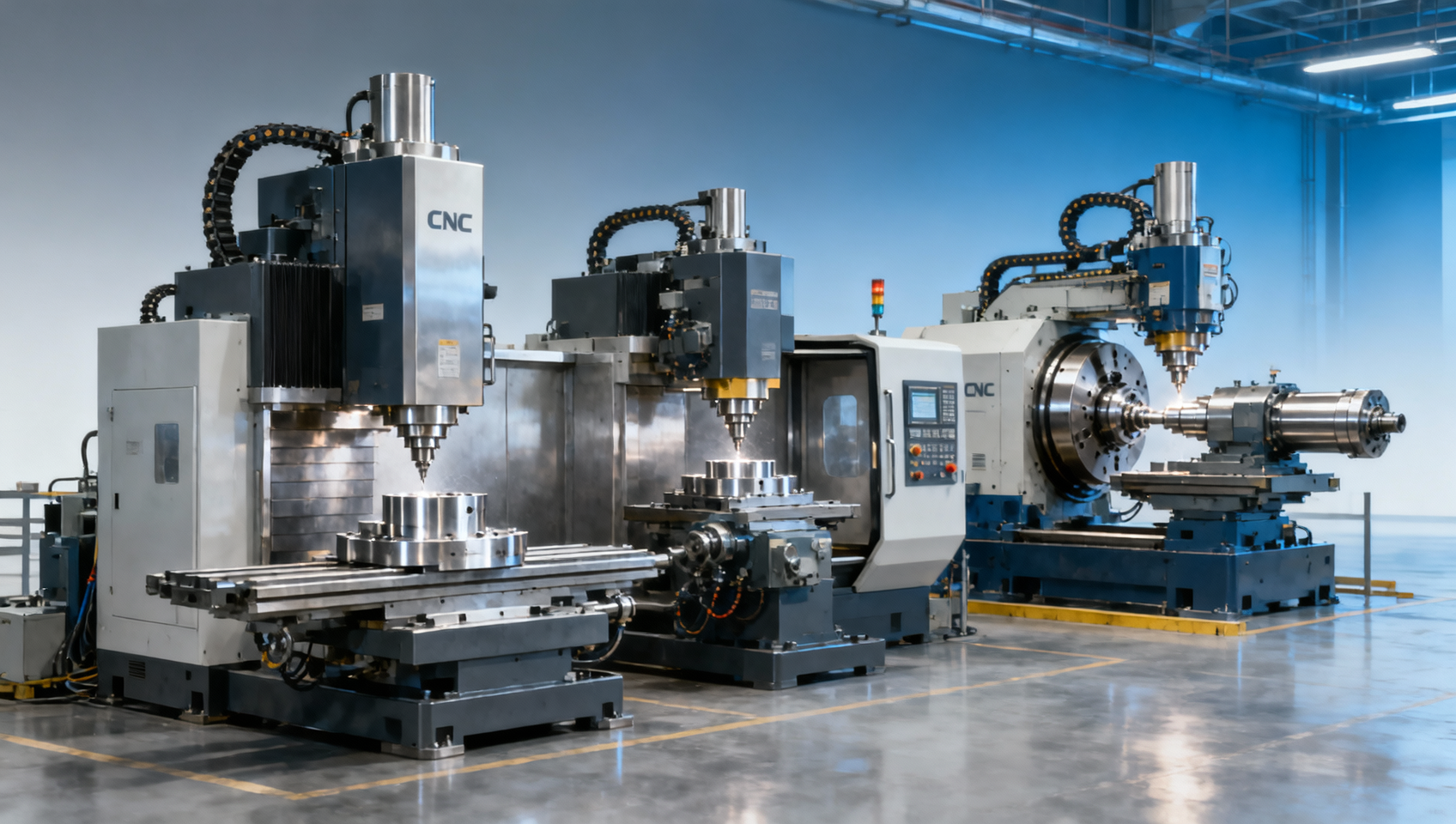
Trade statistics offer a clear lens into shifts in the Machine Tool Market, revealing how Global Manufacturing is responding to rising demand for industrial CNC, CNC milling, and automated production solutions. From metal machining and CNC cutting to advanced Automated Production Line investments, these figures help buyers, operators, and analysts understand where the Manufacturing Industry is heading.
For research teams, trade flows help identify where capacity is expanding and where replacement cycles are accelerating. For machine users and operators, import and export patterns often point to which machine categories are gaining shop-floor relevance, from CNC lathes to 5-axis machining centers. For procurement and business evaluation teams, statistics can reveal whether current demand is driven by short-term inventory adjustments or by longer-term industrial investment.
In the machine tool industry, trade data should never be read as a simple volume chart. It needs to be connected with production lead times, downstream sectors, tooling consumption, automation upgrades, and regional manufacturing policy. When interpreted correctly, these signals can support better sourcing decisions, more accurate market timing, and smarter allocation of capital budgets over the next 12 to 36 months.
How Trade Statistics Reflect Real Machine Tool Demand
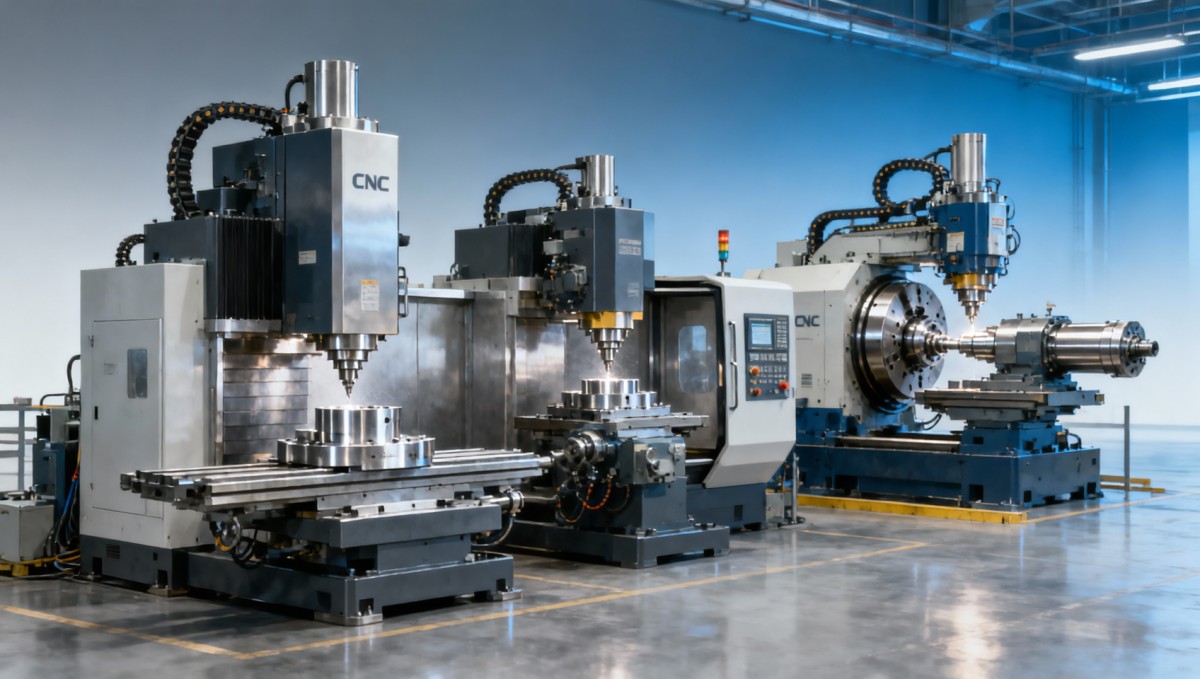
Trade statistics in the machine tool sector usually capture changes in cross-border movement of finished machines, major components, and in some cases tooling systems. While they do not show every local transaction, they often reveal directional demand earlier than annual equipment surveys. A sustained rise in imports over 2 to 4 quarters can indicate that manufacturers are expanding output, replacing older assets, or building new capacity in response to automotive, aerospace, electronics, or energy-sector demand.
Demand is rarely uniform across all machine categories. CNC milling machines, turning centers, grinding equipment, and multi-axis systems often move on different cycles. A market may show flat total import value while still experiencing strong growth in high-precision equipment above the mid-range price band. That matters for suppliers and buyers because value growth can signal a shift toward tighter tolerances, more automation, and better software integration rather than simple unit expansion.
Another important point is timing. Machine tool procurement usually follows downstream order visibility with a lag of roughly 3 to 9 months. If metalworking exports, industrial component production, or EV-related investment rise first, machine tool trade may strengthen in the following quarters. This makes trade statistics especially useful for commercial teams trying to anticipate demand before standard capital equipment budgets are publicly visible.
What buyers should look for in trade data
Procurement teams should not focus only on whether import value is increasing. They should compare value growth with estimated unit growth, supplier concentration, and machine category mix. If value rises by 15% while unit volume grows only 4%, the market may be moving toward more advanced machining centers, integrated probing systems, or automated pallet solutions. This often changes after-sales support requirements, installation time, and operator training needs.
Key indicators that add context
- Quarter-over-quarter changes across at least 3 consecutive periods, which help separate seasonal movement from structural demand.
- Import value versus local production trends, useful for judging whether domestic makers are meeting standard demand or whether buyers are seeking higher-end foreign equipment.
- Growth in related categories such as cutting tools, fixtures, robot cells, and spindle components, which can indicate broader manufacturing upgrades.
- Regional concentration by country, especially in China, Germany, Japan, and South Korea, where industrial clusters strongly influence supply capability.
These indicators help transform a basic trade figure into a practical demand signal. For example, if imports of machining centers rise while cutting tool imports also expand and average lead times move from 8 weeks to 14 weeks, the demand story is more likely to be real and capacity-driven rather than speculative stock building.
Which Machine Tool Categories Show the Strongest Signals
Not all machine tools respond equally to changes in global trade. Entry-level equipment may track general manufacturing activity, but higher-value CNC systems often follow strategic investment in productivity, labor efficiency, and quality control. In recent years, categories linked to digital integration and flexible production have tended to attract more attention, especially in sectors where product complexity and precision requirements continue to rise.
For operators, the strongest signal is often not total machine count but the type of machine being installed. A 3-axis vertical machining center serves a different production model from a 5-axis system with automation interface capability. Trade data showing stronger movement in advanced equipment usually suggests that factories are preparing for shorter production runs, tighter dimensional control, or mixed-model manufacturing.
The table below outlines how major machine tool categories are typically read by procurement and market analysts when reviewing trade-related demand signals.
A key conclusion from this comparison is that rising demand in CNC milling and multi-axis systems often says more about the future direction of manufacturing than growth in lower-complexity equipment alone. It suggests increasing demand for flexibility, fewer setups, and more integrated processing in a single cycle.
How this affects shop-floor operations
When trade data points to growth in advanced machine categories, operators should prepare for more than just installation. They may need updated tool libraries, fixture redesign, spindle utilization planning, and training on probing or automation interfaces. In many facilities, productivity gains are realized only after 6 to 12 weeks of process stabilization, not on day one.
Maintenance teams should also pay attention. Higher-value equipment often requires stricter coolant management, thermal control, axis calibration intervals, and software update planning. A shop that moves from conventional CNC turning into integrated flexible production must usually expand preventive maintenance discipline from monthly checks to weekly or even per-shift verification in critical cells.
Regional Trade Patterns and What They Mean for Global Manufacturing
Regional trade patterns help explain not only where machine tools are sold, but also why demand takes different forms. China often reflects large-scale industrial capacity build-out and broad metalworking demand. Germany and Japan frequently signal high-end precision equipment movement and export-oriented manufacturing investment. South Korea tends to show concentrated demand linked to electronics, automotive, and highly integrated production environments.
For business evaluators, the most useful comparison is not country versus country in isolation, but region versus application. A rise in machine imports into Southeast Asia may reflect supplier diversification and new production footprints. A rebound in European purchases may signal energy transition projects, aerospace recovery, or modernization of aging machine bases. The strategic meaning changes depending on whether the traded equipment is standard 3-axis capacity or automation-ready precision systems.
Lead time behavior also matters. In a balanced market, common machine tool lead times may range from 8 to 16 weeks, while customized automation-integrated systems often extend to 16 to 32 weeks. When trade demand rises sharply in one region, buyers in other regions may feel the impact through longer delivery windows, tighter availability of spindles, controls, ball screws, or tool changers.
Regional implications for sourcing strategy
The table below shows how procurement teams can translate regional trade signals into sourcing actions. It is not a ranking table; instead, it helps align buying strategy with operational risk and supply continuity.
The main takeaway is that trade statistics should influence sourcing structure, not just supplier preference. A buyer sourcing 10 machines over 2 phases may reduce delivery risk by mixing mature supply bases with newer regional options, especially when controls, service response, and spare parts are critical to uptime.
Questions to ask before acting on regional demand shifts
- Is the demand increase linked to one downstream industry, or to broader manufacturing recovery?
- Will stronger regional imports pressure delivery schedules for the next 90 to 180 days?
- Does the supplier have local application support, parts inventory, and installation capability?
- Are there hidden integration costs related to tooling, automation, power requirements, or operator training?
These questions are practical because regional demand surges can create bottlenecks well before they appear in formal annual reports. In machine tools, the difference between ordering in quarter one and quarter three can materially affect commissioning date and production readiness.
How Procurement Teams Can Turn Trade Data into Better Buying Decisions
Trade statistics are most useful when they are converted into procurement criteria. Buyers should connect external market movement with internal production plans, part complexity, target cycle time, labor availability, and expected return window. A machine that looks competitively priced in a soft market may still be a poor choice if its control system, spindle performance, or automation compatibility limits future expansion.
A practical buying framework often includes at least 4 dimensions: technical fit, delivery reliability, service support, and lifecycle cost. Technical fit includes axis travel, spindle range, repeatability, and workpiece envelope. Delivery reliability includes confirmed lead time, packaging, commissioning schedule, and installation resources. Service support covers spare parts, preventive maintenance, troubleshooting response, and application assistance. Lifecycle cost should consider tooling, energy use, training, downtime risk, and software upgrades over 3 to 5 years.
When trade statistics suggest stronger market demand, procurement teams should tighten specification discipline rather than rush orders. Rising demand can shorten negotiation windows and increase the chance of accepting unclear machine configurations. It is often better to finalize acceptance criteria, tooling interface standards, and training scope before purchase than to correct specification gaps after delivery.
A practical procurement checklist
The following checklist summarizes common decision points that become more important when machine tool demand is increasing and suppliers are operating with longer lead times.
This checklist highlights a recurring issue in strong markets: delivery timing and support readiness can become more important than headline machine price. A lower-cost unit that arrives 10 weeks late or lacks application support can create more production loss than it saves in capital expense.
Common procurement mistakes during high-demand periods
- Buying based on catalog specification without validating part mix, fixture strategy, and cycle-time targets.
- Ignoring future automation needs, even when labor shortage or unmanned shifts are already a strategic concern.
- Accepting vague acceptance standards that do not define tolerance verification, trial parts, or operator training scope.
- Failing to compare total cost over 36 months, including service calls, consumables, and software expansion.
For many factories, the best response to positive trade signals is not simply to buy sooner, but to buy with clearer requirements and stronger implementation planning.
From Market Signal to Factory Implementation
A rise in machine tool demand only creates value when equipment is integrated effectively into production. That means installation planning, operator readiness, tooling standardization, and process validation must be aligned before the machine reaches the floor. In facilities adopting CNC cutting, milling, and automated production line solutions, weak implementation often delays return on investment by 1 to 2 quarters.
Implementation usually works best in 3 stages. First is pre-delivery preparation, including foundation checks, power supply review, coolant planning, chip handling, and ERP or MES interface requirements. Second is commissioning and acceptance, which should include geometry checks, dry runs, trial part verification, and safety validation. Third is optimization, where cycle time, tool life, first-pass yield, and unattended runtime are improved through real production data.
For operators and production supervisors, this stage is where trade statistics become practical. If market demand suggests strong future machine utilization, then implementation should prioritize flexibility and uptime. That may mean standardizing tool holders, keeping backup wear parts, and building setup sheets that reduce changeover time by 10% to 20% across repeating jobs.
Implementation priorities for modern machine shops
- Define acceptance criteria before shipment, including target parts, tolerance checks, and required documentation.
- Prepare operator and maintenance training in advance so the first 2 weeks after installation are productive.
- Align tooling, fixtures, and measuring equipment with the machine’s real application, not just its nominal capacity.
- Track utilization, scrap, and downtime for at least the first 30 to 60 days to identify improvement priorities.
FAQ for researchers, operators, and buyers
Below are common questions that arise when interpreting trade statistics and translating them into machine tool decisions.
How should a buyer read rising import value without rising unit volume?
This often indicates a move toward higher-specification equipment rather than a broad increase in machine count. Buyers should investigate whether the market is shifting toward 5-axis systems, automation interfaces, higher spindle performance, or tighter accuracy requirements. In procurement terms, that means service support and application engineering may become more important than simple price comparison.
What lead-time assumptions are reasonable during stronger demand cycles?
For standard CNC machines, 8 to 16 weeks is a common planning range, but automation-ready or customized systems often require 16 to 32 weeks. Buyers should also add time for tooling, fixtures, freight, installation, and process prove-out. In practice, total readiness may exceed machine factory lead time by 2 to 6 additional weeks.
Which users benefit most from trade-statistics analysis?
Research teams use it for market timing, procurement teams use it for sourcing strategy, operators use it to anticipate technology shifts, and business evaluators use it to understand whether demand is cyclical or structural. It is especially useful for companies serving automotive, aerospace, electronics, energy equipment, and precision component production.
What is the biggest implementation risk after machine purchase?
The biggest risk is assuming the machine alone will improve output. Without stable process setup, training, tooling coordination, and maintenance planning, utilization can stay well below target. Many shops discover that the real bottleneck is not spindle speed or axis travel, but setup discipline, programming quality, or inadequate support during the first 60 days.
Trade statistics do not replace technical evaluation, but they do provide a disciplined way to understand where machine tool demand is growing, which equipment categories are gaining strategic importance, and how global manufacturing is changing. When paired with solid procurement criteria and a realistic implementation plan, these signals can help companies make better decisions on CNC machines, precision machine tools, and automated production line investments.
If you are evaluating machine tool opportunities, comparing sourcing options, or planning upgrades in precision manufacturing, now is the right time to turn market signals into actionable strategy. Contact us to discuss your application needs, request a tailored equipment plan, or learn more about practical solutions for CNC machining, automation, and global manufacturing deployment.
PREVIOUS ARTICLE
NEXT ARTICLE
Recommended for You
![]() China Releases First Eastern Sea Seabed Elemental MapGlobal Machine Tool Trade Research Center
China Releases First Eastern Sea Seabed Elemental MapGlobal Machine Tool Trade Research Center![]() AIMM National Standard Advances for CNC Smart Factory CertificationManufacturing Policy Research Center
AIMM National Standard Advances for CNC Smart Factory CertificationManufacturing Policy Research Center![]() eVTOL Mass Production Drives CNC Export GrowthGlobal Machine Tool Trade Research Center
eVTOL Mass Production Drives CNC Export GrowthGlobal Machine Tool Trade Research Center![]() China Launches World's Largest Agri-Meteorological Observation NetworkManufacturing Market Research Center
China Launches World's Largest Agri-Meteorological Observation NetworkManufacturing Market Research Center![]() Robotics ToB Scaling Hits Data Bottleneck in CNC AI InspectionCNC Machining Technology Center
Robotics ToB Scaling Hits Data Bottleneck in CNC AI InspectionCNC Machining Technology Center![]() SAMR to Complete 1,800+ Standards Revisions in 2026Manufacturing Policy Research Center
SAMR to Complete 1,800+ Standards Revisions in 2026Manufacturing Policy Research Center


Aris Katos
Future of Carbide Coatings
15+ years in precision manufacturing systems. Specialized in high-speed milling and aerospace grade alloy processing.
Mastering 5-Axis Workholding Strategies
Join our technical panel on Nov 15th to learn about reducing vibrations in thin-wall components.

Providing you with integrated sanding solutions
Before-sales and after-sales services
Comprehensive technical support