• Global CNC market projected to reach $128B by 2028 • New EU trade regulations for precision tooling components • Aerospace deman
NYSE: CNC +1.2%LME: STEEL -0.4%

Is Industrial Automation Worth It for Mid Size Factories
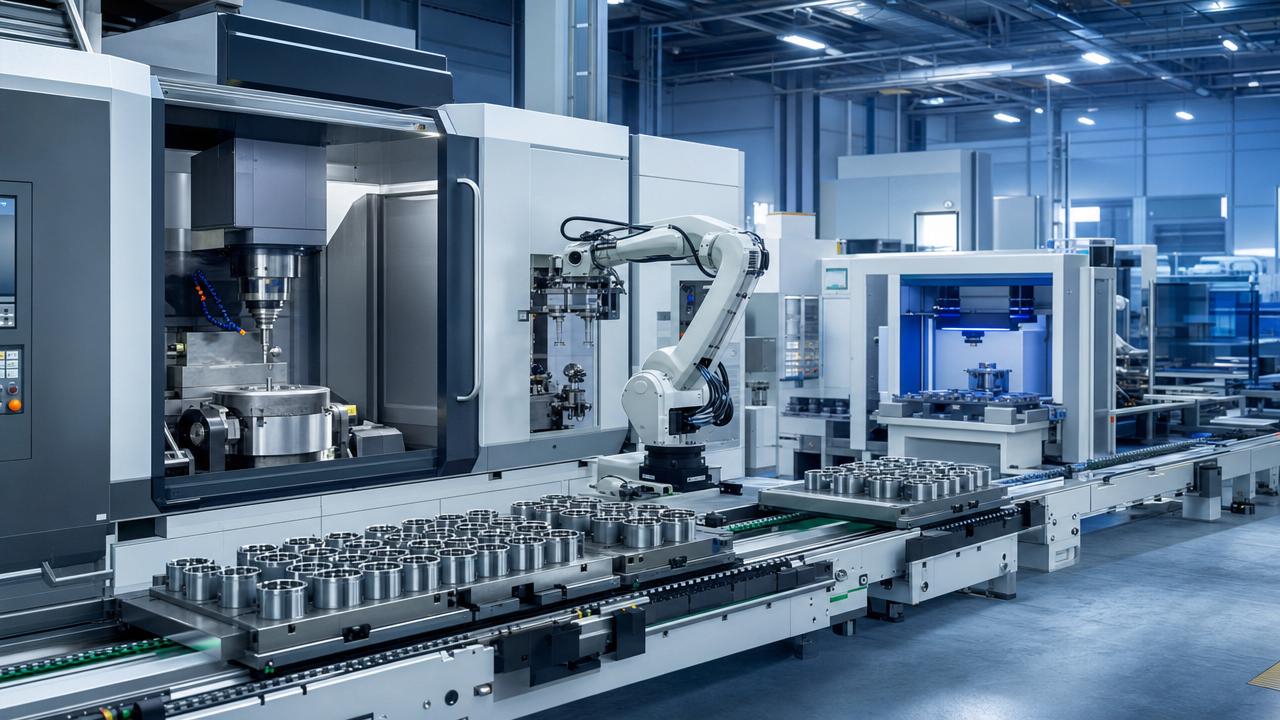
For mid-size factories facing rising labor costs, tighter quality requirements, and growing pressure to scale, Industrial Automation is no longer just a trend—it is a strategic decision. From CNC machining to flexible production lines, the right automation investment can improve efficiency, consistency, and competitiveness. But is the return worth the cost? This article explores the key benefits, risks, and decision factors business leaders need to evaluate.
Why Industrial Automation Has Become a Board-Level Question
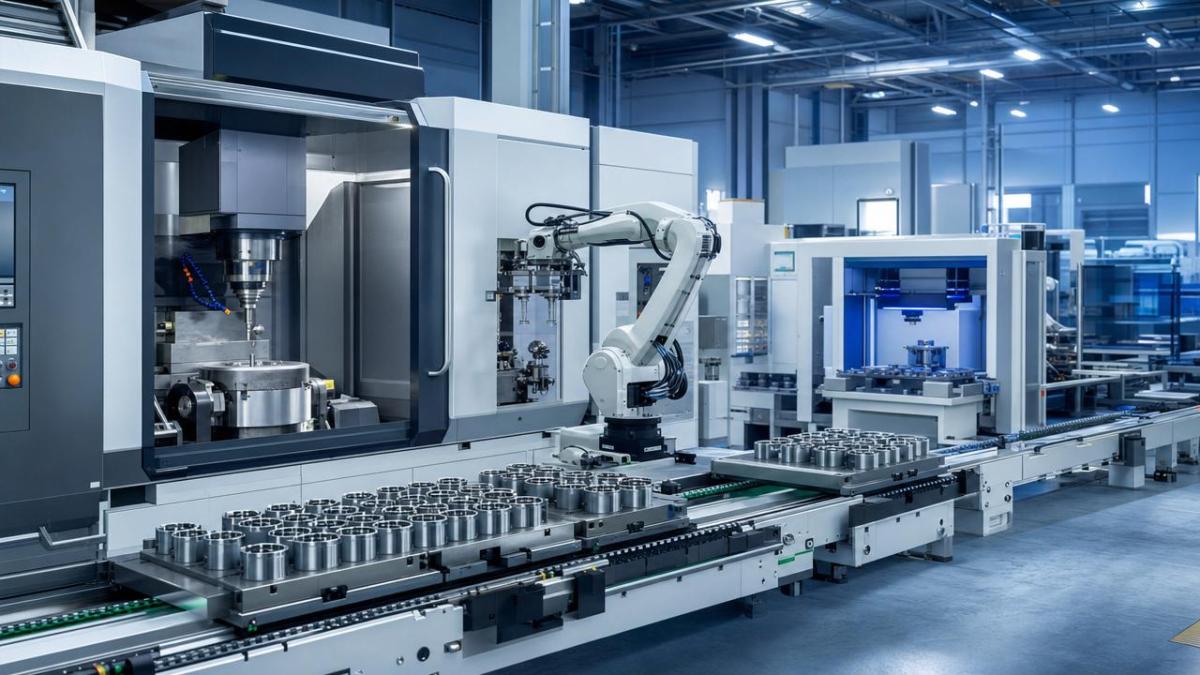
Mid-size factories now operate in a difficult middle ground. They are too large to rely only on manual flexibility, yet often too constrained to absorb waste, inconsistent output, and repeated downtime. In CNC machining, precision manufacturing, and automated assembly, this pressure is even stronger because tolerances are tighter and delivery windows are shorter.
Industrial Automation matters because it changes cost structure, process stability, and production visibility at the same time. For decision-makers, the real question is not whether automation is fashionable. It is whether the factory can remain competitive without upgrading critical processes.
In machine tool environments, automation can include robotic loading and unloading, pallet systems, in-line measurement, tool life monitoring, automated material handling, and production data integration. These are practical tools for improving spindle utilization, reducing scrap, and supporting repeatable quality across shifts.
- Labor availability is becoming less predictable, especially for skilled machine operators, setup technicians, and quality control staff.
- Customer expectations now combine low defect rates with shorter lead times and more product variation.
- Energy, tooling, and floor-space costs make idle equipment and manual bottlenecks more expensive than they were five years ago.
- Global competitors are adopting digital manufacturing, making process transparency and traceability increasingly important.
For factories serving automotive, aerospace, electronics, or energy equipment supply chains, Industrial Automation also supports documentation, repeatability, and controlled process execution. These are not abstract benefits. They influence quotations, audits, and customer retention.
Where Mid-Size Factories Gain the Most from Industrial Automation
Not every process should be automated first. The best return usually comes from operations with high repetition, measurable cycle loss, quality variation, or safety exposure. In the CNC machine tool industry, some applications consistently deliver stronger business cases than others.
High-value application scenarios
- CNC loading and unloading for repeated part families, especially in turning, milling, and multi-axis machining cells.
- Automated pallet transfer and workpiece routing where setup changeovers slow overall equipment utilization.
- In-line inspection and measurement for parts with strict dimensional consistency requirements.
- Tool monitoring and tool management where scrap is often caused by late tool replacement or unstable cutting conditions.
- Flexible production lines for mixed batches, where manual scheduling and handling create hidden delays.
Factories with stable part families usually benefit faster because the process is easier to standardize. However, even high-mix environments can justify Industrial Automation if the design focuses on modular fixturing, programmable handling, and fast recipe switching rather than rigid one-part automation.
The table below compares common automation scenarios for mid-size manufacturers and shows where business leaders typically see the strongest operational impact.
The strongest candidates are not always the most advanced technologies. Often, the first successful Industrial Automation project is the one that removes the most obvious bottleneck with the least process disruption.
What Decision-Makers Should Compare Before Investing
A common mistake is comparing automation proposals only by purchase price. For mid-size factories, a better approach is to compare impact on throughput, staffing structure, scrap exposure, integration complexity, and expansion flexibility. Industrial Automation should be evaluated as a production system, not just as equipment.
Key evaluation dimensions
- Cycle-time economics: Measure not only machine cycle time but operator travel, waiting, setup loss, and inspection delay.
- Quality stability: Estimate how much cost comes from scrap, rework, and customer complaints tied to manual inconsistency.
- Integration effort: Check compatibility with existing CNC controls, fixtures, ERP or MES interfaces, and safety systems.
- Scalability: Ask whether the solution can support future part variants, higher volume, or additional stations.
- Serviceability: Review spare parts access, remote support options, training needs, and expected maintenance burden.
This comparison table helps decision-makers separate low upfront cost from strong long-term value when planning Industrial Automation in CNC and precision manufacturing environments.
For many mid-size factories, the most practical path is phased Industrial Automation: begin with one cell, standardize results, and then expand. This approach lowers risk and produces internal evidence before larger capital approval.
How to Estimate Whether the Return Is Really Worth It
Return on automation is often underestimated when managers look only at labor replacement. In reality, Industrial Automation creates value through several channels at once: more machine hours, less scrap, better schedule reliability, lower expediting cost, and stronger customer confidence.
Cost areas to include in your evaluation
- Direct labor savings, including redeployment of operators to higher-value tasks such as setup verification and process control.
- Higher equipment utilization, especially when automated tending extends productive machine time outside normal shifts.
- Reduced scrap and rework through more stable handling, measurement, and tool management.
- Lower overtime, schedule recovery, and premium logistics costs caused by production variability.
- Potential quality and traceability gains that help retain business in regulated or high-spec sectors.
At the same time, decision-makers should include hidden costs. These may involve fixture redesign, guarding, programming, training, layout change, software integration, commissioning time, and temporary production slowdown during implementation.
A strong Industrial Automation business case usually answers four financial questions clearly: How many labor hours are affected? How much additional output becomes sellable? How much quality loss is prevented? How fast can the system ramp to stable operation?
What Risks Can Undermine an Automation Project
Industrial Automation does not fail only because of technology. It often fails because the production logic, staffing model, or implementation sequence is weak. Mid-size factories are especially vulnerable when they expect automation to fix unmanaged process variation.
Common project risks
- Automating an unstable process before solving tool wear, clamping inconsistency, or part-flow imbalance.
- Choosing a system that fits current output but cannot adapt to future product mix or volume changes.
- Ignoring operator training and supervisor buy-in, which leads to poor use of alarms, recipes, and maintenance routines.
- Underestimating the integration effort between CNC machines, robots, conveyors, sensors, and production software.
- Focusing on theoretical cycle time while neglecting real uptime, material availability, and recovery procedures.
A practical safeguard is to map the current process before finalizing the solution. Measure actual machine uptime, operator movement, setup duration, scrap reasons, and queue time between stations. Industrial Automation works best when based on production facts rather than assumptions.
How to Implement Industrial Automation Without Disrupting Output
Decision-makers often delay automation because they fear production interruption. That concern is valid, but it can be managed with a staged rollout. In CNC and precision manufacturing, the best projects usually move from process diagnosis to pilot cell, then to broader standardization.
Recommended implementation sequence
- Select one process with stable demand, clear bottlenecks, and measurable baseline data.
- Confirm part dimensions, handling conditions, fixture repeatability, and machine interface requirements.
- Define target metrics such as cycle reduction, spindle uptime, first-pass yield, and labor reallocation.
- Run pilot commissioning with operator training, alarm logic review, and maintenance planning included.
- Review actual results after stabilization, then decide whether to replicate, scale, or redesign.
For factories using multiple CNC lathes, machining centers, and secondary operations, phased Industrial Automation also makes layout planning easier. It reduces the risk of installing a rigid system that conflicts with future line balancing or product expansion.
What Standards, Safety, and Integration Issues Should Be Reviewed
In addition to financial return, business leaders should review safety, compliance, and data requirements. Industrial Automation in machine tool applications must be evaluated not only for speed, but for guarding logic, emergency response, access control, and process traceability where required by customers.
Checklist for technical and compliance review
- Machine interface compatibility with existing CNC systems, sensors, probing devices, and tool management workflows.
- Safety design covering guarding, interlocks, operator access, manual override procedures, and emergency stops.
- Data requirements for production reporting, part traceability, maintenance history, and quality records.
- Support for common industrial communication practices used in digital manufacturing environments.
- Documentation for installation, commissioning, operator training, and preventive maintenance.
Where customer industries impose additional controls, such as aerospace documentation or automotive quality discipline, Industrial Automation should strengthen process consistency rather than add isolated complexity. The goal is a more controllable factory, not a more complicated one.
FAQ: Practical Questions Business Leaders Ask About Industrial Automation
Is Industrial Automation only suitable for large factories?
No. Mid-size factories often benefit strongly because they have enough production volume for measurable gains but still suffer from manual bottlenecks that larger plants may have already solved. The key is choosing targeted automation rather than copying a large-scale smart factory model.
Which process should be automated first?
Start with the process that combines repeatability, bottleneck impact, and visible financial loss. In many CNC shops, that means machine tending, pallet movement, or in-line inspection. Avoid beginning with the most complex process unless the baseline data is very strong.
How long does it take to see results from Industrial Automation?
That depends on scope, integration complexity, and the maturity of the current process. A focused cell-level project can show operational improvement relatively quickly after stabilization, while line-level automation usually requires a longer planning and ramp-up period. What matters most is realistic commissioning and training time.
Does automation reduce the need for skilled people?
It usually changes the skill mix rather than removing the need for expertise. Operators may spend less time on repetitive handling and more time on setup control, inspection review, troubleshooting, and process optimization. In high-precision manufacturing, skilled oversight remains essential.
What is the biggest mistake when buying Industrial Automation?
Buying a technically impressive system without confirming process readiness, fixture logic, integration requirements, and expansion goals. A simpler, well-matched system often delivers better payback than a highly advanced solution that the factory cannot fully use.
Why the Answer Is Often Yes—But Only with the Right Scope
Is Industrial Automation worth it for mid-size factories? In many cases, yes. But the return depends on fit, execution, and timing. Factories gain the most when they automate real constraints: idle spindle time, unstable quality, manual transfer loss, inconsistent inspection, and labor-intensive repetition.
In the CNC machine tool and precision manufacturing sector, Industrial Automation is especially valuable because it supports the exact priorities customers pay for: accuracy, repeatability, throughput, and traceability. Those advantages matter across automotive, aerospace, electronics, and energy equipment production.
Why Choose Us for Your Automation Evaluation
We focus on the global CNC machining and precision manufacturing industry, with attention to machine tools, automated production lines, precision parts processing, and smart manufacturing trends. That industry focus helps us discuss Industrial Automation from the perspective that matters most to decision-makers: production logic, technical fit, and commercial viability.
If you are assessing an automation project, you can contact us to discuss practical topics such as part characteristics, suitable automation scope, CNC cell configuration, fixture and tool coordination, expected delivery cycle, integration concerns, and quotation planning. We can also help you compare phased solutions, review supplier communication points, and clarify what information should be confirmed before purchase.
For teams preparing a new investment, the most useful next step is a focused discussion around your current bottleneck process. Share your production scenario, target output, quality requirements, and automation goals, and we can help you narrow the options, define evaluation criteria, and prepare for more confident supplier conversations.
Recommended for You
![]() Haidou-2 Submersible Components Pass 10,000-Meter TestMachine Tool Industry Editorial Team
Haidou-2 Submersible Components Pass 10,000-Meter TestMachine Tool Industry Editorial Team![]() Ningxia's Green Power + Compute Convergence Powers Cloud CNC ExportMachine Tool Industry Editorial Team
Ningxia's Green Power + Compute Convergence Powers Cloud CNC ExportMachine Tool Industry Editorial Team![]() China's First Tri-Mix Gas System for Shield Tunneling DebutsMachine Tool Industry Editorial Team
China's First Tri-Mix Gas System for Shield Tunneling DebutsMachine Tool Industry Editorial Team![]() SAMR to Advance 1,800+ Standard Revisions in 2026, CNC Machine Tool Mandatory Standards AcceleratedManufacturing Policy Research Center
SAMR to Advance 1,800+ Standard Revisions in 2026, CNC Machine Tool Mandatory Standards AcceleratedManufacturing Policy Research Center![]() ‘Low-Altitude+’ Smart Inspection Safeguards Beihai MangrovesMachine Tool Industry Editorial Team
‘Low-Altitude+’ Smart Inspection Safeguards Beihai MangrovesMachine Tool Industry Editorial Team![]() HarmonyOS Adapts to Leading CNC ControllersGlobal Machine Tool Trade Research Center
HarmonyOS Adapts to Leading CNC ControllersGlobal Machine Tool Trade Research Center


Aris Katos
Future of Carbide Coatings
15+ years in precision manufacturing systems. Specialized in high-speed milling and aerospace grade alloy processing.
▶
Ningxia's Green Power + Compute Convergence Powers Cloud CNC ExportMachine Tool Industry Editorial Team▶
China Mobile Launches National Integrated Computing Power NetworkMachine Tool Industry Editorial Team▶
What Buyers Miss When Sourcing an Automated Production LineMachine Tool Industry Editorial Team▶
Is Industrial Automation Worth It for Mid Size FactoriesMachine Tool Industry Editorial Team▶
GAIT 2026 to Launch First CNC Smart Production Line Zone in ShenzhenMachine Tool Industry Editorial Team
Mastering 5-Axis Workholding Strategies
Join our technical panel on Nov 15th to learn about reducing vibrations in thin-wall components.

Providing you with integrated sanding solutions
Before-sales and after-sales services
Comprehensive technical support