• Global CNC market projected to reach $128B by 2028 • New EU trade regulations for precision tooling components • Aerospace deman
NYSE: CNC +1.2%LME: STEEL -0.4%

What Buyers Miss When Sourcing an Automated Production Line
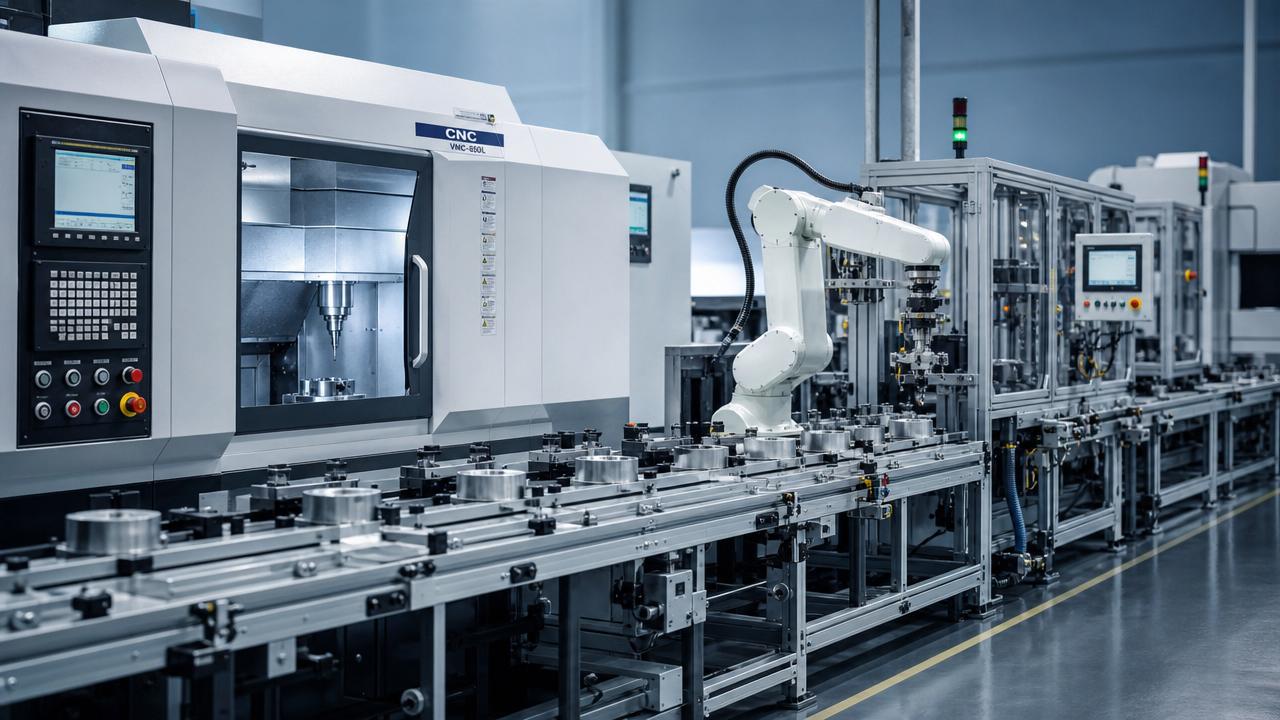
Sourcing an Automated Production Line often looks straightforward on paper, yet many buyers overlook the hidden factors that shape long-term performance, cost, and scalability. Beyond machine specs and initial quotes, issues like integration capability, process stability, maintenance support, and supplier engineering depth can determine whether a project delivers real value. For procurement teams, understanding these overlooked details is essential to making smarter, lower-risk investment decisions.
In CNC machining, precision manufacturing, and flexible assembly, the purchase decision is rarely about one machine. It is about how lathes, machining centers, robots, fixtures, conveyors, inspection stations, software, and operator workflows perform as one system over 3 to 10 years.
A competitive quotation may still hide costly gaps: weak process validation, unclear takt time assumptions, limited spare parts support, or poor compatibility with MES, ERP, and plant utilities. For buyers responsible for output, uptime, and payback, these details matter far more than brochure specifications.
Why an Automated Production Line Is More Than a List of Machines
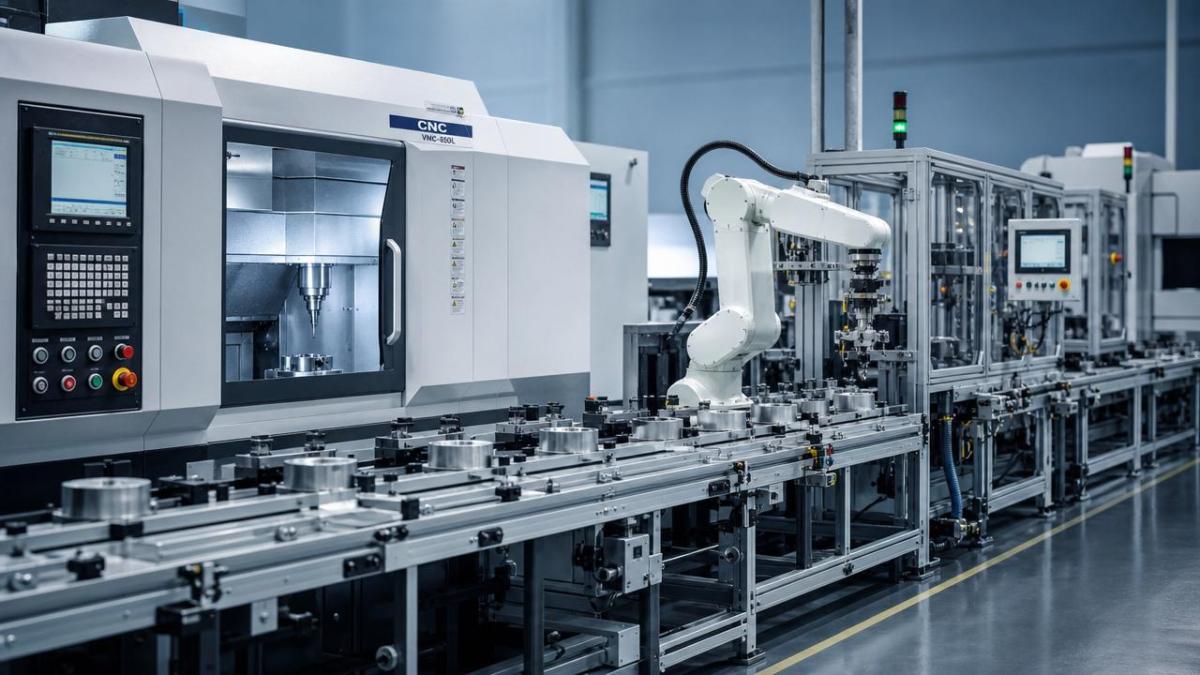
An Automated Production Line combines multiple assets into a synchronized manufacturing flow. In the CNC machine tool industry, that often means raw material feeding, machining, part transfer, in-process measurement, cleaning, marking, assembly, and final inspection working within a takt target such as 45 seconds, 90 seconds, or 3 minutes per part.
Many sourcing teams compare spindle power, axis count, or robot payload first. Those parameters matter, but they only represent one layer. The real purchasing risk lies in whether the complete line can hold repeatability, maintain cycle balance, and recover quickly from stoppages across 2 shifts or even 24/7 production.
The System View Buyers Need
A line with 6 strong standalone machines can still underperform if the handoff logic is weak. If one process station runs at 52 seconds and the next at 68 seconds, the imbalance creates accumulation, idle time, or extra buffer needs. That affects output, labor planning, and floor-space efficiency.
In precision applications such as automotive shafts, aerospace structural parts, or electronics housings, line performance is measured not only by speed but by Cp/Cpk targets, changeover time, scrap rate, and mean time to repair. Buyers who focus only on initial CAPEX often miss these operational cost drivers.
Common hidden system variables
- Cycle time balance across all stations, not just the main CNC unit
- Fixture repeatability, clamping stability, and tool life consistency
- Robot reach, payload, and interference-free motion envelope
- Communication compatibility with PLC, MES, SCADA, or ERP platforms
- Utility demand for air, coolant, chip handling, and power capacity
- Recovery logic after alarm, power loss, or part rejection events
The comparison below shows why line sourcing should move beyond machine-by-machine evaluation and toward system-level validation.
The key takeaway is simple: the line must be judged as a production ecosystem. Buyers who define acceptance only around hardware lists usually face more change requests, delayed ramp-up, and higher unplanned maintenance costs in the first 6 to 12 months.
What Buyers Commonly Miss During Supplier Evaluation
When evaluating suppliers for an Automated Production Line, procurement teams often receive polished layouts, fast quotations, and attractive delivery promises. What is harder to see is whether the supplier has enough engineering depth to design around tolerance risk, future product changes, and real plant conditions.
1. Process engineering depth
A reliable supplier should be able to explain the process chain step by step: rough machining, semi-finishing, finishing, deburring, washing, gauging, and unloading. If a quote only lists equipment but does not include process assumptions, you may be buying capacity without proven manufacturability.
In many CNC applications, one unstable operation can reduce the whole line’s effectiveness by 10% to 20%. For example, poor chip evacuation in deep-hole drilling or unstable clamping on thin-wall components can trigger dimensional drift, alarm frequency, and tool breakage.
2. Integration capability, not just equipment supply
Some vendors are strong machine builders but limited line integrators. Others can source robots and conveyors yet rely heavily on external automation partners. Buyers should ask who owns the full interface responsibility, especially for PLC architecture, HMI logic, safety interlocks, and data communication protocols.
If 3 or 4 subcontractors share one project, troubleshooting during FAT or SAT can become slow and fragmented. A single unresolved interface issue may delay commissioning by 2 to 6 weeks, particularly when machine tools, gauging systems, and handling units come from different sources.
3. Maintenance access and lifetime support
An Automated Production Line that looks compact on a layout may be difficult to maintain in practice. Buyers should check access space for spindle service, gripper replacement, fixture cleaning, filter changes, lubrication points, and sensor inspection. Saving 8 square meters can be meaningless if service time doubles.
Support planning should include preventive maintenance intervals, critical spare parts lists, and realistic lead times. A line using special servo drives, custom grippers, or imported controllers may face 4 to 12 week replacement delays if spare strategy is not defined before purchase.
Supplier questions worth asking
- What assumptions define the quoted cycle time and OEE target?
- Which stations are built in-house, and which are outsourced?
- What is the standard response time for remote and onsite service?
- Which wear parts should be stocked for the first 12 months?
- How is dimensional capability verified before shipment?
- What software backups and electrical documentation are delivered?
The matrix below helps procurement teams compare supplier readiness beyond price and lead time.
A supplier with strong engineering transparency usually gives more practical answers, even if the proposal takes longer to prepare. In B2B manufacturing, a better-defined scope often reduces downstream cost far more than a lower initial quote.
Critical Selection Criteria for Procurement Teams
For buyers in automotive, aerospace, energy equipment, or electronics manufacturing, selecting an Automated Production Line should follow a structured framework. A practical model includes 4 dimensions: process capability, integration fit, service readiness, and scalability.
Process capability under real production conditions
Ask for validation using actual materials, target tolerances, and expected annual volume. A line producing 150,000 parts per year behaves differently from a line producing 1.2 million parts per year. Tool wear, thermal stability, and cleaning effectiveness become much more critical at higher volume.
For precision CNC lines, buyers should verify repeatability thresholds, in-process gauging logic, and reject handling flow. If tolerance demands are within ±0.01 mm or surface finish must stay below Ra 1.6, process controls should be clearly designed into the line rather than treated as optional extras.
Factory integration and digital compatibility
The line should match plant infrastructure from day one. This includes voltage, compressed air pressure, coolant management, chip removal, floor load, and available network architecture. A mismatch in only one utility can create redesign cost or installation delay during the final 10% of the project.
Digital compatibility also matters. Even if full smart factory integration is not required now, buyers should confirm whether the line can support production traceability, alarm history, downtime data, and part-level identification within the next 2 to 3 years.
Scalability and changeover flexibility
A rigid line may be efficient for one SKU but expensive to adapt later. If your roadmap includes 2 to 5 product variants, review fixture modularity, robot program switching, tool magazine capacity, and buffer design. Future flexibility often depends on early engineering decisions that are difficult to retrofit later.
In sectors with fluctuating demand, phased automation can also be smarter than full one-step investment. For example, a line may start with semi-automatic loading and reserve interfaces for robotic loading in phase two after 6 to 18 months of volume validation.
A practical 5-step sourcing checklist
- Define part family, annual volume, takt target, and quality thresholds
- Map process sequence, utilities, layout limits, and data requirements
- Compare suppliers on engineering ownership, not only commercial terms
- Lock FAT, SAT, training, and spare parts scope before PO release
- Plan ramp-up support for the first 30, 60, and 90 days of production
Implementation Risks After the Purchase Order
The sourcing job does not end when the contract is signed. Many Automated Production Line projects struggle during design freeze, FAT, shipment, installation, or ramp-up because technical assumptions were not translated into measurable acceptance criteria.
FAT and SAT should measure production reality
A useful FAT should test more than dry cycle motion. It should verify part flow, tool change logic, alarm handling, traceability functions, and sample production under realistic conditions. For CNC-intensive lines, running a stable batch of 30 to 100 consecutive parts can reveal issues not visible in a 10-minute demo.
SAT should then confirm plant-side readiness: utilities, foundations, communication links, operator access, and safety zoning. If the line achieves target cycle time in FAT but not in the customer plant, the root cause often lies in peripheral conditions rather than core machinery.
Training, documentation, and spare strategy
Operator and maintenance training should be split by role. In many factories, 4 to 8 hours of operator training is not enough for a complex line. A stronger plan includes separate modules for operation, tooling, electrical maintenance, mechanical maintenance, and basic troubleshooting.
Documentation should include electrical drawings, PLC backups, parameter lists, lubrication charts, wear part schedules, and fault recovery guides. Without this package, internal teams become dependent on supplier support for issues that should be resolved locally within 15 to 30 minutes.
Ramp-up expectations must be realistic
Even a well-built Automated Production Line rarely reaches stable output on day one. Buyers should discuss a ramp-up curve in advance, such as 70% output in week 1, 85% in week 3, and target performance after tooling optimization and operator learning. This creates realistic planning for production and inventory teams.
When procurement includes these post-installation elements in the original scope, project risk drops significantly. It also improves accountability because acceptance is tied to defined performance milestones rather than generic statements about “successful commissioning.”
How Buyers Can Make Smarter, Lower-Risk Decisions
The best Automated Production Line sourcing decisions come from asking better questions earlier. Buyers should review not only machine specifications and price, but also process proof, integration ownership, service structure, maintenance access, digital readiness, and expansion potential.
In the CNC machine tool and precision manufacturing sector, long-term value is usually created by stable output, lower downtime, faster changeover, and smoother scale-up. Those results depend on engineering discipline far more than on headline speed or the lowest quote.
If you are evaluating a new line for machining, assembly, or flexible automation, a structured sourcing review can prevent expensive oversights before capital is committed. Contact us to discuss your application, get a tailored solution outline, and explore more manufacturing automation options built around your production goals.
PREVIOUS ARTICLE
Recommended for You
![]() Haidou-2 Submersible Components Pass 10,000-Meter TestMachine Tool Industry Editorial Team
Haidou-2 Submersible Components Pass 10,000-Meter TestMachine Tool Industry Editorial Team![]() Ningxia's Green Power + Compute Convergence Powers Cloud CNC ExportMachine Tool Industry Editorial Team
Ningxia's Green Power + Compute Convergence Powers Cloud CNC ExportMachine Tool Industry Editorial Team![]() China's First Tri-Mix Gas System for Shield Tunneling DebutsMachine Tool Industry Editorial Team
China's First Tri-Mix Gas System for Shield Tunneling DebutsMachine Tool Industry Editorial Team![]() SAMR to Advance 1,800+ Standard Revisions in 2026, CNC Machine Tool Mandatory Standards AcceleratedManufacturing Policy Research Center
SAMR to Advance 1,800+ Standard Revisions in 2026, CNC Machine Tool Mandatory Standards AcceleratedManufacturing Policy Research Center![]() ‘Low-Altitude+’ Smart Inspection Safeguards Beihai MangrovesMachine Tool Industry Editorial Team
‘Low-Altitude+’ Smart Inspection Safeguards Beihai MangrovesMachine Tool Industry Editorial Team![]() HarmonyOS Adapts to Leading CNC ControllersGlobal Machine Tool Trade Research Center
HarmonyOS Adapts to Leading CNC ControllersGlobal Machine Tool Trade Research Center


Aris Katos
Future of Carbide Coatings
15+ years in precision manufacturing systems. Specialized in high-speed milling and aerospace grade alloy processing.
▶
Ningxia's Green Power + Compute Convergence Powers Cloud CNC ExportMachine Tool Industry Editorial Team▶
China Mobile Launches National Integrated Computing Power NetworkMachine Tool Industry Editorial Team▶
What Buyers Miss When Sourcing an Automated Production LineMachine Tool Industry Editorial Team▶
Is Industrial Automation Worth It for Mid Size FactoriesMachine Tool Industry Editorial Team▶
GAIT 2026 to Launch First CNC Smart Production Line Zone in ShenzhenMachine Tool Industry Editorial Team
Mastering 5-Axis Workholding Strategies
Join our technical panel on Nov 15th to learn about reducing vibrations in thin-wall components.

Providing you with integrated sanding solutions
Before-sales and after-sales services
Comprehensive technical support