• Global CNC market projected to reach $128B by 2028 • New EU trade regulations for precision tooling components • Aerospace deman
NYSE: CNC +1.2%LME: STEEL -0.4%

Why Industrial Robotics payback is shorter than many expect
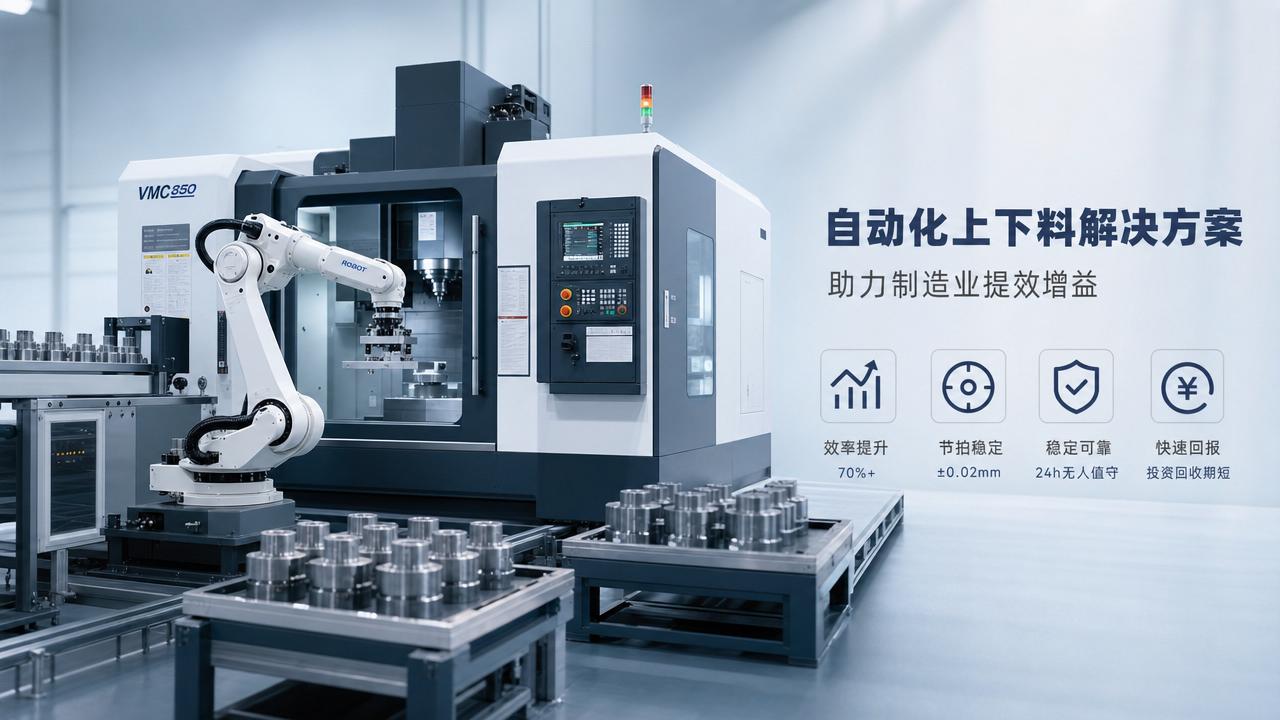
Many manufacturers still assume Industrial Robotics require years to justify the investment, but the reality is often very different. In CNC machining and precision manufacturing, faster cycle times, lower labor dependency, improved consistency, and reduced downtime can shorten payback far more than expected. Understanding where those gains appear is essential before comparing robot cost against manual labor alone.
In the broader machine tool industry, payback is rarely driven by one metric. It often comes from a stack of improvements across machine utilization, part flow, scrap reduction, spindle uptime, labor flexibility, and safer handling of repetitive tasks. When these factors are measured together, Industrial Robotics can become a practical productivity tool rather than a long-term experiment.
Why a checklist approach reveals the true payback of Industrial Robotics
Robot ROI discussions often fail because teams use rough assumptions instead of operational evidence. A checklist forces a clearer review of loading time, setup losses, rework rates, operator allocation, and unattended production potential.
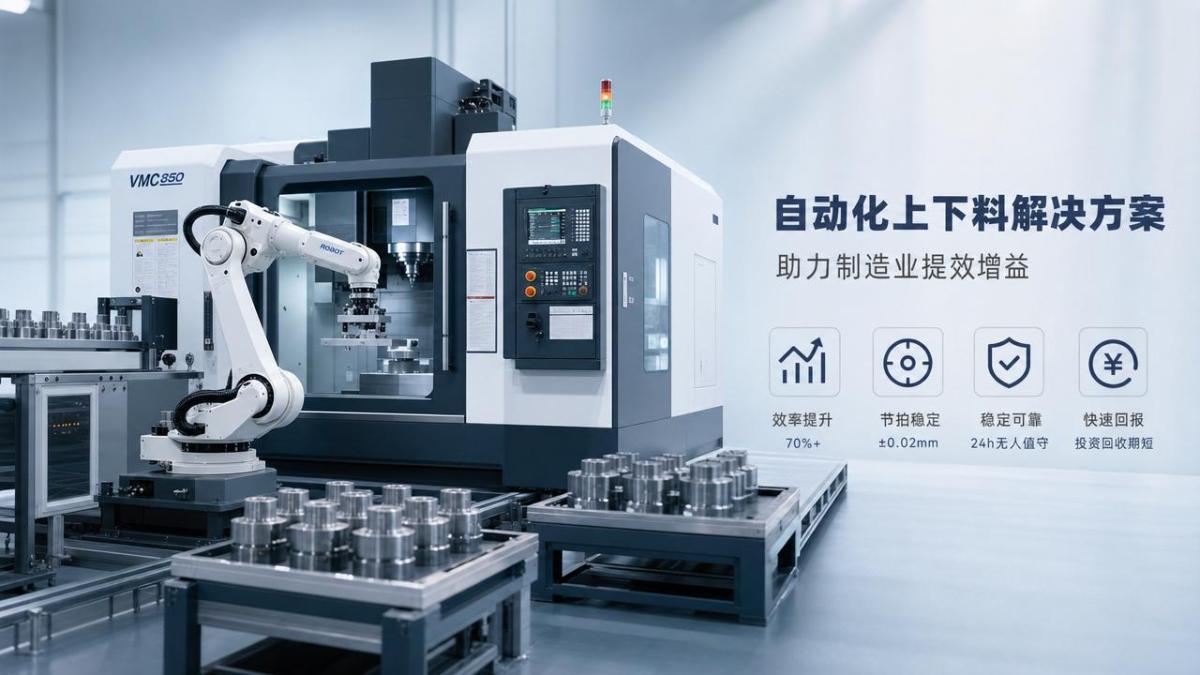
This matters in CNC machining, turning, milling, grinding, and automated assembly. A robot cell may not replace a person one-for-one. Instead, it often raises output from existing assets, which is why Industrial Robotics payback can be shorter than expected.
Core checklist: how to evaluate Industrial Robotics payback realistically
- Measure current machine idle time between cycles, because even short loading delays repeated all day can create major hidden capacity losses.
- Calculate spindle utilization rather than shift utilization, since a machine can appear busy while still losing productive cutting time.
- Track part handling labor separately from machining labor to identify tasks that Industrial Robotics can automate immediately.
- Review changeover frequency and gripper flexibility, because mixed-part production needs different automation economics than high-volume repeat jobs.
- Count scrap, rework, and loading errors caused by inconsistent placement, orientation mistakes, or contamination during manual handling.
- Estimate lights-out or extended-hour production potential, especially where CNC machine tools already have stable programs and predictable tool life.
- Include labor redeployment value, not only labor elimination, because skilled operators can move to setup, inspection, or process optimization.
- Check maintenance simplicity, spare parts access, and integrator support to avoid overstating downtime risk in robot adoption.
- Compare automation cost against output bottlenecks, because a robot on the right machine often pays back faster than one on the busiest line.
- Validate downstream flow, since Industrial Robotics create the most value when inspection, buffering, and part transfer keep pace.
Where the financial gains usually come from
- Reduce non-cutting time by automating part loading, unloading, door operation, and simple in-cell transfer routines.
- Stabilize cycle rhythm and improve part consistency through repeatable handling, especially on tight-tolerance CNC operations.
- Extend productive hours through unattended or low-attendance shifts, weekends, and break periods.
- Lower injury and fatigue exposure in heavy, hot, oily, or repetitive handling environments.
- Protect throughput when labor availability is unstable or cross-trained operators are hard to retain.
Scenario-based payback: where Industrial Robotics move fastest
CNC lathe tending for shaft and disc components
This is one of the clearest use cases for Industrial Robotics. Parts are often repetitive, machine interfaces are straightforward, and loading patterns are stable. Even modest reductions in part exchange time can unlock significant daily spindle hours.
Payback improves further when the same cell supports bar-fed operations, tray handling, or post-machining transfer to gauging and washing. In these cases, robotics reduce waiting time between operations and support continuous material flow.
Machining centers for medium-mix precision parts
Many assume variable part families weaken ROI. In practice, flexible fixtures, vision support, and recipe-based programs allow Industrial Robotics to handle medium-mix production effectively, especially where manual loading limits machine availability.
The key is not maximum complexity. The key is selecting a product family with similar handling logic. When part presentation is standardized, robot cells can deliver fast payback without requiring a fully uniform production environment.
Automated production lines and secondary operations
On integrated lines, Industrial Robotics often pay back through coordination rather than direct labor savings. Robots connect machining, deburring, inspection, marking, and palletizing, reducing queue time and manual interruption.
This is especially relevant in automotive, aerospace suppliers, energy equipment, and electronics components, where takt discipline and traceability are increasingly important. Better process linking often produces a faster return than isolated robot cells.
Commonly overlooked factors that distort payback estimates
Ignoring uptime losses outside the machine cycle
A robot may save only seconds per part, yet those seconds accumulate across every shift. If waiting, searching, lifting, and repositioning are excluded, the baseline is understated and automation looks less attractive than it is.
Focusing only on headcount reduction
The strongest business case for Industrial Robotics often comes from output expansion and labor redeployment. If the analysis counts only eliminated positions, it misses gains in throughput, quality, scheduling stability, and machine utilization.
Using ideal cycle times without part-flow reality
A robot cell is only as effective as upstream and downstream organization. Poor tray presentation, inconsistent raw material, or delayed inspection can reduce expected return. Real payback modeling must reflect actual shop-floor flow.
Overcomplicating the first automation project
Trying to automate every variation at once increases engineering cost and startup risk. A narrower first application usually shortens implementation time and lets Industrial Robotics demonstrate value quickly before broader expansion.
Practical execution steps to shorten Industrial Robotics payback
- Start with a machine or process where loading is repetitive, cycle times are stable, and downtime records are already available.
- Collect one month of baseline data covering spindle utilization, labor touch time, scrap, stoppages, and changeovers.
- Define a simple automation scope first, such as load/unload plus part buffering, before adding vision or complex routing logic.
- Standardize raw part presentation, finished part placement, and fixture interfaces to reduce integration friction.
- Model payback using conservative assumptions for uptime and ramp-up, then compare with best-case and most-likely scenarios.
- Review support capability early, including programming access, maintenance response, operator training, and spare component availability.
Conclusion: Industrial Robotics often pay back through accumulated gains
The reason Industrial Robotics payback is shorter than many expect is simple: the return usually comes from multiple operational improvements at once. Faster loading, better consistency, more usable spindle time, extended production hours, and reduced disruption combine into a stronger financial result.
In CNC machining and precision manufacturing, the best next step is to audit one candidate process with a checklist, quantify hidden losses, and test a focused automation scope. When the baseline is measured correctly, the case for Industrial Robotics often becomes clearer, faster, and more practical than expected.
PREVIOUS ARTICLE
Recommended for You
![]() Delta NC5 CNC System Gains TÜV Safety Certification, Enters BMW Production ValidationMachine Tool Industry Editorial Team
Delta NC5 CNC System Gains TÜV Safety Certification, Enters BMW Production ValidationMachine Tool Industry Editorial Team![]() Vietnam's Draft AI Safety Rule for CNC Machines Requires Dual CertificationManufacturing Policy Research Center
Vietnam's Draft AI Safety Rule for CNC Machines Requires Dual CertificationManufacturing Policy Research Center![]() First CNC Machine Carbon Footprint Guide Released in ChinaManufacturing Policy Research Center
First CNC Machine Carbon Footprint Guide Released in ChinaManufacturing Policy Research Center![]() Brazil INMETRO Launches Spot Inspections on CNC LathesMachine Tool Industry Editorial Team
Brazil INMETRO Launches Spot Inspections on CNC LathesMachine Tool Industry Editorial Team![]() Japan METI Green Subsidy: Up to ¥4M for Chinese High-Efficiency CNC SystemsManufacturing Policy Research Center
Japan METI Green Subsidy: Up to ¥4M for Chinese High-Efficiency CNC SystemsManufacturing Policy Research Center![]() Red Sea Shipping Crisis Escalates: CNC Equipment Delays Hit 14.2 Days on Asia-Europe RoutesManufacturing Market Research Center
Red Sea Shipping Crisis Escalates: CNC Equipment Delays Hit 14.2 Days on Asia-Europe RoutesManufacturing Market Research Center


Aris Katos
Future of Carbide Coatings
15+ years in precision manufacturing systems. Specialized in high-speed milling and aerospace grade alloy processing.
▶
When an Automated Production Line becomes hard to maintainMachine Tool Industry Editorial Team▶
Why Industrial Robotics payback is shorter than many expectMachine Tool Industry Editorial Team▶
When an Automated Production Line becomes hard to maintainMachine Tool Industry Editorial Team▶
Industrial Automation mistakes that raise operating costsMachine Tool Industry Editorial Team▶
Are Industrial Robotics worth the cost for small plants?Machine Tool Industry Editorial Team
Mastering 5-Axis Workholding Strategies
Join our technical panel on Nov 15th to learn about reducing vibrations in thin-wall components.

Providing you with integrated sanding solutions
Before-sales and after-sales services
Comprehensive technical support