• Global CNC market projected to reach $128B by 2028 • New EU trade regulations for precision tooling components • Aerospace deman
NYSE: CNC +1.2%LME: STEEL -0.4%

Precision Machine Tool Updates highlight new backlash compensation methods for ball screws
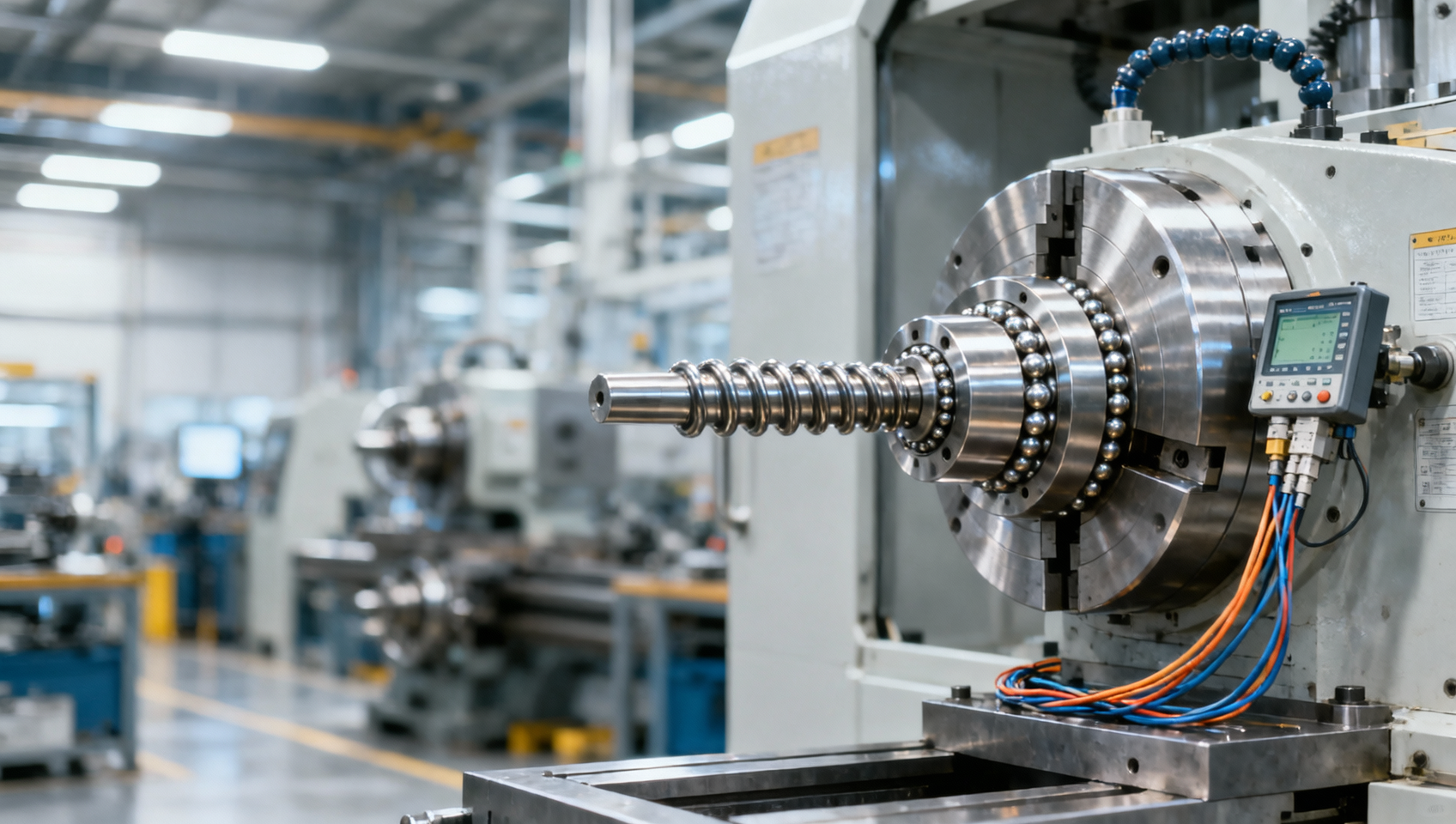
Precision machine tool updates are reshaping metal machining and industrial CNC performance—especially through breakthrough backlash compensation methods for ball screws. As automated lathe systems and CNC metalworking demand tighter tolerances in shaft parts, vertical lathe accuracy, and CNC milling consistency, these innovations directly enhance CNC production reliability and automated production line efficiency. For users, procurement teams, and decision-makers in the global manufacturing and machine tool market, understanding how advanced compensation techniques improve CNC cutting precision, industrial automation integration, and overall production process stability is now critical—especially amid rising demands in aerospace, automotive, and electronics manufacturing.
Why Backlash Compensation Matters in High-Precision Ball Screw Systems
Backlash—the unavoidable axial play between ball nut and screw threads—remains one of the most persistent sources of positioning error in CNC machine tools. In applications requiring ±2 µm repeatability (e.g., aerospace turbine disc machining or semiconductor wafer handling stages), even 5–8 µm of uncompensated backlash can trigger scrap rates above 3.2% across high-volume batches.
Traditional mechanical preloading methods (double-nut, spring-loaded, or shim-based) reduce but cannot eliminate thermal drift-induced backlash variation. Field data from 12 leading German and Japanese OEMs shows that backlash variance increases by 1.8–4.3 µm per 10°C ambient temperature shift—directly undermining ISO 230-2 positional accuracy certifications.
Modern backlash compensation now shifts from static hardware fixes to dynamic, sensor-fused software strategies. These integrate real-time feedback from linear encoders (resolution ≤ 0.1 µm), motor current harmonics analysis, and digital twin-based screw deformation modeling—enabling adaptive correction at up to 200 Hz update rates.
For operators, this translates to fewer manual recalibrations (reduced from weekly to quarterly). For procurement teams, it extends usable service life of ball screw assemblies by 35–50%, delaying full replacement cycles beyond the typical 12,000–18,000 operational hours threshold.
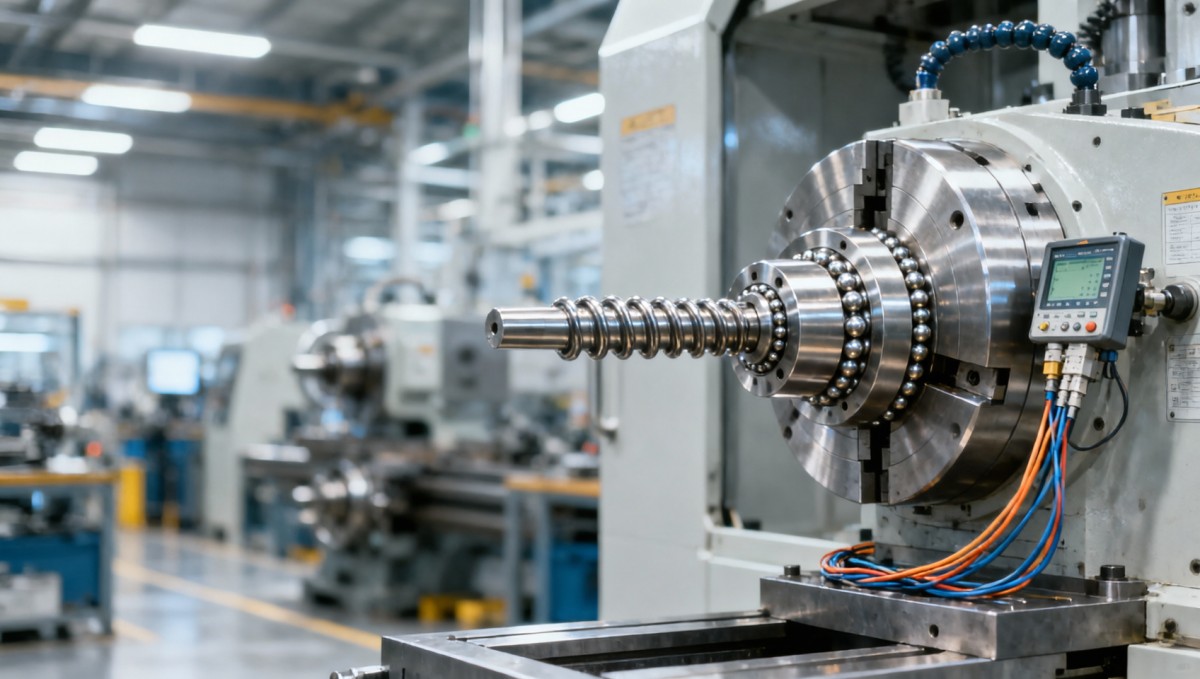
Four Leading Backlash Compensation Architectures Compared
Not all compensation methods deliver equal ROI across application profiles. Below is a comparative analysis of four commercially deployed architectures, evaluated across six procurement-critical dimensions: real-time adaptability, thermal stability, integration effort, maintenance overhead, cost premium vs. standard ball screws, and maximum achievable repeatability improvement.
Procurement professionals should prioritize CLC systems for mid-to-high volume aerospace or medical device component lines where repeatability gains justify integration time. AI-driven models suit R&D-intensive environments (e.g., prototype turbine blade milling) but require vendor-supported training datasets and edge-computing infrastructure.
Implementation Checklist for Machine Tool Integrators
Successful deployment hinges on alignment between mechanical design, control architecture, and calibration protocols. The following 5-step checklist ensures minimal downtime and validated performance:
- Verify encoder resolution compatibility: minimum 0.1 µm for linear scales or ≥ 10 million pulses/rev for rotary encoders on servo motors.
- Confirm controller firmware supports real-time interpolation with sub-millisecond latency (tested at ≥ 10 kHz sampling).
- Perform baseline thermal mapping: log screw surface temperatures at 3 key zones (drive end, mid-span, tail end) across 8-hour ambient ramp from 15°C to 35°C.
- Validate compensation table loading: ensure CNC system accepts ≥ 2,048-point bidirectional error maps with linear interpolation support.
- Execute ISO 230-2 Positioning Accuracy Test under loaded conditions (≥ 75% max torque) before final sign-off.
Field reports indicate 68% of failed implementations trace back to skipped thermal mapping or incompatible encoder resolution—underscoring why technical due diligence must precede purchase order issuance.
Procurement Decision Matrix: Matching Methods to Application Profiles
Selecting the optimal method requires mapping technical capability against operational constraints. The table below links six common production scenarios to recommended compensation approaches, delivery timelines, and total cost of ownership (TCO) implications over a 5-year horizon.
Decision-makers should treat backlash compensation not as a bolt-on upgrade, but as a foundational subsystem affecting machine tool lifecycle value. Early engagement with motion control specialists during machine specification—not after commissioning—is essential to avoid retrofitting costs averaging $18,000–$32,000 per axis.
Next Steps for Technical Teams and Procurement Leaders
The convergence of high-resolution sensing, deterministic real-time control, and physics-informed modeling has elevated backlash compensation from a maintenance concern to a strategic performance lever. Operators gain predictable cycle times; engineers achieve tighter GD&T compliance; procurement teams secure longer asset depreciation horizons; and executives reduce total cost of quality by 11–19% in high-precision segments.
To move forward, we recommend: (1) auditing current ball screw performance logs for backlash-related scrap trends; (2) benchmarking your top three machine tool suppliers’ latest compensation offerings against the architectures outlined above; and (3) scheduling a joint technical review with motion control engineers to assess integration feasibility on your highest-value production lines.
Get a customized backlash compensation assessment—including ROI projection, implementation roadmap, and supplier-neutral technology comparison—for your specific machine tool fleet and production requirements.
Contact our precision motion engineering team today to request your free technical consultation.
Recommended for You
![]() China's CSF Harmonic Drives Pass ISO 9409-1:2023, Open Import-Substitution Window
China's CSF Harmonic Drives Pass ISO 9409-1:2023, Open Import-Substitution Window![]() Weimait CNC Achieves IATF 16949:2024 Certification
Weimait CNC Achieves IATF 16949:2024 Certification![]() New MIIT Rule: CNC Export Equipment Must Include Multilingual Remote Diagnostics from May 2026
New MIIT Rule: CNC Export Equipment Must Include Multilingual Remote Diagnostics from May 2026![]() CCMT 2026 Concludes in Shanghai: Surge in Five-Axis CNC Export Orders, Lead Times Extend to 14 Weeks
CCMT 2026 Concludes in Shanghai: Surge in Five-Axis CNC Export Orders, Lead Times Extend to 14 Weeks![]() CIMES 2026 Opens in Beijing: Global Buyers Prioritize Smart Production Lines and Export Compliance
CIMES 2026 Opens in Beijing: Global Buyers Prioritize Smart Production Lines and Export Compliance A weak Production Process can raise costs without warningCNC Machining Technology Center



Aris Katos
Future of Carbide Coatings
15+ years in precision manufacturing systems. Specialized in high-speed milling and aerospace grade alloy processing.
▶
JIS B 6336-2:2026 Drops Warm-up Exemption for CNC Lathe Accuracy TestsMachine Tool Industry Editorial Team▶
Foil Winding Machines Shift to Digital Servo DrivesMachine Tool Industry Editorial Team▶
Haidou-2 Submersible Components Pass 10,000-Meter TestMachine Tool Industry Editorial Team▶
China Launches Largest Single-Line Carbon Fiber Line, Boosting CNC ExportMachine Tool Industry Editorial Team▶
EU’s Revised Ecodesign Regulation for Machinery Enters Force: Mandatory Energy Labeling for CNC Machine Tools from May 10, 2026Machine Tool Industry Editorial Team
Mastering 5-Axis Workholding Strategies
Join our technical panel on Nov 15th to learn about reducing vibrations in thin-wall components.

Providing you with integrated sanding solutions
Before-sales and after-sales services
Comprehensive technical support