• Global CNC market projected to reach $128B by 2028 • New EU trade regulations for precision tooling components • Aerospace deman
NYSE: CNC +1.2%LME: STEEL -0.4%

Vertical lathe selection gets harder when workpiece height increases
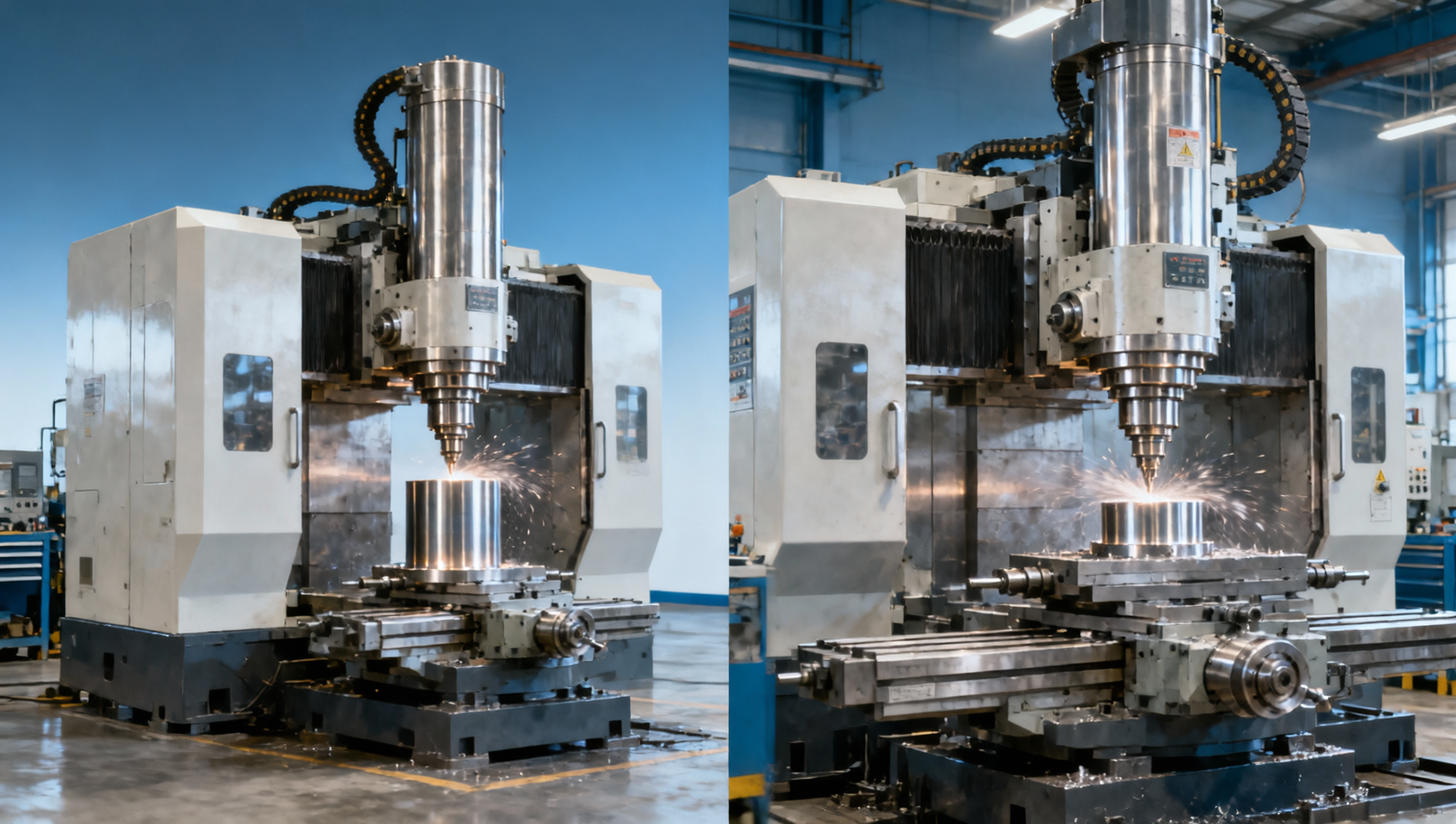
As workpiece height increases, choosing the right vertical lathe becomes more complex across metal machining and industrial CNC applications. From stability, rigidity, and CNC cutting performance to automated production efficiency, buyers and operators must weigh multiple factors. This article explores how vertical lathe selection affects CNC metalworking, production process reliability, and long-term value in today’s Global Manufacturing and Machine Tool Market.
For research teams, machine operators, purchasing managers, and business decision-makers, the challenge is rarely limited to swing diameter or table size alone. A taller workpiece changes center of gravity, cutting force behavior, clamping requirements, chip evacuation, thermal stability, and even the service strategy needed over a 5–10 year equipment life cycle.
In practical CNC turning environments, a vertical lathe that performs well on a 400 mm-high component may not deliver the same reliability on a 1,200 mm or 1,800 mm-high part. The machine structure, ram design, spindle torque, column rigidity, and tooling layout all become more critical as height grows. That is why vertical lathe selection becomes harder—not because the machine is simply larger, but because the process window becomes narrower.
Why Taller Workpieces Change the Vertical Lathe Selection Logic
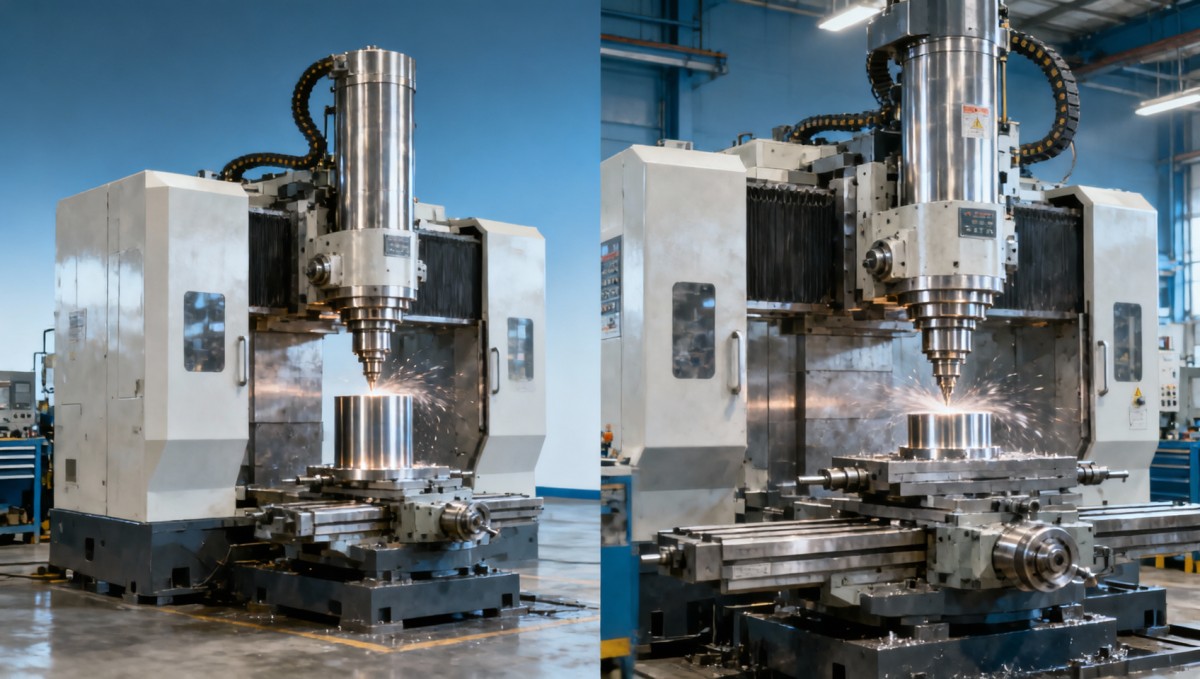
A vertical lathe is naturally well suited for large discs, rings, housings, flanges, and heavy cylindrical parts because gravity helps support the workpiece on the table. However, when workpiece height increases, the machining system faces a different balance problem. A taller component tends to create a higher overturning moment, especially under interrupted cuts or when heavy roughing passes are used at larger diameters.
For example, a part with a diameter of 1,600 mm and a height of 300 mm behaves very differently from a part with the same diameter and a height of 1,400 mm. Even if total weight remains within table capacity, the elevated mass distribution can affect vibration, clamping security, and tool engagement consistency. This is one reason buyers should not rely on table load ratings alone when comparing vertical turning machines.
Machine rigidity also changes in importance. As the cutting point moves farther from the support base, small deflections in the ram, crossrail, column, or fixture become more visible in surface finish and dimensional accuracy. In many industrial machining applications, a tolerance target of ±0.02 mm to ±0.08 mm may still be required on tall precision parts, which means structural stiffness and thermal control need much closer evaluation.
From the production side, taller workpieces often increase setup time by 15%–40% because centering, lifting, probing, and fixture verification take longer. This affects not only cycle time, but also labor planning, crane utilization, and automated loading strategy. In high-mix manufacturing, such delays can reduce the expected return on investment if machine selection is made only on purchase price.
The comparison below shows why workpiece height should be treated as a process variable, not just a dimension on the drawing.
The key takeaway is straightforward: once workpiece height increases beyond the comfort zone of the machine structure, selection must shift from simple capacity matching to process stability analysis. This is especially relevant in aerospace, energy equipment, heavy automotive components, and precision industrial parts where reliability across batch production matters as much as one-time machining capability.
Three common reasons selection errors happen
- Buyers compare only maximum turning diameter, table load, and motor power, while ignoring ram overhang, column span, and crossrail stiffness.
- Operators assume a proven setup for parts under 500 mm height will scale to parts over 1,000 mm height with the same chucking strategy.
- Decision-makers underestimate the impact of tooling access, probing time, and maintenance difficulty on total equipment utilization.
Core Machine Parameters That Matter More as Height Increases
When evaluating a vertical lathe for tall workpieces, several technical parameters should move to the top of the checklist. Table diameter and swing are still important, but they are no longer enough. The machine must maintain accuracy under dynamic cutting loads while supporting a tall component through roughing, semi-finishing, and finishing operations.
First, examine table load in relation to workpiece geometry rather than gross weight only. A machine rated for 8 tons may still be unsuitable for a 5-ton part if the workpiece has a narrow base and a height above 1,500 mm. In such cases, clamping footprint, jaw design, and additional steady support can be more important than raw capacity.
Second, assess spindle torque and usable speed range. Tall parts often require slower, more stable cutting during heavy facing or deep internal turning. A practical spindle range for many large-part applications may sit between 2 rpm and 250 rpm, but the useful question is whether torque remains stable in the low-speed region where material removal is highest.
Third, review ram section size, crossrail locking method, and column structure. In many procurement discussions, these areas receive less attention than CNC brand or motor output. Yet for a tall workpiece, a stronger ram section and a stable crossrail lock can make the difference between predictable surface finish and recurring chatter marks.
Fourth, confirm the machine’s positioning and repeatability performance under real working conditions. A nominal positioning accuracy of 0.02 mm is useful, but buyers should also ask how the machine performs after 6–8 hours of continuous operation, under coolant flow, chip accumulation, and changing workshop temperature conditions.
Recommended evaluation areas for tall-part machining
The table below organizes the most relevant selection criteria for vertical turning of high workpieces in industrial manufacturing environments.
For procurement teams, this means technical comparison should include at least 4 categories: structure, drive performance, CNC functionality, and process support. A machine that looks competitive on price may become more expensive over 24–36 months if it requires reduced cutting parameters, additional manual intervention, or repeated setup correction.
Useful threshold questions during supplier review
- At what workpiece height does the supplier recommend additional support or process limitation?
- What is the recommended roughing depth and feed range for parts above 1,000 mm height?
- How is thermal drift managed during continuous 2-shift or 3-shift production?
- Can the machine integrate in-process probing, tool measurement, or automated loading in the future?
Process Risks, Operator Concerns, and Common Misjudgments
From the operator’s perspective, tall workpieces create more than a machine issue. They introduce process risks that can remain hidden until the first production run. One common problem is vibration that appears only at certain heights or tool positions. A setup may seem stable during trial cutting at the lower section of the part, then begin to chatter near the top because the cutting point is farther from the main support zone.
Another frequent misjudgment involves tooling. Standard holders and insert grades used on lower parts may not be ideal for a taller workpiece where cutting interruption, resonance, and chip evacuation conditions differ. In some cases, reducing cutting speed by 10%–20% and shortening tool projection can improve stability more than changing insert geometry alone.
Safety and handling are equally important. Taller components often require more crane movement, more precise loading alignment, and more careful operator visibility planning. If the machine enclosure, access platform, or inspection position is poorly designed, setup errors and downtime tend to increase. This can be particularly costly in low-volume, high-value sectors such as aerospace structures or energy housings.
There is also a production planning risk. A machine chosen without considering tall-part cycle behavior may run at lower-than-expected material removal rates, reducing output across an entire line. In a workshop aiming for 12–18 large parts per week, even a 40-minute delay per setup can change labor allocation and delivery reliability.
Typical mistakes seen in vertical lathe selection
- Treating maximum machine height as the same as stable machining height.
- Ignoring fixture design until after machine purchase.
- Underestimating chip removal difficulty on deep internal or tall-wall parts.
- Assuming all CNC vertical lathes offer similar low-speed torque behavior.
- Failing to involve operators and maintenance personnel during equipment review.
Risk reduction steps before final purchase
A practical pre-purchase workflow usually includes 5 steps: part family review, fixture concept check, cutting simulation, maintenance access review, and acceptance criteria definition. This process often takes 2–4 weeks, but it can prevent expensive mismatch between machine capability and actual production demand.
Where possible, buyers should request sample process data for similar workpiece proportions rather than only similar diameters. Height-to-diameter ratio, fixture reach, and tool approach angle frequently have more relevance than nominal capacity. This is especially true when machining castings, forgings, or weldments with variable stock conditions.
How Purchasing Teams Should Compare Solutions and Total Cost
For purchasing managers and business leaders, selecting a vertical lathe for tall workpieces should be based on total process value rather than machine price alone. The real comparison must include machine uptime, setup repeatability, tooling consumption, operator hours, maintenance access, and future automation compatibility. A lower purchase price can quickly lose its advantage if the machine runs with frequent intervention or reduced cutting parameters.
A useful comparison horizon is 3–5 years. Within that period, hidden costs often emerge from fixture redesign, spindle load limits, difficult chip evacuation, or insufficient process stability. If a machine causes even 5%–8% extra downtime on critical jobs, the operational cost may exceed the initial savings, especially in factories with tight delivery windows and expensive labor.
Decision-makers should also think about flexibility. Many workshops do not machine one part family forever. A vertical lathe selected today for a 1,200 mm-high component may need to handle 1,500 mm cast housings or multi-operation parts later. Machines that support tool magazine expansion, in-process measurement, or robot-ready interfaces can create stronger long-term value in smart manufacturing environments.
The comparison matrix below can help procurement teams structure discussions with engineering, production, and finance departments.
This kind of matrix helps teams avoid a narrow “specification-only” decision. In modern machine tool purchasing, the better question is not just “Can the machine cut the part?” but “Can it cut the part reliably, repeatedly, and profitably over thousands of production hours?”
What to request from suppliers before contract signing
- A detailed layout with tool travel, loading clearance, and maintenance access zones.
- Recommended fixture concept for the tallest target workpiece.
- Indicative cutting data or process assumptions for roughing and finishing.
- Service response commitments, spare parts policy, and training scope.
- Acceptance test items, including accuracy and cycle performance criteria.
Implementation, Maintenance, and FAQ for Long-Term Reliability
Once the correct vertical lathe is selected, implementation discipline becomes the next priority. For tall-workpiece machining, machine installation is not simply a placement activity. Foundation condition, leveling, temperature variation, coolant management, and lifting route planning all affect performance. In many factories, allowing 7–15 days for installation, alignment, and trial validation is more realistic than expecting immediate full-load production.
Maintenance planning should also reflect the higher structural sensitivity of tall-part applications. Daily checks may include chuck condition, hydraulic or clamping pressure, toolholder security, and chip accumulation around the table. Weekly or monthly inspections often need to cover ram lubrication, guideway cleanliness, positioning repeatability trends, and vibration signs under representative cutting loads.
Digital monitoring is becoming more relevant across the global machine tool market. Even a basic monitoring plan that tracks spindle load, cycle deviations, alarm frequency, and tool life can reveal whether a tall-part process is moving out of its stable window. In automated production environments, this data can help reduce unplanned stops and support better maintenance scheduling.
For companies expanding into smart manufacturing, the best long-term vertical lathe choice is often the one that balances current machining needs with future integration options. That may include probing, condition monitoring, MES connectivity, or automated loading. In this sense, selection for tall workpieces is not just a mechanical decision; it is also a production strategy decision.
FAQ: How should users and buyers approach tall-workpiece vertical turning?
How tall is “too tall” for a standard vertical lathe setup?
There is no universal number because stability depends on diameter, mass distribution, clamping area, and cut type. As a practical rule, once workpiece height rises enough to significantly elevate the center of gravity or extend the cutting point far from the support zone, standard setups may need stronger fixtures, lower cutting parameters, or a more rigid machine structure.
Which industries are most affected by this selection issue?
The issue is especially important in energy equipment, aerospace, automotive heavy components, general industrial machinery, and precision metalworking. These sectors often machine large housings, bearing seats, rings, drums, and structural parts where height, tolerance, and repeatability must all be controlled at the same time.
What is the most overlooked buying factor?
Fixture strategy is often the most overlooked factor. Many teams focus on machine dimensions and power, but poor clamping on a tall part can undermine accuracy, safety, and productivity. Reviewing the fixture concept before purchase can prevent major post-installation issues.
How often should a tall-part vertical lathe process be reviewed after startup?
A structured review after the first 20–50 production hours is recommended, followed by checks at regular weekly or monthly intervals depending on volume. Early review helps identify vibration patterns, abnormal tool wear, and repeatability drift before they affect larger batches.
As workpiece height increases, vertical lathe selection becomes a higher-stakes decision that touches machine rigidity, process stability, operating safety, and total production cost. The right choice depends on matching structure, clamping, torque behavior, CNC capability, and maintenance support to the real geometry and production rhythm of the part family.
For manufacturers, operators, and procurement teams working in today’s CNC machining and precision manufacturing market, a disciplined evaluation process can prevent underperforming equipment and protect long-term investment value. If you are comparing solutions for tall workpieces, planning a new production line, or upgrading large-part turning capacity, contact us to discuss your application, get a tailored machine selection approach, and explore more machining solutions.
Recommended for You
![]() Iranian LNG Vessels Breach U.S. Strait Blockade; Shanghai Crude Surges 4%Manufacturing Market Research Center
Iranian LNG Vessels Breach U.S. Strait Blockade; Shanghai Crude Surges 4%Manufacturing Market Research Center![]() Pakistan Launches CNC Localization Tender for CPEC II Smart Manufacturing ParkGlobal Machine Tool Trade Research Center
Pakistan Launches CNC Localization Tender for CPEC II Smart Manufacturing ParkGlobal Machine Tool Trade Research Center![]() NVIDIA Joins $1T Club; AI-Driven CNC Digital Twin Gains Global TractionCNC Machining Technology Center
NVIDIA Joins $1T Club; AI-Driven CNC Digital Twin Gains Global TractionCNC Machining Technology Center![]() World's First 5-Axis Middle-Grade Wire EDM Machine Enters Mass ProductionMachine Tool Industry Editorial Team
World's First 5-Axis Middle-Grade Wire EDM Machine Enters Mass ProductionMachine Tool Industry Editorial Team![]() China’s CNC Machine Tool Export Prices Up 11.3% in Q1 2026Global Machine Tool Trade Research Center
China’s CNC Machine Tool Export Prices Up 11.3% in Q1 2026Global Machine Tool Trade Research Center![]() Saudi Energy Security Boosts CNC Import Efficiency in Middle EastGlobal Machine Tool Trade Research Center
Saudi Energy Security Boosts CNC Import Efficiency in Middle EastGlobal Machine Tool Trade Research Center


Aris Katos
Future of Carbide Coatings
15+ years in precision manufacturing systems. Specialized in high-speed milling and aerospace grade alloy processing.
▶
Medical Equipment Machining Centers Need Accuracy Beyond SpecsMachine Tool Industry Editorial Team▶
Is a High-speed Machining Center Worth It for Aluminum Parts?Machine Tool Industry Editorial Team▶
Heavy-duty Machining Center for mold making: Why coolant filtration standards evolve faster than OEM manualsMachine Tool Industry Editorial Team▶
High precision machine tool: Why air-bearing spindles demand more than just clean airMachine Tool Industry Editorial Team▶
Machine tool for automotive industry: Why dynamic rigidity matters more than static specsMachine Tool Industry Editorial Team
Mastering 5-Axis Workholding Strategies
Join our technical panel on Nov 15th to learn about reducing vibrations in thin-wall components.

Providing you with integrated sanding solutions
Before-sales and after-sales services
Comprehensive technical support