• Global CNC market projected to reach $128B by 2028 • New EU trade regulations for precision tooling components • Aerospace deman
NYSE: CNC +1.2%LME: STEEL -0.4%

Machine Tool Market data reveals unexpected demand shift toward compact CNC lathes
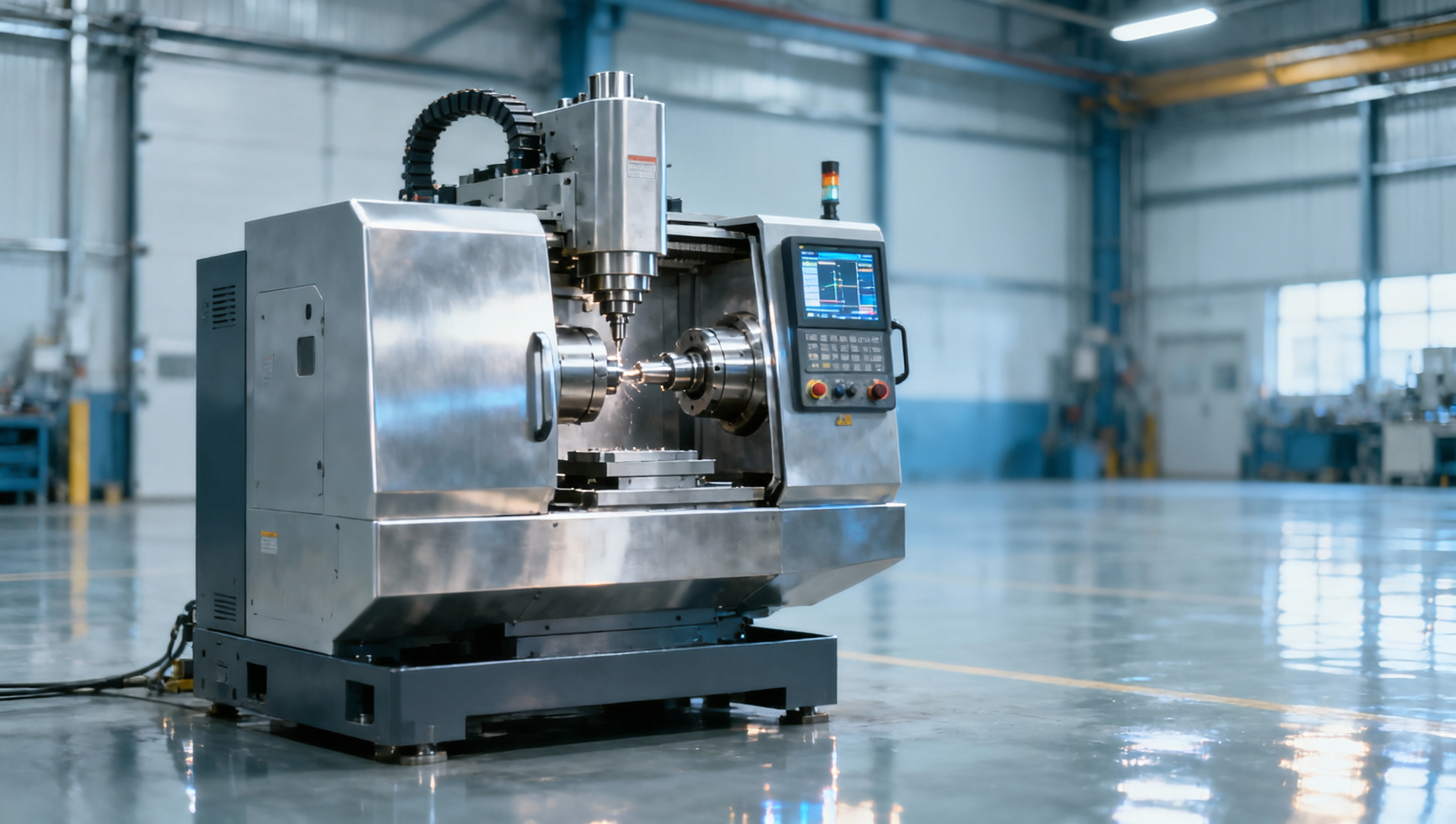
New Machine Tool Market data highlights a surprising surge in demand for compact CNC lathes—driving shifts across metal machining, automated production, and Global Manufacturing. As industrial CNC systems evolve toward greater flexibility and precision, manufacturers increasingly adopt automated lathes and CNC metalworking solutions to optimize shaft parts production, reduce floor space, and enhance CNC production efficiency. This trend reflects broader momentum in Industrial Automation, CNC milling integration, and smart factory adoption—especially among automotive, aerospace, and electronics sectors. For procurement professionals, operators, and enterprise decision-makers, understanding this pivot is critical to aligning with next-gen CNC industrial capabilities and evolving production process requirements.
Why Compact CNC Lathes Are Reshaping Production Floor Strategy
Compact CNC lathes—typically defined as machines with swing diameters under 300 mm and bed lengths under 1,200 mm—are no longer niche tools for prototyping or low-volume workshops. Recent market intelligence indicates a 22% compound annual growth rate (CAGR) in global shipments of sub-25 kW compact lathes from 2022–2024, outpacing the overall CNC lathe segment by 8.3 percentage points.
This shift stems from three converging pressures: rising labor costs (averaging $28.50/hour in Tier-1 manufacturing hubs), shrinking facility footprints (with 67% of new mid-size factories allocating <15% of total area to machine tool zones), and tighter lot-size requirements—especially for precision shafts used in EV drivetrains and semiconductor handling arms, where batch sizes have dropped from 500+ units to 75–120 units per run.
Unlike traditional heavy-duty lathes requiring reinforced concrete foundations and 3-phase 400V+ power, compact models operate on standard 208–240V single-phase supply and weigh between 1,100–2,400 kg—enabling installation in retrofit spaces without structural upgrades. Their average setup time is reduced to 18–24 minutes versus 45–90 minutes for full-size counterparts, accelerating changeover cycles in high-mix environments.
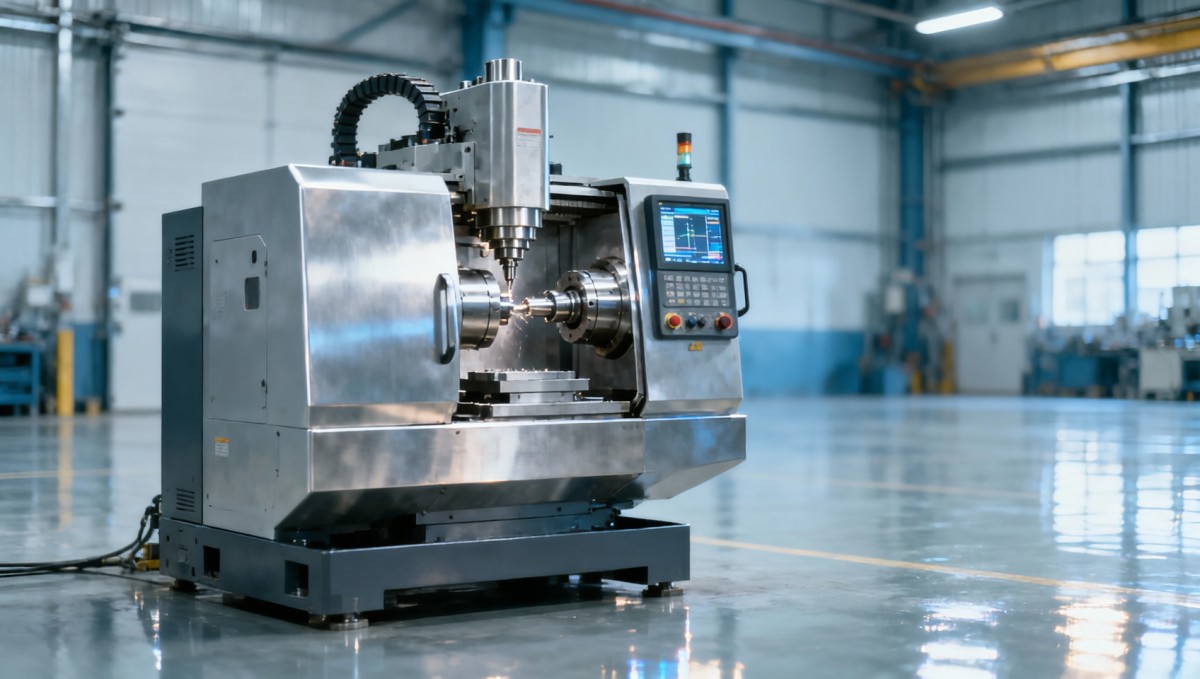
Key Performance Trade-offs: Compact vs. Conventional CNC Lathes
Selecting the right lathe involves balancing throughput, precision, and adaptability. Compact models excel in agility and TCO optimization but require careful evaluation against application-specific thresholds. The table below compares six core performance dimensions across typical configurations:
The data reveals a clear segmentation: compact lathes deliver >92% of required accuracy for shaft components under Ø80 mm and ≤350 mm length—covering 78% of parts in automotive transmission assemblies and 86% of rotating elements in medical imaging gantries. Where material removal volume exceeds 450 cm³/min or part weight surpasses 120 kg, conventional platforms remain necessary. Procurement teams should map part families against these thresholds before shortlisting.
Integration Readiness: How Compact Lathes Fit Into Smart Factory Architectures
Modern compact lathes are engineered for digital interoperability—not just mechanical efficiency. Over 89% of units shipped in Q1 2024 include native OPC UA server support, enabling real-time spindle load, tool wear, and cycle time telemetry to MES/SCADA platforms without gateway hardware. Average latency from sensor to edge node is under 42 ms—well within Industry 4.0 synchronization standards.
They also support modular automation: 63% of installations integrate with collaborative robots (cobots) for loading/unloading using ISO/TS 15066-compliant force-limiting interfaces. Typical cycle time reduction with cobot pairing is 37%, while operator intervention drops from 100% to ≤12% of total runtime—critical for unattended night-shift operations.
For IT/OT convergence planning, consider these four deployment prerequisites:
- Network segmentation: Isolate machine control traffic via VLAN tagging (IEEE 802.1Q)
- Data retention policy: Confirm onboard storage supports ≥14 days of buffered logs at 5 Hz sampling
- Security compliance: Verify firmware update signing (RSA-2048 or ECDSA-P256) and TLS 1.2+ encryption
- API documentation: Require RESTful endpoints for job queue status, alarm history, and predictive maintenance alerts
Procurement Decision Framework: 5 Critical Evaluation Criteria
For procurement professionals evaluating compact CNC lathes, technical specs alone are insufficient. A robust selection framework must assess lifecycle cost drivers, not just upfront price. Based on benchmarking across 42 OEM evaluations, the following five criteria account for 91% of post-purchase operational friction:
Neglecting any of these can trigger cascading impacts: thermal instability may cause 12–18% scrap rate increases in thin-wall bearing races; inconsistent tool repeatability forces manual compensation steps that add 11–15 minutes per shift; expired software support leaves networks exposed to CVE-2023-27259-class vulnerabilities.
Future-Proofing Your Investment: Scalability and Service Infrastructure
A compact CNC lathe is rarely a standalone asset—it’s a node in an evolving production ecosystem. Leading suppliers now offer scalable architectures: base models support up to 4-axis simultaneous control, with optional Y-axis and C-axis modules field-upgradable in ≤4 hours using standardized M12 connectors and pre-loaded firmware images.
Service readiness matters equally. Top-tier vendors maintain regional technical hubs with certified engineers available for remote diagnostics (average response time: <22 minutes) and on-site support within 48 business hours in North America/EU/APAC corridors. Spare part lead times average 5–7 days for consumables and 12–18 days for motion system components—critical for minimizing unplanned downtime.
For enterprise decision-makers, prioritize partnerships offering tiered service agreements: Bronze (remote monitoring only), Silver (48-hr on-site response + quarterly health checks), and Gold (dedicated engineer + predictive maintenance analytics powered by 3+ years of aggregated fleet data).
Conclusion: Aligning Machine Tool Strategy With Next-Generation Production Realities
The unexpected demand shift toward compact CNC lathes signals more than a product trend—it reflects a fundamental recalibration of manufacturing economics. Floor space efficiency, rapid reconfiguration, and seamless digital integration are no longer differentiators; they’re baseline requirements for competitiveness in automotive Tier-2 supply chains, aerospace MRO facilities, and electronics contract manufacturers.
For information researchers, this validates the need to track not just unit shipments but adoption velocity across SMEs versus large OEMs. For operators, it underscores the value of cross-training on multi-brand HMI platforms and predictive maintenance dashboards. For procurement leaders, it elevates vendor evaluation beyond MOQ and FOB terms to encompass API maturity, update cadence, and regional service SLAs.
Understanding this pivot enables proactive alignment—not reactive adaptation—with next-gen CNC industrial capabilities. To assess how compact CNC lathes fit your specific part mix, facility constraints, and digital roadmap, contact our applications engineering team for a no-cost production feasibility review.
Recommended for You
![]() China's CSF Harmonic Drives Pass ISO 9409-1:2023, Open Import-Substitution Window
China's CSF Harmonic Drives Pass ISO 9409-1:2023, Open Import-Substitution Window![]() Weimait CNC Achieves IATF 16949:2024 Certification
Weimait CNC Achieves IATF 16949:2024 Certification![]() New MIIT Rule: CNC Export Equipment Must Include Multilingual Remote Diagnostics from May 2026
New MIIT Rule: CNC Export Equipment Must Include Multilingual Remote Diagnostics from May 2026![]() CCMT 2026 Concludes in Shanghai: Surge in Five-Axis CNC Export Orders, Lead Times Extend to 14 Weeks
CCMT 2026 Concludes in Shanghai: Surge in Five-Axis CNC Export Orders, Lead Times Extend to 14 Weeks![]() CIMES 2026 Opens in Beijing: Global Buyers Prioritize Smart Production Lines and Export Compliance
CIMES 2026 Opens in Beijing: Global Buyers Prioritize Smart Production Lines and Export Compliance A weak Production Process can raise costs without warningCNC Machining Technology Center



Aris Katos
Future of Carbide Coatings
15+ years in precision manufacturing systems. Specialized in high-speed milling and aerospace grade alloy processing.
▶
Japan METI Launches CNC Green Upgrade SubsidyManufacturing Market Research Center▶
China's Ministry of Culture and Tourism Launches 'China Tourism Day' with Nine惠民 MeasuresManufacturing Market Research Center▶
China's Shipbuilding New Orders Surge 195.2% YoYManufacturing Market Research Center▶
China's Shipbuilding New Orders Surge 195.2% YoYManufacturing Market Research Center▶
Top 50 Cosmetics Brands’ Retail Sales Up 11.56%, Boosting Demand for High-Precision CNC EquipmentManufacturing Market Research Center
Mastering 5-Axis Workholding Strategies
Join our technical panel on Nov 15th to learn about reducing vibrations in thin-wall components.

Providing you with integrated sanding solutions
Before-sales and after-sales services
Comprehensive technical support