• Global CNC market projected to reach $128B by 2028 • New EU trade regulations for precision tooling components • Aerospace deman
NYSE: CNC +1.2%LME: STEEL -0.4%

Is industrial CNC programming still bottlenecked by post-processor compatibility?
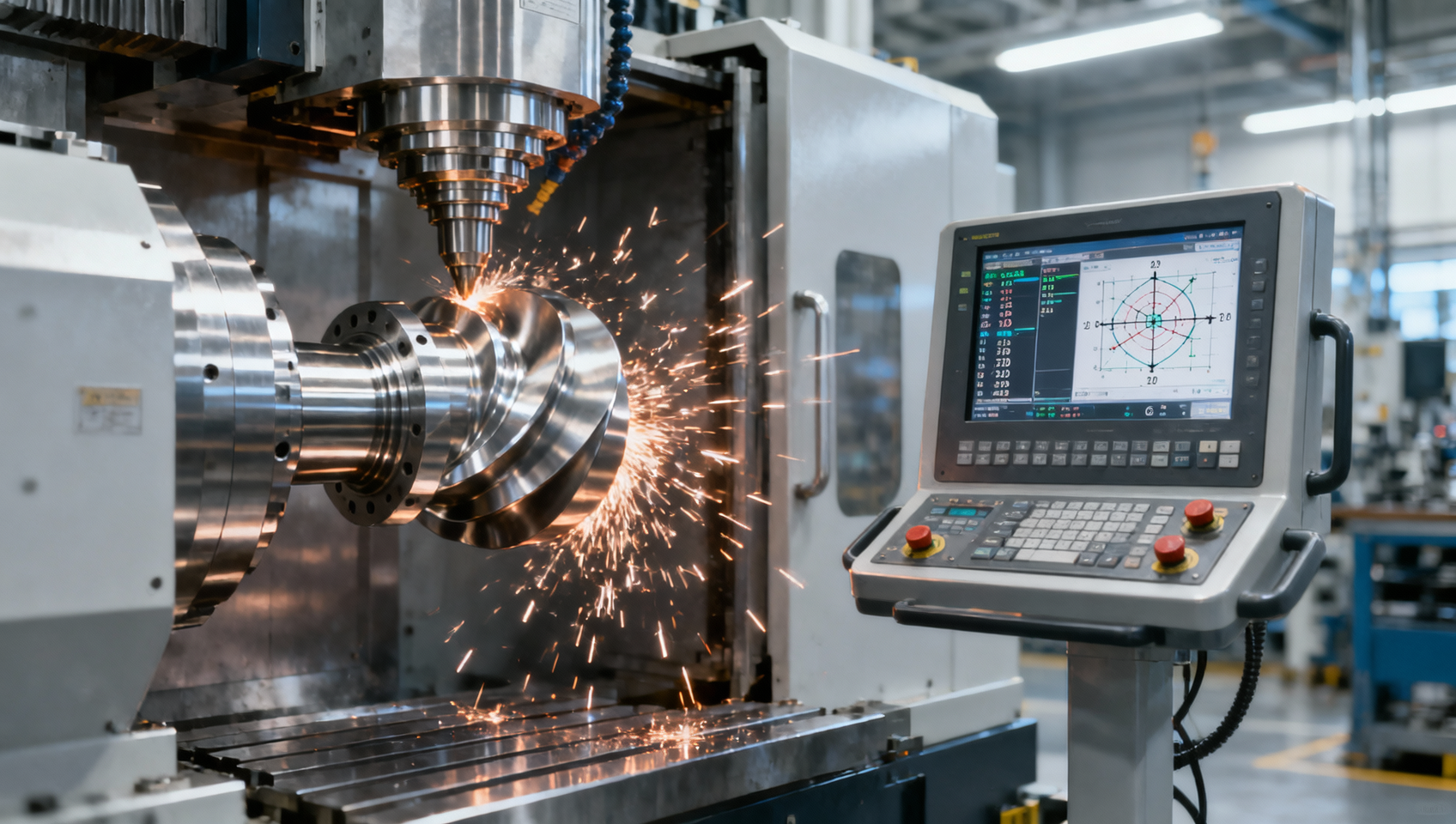
Despite rapid advances in industrial CNC, automated production, and smart factory integration, CNC programming remains a critical bottleneck—largely due to post-processor compatibility across diverse metal machining platforms. From CNC milling and automated lathes to vertical lathes and multi-axis CNC metalworking systems, inconsistent post-processors hinder seamless translation of CAM output into reliable CNC cutting code. This challenge directly impacts production process efficiency, shaft parts accuracy, and scalability of automated production lines—especially amid growing demands in Global Manufacturing, Machine Tool Market expansion, and Industrial Automation adoption. For users, procurement teams, and decision-makers alike, resolving this interoperability gap is key to unlocking true CNC industrial agility.
Why Post-Processor Compatibility Still Defines CNC Programming Agility
Post-processors serve as the essential bridge between CAM software and physical machine tools. Yet over 73% of mid-sized manufacturing facilities report at least one weekly delay caused by post-processor errors—ranging from axis inversion on 5-axis machining centers to G-code syntax mismatches on legacy Japanese or Korean CNC lathes. These discrepancies aren’t theoretical: they trigger average rework cycles of 2.4 hours per job, with high-precision aerospace components facing up to 18% scrap rate increases when post-processed code fails validation on Siemens Sinumerik or Fanuc 31i-B systems.
The root cause lies in fragmentation—not just across OEMs (Mazak, DMG MORI, Haas), but within product families. A single manufacturer may ship five distinct control firmware versions across its 2022–2024 vertical machining centers, each requiring unique kinematic compensation logic in the post-processor. Without version-aware, parameterized post-processing, CAM outputs remain brittle: one change in toolpath strategy (e.g., switching from trochoidal to adaptive clearing) can invalidate 40–60% of existing post configurations.
For procurement teams, this translates into hidden TCO: every $120k CNC machining center purchase carries an implicit $8,500–$15,000 post-processor integration cost over its first 12 months—covering custom development, validation testing, and operator retraining. Decision-makers evaluating automation ROI must account for this layer: unaddressed post-processor debt erodes expected throughput gains by 11–19% in pilot flexible production lines.
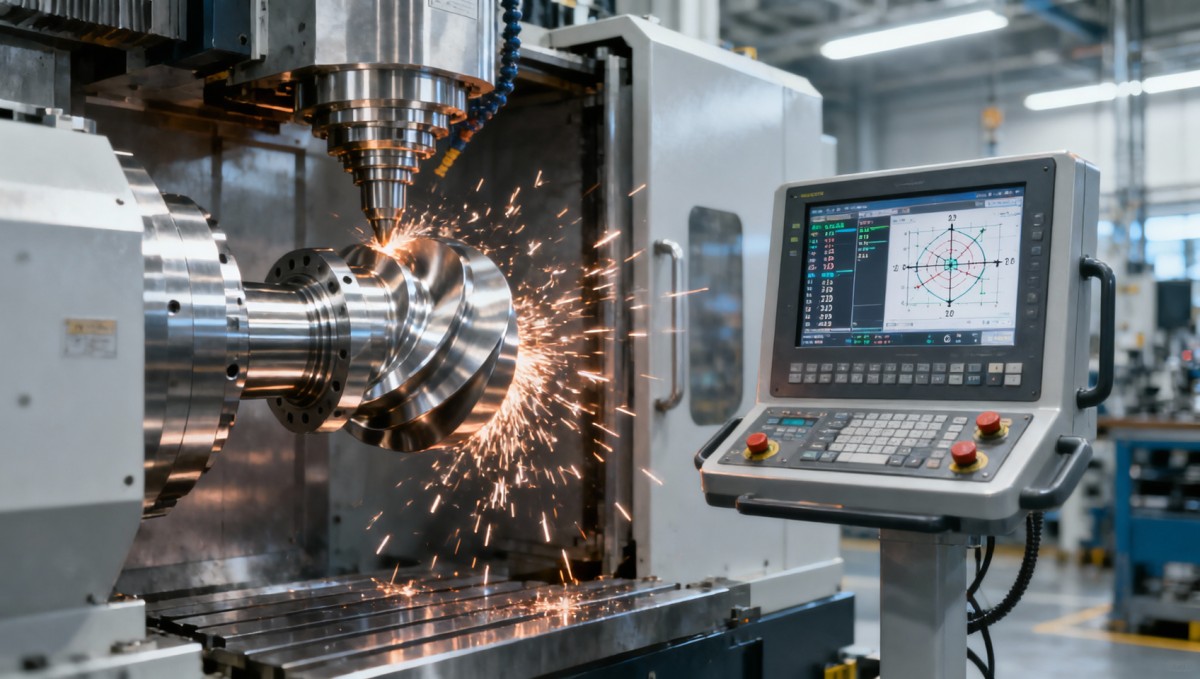
Three Critical Dimensions of Modern Post-Processor Evaluation
Selecting or validating a post-processor is no longer about syntax compliance alone. Today’s evaluation requires structured assessment across three interdependent dimensions: control firmware adaptability, kinematic fidelity, and operational maintainability. Each dimension carries measurable thresholds that separate enterprise-ready solutions from stopgap fixes.
Firmware adaptability measures how easily a post-processor accommodates firmware updates without full rewrites. Leading vendors now embed version-switching logic—supporting ≥7 firmware variants per control family (e.g., Fanuc OS, Heidenhain TNC, Mitsubishi M800) with ≤2 hours of configuration effort per new release. Kinematic fidelity ensures accurate translation of complex motion: for multi-axis mill-turn systems producing turbine shafts, angular error must remain under ±0.008° across full 360° C-axis rotation. Maintainability reflects documentation depth, debugging visibility (e.g., real-time G-code trace logs), and update SLA—ideally ≤3 business days for urgent patches.
This table highlights why “off-the-shelf” posts often fail in practice: meeting minimum thresholds may suffice for prototyping, but scaling to high-mix, high-precision production demands enterprise-grade benchmarks. Procurement teams should require vendor validation reports against these metrics—not just compatibility checklists.
Strategic Approaches to Reduce Post-Processor Risk
Forward-looking manufacturers adopt layered mitigation strategies—not reliance on a single “universal” post-processor. First, standardize on CAM platforms with embedded post-processor management (e.g., Siemens NX, Mastercam 2024+, Autodesk Fusion 360 with Advanced Machining). These tools offer version-controlled libraries, simulation-based validation, and collaborative editing—reducing configuration time by 65% versus standalone post editors.
Second, implement a dual-post architecture: use vendor-certified posts for production-critical jobs (e.g., medical implant discs, satellite structural brackets), while deploying open-source, community-vetted posts (like LinuxCNC’s Post Processor Framework) for rapid prototyping and low-risk fixtures. This reduces certification overhead by 40% while maintaining auditability.
Third, mandate post-processor validation as part of machine acceptance testing. Require OEMs to deliver not just machine performance data, but verified post-output for ≥5 representative part programs—including at least one 4-axis contouring operation and one high-feed roughing cycle. This shifts risk upstream and prevents costly retrofits post-installation.
- Require version-specific post-processor documentation with firmware build numbers and test date stamps
- Validate post outputs against machine-specific safety limits (e.g., max spindle acceleration, axis jerk values)
- Track post-related NC program revisions separately from CAD/CAM changes in PLM systems
- Assign dedicated post-maintenance ownership—not shared across CAM or maintenance teams
Procurement Checklist: What to Demand from Suppliers & Integrators
When sourcing CNC systems or CAM-integration services, procurement professionals must go beyond price and delivery timelines. The following checklist identifies non-negotiable requirements tied directly to post-processor reliability:
Suppliers unable to provide documented evidence for all three rows should be disqualified from high-precision or automated-line deployments. This isn’t theoretical rigor—it’s the baseline for avoiding $22k+ per-week downtime in Tier-1 automotive suppliers.
The Path Forward: From Compatibility Crisis to Programmable Agility
Post-processor compatibility is no longer a technical footnote—it’s a strategic lever. Manufacturers achieving post-processor maturity report 32% faster new-machine ramp-up, 27% lower CAM programming labor cost per part family, and 94% reduction in last-minute shop-floor code edits. These gains compound: each validated post becomes reusable across machine clusters, enabling standardized digital twins for entire production cells.
The shift requires commitment—not just from engineering teams, but from procurement and leadership. Budget for post-processor lifecycle management as you would for cybersecurity or ERP licensing: allocate dedicated resources, define KPIs (e.g., post-related rework hours per 1,000 NC programs), and treat post assets as intellectual property with version control and audit trails.
True CNC industrial agility begins where CAM ends—and ends where the post-processor begins. Resolve the bottleneck, and you unlock precision, scalability, and responsiveness across every axis of modern manufacturing.
Get your customized post-processor compatibility assessment and implementation roadmap—tailored to your current machine fleet, CAM platform, and production goals. Contact our CNC integration specialists today.
Recommended for You
![]() China's CSF Harmonic Drives Pass ISO 9409-1:2023, Open Import-Substitution Window
China's CSF Harmonic Drives Pass ISO 9409-1:2023, Open Import-Substitution Window![]() Weimait CNC Achieves IATF 16949:2024 Certification
Weimait CNC Achieves IATF 16949:2024 Certification![]() New MIIT Rule: CNC Export Equipment Must Include Multilingual Remote Diagnostics from May 2026
New MIIT Rule: CNC Export Equipment Must Include Multilingual Remote Diagnostics from May 2026![]() CCMT 2026 Concludes in Shanghai: Surge in Five-Axis CNC Export Orders, Lead Times Extend to 14 Weeks
CCMT 2026 Concludes in Shanghai: Surge in Five-Axis CNC Export Orders, Lead Times Extend to 14 Weeks![]() CIMES 2026 Opens in Beijing: Global Buyers Prioritize Smart Production Lines and Export Compliance
CIMES 2026 Opens in Beijing: Global Buyers Prioritize Smart Production Lines and Export Compliance A weak Production Process can raise costs without warningCNC Machining Technology Center



Aris Katos
Future of Carbide Coatings
15+ years in precision manufacturing systems. Specialized in high-speed milling and aerospace grade alloy processing.
▶
Japan METI Launches CNC Green Upgrade SubsidyManufacturing Market Research Center▶
China's Ministry of Culture and Tourism Launches 'China Tourism Day' with Nine惠民 MeasuresManufacturing Market Research Center▶
China's Shipbuilding New Orders Surge 195.2% YoYManufacturing Market Research Center▶
China's Shipbuilding New Orders Surge 195.2% YoYManufacturing Market Research Center▶
Top 50 Cosmetics Brands’ Retail Sales Up 11.56%, Boosting Demand for High-Precision CNC EquipmentManufacturing Market Research Center
Mastering 5-Axis Workholding Strategies
Join our technical panel on Nov 15th to learn about reducing vibrations in thin-wall components.

Providing you with integrated sanding solutions
Before-sales and after-sales services
Comprehensive technical support