• Global CNC market projected to reach $128B by 2028 • New EU trade regulations for precision tooling components • Aerospace deman
NYSE: CNC +1.2%LME: STEEL -0.4%

What’s missing from most CNC metalworking ROI calculations — and it’s not labor
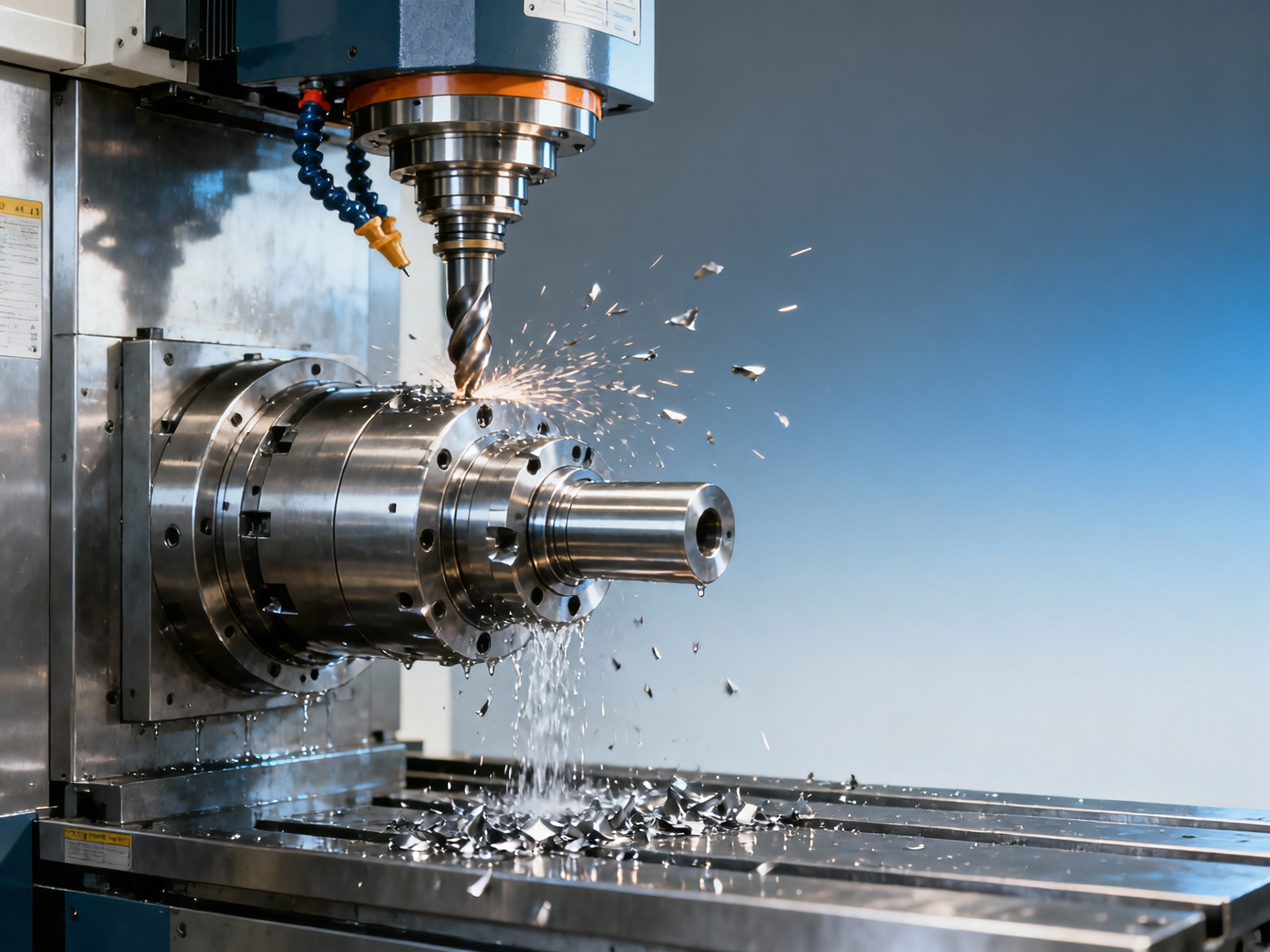
Most CNC metalworking ROI calculations focus on machine cost, labor savings, and cycle time—but overlook critical hidden factors like tooling degradation, unplanned downtime, and programming inefficiencies in automated lathe and CNC milling operations. As industrial CNC systems grow more integrated into automated production lines and smart factories, accurate ROI must account for the full production process—from shaft parts machining to CNC cutting performance across vertical lathes and multi-axis CNC metalworking platforms. For decision-makers, procurement teams, and operators navigating the global manufacturing and machine tool market, this gap undermines investment confidence and long-term competitiveness.
The Hidden Cost Layer: Why Tooling Lifecycle Drives True ROI
Tooling isn’t a one-time line item—it’s a dynamic cost driver that scales with part complexity, material hardness, and spindle utilization. Industry benchmarks show that cutting tools account for 18–25% of total per-part machining cost in high-mix aerospace and energy equipment production—yet most ROI models treat them as static consumables with fixed replacement intervals.
Real-world data from Tier-1 automotive suppliers reveals that unmonitored tool wear increases scrap rates by 3.2–7.8% on precision shaft components machined on 5-axis CNC lathes. Worse, inconsistent tool life estimation leads to premature tool changes (wasting 12–22% of usable edge life) or late replacements (causing 40–65% of unplanned downtime in vertical turning centers).
Modern CNC environments demand predictive tool management—not reactive replacement. This requires integration between CAM software, real-time spindle load monitoring, and digital twin validation of tool-path stress profiles before first cut. Without it, ROI models ignore a $0.18–$0.42 per-minute cost multiplier embedded in every machining cycle.
This table underscores a critical insight: tooling-related variables introduce the largest variance in actual vs. projected ROI—often exceeding labor or energy cost miscalculations by 2.3×. Procurement teams evaluating new CNC machining centers must therefore require OEMs to disclose not just MTBF (Mean Time Between Failures), but MTBT (Mean Time Between Tooling Events)—a metric now standardized across ISO/TC 39/SC 2 working groups for smart machine tool evaluation.
Beyond Downtime: The Programming Efficiency Gap
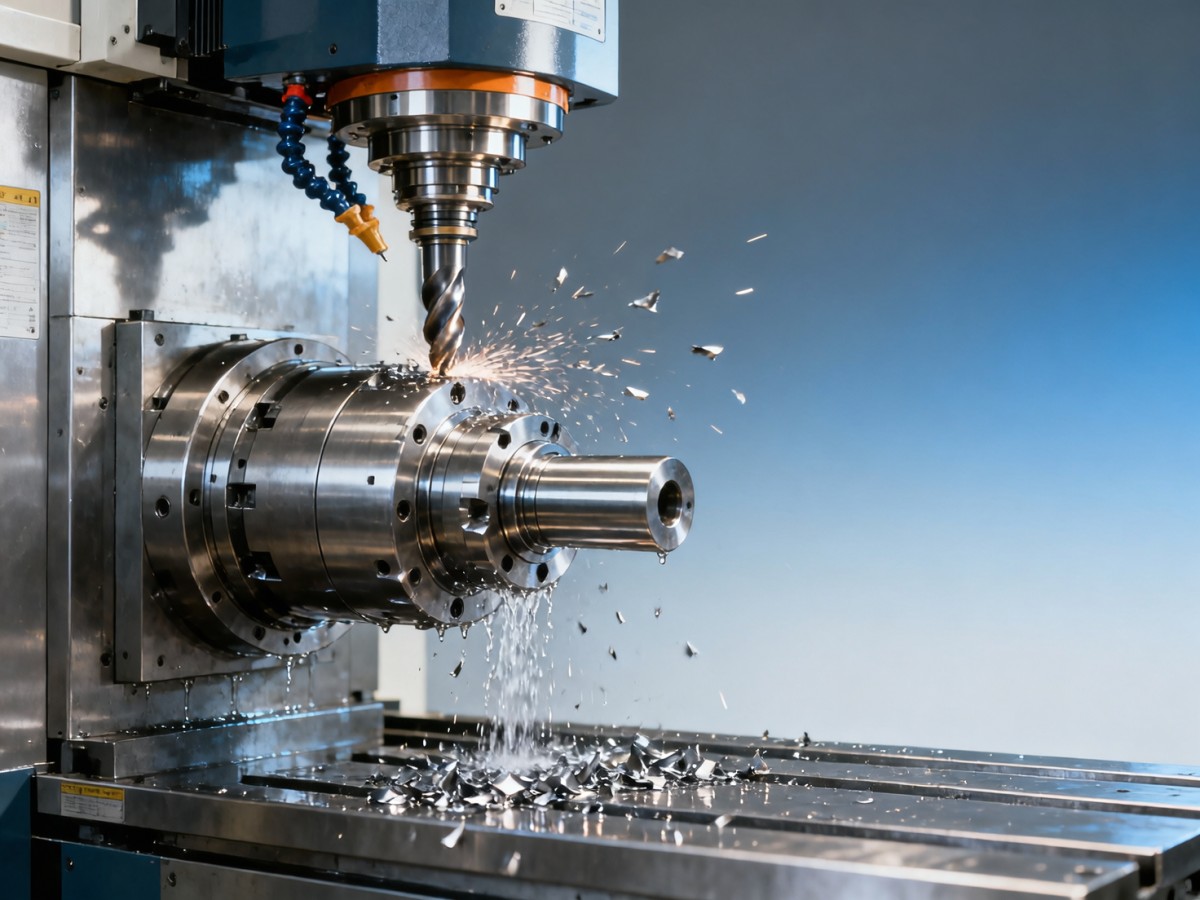
A CNC program isn’t “done” when the G-code runs once. In high-precision disc machining for turbine assemblies, post-process optimization—including adaptive feed control, chatter suppression tuning, and thermal drift compensation—adds 7–14 hours of engineering time per part family. Yet over 68% of ROI models assume “program ready” status out-of-the-box.
Multi-axis CNC metalworking platforms compound this: a single 3D contour path for an impeller blade may require 3–5 iterations of simulation-driven parameter refinement before meeting ±0.015 mm GD&T tolerances. Each iteration consumes 1.5–2.8 hours of skilled CAM engineer time—costing $125–$210/hour at current global rates.
Worse, legacy ROI frameworks rarely quantify “programming debt”: the accumulated inefficiency from inherited, undocumented macros and non-standardized subroutines. A recent audit of 24 German and Japanese automotive suppliers found average programming debt increased cycle times by 11.4% and reduced spindle uptime by 9.2% over 18-month periods.
- Validate CAM vendor support SLAs: minimum 4-hour response for tolerance-critical path adjustments
- Require embedded process validation logs (not just G-code output) for all delivered programs
- Allocate 12–18% of CNC capital budget for dedicated programming optimization resources during Year 1
- Insist on open API access to machine tool’s real-time kinematic error mapping for closed-loop program tuning
Smart Factory Integration: Where Data Flow Defines ROI Accuracy
In automated production lines, CNC machines no longer operate in isolation. Their ROI depends on how seamlessly they feed data into MES, PLM, and predictive maintenance platforms. Yet only 31% of installed CNC systems in North America and EU achieve bi-directional OPC UA connectivity—leaving critical signals like servo motor temperature, axis position deviation, and coolant conductivity unmonitored.
Consider vertical lathes machining large-diameter energy equipment flanges: without synchronized thermal expansion modeling across the CNC controller and factory-wide digital twin, positional errors accumulate at 0.008 mm/°C. Over a 12-hour shift, that’s up to 0.096 mm of uncorrected drift—directly impacting fit-for-assembly yield.
Accurate ROI must therefore include integration validation milestones: 72-hour continuous data stream stability, ≤150ms latency for alarm-triggered PLC responses, and ≥99.92% packet integrity across shop-floor Ethernet networks. These aren’t IT concerns—they’re direct determinants of geometric accuracy, throughput consistency, and warranty claim exposure.
These thresholds are not theoretical—they reflect field-tested baselines from smart factory deployments across China’s Guangdong electronics cluster and Germany’s Baden-Württemberg automotive corridor. Decision-makers must treat integration readiness as a hard ROI gate—not a “nice-to-have” add-on.
Actionable Next Steps for Procurement & Operations Teams
Start your next CNC investment review with these three non-negotiable validations:
- Request a live demonstration of tool-life prediction using actual workpiece material samples—not simulated data
- Require documented evidence of ≥92% successful first-run program success rate for parts matching your typical geometry and tolerance band (e.g., shafts with L/D > 8, discs with <0.025 mm TIR)
- Verify third-party certification of data interface compliance: IEC 61499 for distributed control logic and ISO 23218-2 for CNC-specific information models
For operators and programmers: build a “hidden cost dashboard” tracking tool change frequency vs. predicted life, program revision count per part family, and integration latency metrics. Share quarterly summaries with procurement—this transforms anecdotal feedback into quantifiable ROI levers.
Accurate ROI in modern CNC metalworking isn’t about ignoring labor—it’s about recognizing that labor, tooling, programming, and data flow are interdependent variables. When evaluated in isolation, each appears manageable. When modeled as a system—across shaft machining, multi-axis milling, and vertical turning—their compound effect defines true operational resilience.
To ensure your next CNC investment delivers measurable, auditable returns—not just spreadsheet optimism—contact our precision manufacturing advisory team for a customized ROI validation framework aligned with your specific part families, materials, and smart factory architecture.
Recommended for You
![]() Fuxing EMU Trainset Procurement Reaches ¥4.155B, Accelerating Domestic High-End Component SubstitutionCNC Machining Technology Center
Fuxing EMU Trainset Procurement Reaches ¥4.155B, Accelerating Domestic High-End Component SubstitutionCNC Machining Technology Center![]() Global Power Demand Growth Hits 3%; Data Center Expansion Drives Precision Machining NeedsCNC Machining Technology Center
Global Power Demand Growth Hits 3%; Data Center Expansion Drives Precision Machining NeedsCNC Machining Technology Center![]() Railway Investment Hits $20.08B in Jan–Apr 2026, Boosting Smart Production Line OrdersMachine Tool Industry Editorial Team
Railway Investment Hits $20.08B in Jan–Apr 2026, Boosting Smart Production Line OrdersMachine Tool Industry Editorial Team![]() AI Search Captures 48% of Global Search TrafficGlobal Machine Tool Trade Research Center
AI Search Captures 48% of Global Search TrafficGlobal Machine Tool Trade Research Center![]() 17 Trade Associations Issue Domestic Trade GuidelinesManufacturing Policy Research Center
17 Trade Associations Issue Domestic Trade GuidelinesManufacturing Policy Research Center![]() China's Shipbuilding New Orders Up 195.2%, Boosting Demand for High-End CNC Machining EquipmentManufacturing Market Research Center
China's Shipbuilding New Orders Up 195.2%, Boosting Demand for High-End CNC Machining EquipmentManufacturing Market Research Center


Aris Katos
Future of Carbide Coatings
15+ years in precision manufacturing systems. Specialized in high-speed milling and aerospace grade alloy processing.
▶
China's Shipbuilding New Orders Up 195.2%, Boosting Demand for High-End CNC Machining EquipmentManufacturing Market Research Center▶
Changsha Housing Fund Policy Boosts Smart Manufacturing Real Estate DemandManufacturing Market Research Center▶
Where the Manufacturing Industry Is Seeing New Equipment DemandManufacturing Market Research Center▶
CIBF 2026 Signals Surge in Demand for High-Rigidity龙门 Machining CentersManufacturing Market Research Center▶
Top 10 Future Industries Roadmap 2026 ReleasedManufacturing Market Research Center
Mastering 5-Axis Workholding Strategies
Join our technical panel on Nov 15th to learn about reducing vibrations in thin-wall components.

Providing you with integrated sanding solutions
Before-sales and after-sales services
Comprehensive technical support