• Global CNC market projected to reach $128B by 2028 • New EU trade regulations for precision tooling components • Aerospace deman
NYSE: CNC +1.2%LME: STEEL -0.4%

Where the Manufacturing Industry Is Seeing New Equipment Demand
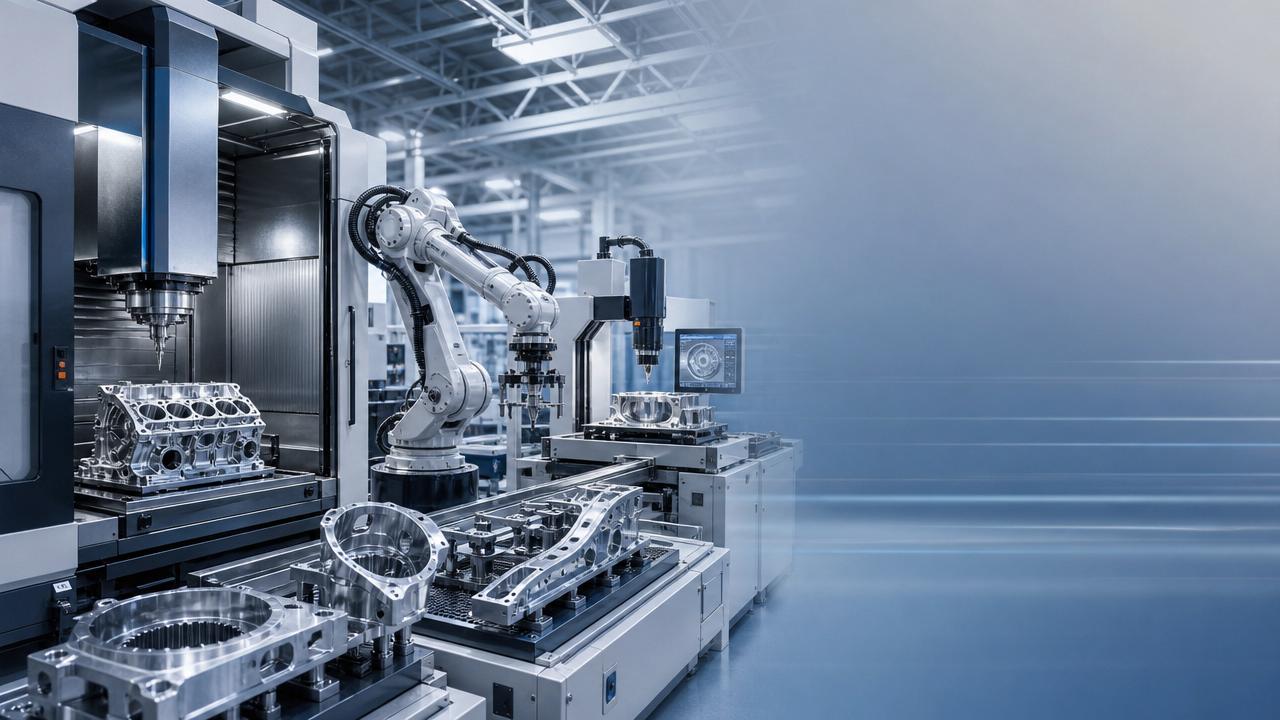
New equipment demand in the Manufacturing Industry is accelerating as production priorities shift from volume alone to speed, precision, flexibility, and digital visibility.
Across automotive, aerospace, energy, and electronics, investment is moving toward CNC machine tools, automation cells, robotics, and connected production systems.
This change is not temporary. It reflects structural pressure from labor costs, shorter product cycles, tighter tolerances, and supply chain uncertainty.
As a result, the Manufacturing Industry is creating fresh demand for equipment that can improve output quality while supporting smarter, more scalable operations.
Where new equipment demand in the Manufacturing Industry is becoming most visible
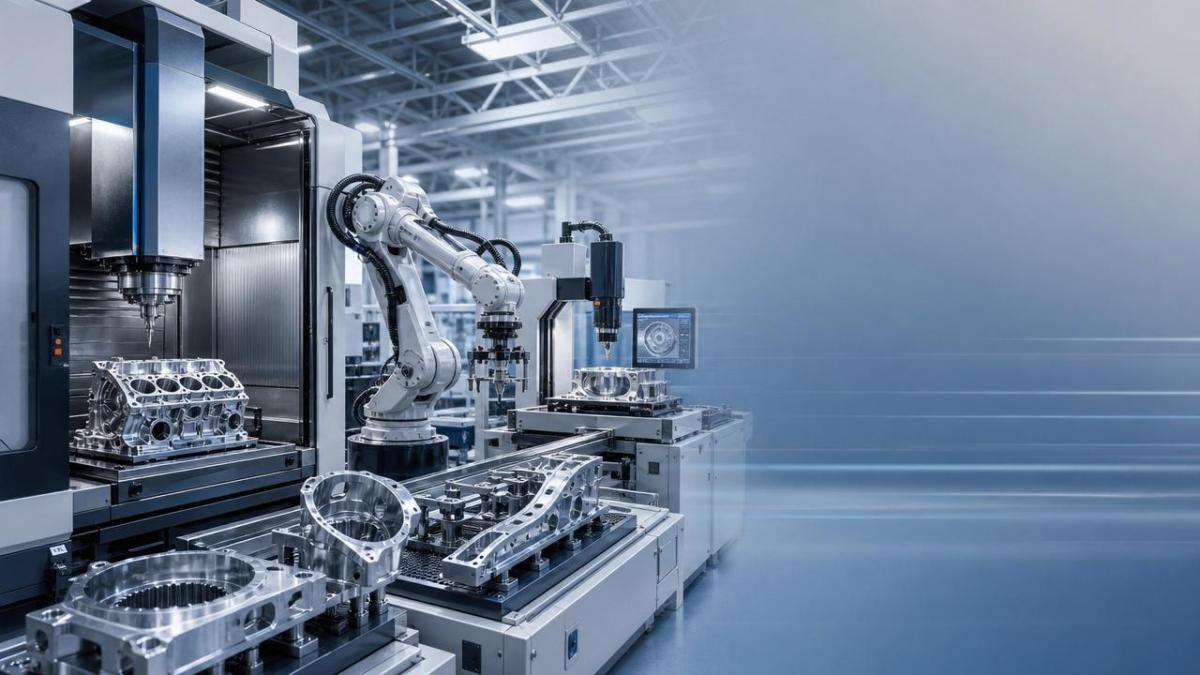
The strongest signals are appearing where production complexity is rising and downtime is becoming more expensive.
In the Manufacturing Industry, equipment replacement is no longer driven only by age. It is increasingly driven by capability gaps.
Facilities that once relied on standalone machines now seek integrated solutions with automation, data collection, and faster changeover.
CNC lathes, machining centers, multi-axis systems, and flexible production lines are receiving stronger interest because they support mixed-part production.
Demand is especially active in applications requiring complex geometry, repeatable accuracy, and reduced manual intervention.
High-demand application zones
- Automotive parts production, including shafts, housings, gears, and EV components
- Aerospace structural parts with tight tolerances and multi-axis machining requirements
- Energy equipment manufacturing for turbines, valves, and heavy-duty precision assemblies
- Electronics production needing micron-level consistency and compact automated lines
- Tooling and fixture production supporting faster product switching and smaller batch runs
Why the Manufacturing Industry is upgrading equipment faster than before
Several forces are pushing the Manufacturing Industry toward new equipment demand at the same time.
These forces affect both capital planning and daily production decisions, making equipment investment more strategic than routine.
This explains why the Manufacturing Industry is not only buying more machines, but also buying smarter machine combinations.
The goal is broader than capacity. It includes uptime, adaptability, traceability, and long-term production control.
Which equipment categories are attracting the most attention
New equipment demand in the Manufacturing Industry is concentrated in categories that deliver measurable productivity gains.
Buyers are comparing not only machine specifications, but also automation compatibility, software openness, and lifecycle support.
Priority equipment segments
- CNC turning centers for precision shafts, threaded parts, and repeatable volume production
- Vertical and horizontal machining centers for flexible metal cutting tasks
- Five-axis systems for aerospace, mold work, and complex structural components
- Industrial robots for material handling, tending, and automated transfer
- Tool presetting, metrology, and in-process inspection systems for quality control
- Smart production software linking scheduling, machine data, and maintenance signals
Support equipment is also gaining importance. Cutting tools, fixtures, spindle systems, and clamping solutions affect output as much as core machines.
In many cases, demand in the Manufacturing Industry starts with productivity pain, then extends into a full process upgrade.
How this shift is affecting production, trade, and service networks
The rise in equipment demand is changing more than factory floors. It is reshaping sourcing patterns, technical support models, and international competition.
The Manufacturing Industry increasingly values equipment ecosystems rather than isolated products.
Machines now need compatible tooling, software interfaces, maintenance response, and training resources.
Operational effects now emerging
- Faster machine adoption is increasing demand for local technical support
- After-sales service is becoming a buying factor, not a secondary concern
- Spare parts availability is influencing supplier selection
- Regional assembly and application engineering are becoming competitive advantages
- Digital diagnostics are reducing unplanned downtime and travel dependence
Global industrial clusters in China, Germany, Japan, and South Korea continue to shape supply and innovation.
At the same time, more markets are looking for diversified sourcing to improve resilience and shorten delivery cycles.
What signals matter most when judging future Manufacturing Industry demand
Not every growth signal points to sustainable demand. Some indicate temporary restocking, while others reflect deeper industrial transition.
The most reliable indicators usually connect equipment spending to process redesign and long-term capacity plans.
Key signals worth tracking
- Growth in multi-axis and high-precision machine installations
- More investment in automated loading and unattended machining
- Expansion of smart factory pilots into full production lines
- Rising demand for integrated metrology and traceability tools
- Stronger replacement activity for older, disconnected machine fleets
These patterns suggest the Manufacturing Industry is moving toward capability-led investment rather than simple asset expansion.
Where attention should focus before making equipment decisions
A strong response to new equipment demand starts with understanding process bottlenecks, not just comparing machine catalogs.
In the Manufacturing Industry, successful upgrades usually align machine selection with workflow, tooling, software, and service capacity.
Core points to evaluate
- Required tolerance stability across full production cycles
- Automation readiness, including loaders, robots, and pallet options
- Software compatibility with monitoring and scheduling systems
- Tooling, fixture, and metrology support for target parts
- Local service response, spare parts access, and operator training
- Scalability for future product complexity and volume changes
A practical next step as Manufacturing Industry demand keeps evolving
The current wave of demand rewards clear judgment more than fast reaction.
The Manufacturing Industry is expanding equipment investment where precision, automation, and flexibility directly support competitiveness.
A useful next step is to map production constraints, rank high-value upgrade points, and compare equipment based on total process impact.
That means reviewing machine capability, integration options, service reliability, and digital readiness together.
When these factors align, new equipment demand becomes more than a purchase decision. It becomes a durable growth strategy for the Manufacturing Industry.
Recommended for You
![]() Changsha Housing Fund Policy Boosts Smart Manufacturing Real Estate DemandManufacturing Market Research Center
Changsha Housing Fund Policy Boosts Smart Manufacturing Real Estate DemandManufacturing Market Research Center![]() SGX April Trading Volume Up 6%; Equipment Financing Gains TractionGlobal Machine Tool Trade Research Center
SGX April Trading Volume Up 6%; Equipment Financing Gains TractionGlobal Machine Tool Trade Research Center![]() China's Avg. Mobile Data Usage Hits 23.4GB, Boosting CNC Cloud Services AbroadManufacturing Market Research Center
China's Avg. Mobile Data Usage Hits 23.4GB, Boosting CNC Cloud Services AbroadManufacturing Market Research Center![]() Germany's DAX Surges 3% on Resurgent Machine Tool DemandGlobal Machine Tool Trade Research Center
Germany's DAX Surges 3% on Resurgent Machine Tool DemandGlobal Machine Tool Trade Research Center![]() Canada Signs Ukraine ICC Treaty, Sanctions Extend to Industrial Equipment ExportsManufacturing Policy Research Center
Canada Signs Ukraine ICC Treaty, Sanctions Extend to Industrial Equipment ExportsManufacturing Policy Research Center![]() MIIT Launches 'AI+Software' Initiative to Boost Smart ProgrammingCNC Machining Technology Center
MIIT Launches 'AI+Software' Initiative to Boost Smart ProgrammingCNC Machining Technology Center


Aris Katos
Future of Carbide Coatings
15+ years in precision manufacturing systems. Specialized in high-speed milling and aerospace grade alloy processing.
▶
Changsha Housing Fund Policy Boosts Smart Manufacturing Real Estate DemandManufacturing Market Research Center▶
Where the Manufacturing Industry Is Seeing New Equipment DemandManufacturing Market Research Center▶
CIBF 2026 Signals Surge in Demand for High-Rigidity龙门 Machining CentersManufacturing Market Research Center▶
Top 10 Future Industries Roadmap 2026 ReleasedManufacturing Market Research Center▶
CNC industrial machines with lower downtime are changing demandManufacturing Market Research Center
Mastering 5-Axis Workholding Strategies
Join our technical panel on Nov 15th to learn about reducing vibrations in thin-wall components.

Providing you with integrated sanding solutions
Before-sales and after-sales services
Comprehensive technical support