• Global CNC market projected to reach $128B by 2028 • New EU trade regulations for precision tooling components • Aerospace deman
NYSE: CNC +1.2%LME: STEEL -0.4%

Industrial Automation Costs That Are Easy to Miss Before Approval
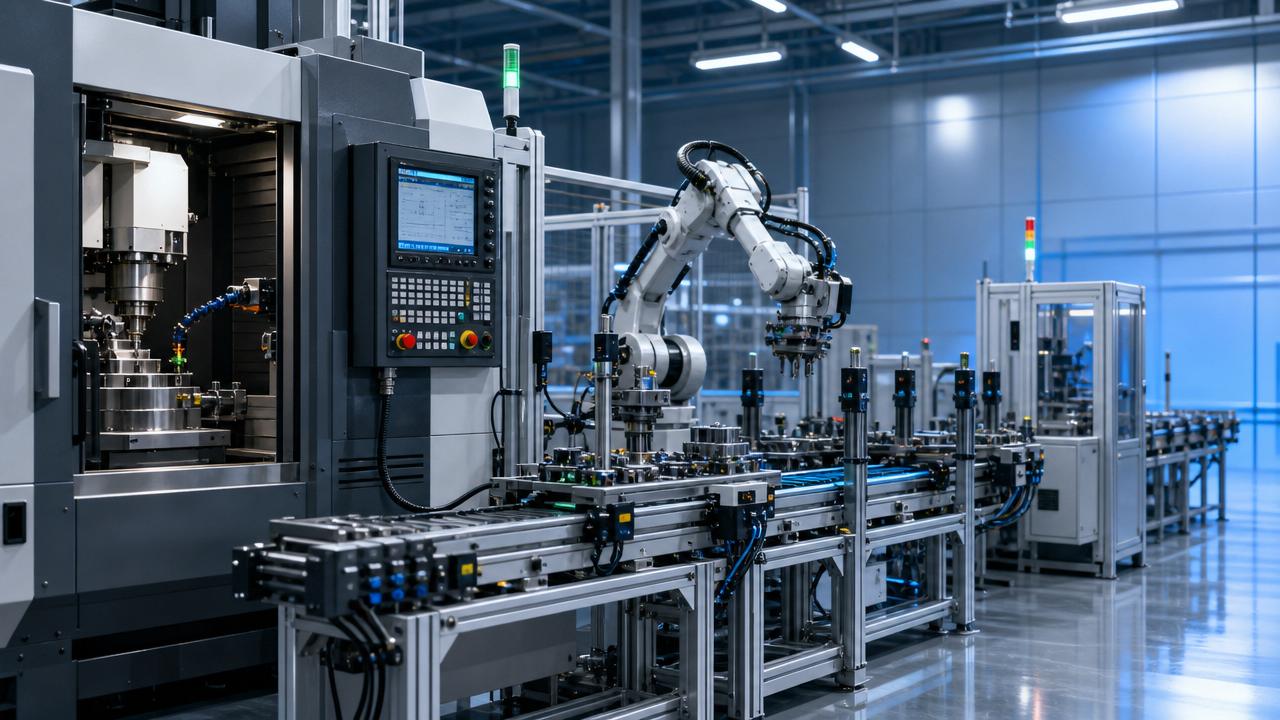
Before approving an Industrial Automation budget, the visible machine price is only the starting point. In CNC machining, precision manufacturing, and automated production lines, overlooked costs often appear after purchase orders are signed.
These hidden expenses can reduce ROI, extend payback periods, and create unexpected pressure on production schedules. A structured review helps expose cost drivers early and supports more reliable investment decisions.
Why Industrial Automation budgets need a deeper review
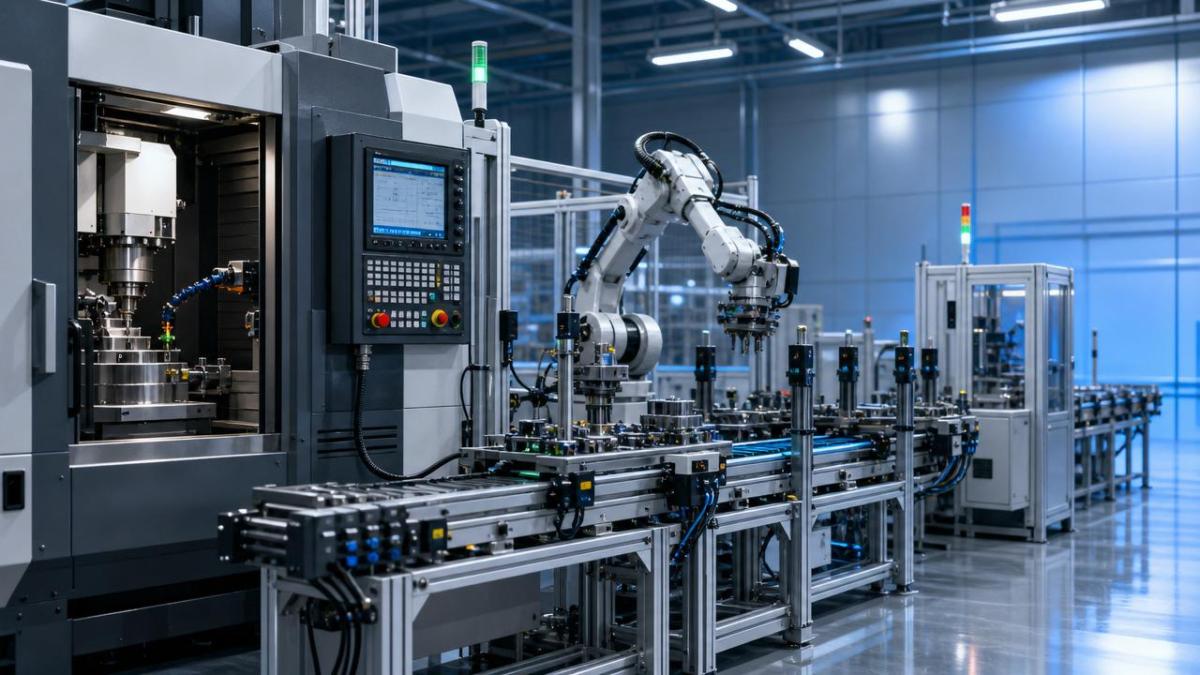
Industrial Automation projects rarely fail because equipment is too advanced. They usually become expensive because planning excludes integration work, plant constraints, software dependencies, and post-installation support.
In high-precision sectors, every unplanned adjustment affects output quality. CNC machine tools, robots, fixtures, sensors, and MES links must operate as one system, not as isolated assets.
A checklist-based review improves visibility across technical, operational, and financial variables. It also makes Industrial Automation approval more realistic for complex factories and mixed-production environments.
Key cost checks before approving Industrial Automation
Use the following points to evaluate total project cost, not just quoted equipment value.
- Confirm integration scope, including PLC programming, CNC communication, robot interfaces, sensor calibration, and software mapping between new equipment and existing production systems.
- Check facility modification costs such as power upgrades, compressed air routing, coolant systems, floor reinforcement, guarding, cable trays, and environmental control.
- Estimate installation downtime realistically, including line stoppage, layout changes, trial runs, process validation, and the delayed return to target productivity.
- Review training expenses for operators, maintenance teams, programmers, and quality staff, especially when Industrial Automation introduces unfamiliar software or multi-axis machining workflows.
- Include spare parts inventory needs, because motors, drives, probes, control boards, and safety devices can create long delays if replacement stock is unavailable.
- Assess maintenance contracts carefully, covering preventive service, emergency response time, remote diagnostics, calibration support, and annual consumable replacement costs.
- Verify software licensing charges for HMI, SCADA, MES connectors, CAD/CAM updates, cybersecurity tools, and future user expansion requirements.
- Calculate data infrastructure expenses, including industrial network upgrades, edge devices, server capacity, cloud subscriptions, and secure storage for machine performance records.
- Study tooling and fixturing changes, since Industrial Automation may require new holders, clamps, grippers, pallets, and part presentation systems.
- Measure quality assurance impacts, including first-article inspection, gauge upgrades, in-process measurement devices, and documentation required for regulated industries.
- Test cycle time assumptions against real part families, because quoted throughput often reflects ideal runs rather than mixed batches and frequent changeovers.
- Plan for future upgrades, since Industrial Automation platforms may need additional axes, new robot cells, AI monitoring tools, or digital twin integration later.
How these costs change across manufacturing scenarios
CNC machining cells
In CNC environments, hidden costs often come from part handling and precision control. A robot loader may seem affordable until custom grippers, probing systems, and pallet logic are added.
Tool life monitoring, chip evacuation, coolant filtration, and spindle utilization tracking also affect Industrial Automation economics. These features improve consistency but increase implementation scope.
Flexible production lines
Flexible lines require stronger coordination between machines, conveyors, robots, and scheduling software. Hidden costs usually appear in synchronization, buffering logic, and exception handling during production changes.
If product mix changes often, setup reduction becomes essential. Industrial Automation savings can disappear when changeover engineering is underestimated.
Aerospace and high-precision applications
Aerospace-grade production demands traceability, process validation, and stable dimensional performance. Hidden costs here often involve documentation, metrology, environmental monitoring, and certification-related testing.
Industrial Automation may improve repeatability, but qualification periods are longer. Budget planning must reflect slower approval cycles and stricter quality control steps.
Electronics and small-part production
For small components, speed and handling sensitivity matter more than machine size. Vision systems, static control, micro-fixturing, and clean operating conditions can become major hidden expenses.
Industrial Automation projects in this area also require careful reject management. Small error rates can still create large financial losses at high volume.
Commonly missed items that weaken ROI
Startup productivity is usually lower than expected
Most Industrial Automation systems need tuning after launch. Early output often falls below quoted capacity because of debugging, operator adaptation, and process stabilization.
Legacy equipment creates hidden interface work
Older CNC controls and plant systems may not connect easily. Gateways, custom code, and electrical redesign can add cost long before the first automated cycle starts.
Cybersecurity is often treated as optional
Connected Industrial Automation systems increase exposure to network risks. Firewalls, access control, patch management, and secure remote service should be budgeted from the beginning.
Vendor support quality changes total ownership cost
A lower quotation may lead to slower service, limited spare parts access, or weak application engineering. Support quality directly affects downtime, quality consistency, and future expansion cost.
Energy consumption can rise after automation
Robots, chillers, conveyors, extraction units, and additional controls all consume power. Industrial Automation may save labor while increasing utility costs.
Practical steps to control Industrial Automation costs
- Build a total cost model covering capital expense, commissioning, training, maintenance, software, downtime, and five-year upgrade expectations.
- Request detailed scope documents from suppliers, not only machine quotations. Every interface, deliverable, and exclusion should be written clearly.
- Run a pilot or simulation using representative parts, real cycle logic, and actual staffing assumptions before full Industrial Automation approval.
- Separate mandatory costs from optional enhancements. This helps prioritize core production needs while preserving future expansion flexibility.
- Create a staged implementation plan so layout work, training, and software validation happen with less disruption to current output.
- Benchmark service response terms, spare parts lead times, and upgrade pathways before selecting an Industrial Automation platform.
Frequently asked questions about Industrial Automation cost planning
Is equipment price the largest Industrial Automation cost?
Not always. In many projects, integration, downtime, software, training, and facility changes together exceed the visible equipment price difference between vendors.
How can payback calculations become misleading?
Payback looks stronger when assumptions use ideal uptime, low maintenance, and immediate productivity gains. Industrial Automation budgets should use conservative startup and support estimates.
Why do CNC-based automation projects need extra review?
Precision machining depends on tooling, fixturing, probing, and process control. Small technical gaps can create major cost increases across quality, scrap, and machine utilization.
Final decision guidance
Industrial Automation can transform precision manufacturing, improve consistency, and support long-term competitiveness. However, approval decisions should reflect full lifecycle cost rather than purchase price alone.
A disciplined review of integration, downtime, training, maintenance, software, and expansion needs will reveal the true financial picture. That approach leads to smarter approvals and more resilient automation results.
The best next step is simple: document every hidden cost category, validate assumptions with real production conditions, and compare Industrial Automation options using total ownership value.
PREVIOUS ARTICLE
NEXT ARTICLE
Recommended for You
![]() Fuxing EMU Trainset Procurement Reaches ¥4.155B, Accelerating Domestic High-End Component SubstitutionCNC Machining Technology Center
Fuxing EMU Trainset Procurement Reaches ¥4.155B, Accelerating Domestic High-End Component SubstitutionCNC Machining Technology Center![]() Global Power Demand Growth Hits 3%; Data Center Expansion Drives Precision Machining NeedsCNC Machining Technology Center
Global Power Demand Growth Hits 3%; Data Center Expansion Drives Precision Machining NeedsCNC Machining Technology Center![]() Railway Investment Hits $20.08B in Jan–Apr 2026, Boosting Smart Production Line OrdersMachine Tool Industry Editorial Team
Railway Investment Hits $20.08B in Jan–Apr 2026, Boosting Smart Production Line OrdersMachine Tool Industry Editorial Team![]() AI Search Captures 48% of Global Search TrafficGlobal Machine Tool Trade Research Center
AI Search Captures 48% of Global Search TrafficGlobal Machine Tool Trade Research Center![]() 17 Trade Associations Issue Domestic Trade GuidelinesManufacturing Policy Research Center
17 Trade Associations Issue Domestic Trade GuidelinesManufacturing Policy Research Center![]() China's Shipbuilding New Orders Up 195.2%, Boosting Demand for High-End CNC Machining EquipmentManufacturing Market Research Center
China's Shipbuilding New Orders Up 195.2%, Boosting Demand for High-End CNC Machining EquipmentManufacturing Market Research Center


Aris Katos
Future of Carbide Coatings
15+ years in precision manufacturing systems. Specialized in high-speed milling and aerospace grade alloy processing.
▶
Industrial Automation Costs That Are Easy to Miss Before ApprovalManufacturing Market Research Center▶
Industrial Robotics Payback Looks Different in 2026Manufacturing Market Research Center▶
Manufacturing Industry pressure points that affect expansion plansManufacturing Market Research Center▶
Where the Manufacturing Industry is adding capacity in 2026Manufacturing Market Research Center▶
When industrial CNC investment starts paying back fasterManufacturing Market Research Center
Mastering 5-Axis Workholding Strategies
Join our technical panel on Nov 15th to learn about reducing vibrations in thin-wall components.

Providing you with integrated sanding solutions
Before-sales and after-sales services
Comprehensive technical support