• Global CNC market projected to reach $128B by 2028 • New EU trade regulations for precision tooling components • Aerospace deman
NYSE: CNC +1.2%LME: STEEL -0.4%

Machine Tool Market signals worth watching in 2026
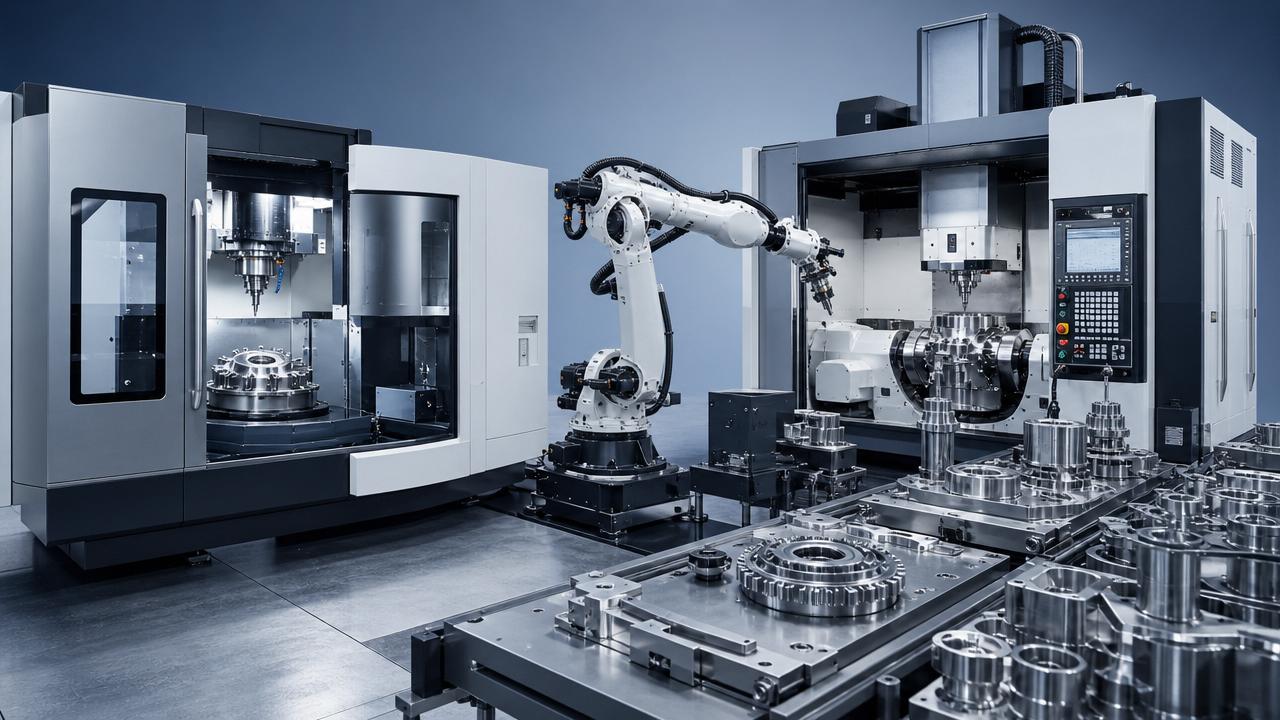
The Machine Tool Market is entering 2026 with signals that financial decision-makers cannot afford to ignore. From automation upgrades and smart factory investment to shifting global supply chains and precision manufacturing demand, the sector is revealing where capital may flow next. In a broad industrial environment shaped by automotive electrification, aerospace recovery, energy transition, and electronics miniaturization, the Machine Tool Market is no longer driven by volume alone. It is increasingly shaped by scenario-specific demand: high-mix precision production, regional localization, retrofit economics, and digital manufacturing readiness. Understanding these scenarios helps separate temporary noise from durable opportunity.
Why 2026 looks different for the Machine Tool Market
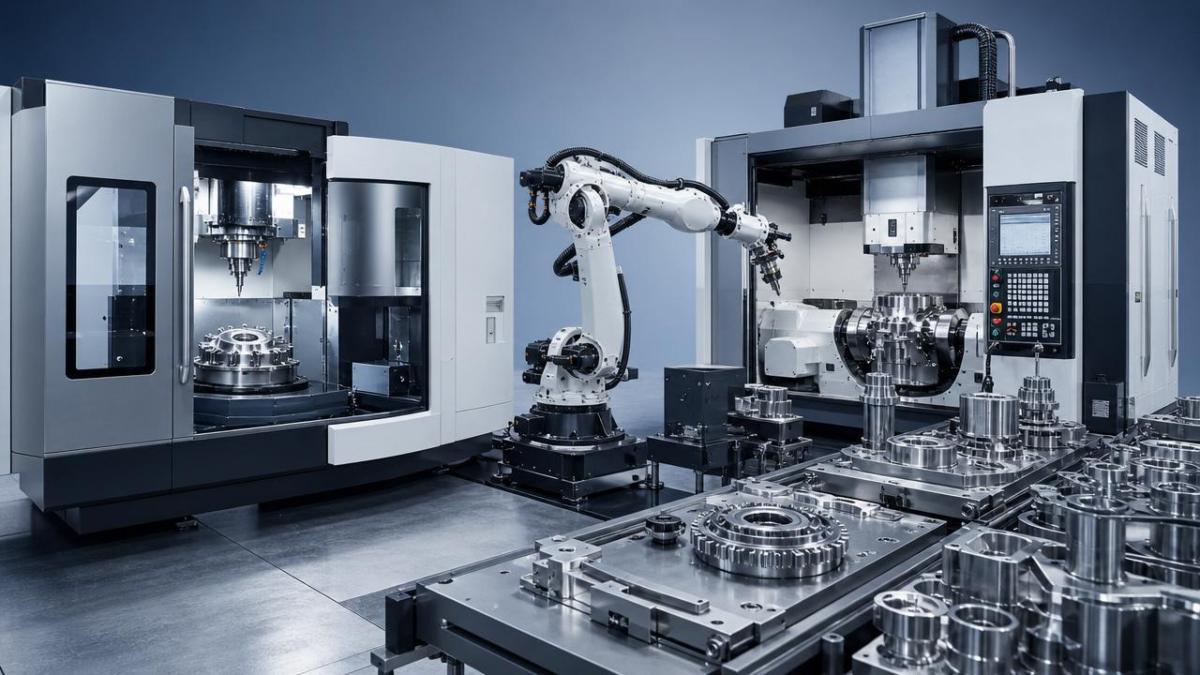
The Machine Tool Market in 2026 is being influenced by several overlapping shifts. First, industrial investment is becoming more selective. Capital spending is moving toward equipment that improves throughput, labor efficiency, data visibility, and part consistency rather than simply expanding installed capacity. Second, supply chain restructuring is changing where machine tools are ordered, assembled, and serviced. Third, higher standards in aerospace, medical components, electronics, and energy equipment are favoring precision machine tools, CNC machining centers, multi-axis systems, and automation-ready platforms.
This means the most important Machine Tool Market signals are not just top-line shipment numbers. Better indicators include order mix, lead-time normalization, retrofit demand, software integration spending, regional export data, and capacity additions in precision-heavy sectors. In practical terms, 2026 should be evaluated through use scenarios: where demand is urgent, where margins are stronger, and where buyers are solving operational constraints rather than pursuing discretionary upgrades.
Scenario one: automation-led factories signal durable Machine Tool Market demand
In facilities facing labor scarcity, quality variation, or rising unit costs, automation upgrades remain one of the strongest Machine Tool Market demand drivers. CNC lathes, machining centers, robotic loading systems, tool monitoring, and automated inspection are increasingly purchased as connected productivity solutions rather than standalone machines. The key signal here is not just machine volume, but the share of orders tied to cells, flexible production lines, and digital process control.
This scenario matters because automation-linked projects typically have clearer return-on-investment logic. When cycle times are reduced, scrap is lowered, and unattended operation increases, machine tool purchases become easier to justify even in uncertain macro conditions. For the Machine Tool Market, that creates a more resilient layer of demand. Regions and suppliers with stronger integration capability, after-sales support, and software compatibility may outperform those competing only on price.
What to watch in automation-heavy scenarios
- Orders that bundle CNC machines with robots, fixtures, probes, or MES connectivity
- Investment growth in lights-out or low-supervision machining cells
- Demand for machine tool retrofits that extend existing assets with automation functions
- Service revenue expansion, which often signals deeper customer dependence and stable utilization
Scenario two: precision manufacturing creates higher-value Machine Tool Market opportunities
Not all machine tool demand carries the same strategic value. One of the clearest 2026 signals is the difference between standard replacement demand and precision-critical demand. Aerospace structures, EV drivetrain parts, semiconductor-related hardware, medical devices, and advanced energy equipment require tighter tolerances, more complex geometries, and greater process stability. In these applications, the Machine Tool Market benefits from higher specification requirements, stronger demand for multi-axis machining, and greater dependence on premium tooling, spindle performance, thermal control, and software compensation.
This scenario often supports better pricing and longer customer relationships. Buyers in precision manufacturing are less likely to select equipment on headline cost alone. They evaluate uptime, accuracy retention, process repeatability, training, spare parts access, and the ability to support future part changes. As a result, the Machine Tool Market tends to show stronger quality differentiation in these segments, which can create a more stable competitive moat for technologically capable suppliers.
Core judgment points in precision-demand scenarios
Watch whether new orders are concentrated in five-axis systems, high-speed machining centers, grinding platforms, or integrated inspection workflows. Also track whether demand is linked to sectors with long certification cycles and high switching costs. These are often signs that the Machine Tool Market is strengthening from the quality side, not only from cyclical replacement behavior.
Scenario three: regional supply chain shifts are changing where the Machine Tool Market grows
Another major 2026 signal comes from industrial geography. The Machine Tool Market is being reshaped by localization strategies, trade policy adjustments, geopolitical risk, and the desire to shorten production lead times. China, Germany, Japan, and South Korea remain central to machine tool manufacturing and precision engineering, but investment patterns are broadening as companies expand production bases in Southeast Asia, India, Mexico, Eastern Europe, and selected North American locations.
This does not mean traditional hubs are weakening uniformly. Instead, the opportunity map is becoming more layered. Mature industrial clusters still dominate high-end equipment, component ecosystems, and engineering know-how. Emerging locations may show stronger growth in assembly, standard CNC demand, and cost-sensitive automation deployment. For the Machine Tool Market, regional strength should be assessed by local supplier networks, technical service depth, industrial policy support, and the mix between export-oriented and domestic demand.
How demand differs across real industrial scenarios
The Machine Tool Market behaves differently depending on the production context. A broad industrial reading is useful, but scenario-level comparison gives a better basis for evaluating timing and resilience.
Practical ways to read Machine Tool Market signals in 2026
A useful 2026 approach is to separate strong signals from misleading ones. A rise in raw shipment numbers may look positive, but if it comes from low-margin standard machines with weak service attachment, the quality of Machine Tool Market growth may be limited. By contrast, moderate shipment growth with rising automation content, better software penetration, and stronger aftermarket revenue can indicate healthier long-term value creation.
- Compare machine orders by application, not only by region or total volume.
- Track industries where downtime costs are high, because these segments support premium equipment spending.
- Assess whether regional expansion includes technical service and parts infrastructure, not just sales presence.
- Monitor retrofit activity, which often reveals practical demand even when new-build confidence is mixed.
- Look for signs of digital integration such as predictive maintenance, remote diagnostics, and process data usage.
Common misreads that can distort a Machine Tool Market outlook
One common mistake is treating the Machine Tool Market as a single-cycle industry. In reality, the market contains very different layers: commodity replacement demand, automation-led productivity investment, and precision-critical strategic capacity. These layers respond differently to interest rates, labor conditions, industrial policy, and end-market technology shifts.
Another misread is underestimating the role of service, tooling, fixtures, software, and training. A machine tool sale is often only one part of a wider manufacturing solution. In 2026, competitive strength will increasingly depend on ecosystem depth. Ignoring this can lead to overly narrow conclusions about who is gaining share in the Machine Tool Market.
A third blind spot is assuming every regional expansion story is equally investable. Growth in installed base does not automatically mean growth in profitable demand. The more reliable test is whether a region has stable downstream industries, skilled technical support, and enough volume to justify localized service and spare parts networks.
Where to focus next if Machine Tool Market signals keep strengthening
If current indicators continue into 2026, the most important next step is to build a scenario-based watchlist. Prioritize automation-intensive factories, precision manufacturing programs, and regions where supply chain relocation is being matched by technical infrastructure. Give more weight to order quality, aftermarket depth, and digital capability than to simple unit counts. In the Machine Tool Market, durable opportunity is likely to come from businesses and industrial zones that solve production complexity, not just from those adding machine capacity.
The Machine Tool Market will remain closely tied to broader manufacturing health, but the clearest signals for 2026 are already visible. Watch where precision requirements are rising, where automation solves hard operating problems, and where regional manufacturing ecosystems are becoming more complete. Those are the conditions most likely to shape risk, return, and long-term relevance across the global industrial landscape.
PREVIOUS ARTICLE
NEXT ARTICLE
Recommended for You
![]() Five Ministries Launch Joint Enforcement on EV Battery RecyclingManufacturing Policy Research Center
Five Ministries Launch Joint Enforcement on EV Battery RecyclingManufacturing Policy Research Center![]() Top 10 Future Industries Roadmap 2026 ReleasedManufacturing Market Research Center
Top 10 Future Industries Roadmap 2026 ReleasedManufacturing Market Research Center![]() Global Methanol-Electric Ecosystem Alliance LaunchedManufacturing Market Research Center
Global Methanol-Electric Ecosystem Alliance LaunchedManufacturing Market Research Center![]() ISO 23218-3:2026 Enters Force: CNC Digital Twin Interoperability Standard Goes GlobalCNC Machining Technology Center
ISO 23218-3:2026 Enters Force: CNC Digital Twin Interoperability Standard Goes GlobalCNC Machining Technology Center![]() ANVISA New Rule: Portuguese Biocompatibility Labels for Medical CNC EquipmentManufacturing Policy Research Center
ANVISA New Rule: Portuguese Biocompatibility Labels for Medical CNC EquipmentManufacturing Policy Research Center![]() KATS Updates KC Certification: CNC Cybersecurity Modules Must Comply with IEC 62443-4-2Manufacturing Policy Research Center
KATS Updates KC Certification: CNC Cybersecurity Modules Must Comply with IEC 62443-4-2Manufacturing Policy Research Center


Aris Katos
Future of Carbide Coatings
15+ years in precision manufacturing systems. Specialized in high-speed milling and aerospace grade alloy processing.
▶
Machine Tool Market signals worth watching in 2026Manufacturing Market Research Center▶
Machine Tool Market signals worth watching this yearManufacturing Market Research Center▶
Where the Machine Tool Market is slowing and where it is notManufacturing Market Research Center▶
Where the Machine Tool Market is slowing and where it is notManufacturing Market Research Center▶
Where the Machine Tool Market is slowing and where it is notManufacturing Market Research Center
Mastering 5-Axis Workholding Strategies
Join our technical panel on Nov 15th to learn about reducing vibrations in thin-wall components.

Providing you with integrated sanding solutions
Before-sales and after-sales services
Comprehensive technical support