• Global CNC market projected to reach $128B by 2028 • New EU trade regulations for precision tooling components • Aerospace deman
NYSE: CNC +1.2%LME: STEEL -0.4%

Machine Tool Market signals worth watching this year

The Machine Tool Market is sending clear signals this year, from rising demand for automation to shifts in global supply chains and precision manufacturing investment. For distributors, agents, and channel partners, understanding these market movements is essential to spotting growth opportunities, aligning product portfolios, and staying competitive in an increasingly digital and high-performance industrial landscape.
What the Machine Tool Market Means in Today’s Manufacturing Economy
The Machine Tool Market refers to the global ecosystem of CNC lathes, machining centers, grinding machines, multi-axis systems, tooling support, fixtures, control systems, and production technologies used to shape metal and advanced materials with high precision. It is not just a measure of equipment sales. It also reflects the health of industrial production, capital expenditure confidence, export competitiveness, and the pace of smart factory adoption.
This year, the Machine Tool Market deserves close attention because it sits at the intersection of several major industrial shifts. Manufacturers are upgrading equipment to improve accuracy, labor efficiency, and production flexibility. At the same time, end-use sectors such as automotive, aerospace, energy, electronics, and industrial equipment are demanding shorter lead times and more complex parts. These pressures are pushing buyers toward advanced CNC solutions, automation-ready systems, and digitally connected production lines.
For distributors and channel partners, this broader definition matters. Market opportunity is no longer limited to the machine itself. Growth also comes from software integration, cutting tools, workholding, maintenance services, retrofit programs, operator training, and application engineering support. In other words, the Machine Tool Market is expanding in value through complete manufacturing solutions rather than simple unit sales alone.
Why the Industry Is Watching These Signals So Closely
Machine tools are often viewed as a leading indicator of industrial momentum. When factories invest in new turning centers, vertical machining centers, five-axis machines, or automated loading systems, they are usually preparing for future production demand rather than reacting only to current orders. Because of this, changes in the Machine Tool Market can reveal where manufacturing confidence is rising, which sectors are upgrading fastest, and how regional supply chains are evolving.
Several factors are shaping attention this year. First, reshoring and regionalization continue to influence investment patterns. Buyers are reassessing where parts should be made and which equipment suppliers can ensure reliable service and spare parts access. Second, labor constraints remain a serious issue in many markets, making automation and user-friendly CNC systems more attractive. Third, energy efficiency and production cost control are becoming strategic priorities, especially for high-volume and high-precision manufacturers.
These signals matter not only to machine builders but also to importers, regional dealers, and industrial agents. A market that favors integrated solutions, preventive maintenance, and data visibility rewards channel partners that can deliver technical confidence, not only product catalogs.
Key Machine Tool Market Signals Worth Watching This Year
The most important developments in the Machine Tool Market can be grouped into a few practical signals. Each one has direct implications for sales strategy, inventory planning, and customer development.
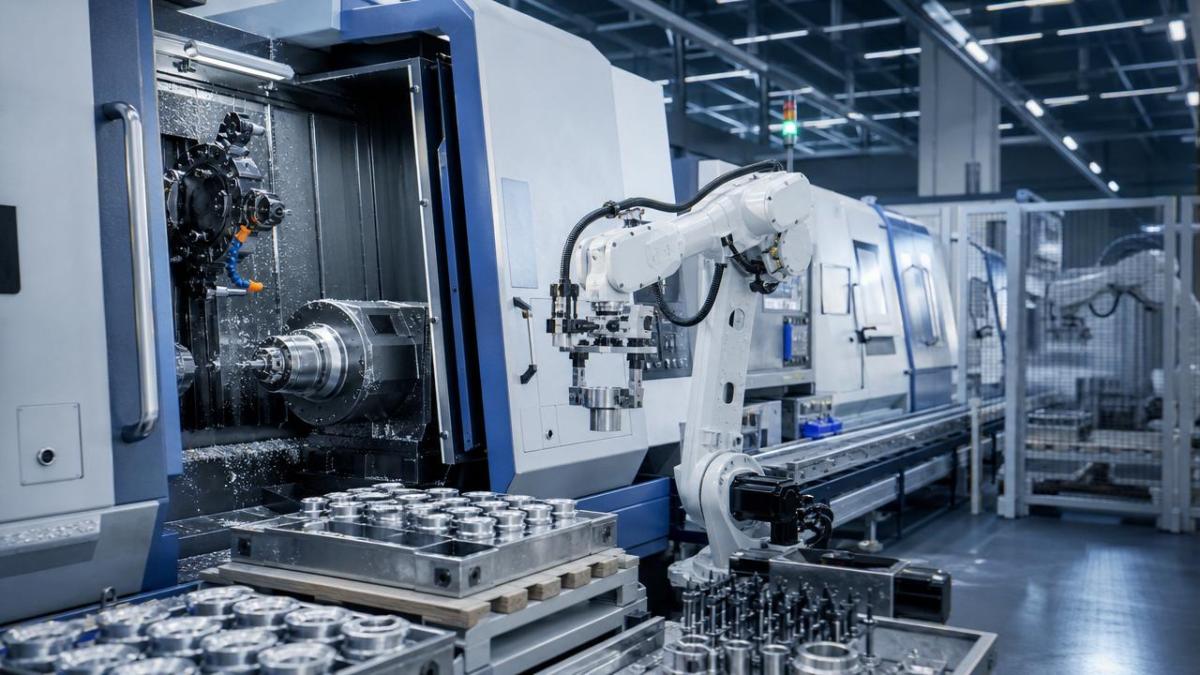
- Automation demand is broadening. Interest in robotic loading, pallet systems, tool monitoring, and unattended machining is moving beyond large factories and into mid-sized workshops.
- Precision expectations are rising. Customers increasingly want tighter tolerances, stable repeatability, and better thermal control, especially in aerospace, medical components, electronics, and EV-related parts.
- Digital integration is becoming a selection factor. Buyers now ask more often about CNC connectivity, remote diagnostics, production traceability, and compatibility with MES or factory data systems.
- Regional sourcing is reshaping competition. Global supply chain risk has encouraged buyers to compare local support capability as carefully as machine specifications.
- After-sales capability is gaining value. Training, spare parts response, service speed, and application support increasingly influence purchasing decisions in the Machine Tool Market.
Taken together, these signs show that the market is becoming more solution-driven, more data-aware, and more service-sensitive. This is especially important for distributors, who often serve as the practical bridge between global manufacturers and local production realities.
Industry Overview: Where Demand Is Concentrating
Demand in the Machine Tool Market is not growing evenly across all customer groups. Some segments are investing for volume, others for complexity, and others for resilience. The table below offers a useful overview for channel planning.
Business Value for Distributors, Agents, and Regional Partners
For the target audience, the Machine Tool Market is not only a source of sales leads. It is a framework for deciding where to place technical resources, how to structure regional coverage, and which brands or product lines deserve deeper commitment. Distributors that read market signals well can move earlier than competitors in high-potential sectors.
One practical value is portfolio alignment. If local customers are shifting toward multi-axis machining, automated cells, or higher-speed milling, carrying only entry-level standalone machines may reduce relevance. Another value is service positioning. In a market where uptime matters, channel partners with strong installation teams, spare parts planning, and troubleshooting support gain stronger retention and referral advantages.
The Machine Tool Market also creates opportunities for cross-selling. A machine sale can lead to recurring revenue from cutting tools, chucks, tool holders, probing systems, coolant solutions, software updates, and operator training. This is especially important in periods when buyers take longer to approve major capital purchases. Accessory and service business can help stabilize revenue while building long-term customer trust.
Typical Product and Solution Categories Gaining Attention
Across the Machine Tool Market, interest is concentrating around equipment and solutions that improve productivity without sacrificing precision. The most watched categories include:
- CNC turning centers for shaft parts, valves, connectors, and automotive components
- Vertical and horizontal machining centers for structural parts, molds, and precision housings
- Five-axis and multi-tasking systems for aerospace, medical, and high-mix low-volume production
- Automation modules such as robotic loading, pallet changers, and unattended operation cells
- Digital service tools including machine monitoring, predictive maintenance, and remote diagnostics
For many buyers, the decision is no longer machine versus machine. It is production system versus production system. That shift is changing how the Machine Tool Market should be presented, priced, and supported by channel partners.
What to Evaluate Before Expanding in the Machine Tool Market
Expanding in the Machine Tool Market requires more than following headline growth stories. Distributors and agents should evaluate local demand structure, technical support capacity, and supplier reliability together. A strong product line can still underperform if application matching is weak or service response is slow.
Start with customer segmentation. Identify whether your regional base is driven by batch manufacturing, heavy industry, export-oriented precision work, or custom job-shop demand. Then compare that profile against the machine categories you represent. The goal is to match machine capability with real production pain points such as lead time pressure, labor shortages, tolerance requirements, or cost-per-part reduction.
Next, assess support readiness. In today’s Machine Tool Market, many customers expect installation guidance, process advice, training, and preventive service planning. If your team cannot provide these functions directly, partnerships with application engineers or service providers become increasingly important. Lastly, consider lifecycle economics. Buyers want to understand not only purchase price but uptime, tooling consumption, energy use, software flexibility, and future upgrade potential.
Practical Recommendations for Channel Strategy This Year
A practical response to the current Machine Tool Market starts with focus rather than broad expansion. It is better to be highly credible in a few verticals than superficially present in many. Build sales messaging around customer outcomes such as precision stability, labor savings, throughput, traceability, and process integration.
It is also wise to strengthen solution bundles. Instead of quoting only a machine, consider packaging the CNC unit with tooling, fixtures, automation options, and training support. This approach improves differentiation and often shortens the customer’s evaluation process. In parallel, invest in technical content. Demonstration cases, machining samples, ROI explanations, and service response commitments can help your business stand out in a crowded Machine Tool Market.
Finally, maintain close visibility on regional policy, manufacturing investment trends, and export sector movement. New factories, industrial parks, automotive supply chain shifts, and electronics capacity upgrades often create early demand signals. Distributors that track these developments consistently are better positioned to enter discussions before specifications are finalized.
Looking Ahead with a More Informed Market View
The Machine Tool Market this year is defined by precision, automation, digital connectivity, and the need for dependable local support. These are not isolated trends. Together, they point to a manufacturing environment where buyers value complete capability over basic equipment supply. For distributors, agents, and industrial partners, the opportunity lies in understanding what customers are trying to achieve on the shop floor and then aligning products, services, and technical resources around that goal.
If your business is reviewing product lines, exploring new regional sectors, or planning a stronger presence in CNC machining and precision manufacturing, now is the right time to study the Machine Tool Market with a practical lens. The clearer your view of demand signals, application priorities, and support expectations, the stronger your position will be in a fast-evolving industrial market.
PREVIOUS ARTICLE
NEXT ARTICLE
Recommended for You
![]() Five Ministries Launch Joint Enforcement on EV Battery RecyclingManufacturing Policy Research Center
Five Ministries Launch Joint Enforcement on EV Battery RecyclingManufacturing Policy Research Center![]() Top 10 Future Industries Roadmap 2026 ReleasedManufacturing Market Research Center
Top 10 Future Industries Roadmap 2026 ReleasedManufacturing Market Research Center![]() Global Methanol-Electric Ecosystem Alliance LaunchedManufacturing Market Research Center
Global Methanol-Electric Ecosystem Alliance LaunchedManufacturing Market Research Center![]() ISO 23218-3:2026 Enters Force: CNC Digital Twin Interoperability Standard Goes GlobalCNC Machining Technology Center
ISO 23218-3:2026 Enters Force: CNC Digital Twin Interoperability Standard Goes GlobalCNC Machining Technology Center![]() ANVISA New Rule: Portuguese Biocompatibility Labels for Medical CNC EquipmentManufacturing Policy Research Center
ANVISA New Rule: Portuguese Biocompatibility Labels for Medical CNC EquipmentManufacturing Policy Research Center![]() KATS Updates KC Certification: CNC Cybersecurity Modules Must Comply with IEC 62443-4-2Manufacturing Policy Research Center
KATS Updates KC Certification: CNC Cybersecurity Modules Must Comply with IEC 62443-4-2Manufacturing Policy Research Center


Aris Katos
Future of Carbide Coatings
15+ years in precision manufacturing systems. Specialized in high-speed milling and aerospace grade alloy processing.
▶
Machine Tool Market signals worth watching in 2026Manufacturing Market Research Center▶
Machine Tool Market signals worth watching this yearManufacturing Market Research Center▶
Where the Machine Tool Market is slowing and where it is notManufacturing Market Research Center▶
Where the Machine Tool Market is slowing and where it is notManufacturing Market Research Center▶
Where the Machine Tool Market is slowing and where it is notManufacturing Market Research Center
Mastering 5-Axis Workholding Strategies
Join our technical panel on Nov 15th to learn about reducing vibrations in thin-wall components.

Providing you with integrated sanding solutions
Before-sales and after-sales services
Comprehensive technical support