• Global CNC market projected to reach $128B by 2028 • New EU trade regulations for precision tooling components • Aerospace deman
NYSE: CNC +1.2%LME: STEEL -0.4%

What Is Shaping the Machine Tool Market in 2026?
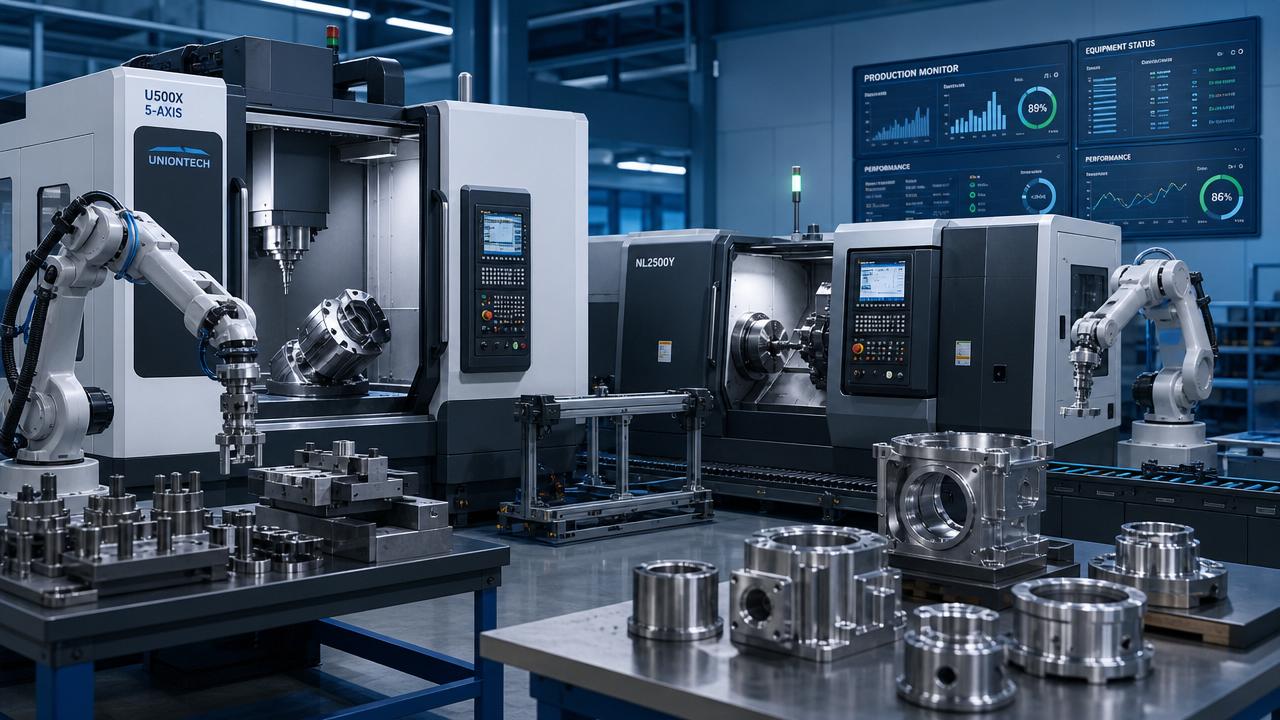
The Machine Tool Market in 2026 is entering a decisive phase. Automation upgrades, precision-led investment, and digital production integration are changing how global manufacturing capacity is built and evaluated.
Across automotive, aerospace, electronics, and energy equipment, machine tools are no longer judged only by speed. Buyers now compare flexibility, software compatibility, uptime, and lifecycle efficiency.
This shift matters because the Machine Tool Market connects directly with industrial competitiveness. CNC lathes, machining centers, multi-axis systems, tooling, fixtures, and automation cells shape output quality and supply reliability.
In 2026, the strongest market signals come from smarter factories, regional capacity expansion, and rising demand for high-accuracy parts. These signals are redefining investment timing, sourcing strategies, and market entry decisions.
Why the Machine Tool Market is changing faster in 2026
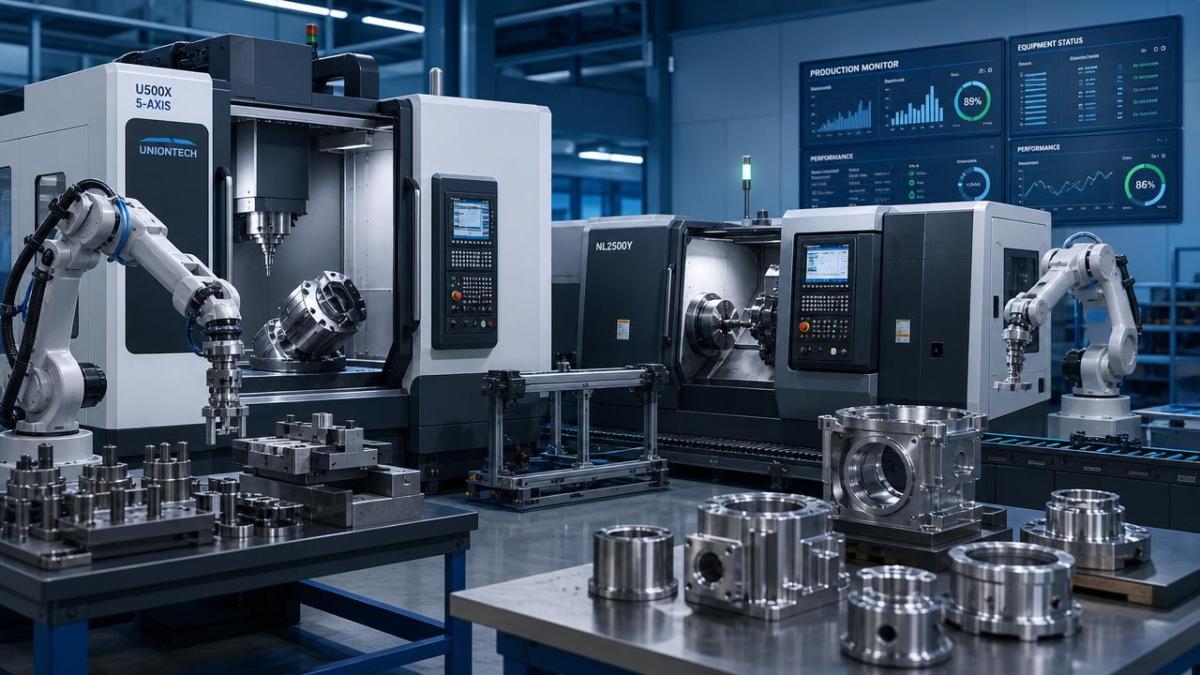
The Machine Tool Market is being pushed by a new manufacturing logic. Production systems must deliver precision, shorter lead times, and stronger resilience under cost pressure and geopolitical uncertainty.
Several trend signals stand out. Multi-axis machining is expanding. Automated loading systems are becoming standard. Software-driven monitoring is moving from premium feature to practical requirement.
Another important signal is the spread of mixed production environments. Factories increasingly need equipment that handles smaller batches, more product variation, and faster engineering changes.
This favors machine tools with modular design, digital connectivity, and stable repeatability. The market is rewarding platforms that support both current throughput and future process upgrades.
The core forces shaping Machine Tool Market demand
The Machine Tool Market in 2026 is not driven by one factor alone. Demand is forming through the interaction of manufacturing technology, industrial policy, and end-use application requirements.
Among these drivers, automation has the widest impact. It influences spindle utilization, labor structure, scheduling accuracy, quality consistency, and overnight production capability.
Digital integration is equally important. In the Machine Tool Market, data visibility now affects maintenance planning, tooling decisions, production balancing, and overall equipment effectiveness.
Industries creating the strongest pull
- Automotive: electric vehicle parts, transmission systems, and lightweight component machining.
- Aerospace: complex geometries, difficult materials, and traceable precision operations.
- Electronics: miniaturized parts, thermal management components, and stable high-volume production.
- Energy equipment: large structural parts, turbine components, and reliability-focused machining.
How automation and smart production are redefining competition
The Machine Tool Market is increasingly judged through system performance, not standalone hardware. A machine without automation compatibility can lose value, even if its base cutting performance remains strong.
Smart production lines are changing buying criteria. Equipment must fit robotic loading, tool life monitoring, remote diagnostics, and cross-platform production planning.
This has direct pricing implications. Higher-end CNC machines can justify stronger margins when they reduce setup time, improve utilization, and simplify data exchange.
It also creates pressure on mid-range suppliers. Competing on price alone becomes difficult when end users compare full-process efficiency rather than initial acquisition cost.
Where smart manufacturing changes equipment value
- Predictive maintenance reduces unplanned downtime.
- Automated handling increases spindle-on time.
- Process monitoring improves yield on precision parts.
- Digital dashboards support faster production decisions.
- Software updates extend the useful life of machine assets.
Regional capacity and supply chain shifts are reshaping the Machine Tool Market
Regional industrial strength remains a defining factor in the Machine Tool Market. China, Germany, Japan, and South Korea continue to influence technology direction, production scale, and export patterns.
However, 2026 is less about simple volume leadership. It is more about who controls critical components, software ecosystems, service networks, and delivery reliability.
Local assembly and regional support centers are gaining importance. Shorter service response times and better spare parts access can strongly affect equipment adoption.
Supply chains are also becoming more selective. End users want transparency around controllers, spindles, bearings, tooling interfaces, and automation compatibility.
What these changes mean across business operations
The Machine Tool Market affects more than equipment purchases. It changes production economics, investment planning, service strategy, and the structure of industrial partnerships.
For production operations, the main impact is higher dependence on connected systems. Machine performance now links closely with software reliability, operator training, and tooling coordination.
For supply chain planning, the impact is greater attention to component origin, after-sales capability, and lead-time stability. A lower-price machine can create higher risk if support is weak.
For market expansion decisions, the key issue is fit. The best growth opportunities often appear where precision demand, automation readiness, and service infrastructure improve together.
The most important points to watch
- Adoption speed of multi-axis and automated CNC systems.
- Integration between machine tools and digital factory software.
- Regional shifts in industrial investment and export competitiveness.
- Availability of service, spare parts, and technical support.
- Demand from aerospace, EV, electronics, and energy equipment sectors.
Practical ways to assess the Machine Tool Market in 2026
A useful market view should balance technology trends with execution reality. The Machine Tool Market can look attractive on demand growth alone, but operational fit determines real value.
- Compare machine capability with end-use precision requirements.
- Check automation readiness, not only standalone machining specifications.
- Review software interoperability with existing factory systems.
- Evaluate service response, training support, and spare parts access.
- Map supplier exposure to component bottlenecks and trade risk.
- Measure lifecycle cost, including energy use and downtime impact.
This approach helps separate short-term excitement from durable opportunity. In 2026, resilient positioning in the Machine Tool Market will come from precision, connectivity, and regional execution strength.
The next step is to track real installation trends, technology adoption rates, and service network expansion across key manufacturing regions. Those indicators often reveal market direction before headline growth numbers do.
As the Machine Tool Market evolves, staying close to CNC innovation, smart factory integration, and international trade developments will support better timing and more confident strategic decisions.
PREVIOUS ARTICLE
NEXT ARTICLE
Recommended for You
![]() Fuxing EMU Trainset Procurement Reaches ¥4.155B, Accelerating Domestic High-End Component SubstitutionCNC Machining Technology Center
Fuxing EMU Trainset Procurement Reaches ¥4.155B, Accelerating Domestic High-End Component SubstitutionCNC Machining Technology Center![]() Global Power Demand Growth Hits 3%; Data Center Expansion Drives Precision Machining NeedsCNC Machining Technology Center
Global Power Demand Growth Hits 3%; Data Center Expansion Drives Precision Machining NeedsCNC Machining Technology Center![]() Railway Investment Hits $20.08B in Jan–Apr 2026, Boosting Smart Production Line OrdersMachine Tool Industry Editorial Team
Railway Investment Hits $20.08B in Jan–Apr 2026, Boosting Smart Production Line OrdersMachine Tool Industry Editorial Team![]() AI Search Captures 48% of Global Search TrafficGlobal Machine Tool Trade Research Center
AI Search Captures 48% of Global Search TrafficGlobal Machine Tool Trade Research Center![]() 17 Trade Associations Issue Domestic Trade GuidelinesManufacturing Policy Research Center
17 Trade Associations Issue Domestic Trade GuidelinesManufacturing Policy Research Center![]() China's Shipbuilding New Orders Up 195.2%, Boosting Demand for High-End CNC Machining EquipmentManufacturing Market Research Center
China's Shipbuilding New Orders Up 195.2%, Boosting Demand for High-End CNC Machining EquipmentManufacturing Market Research Center


Aris Katos
Future of Carbide Coatings
15+ years in precision manufacturing systems. Specialized in high-speed milling and aerospace grade alloy processing.
▶
What Is Shaping the Machine Tool Market in 2026?Manufacturing Market Research Center▶
How the Machine Tool Market Is Shifting in 2026Manufacturing Market Research Center▶
Why the Machine Tool Market Feels Uneven Across RegionsManufacturing Market Research Center▶
Is the Machine Tool Market Cooling or Just Rebalancing?Manufacturing Market Research Center▶
Machine Tool Market signals worth watching in 2026Manufacturing Market Research Center
Mastering 5-Axis Workholding Strategies
Join our technical panel on Nov 15th to learn about reducing vibrations in thin-wall components.

Providing you with integrated sanding solutions
Before-sales and after-sales services
Comprehensive technical support