• Global CNC market projected to reach $128B by 2028 • New EU trade regulations for precision tooling components • Aerospace deman
NYSE: CNC +1.2%LME: STEEL -0.4%

Why the Manufacturing Industry is rethinking capacity plans
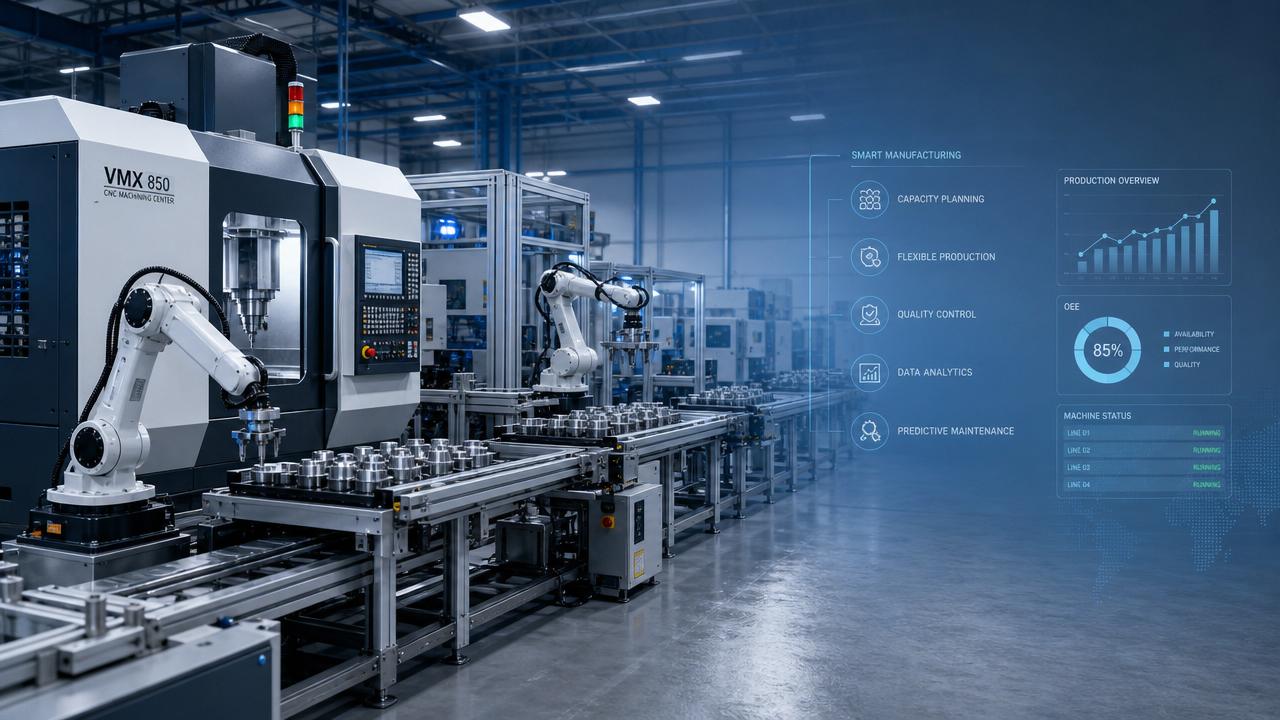
The Manufacturing Industry is rethinking capacity plans as volatility replaces old forecasting assumptions. Demand now moves faster across regions, product categories, and production cycles.
At the same time, supply chain redesign, energy costs, labor constraints, and digital investment are changing how factories expand, automate, and allocate equipment.
In CNC machine tools and precision manufacturing, capacity is no longer only about adding machines. It increasingly depends on flexibility, uptime, software integration, and global positioning.
This shift matters across automotive, aerospace, electronics, and energy equipment. It also shapes where future competitiveness in the Manufacturing Industry will be built.
Capacity planning in the Manufacturing Industry is being redefined
Traditional capacity planning focused on volume growth, stable lead times, and predictable sourcing. Those assumptions are weaker today.
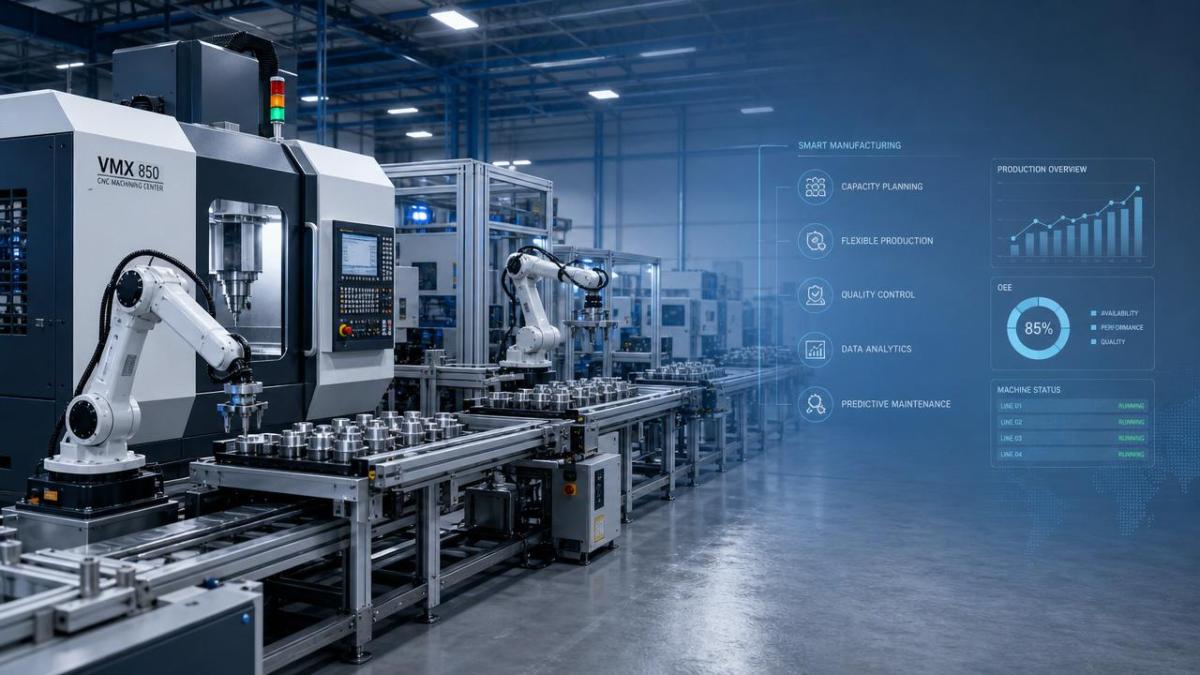
The Manufacturing Industry now treats capacity as a strategic system. Machines, tooling, labor, software, suppliers, and logistics must work together under uncertain conditions.
In CNC operations, a machining center adds value only when programming, fixtures, cutting tools, and inspection systems are aligned. Spare capacity on paper may still fail in practice.
This is why many facilities are shifting from maximum utilization thinking toward adaptable utilization. The goal is to keep output stable while product mix changes.
What capacity means now
- Installed capacity: total available machines, lines, and supporting assets.
- Effective capacity: output after maintenance, setup, quality losses, and staffing limits.
- Flexible capacity: ability to switch products, batches, and schedules without major disruption.
- Digital capacity: visibility created by data, scheduling software, and machine connectivity.
For the Manufacturing Industry, the last two categories are gaining importance. They reduce exposure when demand becomes uneven or regionalized.
Key signals shaping current capacity decisions
Several forces are pushing the Manufacturing Industry to revisit old expansion plans. These signals are visible across machine tools, automation, and component supply networks.
In many segments of the Manufacturing Industry, output is no longer constrained by machine count alone. Material availability, programming skills, and process synchronization often matter more.
This is especially true for high-mix CNC machining. Shorter runs and tighter tolerances require quicker setups and stronger process control.
Why CNC and precision manufacturing are central to this shift
The CNC machine tool sector sits near the core of the Manufacturing Industry. It influences productivity, part accuracy, lead time, and automation readiness across downstream sectors.
CNC lathes, machining centers, and multi-axis systems support complex components for vehicles, aircraft, power systems, and electronics. Their utilization patterns reveal wider industrial trends.
When capacity plans change, machine tool purchasing also changes. Companies often prefer smarter equipment, better monitoring, and more flexible cells over simple volume-based expansion.
Important changes inside workshops
- More demand for multi-purpose machines that reduce handoffs.
- Greater use of robots for loading, unloading, and repetitive handling.
- Stronger investment in tool management and fixture standardization.
- Wider adoption of MES, sensors, and predictive maintenance tools.
- Closer coordination between machining, inspection, and assembly.
These changes help the Manufacturing Industry create capacity without always building new plants. Better process design can unlock hidden throughput and reduce quality losses.
Business value of more flexible capacity models
A flexible capacity model offers strategic advantages beyond cost control. It helps the Manufacturing Industry respond to sudden order shifts and uncertain trade conditions.
First, it protects service levels. If one product line slows, assets can be reassigned more easily to another program or customer requirement.
Second, it improves capital discipline. Funds can move toward automation, software, and tooling upgrades instead of excessive fixed expansion.
Third, it supports resilience. Regional disruptions, shipping delays, or component shortages become easier to absorb when capacity is distributed and digitally visible.
For the Manufacturing Industry, resilience now carries direct economic value. Faster recovery reduces missed deliveries, expensive overtime, and unplanned outsourcing.
Typical value areas
- Lower setup time and better machine utilization.
- Shorter lead times for customized or smaller batches.
- Higher quality consistency in complex precision parts.
- Reduced dependence on single-region sourcing.
- Improved planning visibility for future investment.
Typical capacity planning scenarios across the Manufacturing Industry
Capacity decisions differ by production model, product complexity, and automation maturity. The following scenarios show common patterns across the Manufacturing Industry.
These examples show that the Manufacturing Industry is not reducing capacity ambition. It is refining where, how, and why capacity is created.
Practical considerations before adjusting capacity plans
Effective planning starts with data quality. If cycle times, scrap rates, and setup durations are inaccurate, expansion decisions may solve the wrong problem.
A second consideration is bottleneck mapping. In the Manufacturing Industry, heat treatment, inspection, tooling, or programming can limit output more than machining itself.
Third, equipment choices should reflect product mix. A highly specialized machine may deliver speed, but a flexible platform may create stronger long-term value.
Fourth, capacity planning should include supplier capability. Expanding internal output while external components remain unstable can create expensive imbalance.
Recommended planning checklist
- Measure effective capacity, not only installed capacity.
- Compare expansion with automation and process optimization options.
- Model demand by region, sector, and batch type.
- Review energy usage and compliance exposure.
- Build digital visibility across machines, tools, and suppliers.
- Prepare contingency plans for material or logistics disruption.
How the Manufacturing Industry can move forward
The Manufacturing Industry is entering a capacity era defined by adaptability. Competitive advantage will come from synchronized assets, smart automation, and region-aware investment choices.
CNC machine tools, precision production systems, and digital factory platforms will remain central to that transition. They provide the foundation for both efficiency and resilience.
A practical next step is to reassess current throughput limits using real production data. Then compare plant expansion with automation, tooling, and scheduling improvements.
From there, map capacity by product family, process risk, and regional demand exposure. This approach gives the Manufacturing Industry a clearer path toward sustainable growth.
As market conditions continue to change, the strongest capacity plans will be those designed to evolve. That is where the future direction of the Manufacturing Industry is increasingly taking shape.
PREVIOUS ARTICLE
NEXT ARTICLE
Recommended for You
![]() Delta NC5 CNC System Gains TÜV Safety Certification, Enters BMW Production ValidationMachine Tool Industry Editorial Team
Delta NC5 CNC System Gains TÜV Safety Certification, Enters BMW Production ValidationMachine Tool Industry Editorial Team![]() Vietnam's Draft AI Safety Rule for CNC Machines Requires Dual CertificationManufacturing Policy Research Center
Vietnam's Draft AI Safety Rule for CNC Machines Requires Dual CertificationManufacturing Policy Research Center![]() First CNC Machine Carbon Footprint Guide Released in ChinaManufacturing Policy Research Center
First CNC Machine Carbon Footprint Guide Released in ChinaManufacturing Policy Research Center![]() Brazil INMETRO Launches Spot Inspections on CNC LathesMachine Tool Industry Editorial Team
Brazil INMETRO Launches Spot Inspections on CNC LathesMachine Tool Industry Editorial Team![]() Japan METI Green Subsidy: Up to ¥4M for Chinese High-Efficiency CNC SystemsManufacturing Policy Research Center
Japan METI Green Subsidy: Up to ¥4M for Chinese High-Efficiency CNC SystemsManufacturing Policy Research Center![]() Red Sea Shipping Crisis Escalates: CNC Equipment Delays Hit 14.2 Days on Asia-Europe RoutesManufacturing Market Research Center
Red Sea Shipping Crisis Escalates: CNC Equipment Delays Hit 14.2 Days on Asia-Europe RoutesManufacturing Market Research Center


Aris Katos
Future of Carbide Coatings
15+ years in precision manufacturing systems. Specialized in high-speed milling and aerospace grade alloy processing.
▶
Why the Manufacturing Industry is rethinking capacity plansManufacturing Market Research Center▶
How Global Manufacturing shifts are reshaping supplier choicesManufacturing Market Research Center▶
How Global Manufacturing is shifting beyond low-cost hubsManufacturing Market Research Center▶
Why the Manufacturing Industry is rethinking capacityManufacturing Market Research Center▶
Global Manufacturing is moving faster than many firms expectManufacturing Market Research Center
Mastering 5-Axis Workholding Strategies
Join our technical panel on Nov 15th to learn about reducing vibrations in thin-wall components.

Providing you with integrated sanding solutions
Before-sales and after-sales services
Comprehensive technical support