• Global CNC market projected to reach $128B by 2028 • New EU trade regulations for precision tooling components • Aerospace deman
NYSE: CNC +1.2%LME: STEEL -0.4%

Industrial Machining Equipment Lead Times Are Changing Again
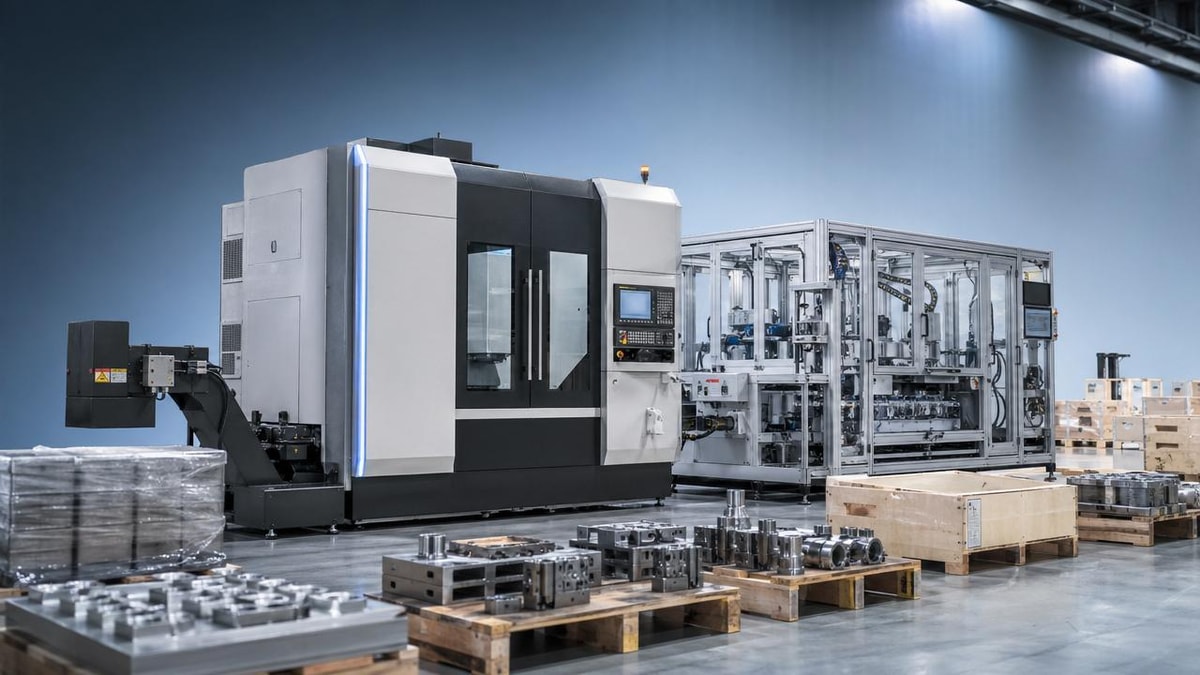
Lead times for industrial machining equipment are shifting again, and for procurement teams this is more than a scheduling issue. It directly affects project timing, capital planning, supplier selection, and production risk. The short answer is that lead times are no longer moving in one direction. Some standard machines are becoming easier to source, while complex CNC systems, automation packages, and equipment tied to specialized components can still face long or unpredictable delivery windows.
For buyers, the real challenge is not simply asking whether lead times are longer or shorter. It is understanding which categories are stabilizing, which remain constrained, and how to adjust sourcing strategies before delays turn into missed output, rushed purchases, or higher total cost. In today’s market, procurement teams that rely on old assumptions may either overbuy too early or wait too long and lose capacity.
This article looks at what is changing in the industrial machining equipment market, why delivery timelines are shifting again, and what purchasing teams should do now to reduce risk while maintaining flexibility.
Why lead times are changing again in industrial machining equipment
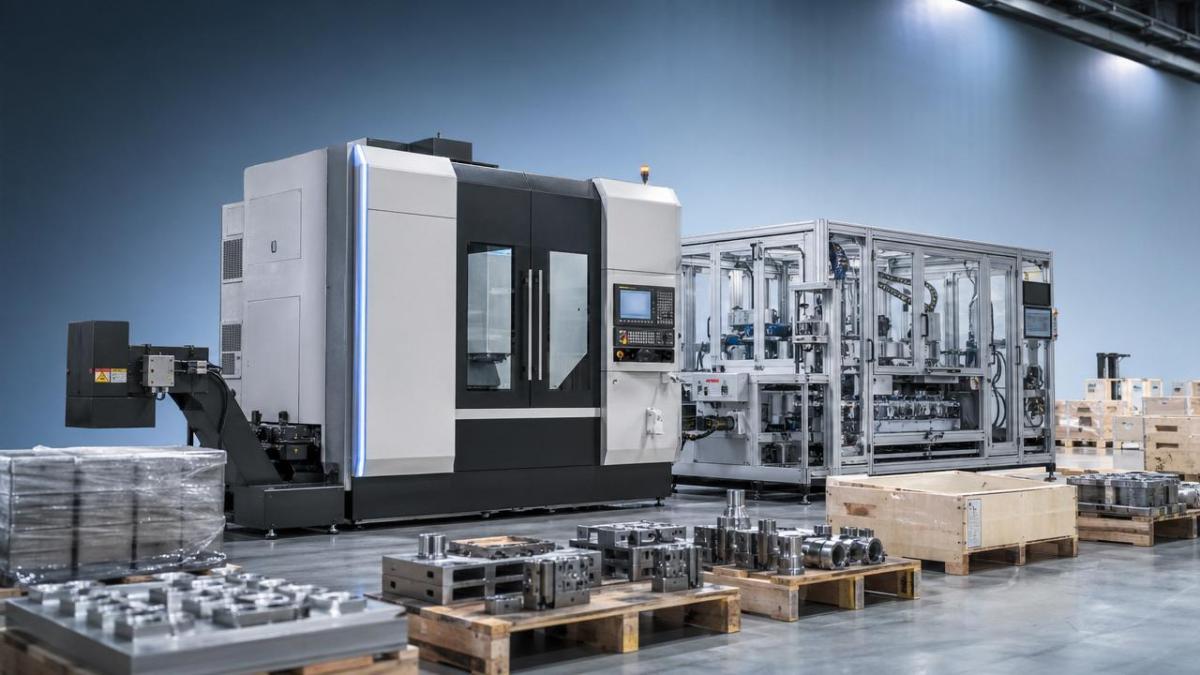
The latest shift in industrial machining equipment lead times is being driven by a mix of supply-side recovery and new bottlenecks. Over the past few years, buyers became used to extended delivery periods caused by raw material shortages, logistics disruption, labor constraints, and strong post-pandemic demand. That environment is now evolving, but not evenly across all equipment segments.
In some machine categories, especially standard CNC lathes, vertical machining centers, and common shop-floor support equipment, supply conditions have improved. Manufacturers have added capacity, logistics networks are more stable than they were at peak disruption, and some end markets have moderated their capital spending. As a result, lead times for widely produced equipment may be shorter than they were one or two years ago.
At the same time, other categories remain vulnerable. Multi-axis machining systems, customized machining centers, integrated automation cells, pallet systems, robotic loading solutions, and equipment requiring highly specific controls or imported components can still have long lead times. The difference is that delays now come less from broad global shutdowns and more from narrow component shortages, engineering complexity, or project-specific integration work.
Another reason lead times are changing is supplier behavior. Machine builders are becoming more selective about production slots, quotation validity, and customer forecast commitments. Some are trying to smooth operations by prioritizing confirmed orders and better-qualified buyers. For procurement teams, this means that commercial readiness now affects delivery timing almost as much as factory capacity.
What procurement teams should understand before requesting quotes
Purchasing teams often focus first on quoted lead time, but that number alone can be misleading. In today’s market, the most important question is what the lead time actually includes. A quoted delivery window may refer only to machine completion at the factory, not shipment, installation, commissioning, software integration, or operator training.
For industrial machining equipment, a realistic timeline should include at least five stages: order confirmation, engineering and documentation, production and assembly, shipping and customs, and on-site installation with acceptance testing. For complex systems, application proofing and tooling validation may also affect final readiness.
This matters because two suppliers may both quote “20 weeks,” while one means 20 weeks to ex works delivery and the other means 20 weeks to site readiness. Procurement teams that compare only the headline number may choose the wrong supplier or misalign the production launch schedule.
It is also important to distinguish between standard and configured equipment. A standard machine with no major modifications may move through production relatively quickly. But once the scope includes a larger spindle package, special workholding, probing systems, chip automation, coolant upgrades, or interface requirements for a smart factory environment, lead time risk rises significantly.
Buyers should therefore treat each quotation as a supply chain document, not just a price offer. The quote should be reviewed for hidden schedule assumptions, dependency risks, and critical-path items that may affect on-time delivery.
Which equipment categories are most exposed to volatile lead times
Not all industrial machining equipment is behaving the same way. Procurement teams can make better decisions when they separate equipment into practical sourcing categories rather than treating the market as a single lead-time trend.
Standard production machines generally have the best chance of shorter or more predictable delivery. This group includes common CNC turning centers, three-axis vertical machining centers, and basic toolroom machines from large-volume manufacturers. If the specification is close to standard and the supplier holds regional inventory or semi-finished stock, procurement timing can improve considerably.
Configured machines carry higher variability. These may include horizontal machining centers, five-axis systems, larger-bed machines, precision grinding systems, and equipment with special control packages or process requirements. Lead times here depend not only on assembly capacity but also on application engineering and third-party component availability.
Fully customized systems remain the most exposed. Automated machining cells, flexible manufacturing systems, special-purpose machining lines, and production-ready turnkey packages often depend on multiple vendors and staged integration. In these cases, the “machine” is really a project, and the project timeline can shift if any critical subsystem lags.
Tooling, fixtures, metrology, and auxiliary systems should not be underestimated either. A machine may arrive on time, but if fixtures, cutting tools, tool presetters, probing hardware, coolant systems, or material handling interfaces are delayed, the production start can still slip. Smart procurement teams increasingly track these supporting items as part of one equipment readiness plan.
What is driving the next round of pricing pressure
Changing lead times and pricing pressure are closely connected. When equipment availability improves, buyers may assume they have stronger negotiating leverage. In some cases that is true, especially for standard machines in more competitive categories. But pricing remains uneven because machine builders are still managing elevated costs in components, labor, energy, freight, and compliance.
Suppliers are also balancing order-book quality. A lower-demand environment does not automatically produce aggressive discounts if the manufacturer wants to protect margin or prioritize strategic accounts. In addition, some builders now price uncertainty into custom projects, especially when delivery depends on volatile component supply or imported subassemblies.
For procurement teams, the key insight is that shorter lead times do not always mean lower total acquisition cost. Expedited builds, reserved production slots, software customization, and integration support can all add cost even when the machine itself is available sooner than expected.
This is why buyers should move beyond unit price and evaluate total project cost, including installation, spare parts, tooling packages, maintenance support, acceptance criteria, and the cost of schedule slippage. A cheaper machine with unstable delivery or weak application support can become far more expensive than a higher-priced alternative with stronger execution reliability.
How buyers can reduce lead-time risk without overcommitting capital
Procurement teams do not need perfect market certainty to act effectively. They do need a disciplined process for separating urgent needs from forecasted needs and matching each to the right sourcing strategy.
For near-term production requirements, early technical alignment is one of the best ways to reduce risk. Many delays start not at the factory but during specification review. If stakeholders disagree on machine size, axis configuration, spindle performance, automation scope, or control standards after the RFQ is issued, the buying cycle slows and supplier commitments weaken.
A second best practice is to create a two-level supplier plan. The first level should include preferred suppliers for strategic fit, technical capability, and service support. The second level should include viable alternatives in case lead times shift suddenly, pricing moves out of range, or one supplier cannot confirm a slot. This reduces dependency without forcing premature purchase commitments.
Third, buyers should ask suppliers to identify long-lead components at the quotation stage. These may include CNC controls, motors and drives, ball screws, linear guides, probing systems, chip conveyors, hydraulic units, or automation hardware. If those parts are on the critical path, procurement can negotiate milestone transparency instead of waiting for problems to surface later.
Another useful tactic is phased commitment. In some cases, buyers can reserve engineering capacity or production slots with limited early commitment while finalizing tooling, layout, or financing details. This approach is especially helpful for larger industrial machining equipment projects where waiting for every internal approval may mean losing the best delivery window.
Questions procurement teams should ask suppliers right now
When lead times are changing again, better questions often matter more than more quotes. Procurement teams should push suppliers for operational clarity rather than relying on generic promises.
Useful questions include: Is the quoted lead time based on current factory load or expected future capacity? Which components are most likely to affect shipment timing? Is the machine specification fully standard, partially configured, or engineering-to-order? What milestones trigger schedule changes? What portion of the system depends on third-party suppliers? What is the average installation and commissioning time after delivery?
Buyers should also ask how often the supplier updates order status, whether the company can provide application proofing before shipment, and what local service resources are available if startup issues occur. A machine that ships on time but takes weeks to become productive can still create a major procurement failure.
For multinational sourcing, questions about trade risk are also essential. Country of origin, export controls, customs documentation, and regional inventory position can all influence true lead time. A competitive quote from an overseas source may look attractive until shipping complexity or border delay erases the advantage.
How to build a smarter sourcing strategy for the next 12 months
The current environment favors procurement teams that combine flexibility with stronger market intelligence. Rather than assuming that all industrial machining equipment is either constrained or available, buyers should segment their demand and create category-level strategies.
For standard equipment, it may be possible to time purchases more competitively, compare multiple suppliers, and negotiate based on improved availability. For configured and customized systems, the priority should shift toward earlier engagement, more detailed technical review, and stronger milestone control.
Procurement leaders should also work more closely with production, engineering, and finance. Equipment planning cannot sit in a silo when lead times are unstable. Operations teams can help define what is truly urgent, engineering can reduce specification ambiguity, and finance can support phased purchasing decisions that preserve both cash flow and schedule security.
Another smart move is to track supplier performance over time instead of relying only on market reputation. Actual versus quoted lead time, startup performance, response speed, spare-parts support, and change-order discipline all provide better guidance for future purchases than brochure claims.
Finally, buyers should treat lead-time volatility as a recurring condition rather than a temporary anomaly. The machine tool market is being reshaped by automation demand, digital integration, regional supply shifts, and continued competition for specialized components. This means procurement resilience is now a strategic capability, not just an operational task.
Conclusion: lead-time changes create both risk and leverage for buyers
Industrial machining equipment lead times are changing again, but the market is not simply returning to normal. Some machine categories are becoming easier to source, while customized, integrated, and component-sensitive systems still carry meaningful timing risk. For procurement teams, the winning approach is not to generalize but to evaluate each equipment type, supplier, and project scope on its own supply reality.
The most effective buyers will move early on complex systems, verify what quoted lead times really mean, track critical components beyond the machine itself, and compare suppliers on execution strength as well as price. In this environment, good procurement is not just about finding available equipment. It is about securing the right industrial machining equipment with the timing, support, and commercial structure needed to keep production plans on track.
That is where the real opportunity lies. As lead times shift, informed buyers can reduce risk, improve negotiating position, and make more confident capital decisions than competitors who are still using yesterday’s assumptions.
Recommended for You
![]() ZhiAnHua GNA Named Top 5 GEO Service Provider for 2026Machine Tool Industry Editorial Team
ZhiAnHua GNA Named Top 5 GEO Service Provider for 2026Machine Tool Industry Editorial Team![]() 2026 Bio-based Feedstock Supply Chain Guide ReleasedMachine Tool Industry Editorial Team
2026 Bio-based Feedstock Supply Chain Guide ReleasedMachine Tool Industry Editorial Team![]() Beijing E-Bike Battery Compartment Rules Take Effect May 1, 2026Machine Tool Industry Editorial Team
Beijing E-Bike Battery Compartment Rules Take Effect May 1, 2026Machine Tool Industry Editorial Team![]() 2026 World Intelligent Industry Expo: CNC Structural Parts in FocusMachine Tool Industry Editorial Team
2026 World Intelligent Industry Expo: CNC Structural Parts in FocusMachine Tool Industry Editorial Team![]() NMPA Adds 74 External Experts; CNC High-Purity Tubing Standards Align with ISO 15378CNC Machining Technology Center
NMPA Adds 74 External Experts; CNC High-Purity Tubing Standards Align with ISO 15378CNC Machining Technology Center![]() 2026 China Bike Show: CNC Fixture Export OpportunityCNC Machining Technology Center
2026 China Bike Show: CNC Fixture Export OpportunityCNC Machining Technology Center


Aris Katos
Future of Carbide Coatings
15+ years in precision manufacturing systems. Specialized in high-speed milling and aerospace grade alloy processing.
▶
2026 International Food Safety Conference Highlights Wanchai Ferry’s Traceability ModelManufacturing Market Research Center▶
Industrial Machining Equipment Lead Times Are Changing AgainManufacturing Market Research Center▶
Hainan Rubber Q2 Tapping & Processing Boosts Natural Rubber SupplyManufacturing Market Research Center▶
How to Choose a Machine Tool Supplier for Stable DeliveryManufacturing Market Research Center▶
How to Audit a Machine Tool Factory Before Long-Term SupplyManufacturing Market Research Center
Mastering 5-Axis Workholding Strategies
Join our technical panel on Nov 15th to learn about reducing vibrations in thin-wall components.

Providing you with integrated sanding solutions
Before-sales and after-sales services
Comprehensive technical support