• Global CNC market projected to reach $128B by 2028 • New EU trade regulations for precision tooling components • Aerospace deman
NYSE: CNC +1.2%LME: STEEL -0.4%

What’s causing the widening gap between quoted CNC metalworking lead times and actual delivery?
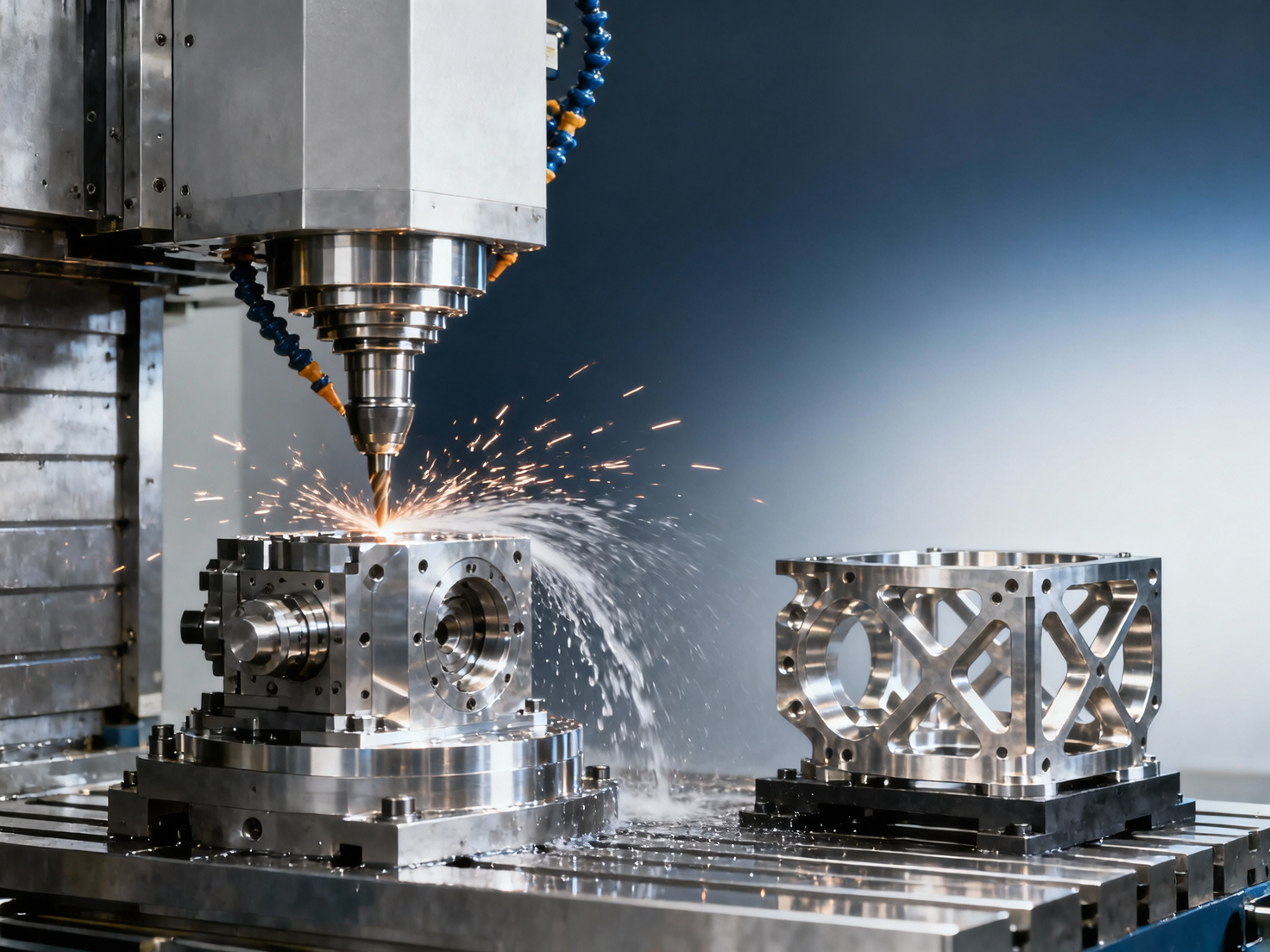
Across the Global Manufacturing landscape, rising delays between quoted and actual CNC metalworking lead times are raising alarms among procurement teams, operators, and decision-makers. From industrial CNC machining centers to automated lathes and vertical lathes, disruptions in the production process—spanning CNC programming bottlenecks, supply chain volatility, and capacity constraints in metal machining and CNC cutting—are widening the gap. As demand for shaft parts, precision discs, and complex structural components surges in aerospace, automotive, and electronics sectors, industrial automation and automated production lines struggle to keep pace. This article examines root causes behind the growing disconnect—and what stakeholders in the Machine Tool Market and Manufacturing Industry can do to restore predictability in CNC production.
CNC Programming Complexity and Engineering Handoff Gaps
Modern CNC metalworking increasingly relies on multi-axis machining centers capable of producing aerospace-grade turbine blades or medical-grade orthopedic implants. Yet over 68% of quoting inaccuracies originate not from machine uptime, but from misalignment during engineering handoff—where CAD models lack GD&T annotations, toolpath simulations omit thermal deformation modeling, or tolerance callouts exceed achievable process capability (Cpk < 1.33).
A typical CNC job requires 4–7 distinct pre-production steps: design review (1–2 days), CAM programming (3–5 days), fixture design & validation (2–4 days), first-article inspection (1–3 days), and program optimization (2–4 days). Delays compound when design revisions occur after quoting—especially when customers submit legacy 2D drawings without PMI (Product Manufacturing Information) or geometric tolerancing data.
Operators report that 42% of “urgent” orders require reprogramming due to unverified stock geometry or undocumented material hardness variations. Without integrated digital twin validation—linking CAD, CAM, and metrology data—quoted cycle times assume ideal conditions that rarely exist on shop floors.
The table reveals a systemic pattern: stages requiring human judgment and physical verification show the largest variances. Reducing this gap demands tighter integration between quoting systems and shop-floor execution platforms—not just faster software, but traceable, auditable digital workflows with embedded process capability data.
Supply Chain Fragmentation in Critical Subsystems
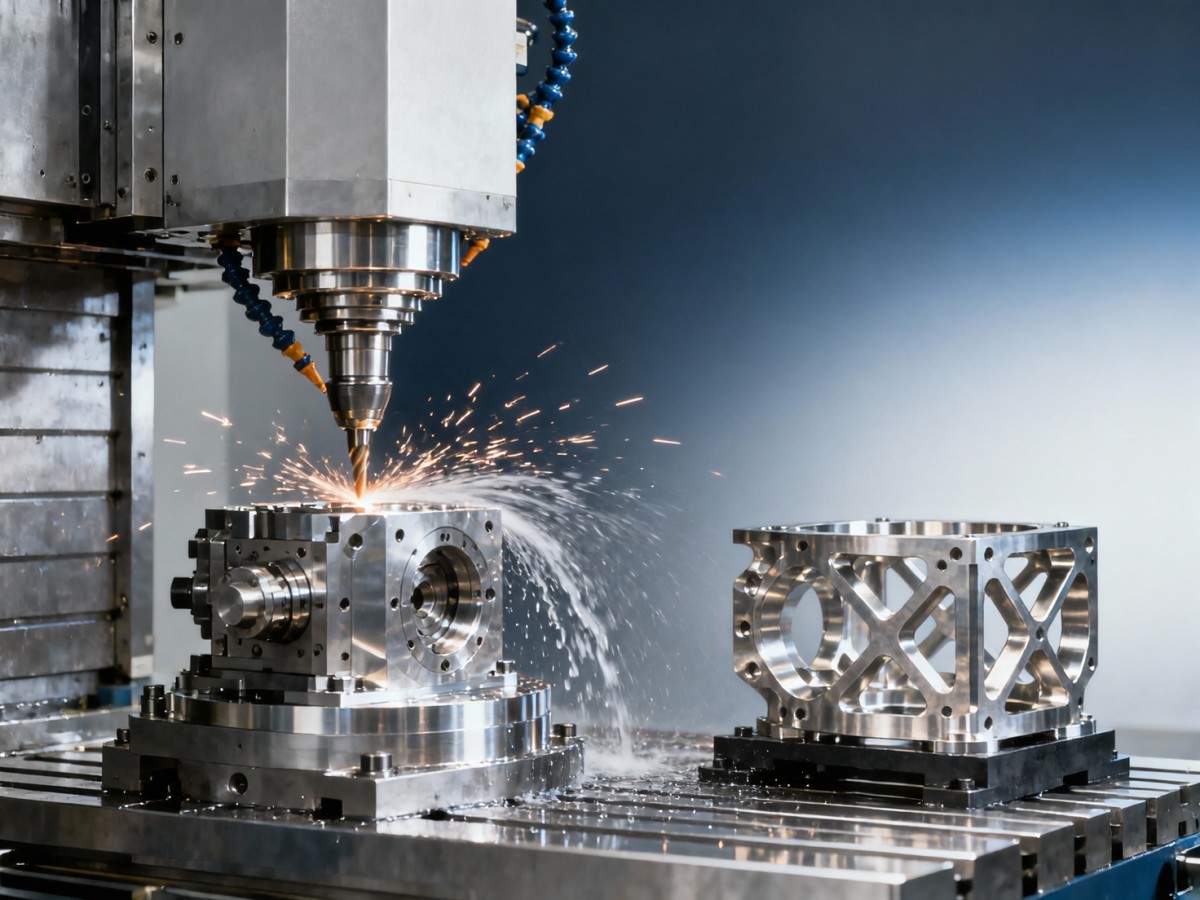
Global CNC machine tool manufacturers source over 65% of motion control components—including servo drives, linear guides, and high-precision ball screws—from specialized Tier-2 suppliers across Germany, Japan, and Taiwan. When geopolitical tensions or port congestion delay shipments by 12–22 days, original equipment manufacturers (OEMs) face cascading impacts: backlog grows, maintenance spare parts dwindle, and retrofit projects stall.
Cutting tool availability remains another critical bottleneck. Carbide inserts for titanium machining—used extensively in aerospace structural parts—experience 8–14 week lead times during peak demand cycles. Meanwhile, coolant filtration systems and high-pressure through-spindle coolant pumps face 10–16 week waits due to semiconductor shortages affecting onboard controllers.
Procurement professionals cite three recurring pain points: (1) lack of real-time visibility into supplier component-level inventory, (2) absence of dual-sourcing protocols for mission-critical subsystems, and (3) quoting systems that treat “standard delivery” as 4–6 weeks—even when raw material lead times alone consume 3 weeks.
Capacity Constraints Across High-Precision Machining Segments
While overall CNC machine tool capacity utilization hovers near 72%, capacity is highly unevenly distributed. Five-axis machining centers capable of ±0.005 mm positional accuracy operate at 94% utilization in Europe and 89% in North America—driving average quoted lead times of 14–21 days versus actual deliveries averaging 32–47 days.
This imbalance stems from specialization: only 12% of global CNC shops possess certified AS9100-compliant processes for aerospace structural components, and fewer than 7% maintain in-house coordinate measuring machine (CMM) labs calibrated to ISO 10360-2 standards. When demand spikes for complex shaft parts or thin-walled precision discs, qualified capacity becomes the limiting factor—not raw machine hours.
Moreover, skilled labor scarcity compounds mechanical constraints. A recent industry survey found that 63% of CNC shops report >6-month hiring timelines for certified NC programmers with multi-axis mill-turn experience—delaying ramp-up for new programs and extending changeover times by 2.3x on average.
The data confirms that precision tiers directly correlate with delivery uncertainty. Decision-makers must shift from quoting based on “machine availability” to quoting based on “certified capacity availability”—factoring in calibration status, operator certification levels, and historical first-pass yield rates per part family.
Strategic Mitigation: From Reactive Quoting to Predictive Capacity Planning
Leading manufacturers now embed predictive analytics into quoting engines. By feeding real-time data—machine sensor logs, tool wear trends, spindle load histories, and even local weather impact on thermal stability—they generate probabilistic delivery windows rather than deterministic dates. One Tier-1 automotive supplier reduced quoted-to-actual variance by 53% using Monte Carlo simulation across 12 key process variables.
Three actionable strategies deliver measurable improvement:
- Digital Twin Integration: Sync quoting systems with live shop-floor MES data to reflect actual machine health, scheduled maintenance windows, and current WIP loads—not theoretical capacity.
- Modular Quoting Frameworks: Break quotes into configurable blocks (e.g., “base machining,” “GD&T inspection,” “heat treatment coordination”) with independent lead time buffers tied to verified subsystem performance.
- Supplier-Capacity Mapping: Maintain dynamic dashboards showing real-time availability of critical subsystems (ball screws, servo amplifiers, high-pressure coolant modules) across primary and alternate suppliers.
For procurement teams, this means requesting not just “lead time,” but “confidence interval” (e.g., “85% probability of delivery within 28 days”) and documented process capability indices per operation. For operators, it enables proactive tooling prep and fixture staging before release to production.
Conclusion: Rebuilding Trust Through Transparency and Traceability
The widening gap between quoted and actual CNC metalworking lead times isn’t a symptom of inefficiency—it’s evidence of fragmented information flows across engineering, procurement, and operations. Closing it requires moving beyond calendar-based estimates toward capability-based commitments, grounded in real-time data, validated process knowledge, and shared digital infrastructure.
Stakeholders across the machine tool market—from information researchers evaluating industry trends to enterprise decision-makers selecting strategic partners—must prioritize vendors who publish verifiable capacity metrics, disclose their quoting methodology, and integrate digital twin validation into commercial workflows. Predictability isn’t delivered by faster machines—it’s engineered through transparency.
To assess your current quoting reliability or benchmark against industry capability baselines, request a free CNC capacity audit—including digital twin readiness scoring, subsystem lead time mapping, and multi-tiered quoting framework evaluation.
Recommended for You
![]() Fuxing EMU Trainset Procurement Reaches ¥4.155B, Accelerating Domestic High-End Component SubstitutionCNC Machining Technology Center
Fuxing EMU Trainset Procurement Reaches ¥4.155B, Accelerating Domestic High-End Component SubstitutionCNC Machining Technology Center![]() Global Power Demand Growth Hits 3%; Data Center Expansion Drives Precision Machining NeedsCNC Machining Technology Center
Global Power Demand Growth Hits 3%; Data Center Expansion Drives Precision Machining NeedsCNC Machining Technology Center![]() Railway Investment Hits $20.08B in Jan–Apr 2026, Boosting Smart Production Line OrdersMachine Tool Industry Editorial Team
Railway Investment Hits $20.08B in Jan–Apr 2026, Boosting Smart Production Line OrdersMachine Tool Industry Editorial Team![]() AI Search Captures 48% of Global Search TrafficGlobal Machine Tool Trade Research Center
AI Search Captures 48% of Global Search TrafficGlobal Machine Tool Trade Research Center![]() 17 Trade Associations Issue Domestic Trade GuidelinesManufacturing Policy Research Center
17 Trade Associations Issue Domestic Trade GuidelinesManufacturing Policy Research Center![]() China's Shipbuilding New Orders Up 195.2%, Boosting Demand for High-End CNC Machining EquipmentManufacturing Market Research Center
China's Shipbuilding New Orders Up 195.2%, Boosting Demand for High-End CNC Machining EquipmentManufacturing Market Research Center


Aris Katos
Future of Carbide Coatings
15+ years in precision manufacturing systems. Specialized in high-speed milling and aerospace grade alloy processing.
▶
Guangdong-Shanghai 'Green Transport Pass' Zero-Carbon Trucking Corridor LaunchedManufacturing Market Research Center▶
Shanghai Port Launches Green Clearance Channel for High-End EquipmentManufacturing Market Research Center▶
Why CNC production delays often start before machining beginsManufacturing Market Research Center▶
Shanghai Port Launches Green Clearance for CNC EquipmentManufacturing Market Research Center▶
Shanghai Port Launches Green Clearance Channel for CNC EquipmentManufacturing Market Research Center
Mastering 5-Axis Workholding Strategies
Join our technical panel on Nov 15th to learn about reducing vibrations in thin-wall components.

Providing you with integrated sanding solutions
Before-sales and after-sales services
Comprehensive technical support