• Global CNC market projected to reach $128B by 2028 • New EU trade regulations for precision tooling components • Aerospace deman
NYSE: CNC +1.2%LME: STEEL -0.4%

CNC Programming Mistakes That Cause Scrap and Rework
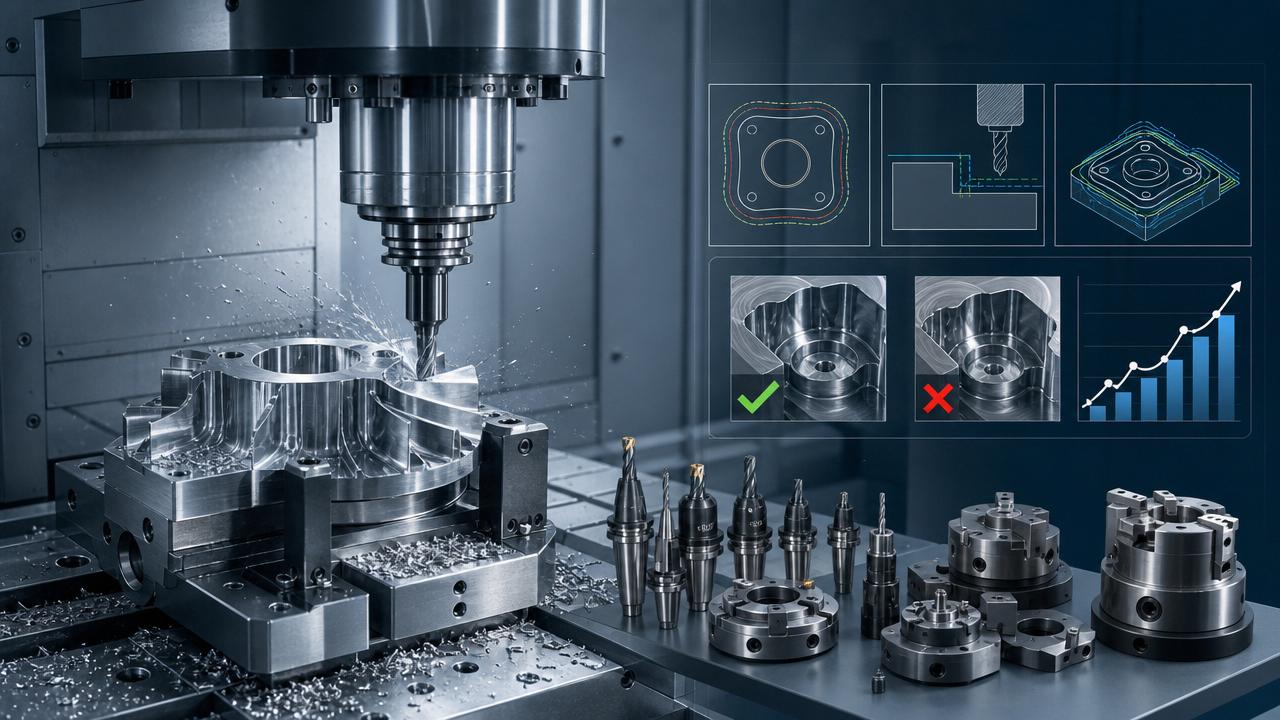
Even small CNC Programming mistakes can lead to scrap, rework, machine downtime, and rising production costs. For operators and shop-floor users, understanding where programming errors happen is essential to maintaining part accuracy, process stability, and overall efficiency. This article highlights the most common mistakes that affect machining results and shows how to reduce risk in daily production.
Why Small CNC Programming Errors Turn Into Big Shop-Floor Problems
Most operators do not search for CNC Programming advice because they want theory. They want to stop bad parts, avoid reruns, and keep machines cutting good parts consistently.
In daily production, scrap rarely comes from one dramatic failure alone. More often, it starts with a small programming issue that escapes review and multiplies across a batch.
A wrong offset value, an incorrect tool length call, poor entry movement, or an overlooked coordinate setting can quickly damage part quality and waste expensive material.
For shop-floor users, the real issue is not just whether a program runs. The real question is whether it runs safely, repeatedly, and with enough stability for production.
That is why the most useful way to look at CNC Programming mistakes is through their production impact: scrap, rework, downtime, tool breakage, setup confusion, and inconsistent results.
The Most Common CNC Programming Mistakes That Cause Scrap and Rework
Some programming errors appear obvious after a crash or bad part. Others are harder to detect because the machine still completes the cycle, but dimensions drift or surfaces fail inspection.
Below are the programming mistakes operators and machine users most often encounter, especially in mixed production environments where speed, part variation, and setup pressure are constant.
1. Wrong Work Offset or Coordinate System Selection
Using the wrong work offset is one of the fastest ways to make scrap. If G54, G55, or another coordinate system is called incorrectly, the toolpath may be accurate in theory but wrong on the machine.
This often happens when similar parts share fixtures, when multiple setups run on one machine, or when operators restart a program without fully confirming the active offset.
The result may be mislocated holes, incorrect facing depth, broken tools, or complete part loss. Even if the error is caught quickly, cycle interruption creates rework and wasted setup time.
2. Incorrect Tool Length or Cutter Compensation Calls
Tool compensation errors are common because they sit between programming, setup, and machine data. A correct path can still fail if the wrong length offset or radius compensation is active.
Typical examples include calling H03 with tool 4, forgetting to cancel compensation, or applying cutter comp at a point where the control cannot transition smoothly.
These mistakes can produce oversize features, undersize walls, sudden gouging, poor corner geometry, and alarm conditions that stop production in the middle of a run.
3. Unsafe Start Lines and Incomplete Program Reset Conditions
Many scrap events happen at restart, not at initial cycle launch. If the program does not include a safe and repeatable start condition, the machine may continue with leftover modal states.
Feeds, spindle direction, compensation mode, active plane, canned cycles, and coordinate calls can remain active from the previous operation if not clearly reset.
Operators especially feel this risk during tool replacement, recovery after alarm, and proving out edited code. A weak safety line can turn a simple restart into a costly mistake.
4. Poor Clearance Moves Between Features or Setups
A toolpath may cut the feature correctly but still create risk when moving between locations. Clearance mistakes are a major cause of fixture strikes, part collisions, and damaged holders.
This usually comes from retracting too little, assuming the fixture is lower than it really is, or using direct rapid moves across clamps, jaws, tombstones, or unfinished surfaces.
In real production, setup conditions change more often than programming assumptions. What was safe in simulation may not be safe after a vise change or different stock condition.
5. Feeds and Speeds That Do Not Match Actual Cutting Conditions
Sometimes the code is geometrically correct, but process values are not realistic for the material, tool stick-out, workholding rigidity, or coolant condition on the machine.
Overly aggressive feeds can cause chatter, poor finish, dimensional instability, and tool failure. Overly conservative values can create rubbing, heat buildup, burr formation, and short tool life.
When this happens, operators may keep adjusting at the control to save the run. But repeated manual overrides can hide the real programming issue and reduce process consistency.
6. No Attention to Tool Entry, Exit, and Chip Control
Bad entry and exit strategy is another hidden source of rework. A feature may measure correctly, but the edge quality, surface finish, or tool life may still be unacceptable.
Programming straight plunges into difficult material, sharp directional changes, or poor chip evacuation paths can overload tools and leave visible marks on the finished part.
These issues are especially costly in deep pockets, narrow grooves, bores, and materials where chips recut easily. Rework often appears as deburring, polishing, or an extra finishing pass.
7. Failure to Account for Tool Wear and Production Drift
Programs that work during first-piece inspection do not always remain stable through a full batch. Wear compensation must be considered if the process naturally shifts over time.
If a program leaves no practical adjustment range, operators are forced to stop the machine for manual edits or accept increasing variation until parts go out of tolerance.
That turns a manageable wear issue into scrap. Good CNC Programming supports production reality by making offset adjustment simple, predictable, and safe.
8. Post-Processor or CAM Output Problems Left Unchecked
In many shops, machine users run code generated by CAM systems. That saves time, but it also creates risk when post-processor settings do not match the actual control behavior.
Arc output, canned cycle format, tool change position, smoothing commands, and machine-specific syntax can all create unexpected machine motion if they are not verified carefully.
Operators should never assume CAM output is automatically production-ready. Even high-quality software still depends on correct setup data, machine definition, and final review.
What Operators Usually Care About Most: How to Catch Mistakes Before They Make Bad Parts
For machine users, the most valuable skill is not only writing or loading code. It is recognizing where the program can fail before material, tooling, or spindle time is wasted.
A practical review process does not need to be complicated. It needs to be consistent, fast enough for production, and focused on the points that most often create scrap.
Check the Setup Against the Program, Not Separately
Many mistakes survive because the setup sheet, tooling, and program are reviewed as separate items. Operators should compare them directly before cycle start.
Confirm tool numbers, length offsets, diameter data, work offset callouts, stock condition, clamping method, and first-cut location together, not one at a time in isolation.
Read the First Few Operations With Risk in Mind
The highest risk is often in the first motion after tool change, the first approach to stock, and the first transition near workholding. These lines deserve extra attention.
Ask simple questions: Is the offset correct? Is the spindle command present? Is the tool retracting high enough? Is rapid motion crossing anything unsafe?
Use Single Block and Reduced Override Intelligently
During prove-out or after edits, single block and reduced rapid override are not signs of low confidence. They are practical controls for protecting the machine and the part.
Watching actual machine behavior during the first run often reveals issues that looked harmless on screen, especially on complex parts or machines with limited visibility.
Do Not Ignore Small Surface or Chip Problems
Operators sometimes treat finish issues as normal variation, but they may point to deeper programming weakness. Poor chip evacuation, awkward stepovers, or unstable engagement can grow worse over time.
Catching these signs early prevents a full batch of borderline parts and helps distinguish between a setup issue and a code issue that needs correction.
How Better CNC Programming Reduces Scrap Without Slowing Production
Some shops assume safer programming always means longer cycle times. In practice, the opposite is often true. Stable code reduces interruptions, offset chasing, and repeated inspections.
When a program is clean, predictable, and matched to real shop conditions, operators spend less time recovering from alarms, adjusting dimensions, and troubleshooting avoidable problems.
That creates gains beyond part quality alone. It improves machine availability, tool life, scheduling reliability, and operator confidence during both repeat jobs and new part introduction.
Standardize Safe Start and End Blocks
Consistent program structure reduces restart errors. Standard safety blocks, compensation cancellation, and return logic make code easier to prove out and safer to run across shifts.
Program for Real Fixtures, Not Ideal Geometry Alone
Including realistic clearances and clamp awareness in CNC Programming helps prevent crashes and makes setups easier to repeat without hidden motion risks.
Build Adjustment Flexibility Into the Process
Programs that allow wear compensation and sensible finishing control are easier to maintain through long runs. That means fewer manual edits and fewer dimension-related surprises.
Make Operator Feedback Part of Program Improvement
Operators see tool behavior, chip flow, vibration, and restart risks directly on the machine. Their feedback is valuable for refining code into a stronger production process.
A Practical Checklist for Shop-Floor Users Before Running a CNC Program
Before pressing cycle start, operators can reduce many common failures by following a short checklist that focuses on real production risk rather than paperwork alone.
Verify the correct revision of the program. Confirm active work offset. Match tool numbers with physical tools and offset data. Check safe start lines and spindle commands.
Review the first approach move for each tool. Confirm clearance over clamps and jaws. Check coolant setup, workholding condition, and stock position against the expected program zero.
Run the first part with controlled overrides if needed. Measure early features quickly. Watch chip evacuation, sound, spindle load, and surface finish for signs of mismatch.
If anything looks unstable, pause and correct the cause before continuing. A few minutes of review is always cheaper than a batch of scrap and hours of rework.
Conclusion
CNC Programming mistakes do not need to be dramatic to become expensive. In most shops, scrap and rework come from small errors in offsets, compensation, clearances, restart logic, and cutting conditions.
For operators and shop-floor users, the goal is not just to run code that moves. It is to run code that matches the machine, the setup, the tool, and the real demands of production.
By focusing on the most common failure points and using a disciplined review routine, teams can reduce bad parts, improve consistency, and make CNC Programming a stronger part of manufacturing performance.
PREVIOUS ARTICLE
Recommended for You
![]() Changsha Housing Fund Policy Boosts Smart Manufacturing Real Estate DemandManufacturing Market Research Center
Changsha Housing Fund Policy Boosts Smart Manufacturing Real Estate DemandManufacturing Market Research Center![]() SGX April Trading Volume Up 6%; Equipment Financing Gains TractionGlobal Machine Tool Trade Research Center
SGX April Trading Volume Up 6%; Equipment Financing Gains TractionGlobal Machine Tool Trade Research Center![]() China's Avg. Mobile Data Usage Hits 23.4GB, Boosting CNC Cloud Services AbroadManufacturing Market Research Center
China's Avg. Mobile Data Usage Hits 23.4GB, Boosting CNC Cloud Services AbroadManufacturing Market Research Center![]() Germany's DAX Surges 3% on Resurgent Machine Tool DemandGlobal Machine Tool Trade Research Center
Germany's DAX Surges 3% on Resurgent Machine Tool DemandGlobal Machine Tool Trade Research Center![]() Canada Signs Ukraine ICC Treaty, Sanctions Extend to Industrial Equipment ExportsManufacturing Policy Research Center
Canada Signs Ukraine ICC Treaty, Sanctions Extend to Industrial Equipment ExportsManufacturing Policy Research Center![]() MIIT Launches 'AI+Software' Initiative to Boost Smart ProgrammingCNC Machining Technology Center
MIIT Launches 'AI+Software' Initiative to Boost Smart ProgrammingCNC Machining Technology Center


Aris Katos
Future of Carbide Coatings
15+ years in precision manufacturing systems. Specialized in high-speed milling and aerospace grade alloy processing.
▶
MIIT Launches 'AI+Software' Initiative to Boost Smart ProgrammingCNC Machining Technology Center▶
CNC Programming Mistakes That Cause Scrap and ReworkCNC Machining Technology Center▶
Why CNC Milling Tolerances Drift in Long Production RunsCNC Machining Technology Center▶
China's Fourth-Gen Quantum Computer 'Wukong-180' Goes OnlineCNC Machining Technology Center▶
CNC Programming Errors That Lead to Scrap and ReworkCNC Machining Technology Center
Mastering 5-Axis Workholding Strategies
Join our technical panel on Nov 15th to learn about reducing vibrations in thin-wall components.

Providing you with integrated sanding solutions
Before-sales and after-sales services
Comprehensive technical support