• Global CNC market projected to reach $128B by 2028 • New EU trade regulations for precision tooling components • Aerospace deman
NYSE: CNC +1.2%LME: STEEL -0.4%

Why CNC Milling Tolerances Drift in Long Production Runs
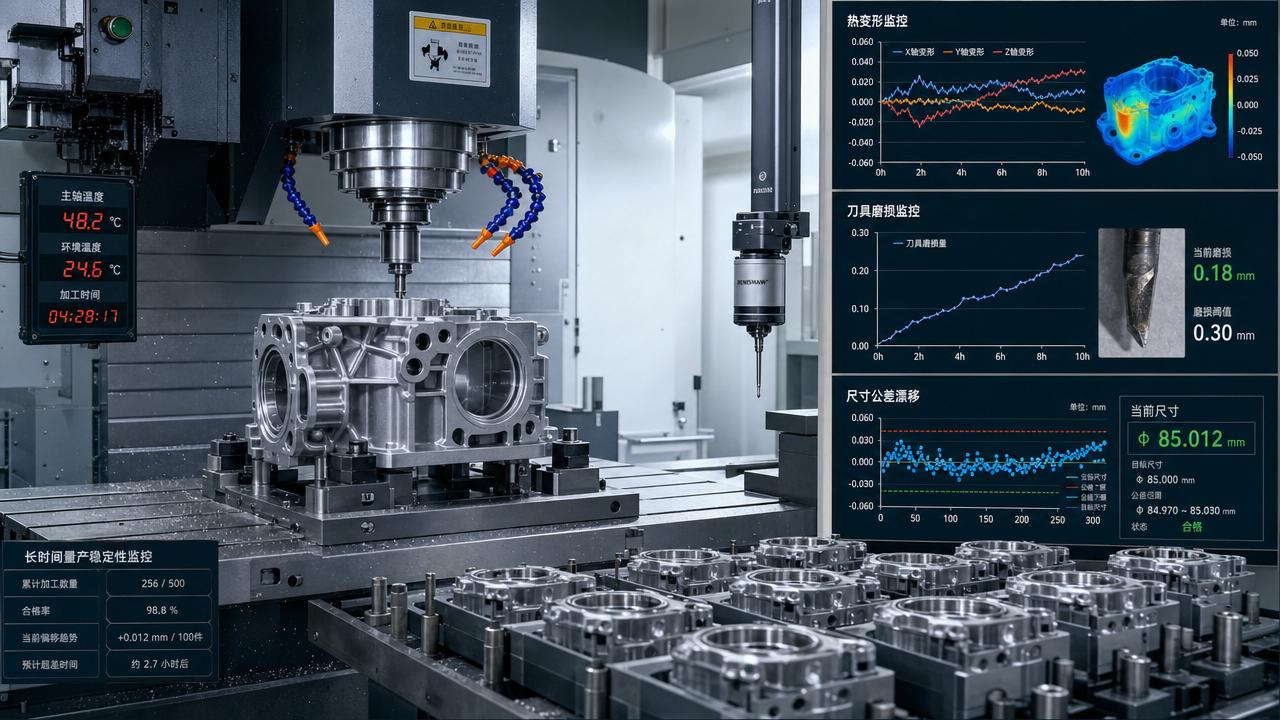
In long production runs, even stable CNC milling processes can show gradual tolerance drift that threatens quality, safety, and output consistency. For quality control and safety management, this issue is no longer a minor shop-floor variation. It is a signal that process capability, machine condition, thermal balance, tooling behavior, and environmental stability are changing over time.
Across modern manufacturing, CNC milling supports precision parts for automotive systems, aerospace structures, electronics housings, energy equipment, and industrial assemblies. As production volumes rise and cycle times tighten, the expectation is simple: the first part and the thousandth part should remain equally accurate. In reality, that expectation depends on controlling a moving process, not a fixed one.
Tolerance drift in CNC milling often develops slowly. Early parts may pass inspection, while later parts move toward specification limits. The result can be hidden scrap, unstable Cpk, rework, unplanned stoppages, and increased safety risk where functional dimensions matter. Understanding the drivers behind this drift is essential for reliable high-volume machining.
Why CNC milling drift is becoming more visible in long-run production
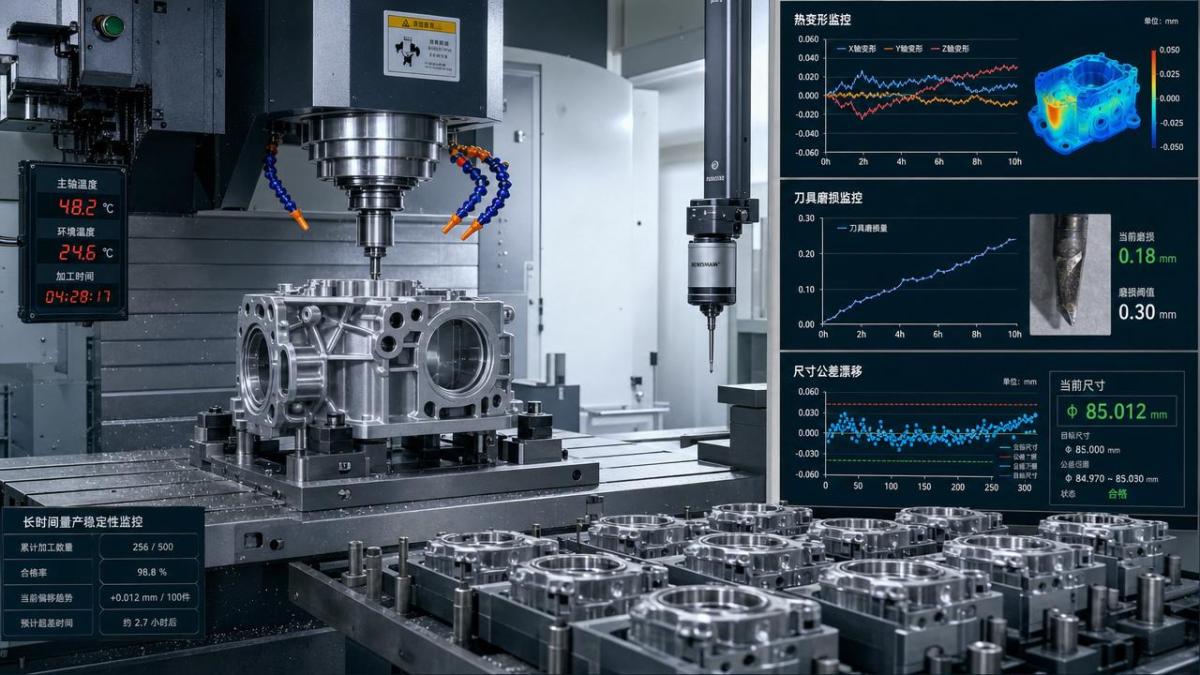
Several industry shifts are making CNC milling tolerance drift easier to detect and harder to ignore. Production lines now run longer, materials vary more, and customers demand tighter traceability. Digital inspection systems also reveal trends that older sampling methods often missed.
At the same time, smart manufacturing has increased machine utilization. Higher spindle hours mean thermal loads build faster. Automated loading reduces pauses between cycles. Multi-axis CNC milling also places more demand on machine geometry, servo accuracy, and fixture repeatability across long production windows.
This is why many operations see dimensional shifts not as isolated machine errors, but as process drift linked to throughput pressure. In other words, CNC milling performance now depends on how well the entire system stays stable over time.
The main forces driving CNC milling tolerance drift
Tolerance drift rarely comes from one cause alone. It usually results from several small changes that combine during extended production. The table below summarizes the most common drivers in CNC milling.
Thermal behavior is often the earliest and strongest signal
In CNC milling, heat is unavoidable. Spindle rotation, axis motion, cutting forces, and coolant circulation all create changing thermal conditions. As machine components expand, tool center position can move enough to affect critical tolerances.
This effect is strongest when machines start cold, switch between heavy and light cuts, or run continuously without cooling balance. Long production runs expose these shifts because the process has more time to drift away from its initial condition.
Tool wear changes size before failure becomes obvious
A tool does not need to break to create problems in CNC milling. Progressive flank wear, edge rounding, built-up edge, and coating loss can all change cutting forces and dimensional output. The machine may still sound normal while tolerance slowly moves.
Wear-related drift is especially common in pocket milling, sidewall finishing, and high-feed roughing followed by fine finishing. If offsets are not updated at the right intervals, dimensional trend lines begin to slope toward the limit.
Why process interactions matter more than single-point errors
One of the biggest mistakes in CNC milling troubleshooting is looking for one root cause too early. In long production runs, thermal change may increase tool wear, while fixture contamination amplifies the resulting dimensional shift. Separate issues become one visible drift pattern.
Consider a machine running aluminum housings. Rising spindle temperature changes length slightly. Fine chips build under the locating surface. Meanwhile, tool wear increases wall deflection. Each change is small, but together they push parts out of tolerance.
This systems view matters because effective control in CNC milling must include machine, tooling, workholding, measurement, coolant, and material handling. Drift is often a process interaction problem, not a simple adjustment problem.
How tolerance drift affects quality, safety, and production flow
The impact of CNC milling drift extends well beyond dimensional rejection. In many sectors, a small change in hole position, flatness, or wall thickness can affect assembly fit, sealing performance, fatigue life, or vibration behavior.
- More scrap and rework during late-stage inspection
- Reduced confidence in unattended CNC milling cells
- Interruptions to production scheduling and delivery
- Risk of nonconforming parts entering downstream assembly
- Higher maintenance burden from reactive adjustments
In safety-critical applications, hidden drift is particularly dangerous. A process may remain inside limits on average while individual features trend toward failure risk. That is why CNC milling control should focus on trend detection, not only pass-fail inspection.
What operations should monitor most closely during CNC milling runs
The most effective response is targeted monitoring. Not every signal deserves equal attention. Focus should stay on variables that move before tolerance loss becomes visible.
- Warm-up condition and first-hour dimensional trend
- Tool life by feature, not only by total runtime
- Coolant temperature, pressure, and concentration stability
- Fixture cleanliness, clamp force, and locator wear
- Axis backlash, spindle growth, and repeatability checks
- Material lot changes and corresponding size behavior
- SPC trend lines for critical CNC milling dimensions
These checkpoints help separate predictable drift from abnormal variation. They also support better decisions on offset updates, tool change timing, maintenance intervals, and in-process verification frequency.
Practical ways to reduce CNC milling drift over long runs
Stable CNC milling requires prevention, not correction alone. The best results come from combining process discipline with measurable control actions.
Digital tools improve visibility, but discipline still decides results
Sensors, machine data platforms, and automated gauging help reveal CNC milling drift earlier. However, data alone does not solve instability. Clear action rules, maintenance response, and feature-based control plans are still required.
The strongest programs combine digital monitoring with practical routines: stable setup approval, scheduled fixture care, verified tool offsets, and regular machine health checks. This combination supports repeatable CNC milling under real production pressure.
What to do next when CNC milling tolerance drift appears
When drift appears, start with the trend pattern. Check when it begins, how fast it grows, and whether it follows time, part count, tool life, or temperature. That sequence often identifies the strongest driver faster than isolated inspection results.
- Separate thermal, tool, fixture, and material effects using time-based data.
- Confirm measurement system stability before changing the process.
- Compare first-off, mid-run, and late-run dimensions on critical features.
- Adjust preventive controls, not only offsets, to avoid repeated drift.
In today’s manufacturing environment, tolerance drift in CNC milling is a process stability issue with quality and safety consequences. Operations that track trends, control thermal behavior, manage tool wear, and maintain fixture integrity will achieve stronger consistency across long production runs. The next step is simple: review recent dimensional data, identify drift patterns, and build a control plan around the variables that move first.
PREVIOUS ARTICLE
NEXT ARTICLE
Recommended for You
![]() Changsha Housing Fund Policy Boosts Smart Manufacturing Real Estate DemandManufacturing Market Research Center
Changsha Housing Fund Policy Boosts Smart Manufacturing Real Estate DemandManufacturing Market Research Center![]() SGX April Trading Volume Up 6%; Equipment Financing Gains TractionGlobal Machine Tool Trade Research Center
SGX April Trading Volume Up 6%; Equipment Financing Gains TractionGlobal Machine Tool Trade Research Center![]() China's Avg. Mobile Data Usage Hits 23.4GB, Boosting CNC Cloud Services AbroadManufacturing Market Research Center
China's Avg. Mobile Data Usage Hits 23.4GB, Boosting CNC Cloud Services AbroadManufacturing Market Research Center![]() Germany's DAX Surges 3% on Resurgent Machine Tool DemandGlobal Machine Tool Trade Research Center
Germany's DAX Surges 3% on Resurgent Machine Tool DemandGlobal Machine Tool Trade Research Center![]() Canada Signs Ukraine ICC Treaty, Sanctions Extend to Industrial Equipment ExportsManufacturing Policy Research Center
Canada Signs Ukraine ICC Treaty, Sanctions Extend to Industrial Equipment ExportsManufacturing Policy Research Center![]() MIIT Launches 'AI+Software' Initiative to Boost Smart ProgrammingCNC Machining Technology Center
MIIT Launches 'AI+Software' Initiative to Boost Smart ProgrammingCNC Machining Technology Center


Aris Katos
Future of Carbide Coatings
15+ years in precision manufacturing systems. Specialized in high-speed milling and aerospace grade alloy processing.
▶
MIIT Launches 'AI+Software' Initiative to Boost Smart ProgrammingCNC Machining Technology Center▶
CNC Programming Mistakes That Cause Scrap and ReworkCNC Machining Technology Center▶
Why CNC Milling Tolerances Drift in Long Production RunsCNC Machining Technology Center▶
China's Fourth-Gen Quantum Computer 'Wukong-180' Goes OnlineCNC Machining Technology Center▶
CNC Programming Errors That Lead to Scrap and ReworkCNC Machining Technology Center
Mastering 5-Axis Workholding Strategies
Join our technical panel on Nov 15th to learn about reducing vibrations in thin-wall components.

Providing you with integrated sanding solutions
Before-sales and after-sales services
Comprehensive technical support