• Global CNC market projected to reach $128B by 2028 • New EU trade regulations for precision tooling components • Aerospace deman
NYSE: CNC +1.2%LME: STEEL -0.4%

How CNC milling accuracy changes with material and setup
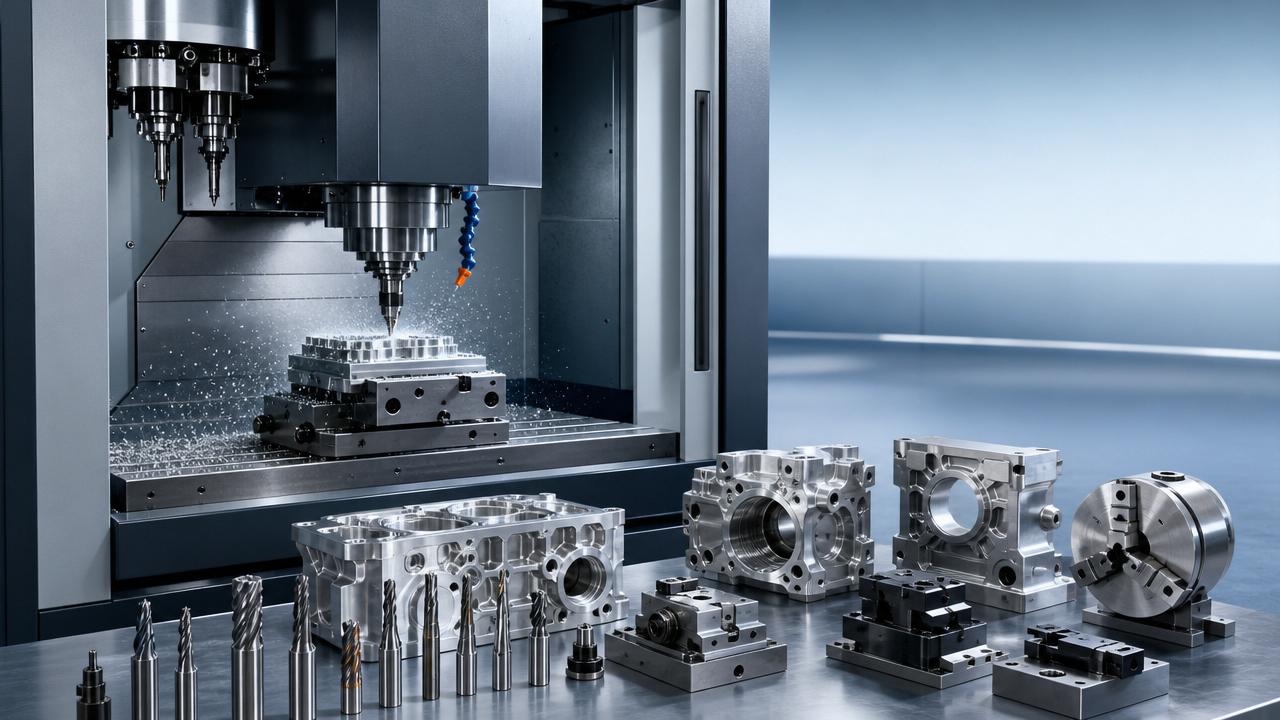
CNC milling accuracy is not fixed. It changes with material behavior, tool wear, fixturing stiffness, spindle condition, and programming choices. In precision manufacturing, these variables directly affect size control, surface finish, and repeatability. A stable setup can hold tight tolerances on one alloy, yet drift quickly on another. Understanding these shifts helps reduce scrap, prevent false capability assumptions, and improve confidence in CNC milling results across different production environments.
Why CNC milling accuracy needs a checklist approach
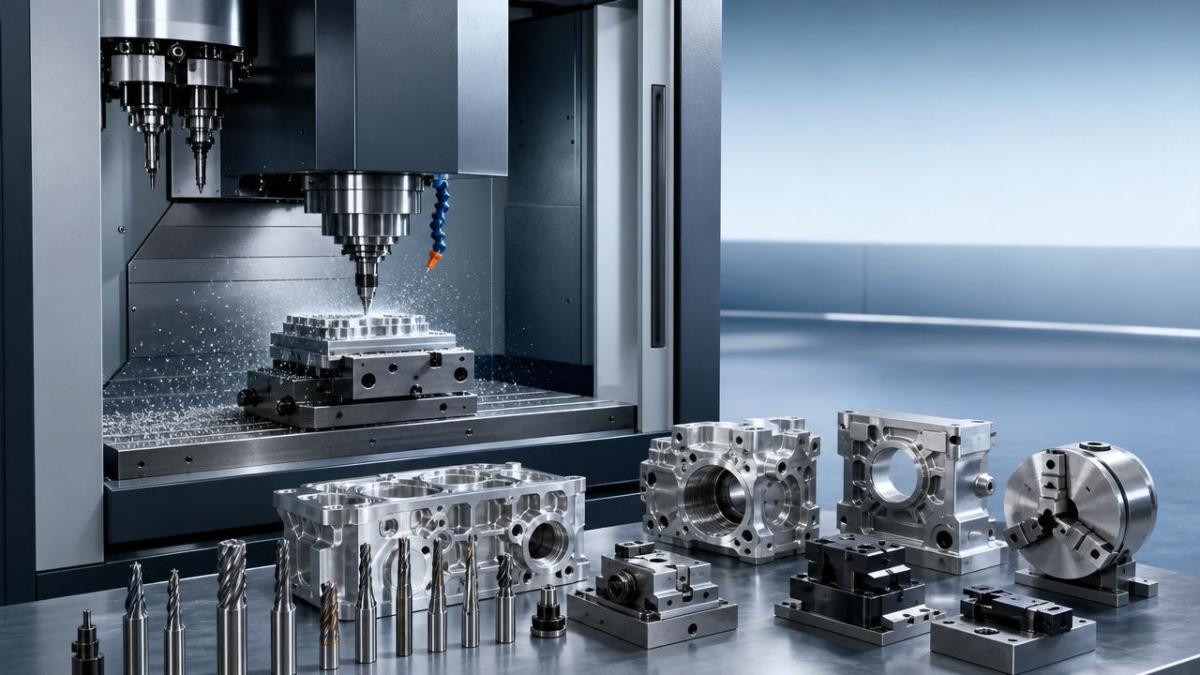
CNC milling problems rarely come from one cause alone. Material hardness, thermal expansion, cutter overhang, clamping force, and machine dynamics often interact. A checklist approach prevents important variables from being missed during quoting, setup, trial cutting, and batch production.
This matters across automotive, aerospace, electronics, and general industrial parts. The same machine may deliver excellent CNC milling accuracy on aluminum housings, but struggle with thin stainless plates or heat-resistant alloys unless setup decisions are adjusted early.
Core checklist for evaluating CNC milling accuracy
Use the following checklist before approving a process, comparing suppliers, or releasing production. Each point helps explain how CNC milling accuracy changes with material and setup.
- Confirm material condition first, including alloy grade, hardness range, heat treatment state, and internal stress, because identical geometry can machine very differently after cutting forces are applied.
- Check rigidity of the full setup, including vise, soft jaws, fixture plate, toolholder, spindle taper, and part support, since weak links amplify vibration and dimensional variation.
- Measure tool overhang and cutter diameter selection, because long stick-out improves reach but usually reduces stiffness, worsening deflection, chatter marks, and feature position error.
- Review cutting parameters against material behavior, especially spindle speed, feed per tooth, radial engagement, and axial depth, to avoid heat buildup or unstable chip formation.
- Verify workholding pressure carefully, because excessive clamping can distort thin walls, while weak clamping allows part movement that looks like machine inaccuracy.
- Inspect tool wear control rules, including life limits, break detection, and compensation timing, since progressive wear often shifts CNC milling accuracy before operators see visible damage.
- Evaluate thermal stability of machine and part, because long cycles, high spindle loads, and warm coolant can change dimensions through expansion during production runs.
- Validate toolpath strategy, especially roughing-to-finishing stock allowance, cutter entry moves, and climb milling direction, to maintain balanced cutting forces and repeatable finishing results.
- Check measurement method alignment, ensuring probes, gauges, and CMM routines match the tolerance intent, because poor inspection practice can mask real CNC milling variation.
- Run a short capability trial across multiple parts, not one sample only, so material variation and setup stability are tested under realistic production conditions.
How material type changes CNC milling accuracy
Aluminum and softer nonferrous materials
Aluminum often supports strong CNC milling productivity, but accuracy is not automatic. Softer grades can form built-up edge, especially with poor chip evacuation or worn tools. That condition changes effective cutter geometry and pushes dimensions out of range.
Thin aluminum parts also distort easily during clamping. A process may look accurate after machining in the fixture, then shift after release. For this reason, jaw design, support points, and finishing passes matter as much as machine precision.
Carbon steel and alloy steel
Steel usually offers more stable cutting than soft aluminum, but cutting loads are higher. Tool deflection becomes more significant on deep pockets, long reaches, and narrow slots. Harder grades can also accelerate wear, causing size drift across the batch.
Residual stress is another issue. When stock is rough milled aggressively, the part may move before finishing. Balanced material removal and intermediate stress relief can improve CNC milling accuracy on demanding steel components.
Stainless steel and heat-resistant alloys
Stainless steel tends to work harden and generate heat. If feed is too low or the tool rubs, dimensional consistency declines quickly. Heat-resistant alloys add even more thermal and wear challenges, making stable CNC milling accuracy harder to maintain.
These materials usually benefit from rigid holders, short tools, controlled engagement, and dependable coolant delivery. Finishing stock must remain consistent, or the final pass sees changing load and produces uneven geometry.
Plastics and composites
Plastics can deform under heat or clamping, while composites may fray, delaminate, or chip at edges. In these cases, CNC milling accuracy includes edge quality and feature integrity, not just measured dimensions.
Tool sharpness, low heat input, and controlled support are critical. A setup that works for metal may damage a composite panel or distort an engineering plastic during machining and inspection.
How setup decisions affect repeatable CNC milling accuracy
Fixturing and support
A precise machine cannot overcome a weak fixture. Unsupported areas vibrate, flex, or spring back after cutting. That is why thin ribs, plates, and long parts often require custom jaws, vacuum support, or staged machining.
Toolholder, runout, and balance
Holder quality strongly affects CNC milling accuracy. Excessive runout loads one flute more than the others, creating uneven wear and poor surface finish. At higher spindle speeds, balance quality also influences vibration and hole location control.
Program strategy and stock control
Roughing strategy sets up finishing success. Leaving inconsistent stock causes variable tool pressure on the final pass. For tight CNC milling tolerances, uniform allowance, spring passes where justified, and predictable tool engagement are more reliable.
Machine condition and thermal behavior
Ballscrew wear, spindle growth, axis backlash, and poor warm-up routines all reduce repeatability. Some dimensions drift only after the machine reaches operating temperature. A qualified setup therefore includes warm-up and periodic verification cuts.
Application notes across common manufacturing scenarios
Thin-wall housings
Thin-wall parts are highly sensitive to both material and setup. Aluminum housings may bow under jaw pressure, while stainless versions may chatter during side milling. Smaller stepdowns, support close to the cut, and symmetric finishing paths help control movement.
Precision plates and flatness-critical parts
Flatness issues often come from stress release and uneven clamping rather than nominal machine error. Face milling sequence, material removal balance, and post-machining inspection timing all influence final CNC milling accuracy on plate-like components.
Multi-feature parts with tight positional tolerances
When pockets, holes, and bosses must align tightly, setup transfer becomes critical. Re-clamping introduces datum shift. Whenever possible, complete related features in one setup and use probing to maintain consistent coordinate control.
Commonly overlooked risks
Ignore coolant delivery, and heat concentration may alter size even when feeds and speeds look correct on paper. Poor chip evacuation can also recut chips, damaging surfaces and accelerating tool wear.
Assume one successful first article proves the process, and later batch variation may be missed. True CNC milling accuracy must be demonstrated across multiple cycles, tools, and material lots.
Focus only on machine specification, and practical setup limitations may be overlooked. Catalog precision does not equal process precision once a flexible part, long tool, or difficult alloy enters the cut.
Practical execution steps
- Start with the material drawing and confirm alloy, hardness, and stress condition before choosing tooling or estimating achievable CNC milling tolerance.
- Build the shortest, stiffest tool and fixture combination that still reaches all features safely.
- Set roughing and finishing as separate control stages with consistent stock allowance.
- Record wear offsets, thermal checks, and in-process measurements during trial production.
- Compare results across at least several parts before locking the process window.
Conclusion and next action
CNC milling accuracy depends on more than machine capability. Material behavior, tool condition, fixturing rigidity, thermal control, and toolpath design all shape the final result. The most reliable way to manage risk is to evaluate these factors together, not separately.
Use the checklist above during process review, sample validation, and production startup. When CNC milling accuracy is assessed through material-plus-setup logic, dimensional stability becomes easier to predict, verify, and improve.
PREVIOUS ARTICLE
NEXT ARTICLE
Recommended for You
![]() Delta NC5 CNC System Gains TÜV Safety Certification, Enters BMW Production ValidationMachine Tool Industry Editorial Team
Delta NC5 CNC System Gains TÜV Safety Certification, Enters BMW Production ValidationMachine Tool Industry Editorial Team![]() Vietnam's Draft AI Safety Rule for CNC Machines Requires Dual CertificationManufacturing Policy Research Center
Vietnam's Draft AI Safety Rule for CNC Machines Requires Dual CertificationManufacturing Policy Research Center![]() First CNC Machine Carbon Footprint Guide Released in ChinaManufacturing Policy Research Center
First CNC Machine Carbon Footprint Guide Released in ChinaManufacturing Policy Research Center![]() Brazil INMETRO Launches Spot Inspections on CNC LathesMachine Tool Industry Editorial Team
Brazil INMETRO Launches Spot Inspections on CNC LathesMachine Tool Industry Editorial Team![]() Japan METI Green Subsidy: Up to ¥4M for Chinese High-Efficiency CNC SystemsManufacturing Policy Research Center
Japan METI Green Subsidy: Up to ¥4M for Chinese High-Efficiency CNC SystemsManufacturing Policy Research Center![]() Red Sea Shipping Crisis Escalates: CNC Equipment Delays Hit 14.2 Days on Asia-Europe RoutesManufacturing Market Research Center
Red Sea Shipping Crisis Escalates: CNC Equipment Delays Hit 14.2 Days on Asia-Europe RoutesManufacturing Market Research Center


Aris Katos
Future of Carbide Coatings
15+ years in precision manufacturing systems. Specialized in high-speed milling and aerospace grade alloy processing.
▶
UL Tightens AI Failure Testing for CNC Systems Starting May 22, 2026CNC Machining Technology Center▶
How CNC Programming errors lead to scrap and reworkCNC Machining Technology Center▶
How CNC milling accuracy changes with material and setupCNC Machining Technology Center▶
Delta Launches NC5 CNC Series with RTCP & SIL2 CertificationCNC Machining Technology Center▶
What good CNC Programming changes on the shop floorCNC Machining Technology Center
Mastering 5-Axis Workholding Strategies
Join our technical panel on Nov 15th to learn about reducing vibrations in thin-wall components.

Providing you with integrated sanding solutions
Before-sales and after-sales services
Comprehensive technical support