• Global CNC market projected to reach $128B by 2028 • New EU trade regulations for precision tooling components • Aerospace deman
NYSE: CNC +1.2%LME: STEEL -0.4%

How CNC milling affects part cost and lead time
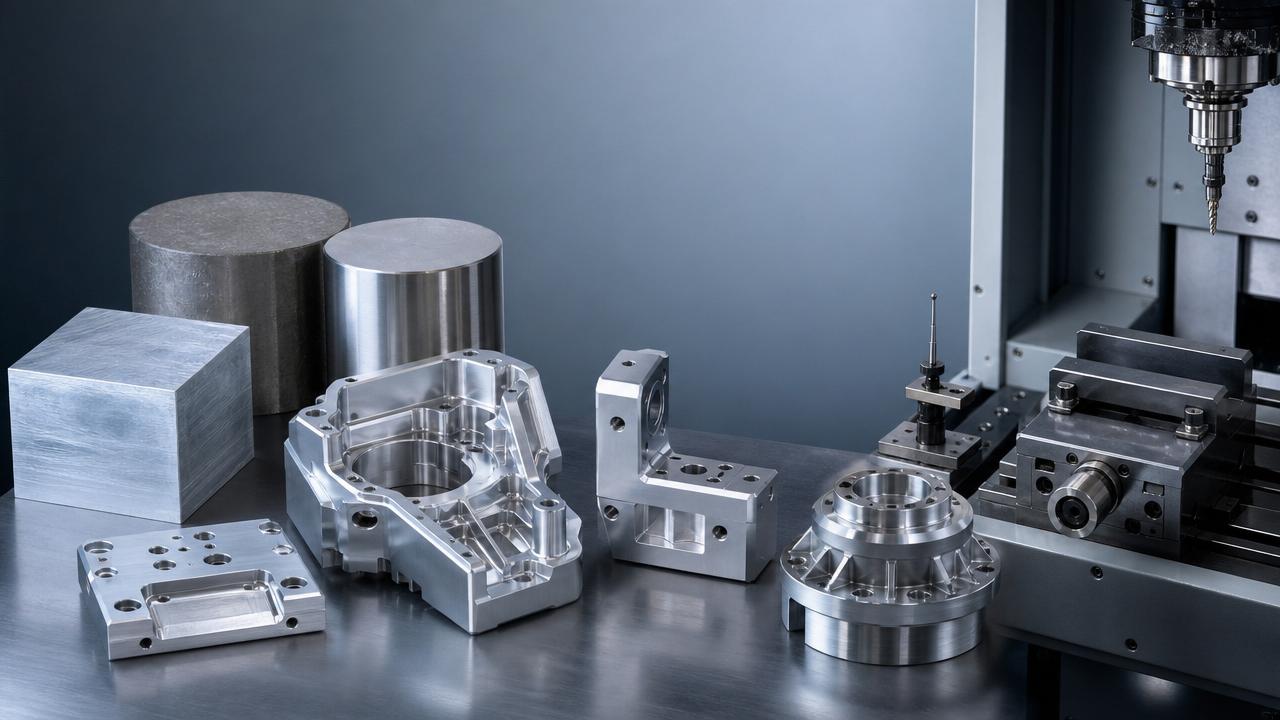
For sourcing decisions, CNC milling has a direct impact on unit price, project timing, and production risk. Material grade, feature complexity, tolerance level, and setup time all shape the final result. When these variables are evaluated early, CNC milling becomes easier to compare across suppliers, helping balance cost, lead time, and required quality.
When simple CNC milling jobs stay fast and affordable
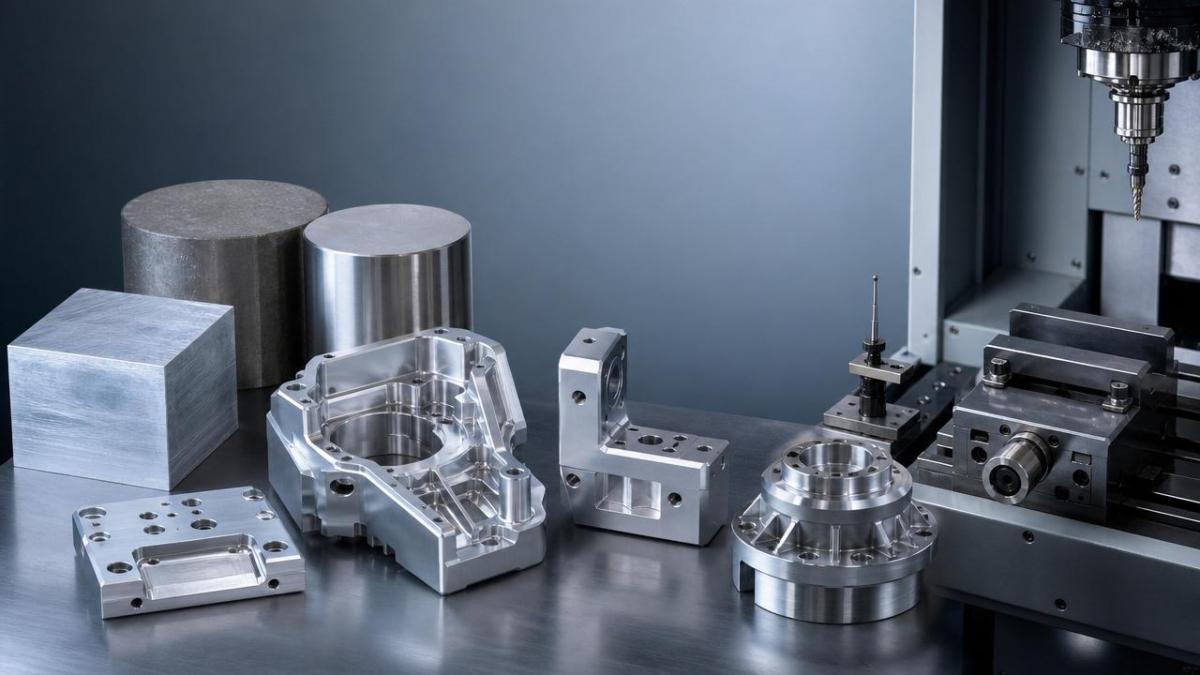
Some parts move through CNC milling with little friction. Flat surfaces, open pockets, and standard hole patterns usually reduce programming time and machine changes. These jobs often fit common machining centers and standard cutting tools.
In this scenario, part cost stays predictable because cycle time is easier to estimate. Lead time also improves because fewer process risks appear during quoting, setup, machining, and inspection.
Key signs of a low-complexity milling scenario
- Prismatic geometry with easy tool access
- Standard materials such as aluminum or mild steel
- Moderate tolerances without critical mating surfaces
- Limited number of setups and secondary operations
- Batch sizes large enough to spread setup costs
These parts are common across automation equipment, electronics housings, fixtures, brackets, and general industrial assemblies. In such applications, CNC milling supports efficient planning and lower schedule uncertainty.
When complex geometry makes CNC milling more expensive
The cost picture changes when parts include deep cavities, thin walls, undercuts, angled faces, or tight corner radii. These features increase tool wear, reduce cutting speed, and often require additional setups.
Complex CNC milling may also require 4-axis or 5-axis capability. That can shorten total operations, but machine rates are usually higher. If machine availability is limited, lead time may increase even before production begins.
Cost drivers in high-complexity scenarios
- More CAM programming and simulation time
- Longer cycle times per part
- Extra fixturing or custom workholding
- Higher scrap risk during initial runs
- Additional in-process and final inspection steps
This is common in aerospace brackets, energy equipment parts, medical device components, and precision machine structures. Here, CNC milling affects not only price, but also production confidence.
When material selection changes CNC milling cost and delivery
Material choice often shifts a project from routine to difficult. Aluminum typically machines faster than stainless steel, titanium, hardened steel, or high-temperature alloys. Faster cutting means less spindle time and lower cost.
However, raw material availability can matter as much as machinability. A part made from an uncommon grade may face delays before CNC milling starts. Material certification requirements can add further lead time.
Material-based scenario differences
Across general industry, the best choice is not always the cheapest raw material. The better decision is the material that meets performance needs with stable CNC milling and reliable supply.
When tolerance and surface finish become the main decision point
Tight tolerances can transform a standard component into a precision project. CNC milling costs rise when repeated measurement, fine finishing passes, or temperature-controlled inspection become necessary.
Surface finish requirements have a similar effect. Very smooth finishes may require lower feed rates, extra tooling, polishing, or secondary processing. Each added step affects delivery planning.
Questions that clarify this scenario
- Which dimensions are function-critical?
- Can non-critical tolerances be widened?
- Is the finish requirement cosmetic or performance-based?
- Will inspection reports or traceability documents be required?
In many cases, only a few dimensions truly need premium precision. Aligning tolerance demands with function can improve CNC milling cost and shorten lead time without lowering part performance.
How batch size changes the economics of CNC milling
Prototype, bridge production, and repeat production do not behave the same way. For prototypes, setup and programming are spread over very few parts, so unit price is naturally higher.
For medium or large batches, CNC milling becomes more efficient. Tooling, fixturing, and process optimization are reused, lowering unit cost. Delivery can also become more stable after first-article validation.
Typical demand scenarios
This is especially relevant in automotive support parts, industrial equipment, consumer electronics components, and export-oriented precision assemblies.
Scenario-based advice for lowering CNC milling cost without delaying delivery
The most effective improvements usually come from design and sourcing alignment before machining starts. Small changes often deliver larger savings than price negotiation alone.
- Use standard material sizes to reduce waste and procurement delays
- Avoid unnecessary deep pockets and very small internal radii
- Match tolerance levels to actual assembly function
- Combine operations where possible to reduce setups
- Confirm whether 3-axis CNC milling can replace multi-axis machining
- Plan repeat orders to reuse proven fixtures and programs
- Request DFM feedback before final release
These actions are practical across the broader CNC machining and precision manufacturing industry, especially where quality requirements are fixed but schedule pressure remains high.
Common mistakes when evaluating CNC milling lead time
A frequent mistake is focusing only on machine cutting time. Real CNC milling lead time also includes drawing review, material sourcing, fixture preparation, programming, inspection, finishing, and shipping coordination.
Another common error is treating all suppliers as technically equal. Equipment type, spindle capacity, metrology resources, and scheduling discipline can create major delivery differences for the same part.
It is also risky to assume tighter tolerances always mean better quality. Over-specifying can slow CNC milling, raise rejection rates, and consume budget without improving end-use performance.
What to do next when comparing CNC milling options
Start by separating must-have requirements from optional features. Then review geometry, material, tolerance, finish, quantity, and delivery window as one combined CNC milling scenario.
Next, ask for process-based quotations rather than price alone. A useful quote explains machine type, setup count, inspection approach, material assumptions, and any lead time risk factors.
Finally, use early technical feedback to refine the part before release. In many industrial applications, smarter CNC milling decisions reduce total cost and improve supply reliability at the same time.
Recommended for You
![]() China's Energy Storage Sector Faces 'Advanced Shortage, Outdated Surplus'Machine Tool Industry Editorial Team
China's Energy Storage Sector Faces 'Advanced Shortage, Outdated Surplus'Machine Tool Industry Editorial Team![]() Top 50 Cosmetics Brands’ Retail Sales Up 11.56%, Boosting Demand for High-Precision CNC EquipmentManufacturing Market Research Center
Top 50 Cosmetics Brands’ Retail Sales Up 11.56%, Boosting Demand for High-Precision CNC EquipmentManufacturing Market Research Center![]() Home Service Skills Hub Launches, Boosting Robot Export TrainingMachine Tool Industry Editorial Team
Home Service Skills Hub Launches, Boosting Robot Export TrainingMachine Tool Industry Editorial Team![]() Steel Structure Mezzanine Tech Moves Beyond 'Adequate'CNC Machining Technology Center
Steel Structure Mezzanine Tech Moves Beyond 'Adequate'CNC Machining Technology Center![]() Fireproof Cable Tray Industry Shifts to High-Performance CompositesManufacturing Policy Research Center
Fireproof Cable Tray Industry Shifts to High-Performance CompositesManufacturing Policy Research Center![]() Foil Winding Machines Shift to Digital Servo DrivesMachine Tool Industry Editorial Team
Foil Winding Machines Shift to Digital Servo DrivesMachine Tool Industry Editorial Team


Aris Katos
Future of Carbide Coatings
15+ years in precision manufacturing systems. Specialized in high-speed milling and aerospace grade alloy processing.
▶
Steel Structure Mezzanine Tech Moves Beyond 'Adequate'CNC Machining Technology Center▶
CNC Programming mistakes that cause hidden scrapCNC Machining Technology Center▶
How CNC milling affects part cost and lead timeCNC Machining Technology Center▶
Fuxing EMU Trainset Procurement Reaches ¥4.155B, Accelerating Domestic High-End Component SubstitutionCNC Machining Technology Center▶
CNC Milling Tolerance Problems That Start in Tool SetupCNC Machining Technology Center
Mastering 5-Axis Workholding Strategies
Join our technical panel on Nov 15th to learn about reducing vibrations in thin-wall components.

Providing you with integrated sanding solutions
Before-sales and after-sales services
Comprehensive technical support