• Global CNC market projected to reach $128B by 2028 • New EU trade regulations for precision tooling components • Aerospace deman
NYSE: CNC +1.2%LME: STEEL -0.4%

CNC cutting speed vs edge quality where the tradeoff begins
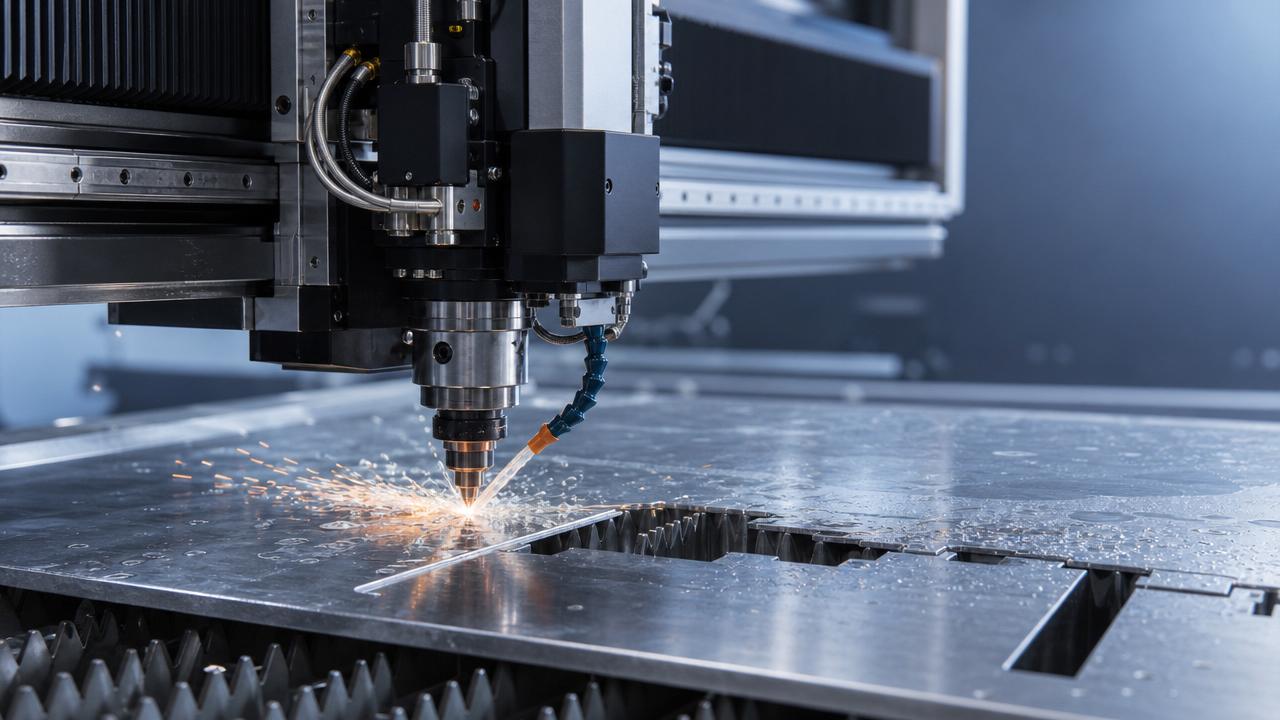
In CNC cutting, pushing for higher speed can boost throughput, but edge quality often begins to decline beyond a critical threshold. For technical evaluators, understanding where this tradeoff starts is essential to balancing surface finish, dimensional accuracy, tool life, and production efficiency across demanding manufacturing applications. In real production, CNC cutting speed is never just a number on a machine screen. It influences heat generation, burr formation, vibration, chip evacuation, and the stability of the entire process window. The key question is not simply how fast a machine can run, but at what point higher speed starts to damage the cut edge enough to create downstream problems in inspection, assembly, coating, or service life.
What does the CNC cutting speed versus edge quality tradeoff actually mean?
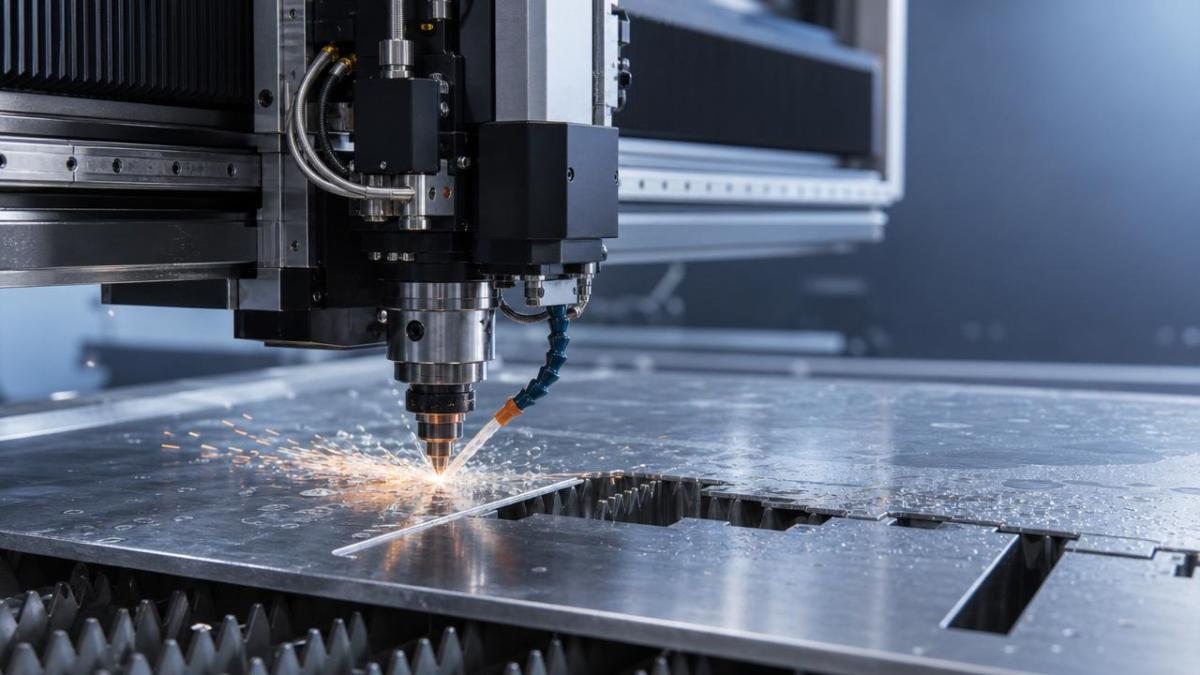
The tradeoff begins when faster CNC cutting improves cycle time but reduces the consistency of the cut edge. Edge quality usually refers to burr size, roughness, edge chipping, thermal damage, dimensional deviation, and the need for secondary finishing. At low to moderate speed, the process often stays stable, producing clean edges with predictable tool wear. As speed rises, friction and cutting temperature increase, dynamic loads become less forgiving, and the process can move from controlled shearing to unstable material removal.
This threshold varies by material, cutter geometry, spindle power, machine rigidity, coolant method, and toolpath strategy. Aluminum may tolerate a wider high-speed window than stainless steel. Thin sheet, composite panels, and heat-sensitive alloys often reveal edge degradation earlier than more forgiving materials. In precision manufacturing, the loss of edge quality can erase the productivity gain because extra deburring, rework, slower inspection, or part rejection adds hidden cost.
In practical terms, CNC cutting reaches the tradeoff point when one of two things happens: either measured edge quality begins to move outside specification, or it still passes specification but becomes too inconsistent to support stable production. That second condition is important. A process that occasionally produces excellent edges but frequently creates burr spikes or chatter marks is not a reliable high-efficiency process.
Where does edge quality usually start to decline in CNC cutting?
There is no universal speed value, but edge quality commonly starts to decline after the process crosses a material-specific and machine-specific stability zone. In many shops, that zone is identified during trial cutting rather than by handbook data alone. Recommended cutting speed from the tool supplier is the starting point, not the finish line. Real decline often begins when feed, spindle speed, and depth of cut are increased together without maintaining chip thickness, tool engagement, and thermal control.
Several early warning signs show that CNC cutting speed is approaching the edge-quality limit:
- Burrs become larger or more directional at exit points.
- Edges show discoloration, smearing, or recast effects from heat.
- Microscopic chipping appears on hard or brittle materials.
- Part-to-part edge consistency drops even before average quality fails.
- Tool wear accelerates sharply instead of gradually.
- Machine vibration or cutting noise changes noticeably.
The transition can be sudden. A small increase in spindle speed may look harmless, but if it pushes the tool into chatter or raises heat beyond the coating’s effective range, edge quality can collapse quickly. That is why CNC cutting optimization should be based on a process window, not on a single maximum-speed target.
Which factors move the tradeoff point earlier or later?
The speed-versus-edge-quality balance depends on the interaction of machine, tool, material, and programming. A rigid machining center with stable spindle dynamics can hold good edge quality at higher CNC cutting speeds than a less stable platform, even with the same cutter and workpiece. Likewise, coated carbide, PCD, CBN, or high-performance micrograin tools can shift the threshold if their geometry matches the application.
Material behavior is one of the strongest variables. Ductile metals tend to form burrs and built-up edge when cutting speed, feed, and coolant are poorly matched. Hardened steels may suffer micro-chipping if tool engagement becomes unstable. Composites and laminates can fray, delaminate, or burn if CNC cutting speed climbs without proper support and dust extraction. Thin-wall parts also have a lower tolerance because vibration and deformation amplify edge damage.
Toolpath design matters just as much. Sharp corners, poor entry moves, inconsistent radial engagement, and sudden acceleration changes can create local edge damage even if the average CNC cutting speed appears reasonable. In advanced applications, smoother toolpaths, adaptive clearing, controlled stepovers, and high-speed look-ahead functions often improve edge quality more effectively than simply reducing speed.
Coolant and chip control can also delay the tradeoff point. Efficient cooling removes heat, while stable chip evacuation prevents recutting. If chips stay in the cut zone, the process may show edge scratching and local melting long before nominal speed limits are reached.
How can CNC cutting speed be increased without sacrificing edge quality too early?
The most effective approach is to optimize the whole cutting system rather than adjusting one parameter in isolation. Higher CNC cutting performance with acceptable edge quality usually comes from coordinated changes in speed, feed per tooth, tool geometry, radial engagement, and cooling. In other words, the answer is often better process balance, not just slower cutting.
A practical method is to raise CNC cutting speed in controlled increments and inspect the edge after each step. Measure burr height, edge roughness, dimensional shift, and visible thermal effects. At the same time, monitor spindle load, tool wear pattern, sound, and chip shape. When quality degradation begins to accelerate faster than productivity gain, the process has likely crossed the useful threshold.
The following actions often help extend the safe speed window:
- Use sharper, application-specific cutting tools with suitable coatings.
- Reduce tool overhang to improve rigidity and suppress vibration.
- Adjust feed to maintain proper chip thickness rather than rubbing.
- Apply optimized entry and exit strategies to protect edge integrity.
- Upgrade coolant delivery or air blast for cleaner chip evacuation.
- Use finishing passes to separate bulk removal speed from final edge quality.
This last point is especially useful in general industry. Roughing can be optimized for throughput, while a lighter finishing cut protects the final edge. That approach often delivers better economics than forcing one aggressive CNC cutting pass to do everything.
How should edge quality be judged in different applications?
Not every application needs the same edge standard, so the tradeoff should be judged in context. Parts that will be welded, bonded, coated, sealed, or directly assembled usually require tighter control of burrs and heat-affected zones. Components used in aerospace, energy equipment, electronics housings, or precision mechanical assemblies may also need better dimensional control around the cut edge because local defects can affect fit, fatigue behavior, or electrical shielding.
By contrast, some structural or hidden components may allow a wider edge-quality range if secondary processing is already planned. In those cases, higher CNC cutting speed can be justified when downstream operations absorb small imperfections efficiently. The mistake is assuming that all visible edge defects are acceptable simply because the part is not cosmetic. Burrs can disrupt fixtures, interfere with sensors, contaminate assemblies, and increase handling risk.
What common mistakes cause the CNC cutting edge tradeoff to be misjudged?
One common mistake is focusing only on cycle time while ignoring hidden quality cost. A faster CNC cutting setup may appear productive until deburring labor, scrap, extra tool consumption, and inspection delays are included. Another mistake is evaluating edge quality only on the first few parts. Many high-speed problems emerge after the tool warms up or wears into a less stable condition.
A second error is copying cutting data from a different machine or material condition. Even small changes in clamping, stock variation, spindle condition, or coolant pressure can shift the edge-quality threshold. There is also a tendency to reduce feed too much when quality declines. That can worsen rubbing and heat, making the CNC cutting edge look cleaner for a short time but shortening tool life and causing more erratic results later.
The best safeguard is structured validation: define the edge-quality target, test speed increases in steps, inspect consistently, and compare the full cost per acceptable part. When that discipline is followed, the tradeoff becomes measurable rather than subjective.
FAQ: quick answers for deciding the right CNC cutting speed
The point where CNC cutting speed starts to hurt edge quality is not fixed by theory alone. It is defined by the usable balance between throughput, dimensional control, surface condition, and total process cost. In modern precision manufacturing, the strongest results come from finding a repeatable operating window where CNC cutting remains fast enough to support productivity but stable enough to preserve edge integrity over the full tool life cycle.
A practical next step is to document current edge defects, run a staged speed test, and compare productivity against the cost of burr removal, rework, and tool wear. That simple discipline turns CNC cutting optimization from guesswork into a data-based decision, helping production teams protect both efficiency and part quality in real-world industrial applications.
PREVIOUS ARTICLE
Recommended for You
![]() Five Ministries Launch Joint Enforcement on EV Battery RecyclingManufacturing Policy Research Center
Five Ministries Launch Joint Enforcement on EV Battery RecyclingManufacturing Policy Research Center![]() Top 10 Future Industries Roadmap 2026 ReleasedManufacturing Market Research Center
Top 10 Future Industries Roadmap 2026 ReleasedManufacturing Market Research Center![]() Global Methanol-Electric Ecosystem Alliance LaunchedManufacturing Market Research Center
Global Methanol-Electric Ecosystem Alliance LaunchedManufacturing Market Research Center![]() ISO 23218-3:2026 Enters Force: CNC Digital Twin Interoperability Standard Goes GlobalCNC Machining Technology Center
ISO 23218-3:2026 Enters Force: CNC Digital Twin Interoperability Standard Goes GlobalCNC Machining Technology Center![]() ANVISA New Rule: Portuguese Biocompatibility Labels for Medical CNC EquipmentManufacturing Policy Research Center
ANVISA New Rule: Portuguese Biocompatibility Labels for Medical CNC EquipmentManufacturing Policy Research Center![]() KATS Updates KC Certification: CNC Cybersecurity Modules Must Comply with IEC 62443-4-2Manufacturing Policy Research Center
KATS Updates KC Certification: CNC Cybersecurity Modules Must Comply with IEC 62443-4-2Manufacturing Policy Research Center


Aris Katos
Future of Carbide Coatings
15+ years in precision manufacturing systems. Specialized in high-speed milling and aerospace grade alloy processing.
▶
CNC metal cutting burr issues often point to setup choicesCNC Machining Technology Center▶
CNC cutting speed vs edge quality where the tradeoff beginsCNC Machining Technology Center▶
CNC metal cutting burr problems that slow downstream assemblyCNC Machining Technology Center▶
Why CNC cutting quality drops even with the same materialCNC Machining Technology Center▶
CNC metal cutting burr problems and what usually causes themCNC Machining Technology Center
Mastering 5-Axis Workholding Strategies
Join our technical panel on Nov 15th to learn about reducing vibrations in thin-wall components.

Providing you with integrated sanding solutions
Before-sales and after-sales services
Comprehensive technical support