• Global CNC market projected to reach $128B by 2028 • New EU trade regulations for precision tooling components • Aerospace deman
NYSE: CNC +1.2%LME: STEEL -0.4%

CNC metal cutting burr issues often point to setup choices
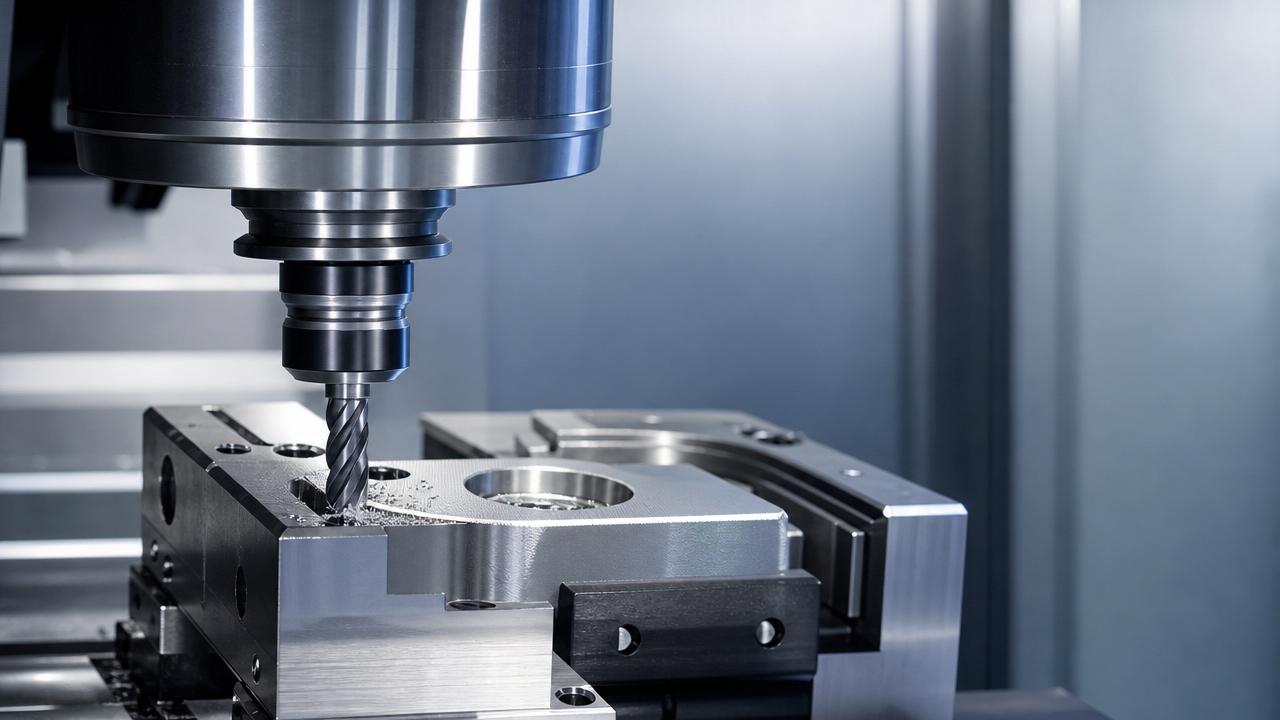
In CNC metal cutting, burr problems are rarely random—they are usually a visible signal that setup choices are drifting away from process stability. Across precision manufacturing, rising quality expectations, tighter delivery cycles, and stronger safety standards are making burr control more than a finishing concern. In many workshops, a small burr can trigger large consequences: dimensional risk, handling injuries, poor assembly fit, coating defects, and avoidable secondary operations. That is why CNC metal cutting performance must be evaluated not only by cycle time and tolerance, but also by how consistently the setup prevents edge breakdown and unwanted material rollover.
As machine tools become more precise and production systems more automated, burr formation is gaining attention as an early warning indicator. A burr often points to a mismatch among tool geometry, cutting parameters, workholding rigidity, material behavior, and machine condition. Instead of treating deburring as a routine cleanup step, many operations are now using burr patterns to diagnose whether a CNC metal cutting process is stable enough for repeatable output, safer part flow, and lower total production cost.
Burr patterns are becoming a faster way to read setup quality in CNC metal cutting
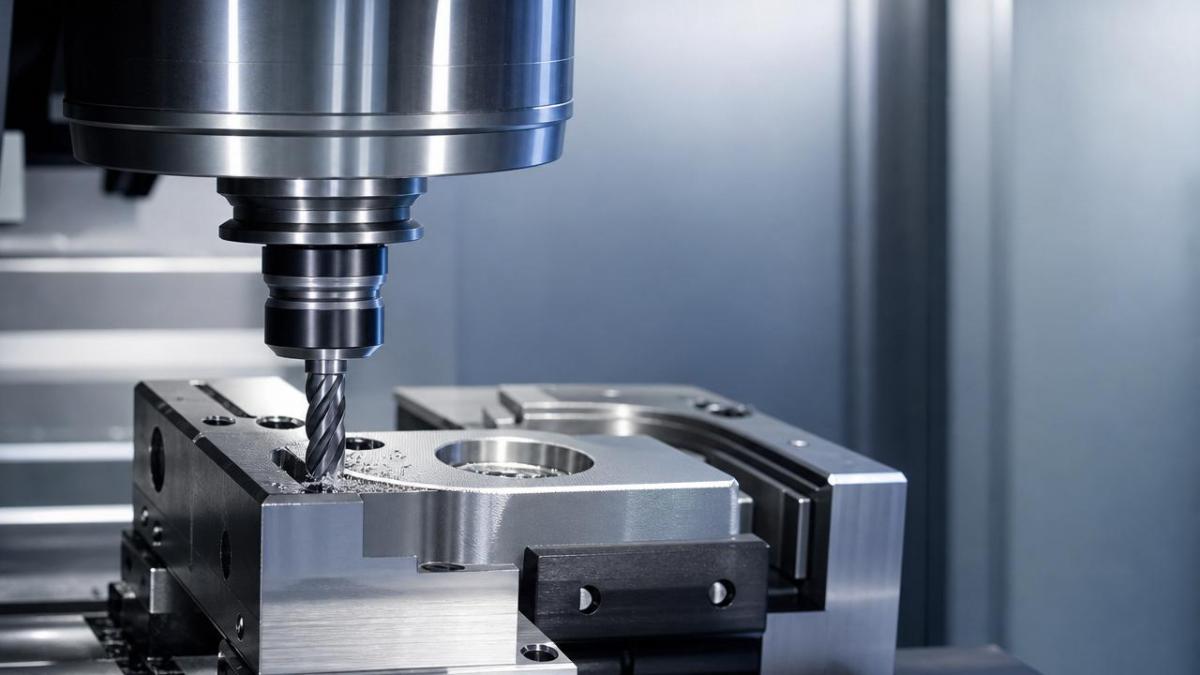
In modern machining environments, burr location, thickness, and direction often reveal more than a basic visual inspection report. Entrance burrs may suggest tool engagement issues, while exit burrs often indicate poor support at the edge, excessive feed, or a tool that is no longer shearing cleanly. When the same part family shows changing burr behavior from shift to shift, the cause is frequently tied to setup variation rather than material inconsistency alone.
This matters because CNC metal cutting is increasingly connected to downstream automation. Robotic handling, precision assembly, surface treatment, and in-line inspection all perform better when edge condition is controlled. A burr that once seemed minor during manual processing can now stop automated flow, damage sensors, or create false rejects. In that sense, burr analysis is becoming part of broader smart manufacturing discipline: it helps reveal whether the cutting process is truly under control.
Current shop-floor signals show that burr issues are linked to setup decisions, not chance
Several production trends are making burr-related setup choices more visible. First, manufacturers are cutting more mixed materials, including stainless steels, aluminum alloys, and high-strength metals that respond differently at the edge. Second, shorter batch cycles increase the frequency of changeovers, and each changeover creates new risk in offsets, tool selection, and clamping repeatability. Third, pressure for higher spindle utilization can encourage aggressive feeds or delayed tool changes, both of which influence burr formation in CNC metal cutting.
Another signal comes from quality records. In many facilities, burr-related nonconformities appear alongside issues such as poor surface finish, vibration marks, inconsistent hole breakout, or uneven chamfers. These are not isolated symptoms. They often arise from the same setup weaknesses: runout, insufficient support, unstable toolpath entry and exit, or reduced machine stiffness. Reading these signs together allows faster root-cause analysis than addressing burrs in isolation.
The main forces behind burr formation can be grouped into a few repeatable setup drivers
Burrs form when material is plastically displaced instead of being fully separated by a stable cutting action. In CNC metal cutting, that transition from clean shearing to edge deformation is influenced by a limited set of setup variables. The table below summarizes the most common drivers and what they usually mean on the shop floor.
These drivers are especially important in high-volume CNC metal cutting, where even a slight change in edge condition can multiply into rework hours, scrap cost, and delayed shipments. Burrs are therefore not just a part-quality symptom; they are often a process capability symptom.
Tooling, feed strategy, and clamping choices are shaping burr outcomes more than before
Among all setup variables, tooling remains one of the strongest factors. A sharp tool with geometry matched to the work material promotes clean chip separation. By contrast, a worn cutting edge, incorrect rake angle, or excessive corner radius can increase plowing and leave a heavier burr. In drilling and milling, the final edge breakout zone deserves special attention because this is where support disappears and material is most likely to deform instead of fracture cleanly.
Feed strategy also plays a decisive role in CNC metal cutting. If feed is too high for the tool condition or material response, the edge load rises and burr size often increases. If feed is too low, rubbing may replace efficient cutting, which can also worsen burr formation. The best result usually comes from a balanced cutting window validated by actual edge inspection rather than theoretical values alone.
Clamping is equally critical. A rigid machine cannot compensate for a flexible setup. Thin walls, unsupported exits, long overhangs, and uneven fixture pressure can all allow micro-movement that changes how the tool leaves the material. In practical terms, when burrs vary from part to part despite stable programming, workholding should be investigated before blaming the material or operator routine.
Useful signs that the setup is the true source of the burr
- Burr size changes after tool replacement or offset correction
- The same program produces different edges on different fixtures or machines
- Burrs appear mainly at part exit points, corners, or unsupported features
- Deburring time rises gradually as the tool approaches end of life
- Surface finish, noise, and burr severity worsen together
The impact of poor burr control now extends across quality, safety, and total equipment efficiency
The effects of burrs in CNC metal cutting are no longer limited to cosmetic inspection. Sharp edges can create direct handling risk during unloading, inspection, and assembly. Burrs can also interfere with sealing surfaces, threaded engagement, electrical contact, and coating adhesion. In precision sectors such as aerospace, automotive, energy equipment, and electronics, edge condition directly affects whether a part performs reliably in service.
Operationally, burrs reduce efficiency in several ways. They extend manual finishing time, complicate in-process measurement, and create uncertainty in pass-fail decisions. If burrs break loose, they may contaminate assemblies or damage downstream tools. For automated lines, burr inconsistency can reduce uptime because grippers, vision systems, and insertion processes rely on predictable geometry. This is why burr control has become a cross-functional process issue, not just a machining detail.
The most effective response is to monitor a short list of setup priorities consistently
A reliable burr-reduction strategy in CNC metal cutting does not always require major investment. It usually starts with disciplined attention to a few high-value control points:
- Standardize tool condition limits: define replacement criteria based on burr trend, not only dimensional wear.
- Validate edge-critical feeds and speeds: optimize final pass and breakout conditions for each material group.
- Improve fixture support: reduce unsupported exits and review clamping force distribution on thin or flexible parts.
- Review toolpath behavior: adjust entry, exit, ramp, and step-over patterns where burrs repeatedly form.
- Track machine health: inspect spindle runout, backlash, vibration, and thermal stability when burrs rise unexpectedly.
- Use burr mapping: record where burrs appear by feature to accelerate root-cause analysis during repeat jobs.
A practical judgment framework helps turn burr data into better CNC metal cutting decisions
Because burrs can have multiple causes, a simple response framework is useful. Instead of making broad parameter changes, link each burr symptom to the most probable setup area first. This shortens troubleshooting time and protects stable parts of the process.
For operations seeking better consistency, the next step is to treat burr inspection as part of setup approval. Record burr severity at first-off, compare against known acceptable patterns, and tie the result to tooling life, fixture condition, and machine state. In CNC metal cutting, this converts a recurring defect into a measurable process signal that supports safer handling, lower rework, and more dependable output.
When burrs start to appear more often, the best response is rarely more deburring. It is a disciplined review of setup choices. By tightening control over tooling, feeds, clamping, toolpath transitions, and machine condition, CNC metal cutting operations can improve edge quality at the source. That shift reduces waste, protects downstream processes, and strengthens the overall performance of modern precision manufacturing.
PREVIOUS ARTICLE
NEXT ARTICLE
Recommended for You
![]() Five Ministries Launch Joint Enforcement on EV Battery RecyclingManufacturing Policy Research Center
Five Ministries Launch Joint Enforcement on EV Battery RecyclingManufacturing Policy Research Center![]() Top 10 Future Industries Roadmap 2026 ReleasedManufacturing Market Research Center
Top 10 Future Industries Roadmap 2026 ReleasedManufacturing Market Research Center![]() Global Methanol-Electric Ecosystem Alliance LaunchedManufacturing Market Research Center
Global Methanol-Electric Ecosystem Alliance LaunchedManufacturing Market Research Center![]() ISO 23218-3:2026 Enters Force: CNC Digital Twin Interoperability Standard Goes GlobalCNC Machining Technology Center
ISO 23218-3:2026 Enters Force: CNC Digital Twin Interoperability Standard Goes GlobalCNC Machining Technology Center![]() ANVISA New Rule: Portuguese Biocompatibility Labels for Medical CNC EquipmentManufacturing Policy Research Center
ANVISA New Rule: Portuguese Biocompatibility Labels for Medical CNC EquipmentManufacturing Policy Research Center![]() KATS Updates KC Certification: CNC Cybersecurity Modules Must Comply with IEC 62443-4-2Manufacturing Policy Research Center
KATS Updates KC Certification: CNC Cybersecurity Modules Must Comply with IEC 62443-4-2Manufacturing Policy Research Center


Aris Katos
Future of Carbide Coatings
15+ years in precision manufacturing systems. Specialized in high-speed milling and aerospace grade alloy processing.
▶
CNC metal cutting burr issues often point to setup choicesCNC Machining Technology Center▶
CNC cutting speed vs edge quality where the tradeoff beginsCNC Machining Technology Center▶
CNC metal cutting burr problems that slow downstream assemblyCNC Machining Technology Center▶
Why CNC cutting quality drops even with the same materialCNC Machining Technology Center▶
CNC metal cutting burr problems and what usually causes themCNC Machining Technology Center
Mastering 5-Axis Workholding Strategies
Join our technical panel on Nov 15th to learn about reducing vibrations in thin-wall components.

Providing you with integrated sanding solutions
Before-sales and after-sales services
Comprehensive technical support