• Global CNC market projected to reach $128B by 2028 • New EU trade regulations for precision tooling components • Aerospace deman
NYSE: CNC +1.2%LME: STEEL -0.4%

A stable Production Process starts with fewer handoffs
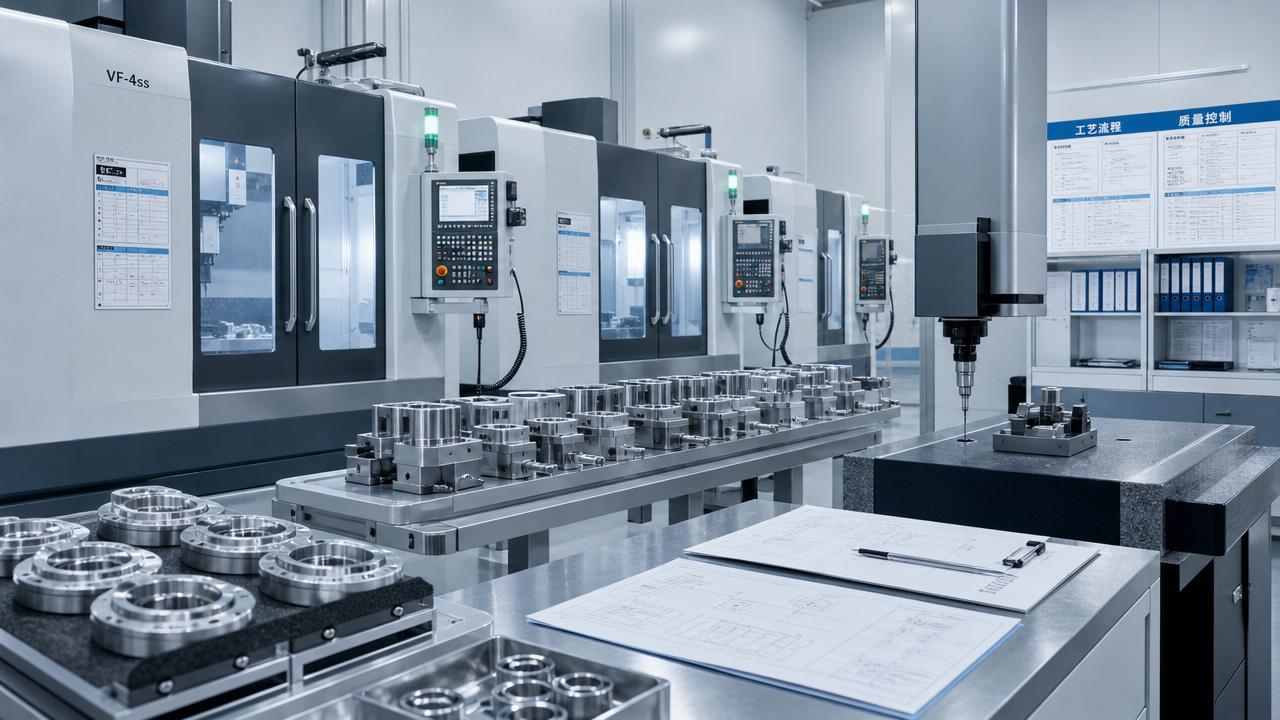
A stable Production Process begins long before machining starts—it is built by reducing handoffs, aligning teams, and keeping decisions close to execution. For project managers and engineering leaders in CNC and precision manufacturing, fewer transitions mean better quality control, faster response times, and lower risk across complex production workflows.
In CNC machining, every additional transfer between sales, engineering, planning, procurement, tooling, production, inspection, and logistics introduces a new point of delay or interpretation error. When tolerances are measured in microns, and delivery windows are often set at 2–6 weeks, unstable communication can be as damaging as unstable cutting conditions.
For project leaders managing multi-part programs, prototype-to-production transitions, or cross-border supply chains, the Production Process is not only about spindle speed or fixture design. It is also about organizational structure, decision speed, document control, and how closely planning stays connected to the machine floor.
This article examines why fewer handoffs create a more reliable Production Process, how project teams can redesign workflows around execution, and which control points matter most in CNC and precision manufacturing environments.
Why Handoffs Destabilize the Production Process
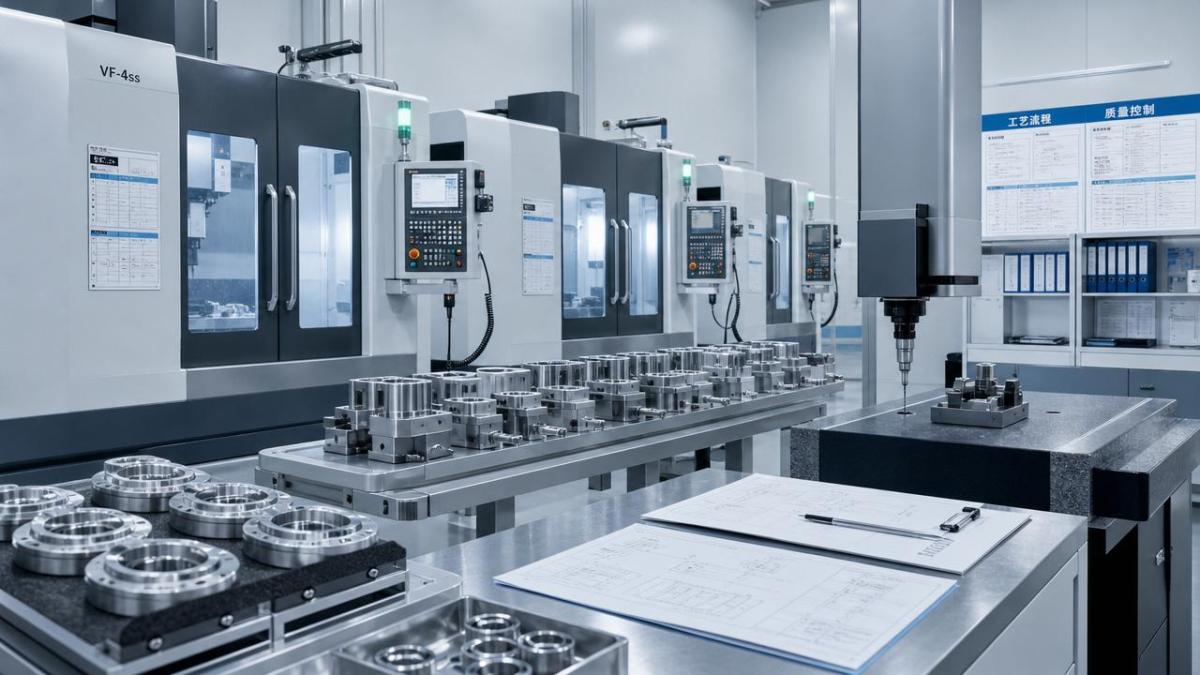
A handoff is any point where responsibility, data, or decisions move from one person or team to another. In a machining project, that can happen 5 times in a simple order or more than 12 times in a complex, multi-operation program involving turning, milling, heat treatment, surface finishing, and final inspection.
Each transfer may seem minor, but the cumulative effect is significant. A missing revision level, an outdated tool list, or a tolerance note interpreted differently by engineering and quality can stop a job for 4 hours, 1 shift, or in some cases 2–3 full days if material or fixtures need to be reworked.
Where instability usually begins
In many factories, instability starts before the first chip is cut. Quotation teams may estimate cycle time without fixture input. Process engineers may release routing before tooling is confirmed. Procurement may substitute materials with equivalent grades that still require updated cutting parameters. These are not isolated technical issues; they are handoff issues.
- Drawing revisions not synchronized across departments
- Process plans released before DFM feedback is closed
- Tooling and fixture assumptions not validated at the machine level
- Inspection criteria not aligned with customer critical dimensions
- Scheduling changes not communicated to setup and quality teams
For project managers, these issues directly affect three measurable outcomes: first-pass yield, on-time delivery, and response time to deviations. Even a 3% drop in first-pass yield can create downstream bottlenecks when high-mix production lines are already operating near 80%–90% planned capacity.
The hidden cost of too many transitions
A fragmented Production Process often looks manageable on paper because no single delay appears catastrophic. In practice, however, repeated micro-delays accumulate: 20 minutes waiting for program confirmation, 45 minutes for quality disposition, 2 hours for fixture correction, and 1 day for customer clarification. The result is unstable flow.
This matters even more in industries such as aerospace, automotive, electronics, and energy equipment, where part families may include 10–200 SKUs and traceability requirements are strict. More handoffs usually mean more waiting, more duplicate checking, and more variation between planned and actual output.
Operational signals that handoffs are too high
- Engineering questions continue after setup has started.
- Operators pause jobs to confirm routings or offsets.
- Quality teams receive parts before inspection criteria are finalized.
- Delivery promises change more than 2 times per order.
- Root cause analysis repeatedly points to communication gaps rather than machine capability.
When these signals appear regularly, the Production Process is not suffering from a single technical weakness. It is suffering from distance between decision-makers and execution.
What Fewer Handoffs Look Like in a CNC Manufacturing Environment
Reducing handoffs does not mean removing structure. It means shortening the path from information to action. In a stable Production Process, the people defining the job, planning the job, and running the job are connected through fewer approval layers and clearer ownership.
This can be achieved through cross-functional cells, program ownership by part family, or integrated project teams that cover RFQ, process planning, tooling, quality, and production launch. In most mid-to-large machining operations, reducing even 2–3 nonessential handoffs can noticeably improve launch speed and change response.
A practical comparison
The table below compares two common workflow models in precision manufacturing. The difference is not theoretical; it affects response speed, revision control, and the daily stability of the Production Process.
The low-handoff model does not eliminate controls. It places controls closer to execution. That shortens feedback loops and reduces the chance that an issue discovered at inspection traces back to a planning assumption made days earlier.
Core characteristics of a stable model
A more resilient Production Process in CNC machining usually includes the following features:
- One accountable owner for each project phase, with clear escalation rules
- Shared access to the latest drawing, BOM, control plan, and routing
- Setup validation before batch release, especially for first article runs
- Quality checkpoints tied to critical dimensions, not generic inspection routines
- Daily communication loops measured in hours, not days
For engineering leaders, this model is especially effective when batch sizes are small to medium, part complexity is high, and process windows are narrow, such as ±0.01 mm feature control, 3-axis plus 5-axis sequencing, or mixed material programs involving aluminum, stainless steel, and alloy steels.
How Project Managers Can Redesign the Production Process
Improving the Production Process requires more than asking teams to communicate better. Project managers need a defined operating method that reduces unnecessary transfers while preserving technical control. In most CNC organizations, the best results come from redesigning workflow in 4 practical layers.
1. Map the real workflow, not the formal chart
Start by tracking one representative part or order from RFQ to shipment. Count every transfer of information, approval, and responsibility. Many teams assume there are 6–7 steps; actual workflows often reveal 10–15 touchpoints, including unofficial approvals through email, chat, or shop-floor clarification.
Once mapped, classify each touchpoint as value-adding, compliance-driven, or delay-prone. This simple exercise often reveals that 20%–30% of handoffs add little technical value but create timing risk.
2. Put technical decisions closer to production launch
The closer a decision is made to actual setup conditions, the more accurate it usually becomes. Fixture clamp strategy, tool reach, offset logic, coolant approach, and in-process gauging should be confirmed by people who understand machine reality, not only by upstream planners.
A common method is to require a pre-launch review 24–48 hours before first machining. That review should include process engineering, setup, quality, and project management. If unresolved questions remain at this point, the release is not ready.
3. Use standard gates for exceptions, not for every routine step
Many factories over-control normal work and under-control abnormal work. A stable Production Process uses lightweight flow for routine jobs and stronger gates for high-risk conditions such as new materials, tolerance tighter than ±0.005 mm, customer-owned tooling, or outsourced heat treatment.
This reduces administrative load while protecting high-risk operations. It also helps project leaders focus attention where variation is most likely to affect cost, delivery, or compliance.
4. Build fast escalation paths
A problem is not dangerous because it exists; it becomes dangerous when it waits. For most precision machining projects, nonconformance decisions, schedule changes, or tooling substitutions should be resolved within 30 minutes to 4 hours depending on severity. If an issue takes 24 hours to reach the right person, the workflow is too distant from execution.
A 5-step implementation sequence
- Audit one current-state project and count total handoffs.
- Remove duplicate approvals and merge fragmented reviews.
- Assign one launch owner responsible for routing, tooling, and timing alignment.
- Define escalation windows by issue type: quality, engineering, material, or schedule.
- Review metrics weekly for at least 6–8 weeks before expanding the model.
This approach is practical because it does not require a complete organizational redesign. It starts with one value stream, one product family, or one customer program and scales from measurable gains.
Control Points That Matter Most for Quality, Delivery, and Risk
Not every control point has equal impact. In CNC and precision manufacturing, a stable Production Process depends on a small number of high-value checks that prevent costly rework later. Project managers should prioritize the points where interpretation errors become physical defects.
Priority checkpoints across the workflow
The following table highlights practical checkpoints that reduce risk without slowing the whole operation. These are widely applicable in machining centers, CNC lathe operations, and mixed-process production lines.
These checkpoints work because they focus on translation risk: where design intent becomes machine action, and where machine action becomes accepted product. A robust Production Process protects those transitions first.
Metrics worth tracking
Project teams do not need dozens of indicators. In most machining operations, 5 core measures are enough to evaluate whether handoff reduction is improving the Production Process:
- First-pass yield by part family
- On-time launch rate for new or revised jobs
- Average time to resolve production exceptions
- Number of engineering clarifications after setup release
- Schedule deviation between planned and actual completion
If exception resolution drops from 8 hours to 2 hours, and post-release clarifications fall by even 25%, most factories will see secondary benefits in machine utilization, overtime pressure, and customer communication quality.
Common Mistakes When Trying to Simplify the Production Process
Not every simplification effort improves performance. Some organizations remove approvals without clarifying ownership. Others centralize all decisions into one manager, creating a new bottleneck. A better Production Process is simpler, but it is also clearer.
Mistake 1: Confusing fewer handoffs with fewer standards
Reducing transitions should not weaken traceability, inspection discipline, or change control. In regulated or high-spec sectors, documentation still matters. The goal is to reduce unnecessary movement of decisions, not remove essential technical verification.
Mistake 2: Leaving operators out of the planning loop
A Production Process becomes unstable when plans are written without setup or machining input. Operators and setup technicians often identify practical risks in less than 10 minutes that could otherwise trigger hours of downtime after release.
Mistake 3: Measuring output only at the shipment stage
If teams only track final delivery, they react too late. Stability must be measured earlier: pre-launch readiness, first article success, setup completion time, and exception closure. These indicators show whether the Production Process is healthy before delay becomes visible to the customer.
Quick diagnostic questions for project leaders
- Can one person explain the current part status in under 2 minutes?
- Are all active teams working from the same revision and control plan?
- Do quality and production agree on the top 3 critical dimensions?
- Can urgent process issues reach a decision-maker within 1 hour?
- Have duplicate approvals been removed in the last 90 days?
If the answer to several of these questions is no, the operation likely has more handoffs than it can reliably support.
Building a Production Process That Supports Growth
As CNC manufacturers expand into larger programs, tighter tolerance work, or international supply chains, complexity naturally increases. The answer is not to add unlimited layers of coordination. It is to design a Production Process that can scale without losing speed, traceability, or technical clarity.
For project managers and engineering leaders, that means organizing around fast feedback, clear ownership, and disciplined checkpoints. Fewer handoffs create shorter learning cycles, more stable launches, and better alignment between planning and real production conditions.
In precision manufacturing, stability is rarely created by one machine, one software platform, or one meeting. It is created when the right decisions happen at the right level, within the right time window, and as close as possible to execution.
If you are reviewing your current Production Process, this is the right time to identify hidden handoffs, tighten project ownership, and redesign workflows around measurable control points. Contact us to discuss your machining workflow challenges, request a tailored solution, or explore more practical strategies for improving quality, delivery, and cross-team execution.
PREVIOUS ARTICLE
NEXT ARTICLE
Recommended for You
![]() First Global CNC Machine Carbon Footprint Guide ReleasedManufacturing Policy Research Center
First Global CNC Machine Carbon Footprint Guide ReleasedManufacturing Policy Research Center![]() Delta Launches NC5 CNC Series with RTCP & SIL2 CertificationCNC Machining Technology Center
Delta Launches NC5 CNC Series with RTCP & SIL2 CertificationCNC Machining Technology Center![]() Japan METI Boosts Green Subsidies for Chinese CNC SystemsManufacturing Policy Research Center
Japan METI Boosts Green Subsidies for Chinese CNC SystemsManufacturing Policy Research Center![]() Brazil INMETRO Mandates IoT Modules for CNC LathesManufacturing Policy Research Center
Brazil INMETRO Mandates IoT Modules for CNC LathesManufacturing Policy Research Center![]() Red Sea Crisis Worsens: Suez Canal CNC Equipment Delays Hit 11.4 DaysGlobal Machine Tool Trade Research Center
Red Sea Crisis Worsens: Suez Canal CNC Equipment Delays Hit 11.4 DaysGlobal Machine Tool Trade Research Center![]() UL Mandates AI Failure Scenario Testing for CNC Equipment Safety CertificationManufacturing Policy Research Center
UL Mandates AI Failure Scenario Testing for CNC Equipment Safety CertificationManufacturing Policy Research Center


Aris Katos
Future of Carbide Coatings
15+ years in precision manufacturing systems. Specialized in high-speed milling and aerospace grade alloy processing.
▶
A stable Production Process starts with fewer handoffsCNC Machining Technology Center▶
A weak Production Process often hides in these 5 signalsCNC Machining Technology Center▶
Which Production Process delays usually ruin delivery plans?CNC Machining Technology Center▶
What slows a Production Process more than teams expect?CNC Machining Technology Center▶
A weak Production Process often hides in these 5 signalsCNC Machining Technology Center
Mastering 5-Axis Workholding Strategies
Join our technical panel on Nov 15th to learn about reducing vibrations in thin-wall components.

Providing you with integrated sanding solutions
Before-sales and after-sales services
Comprehensive technical support