• Global CNC market projected to reach $128B by 2028 • New EU trade regulations for precision tooling components • Aerospace deman
NYSE: CNC +1.2%LME: STEEL -0.4%

Are Shaft Parts Failing Due to Material Choice or Machining
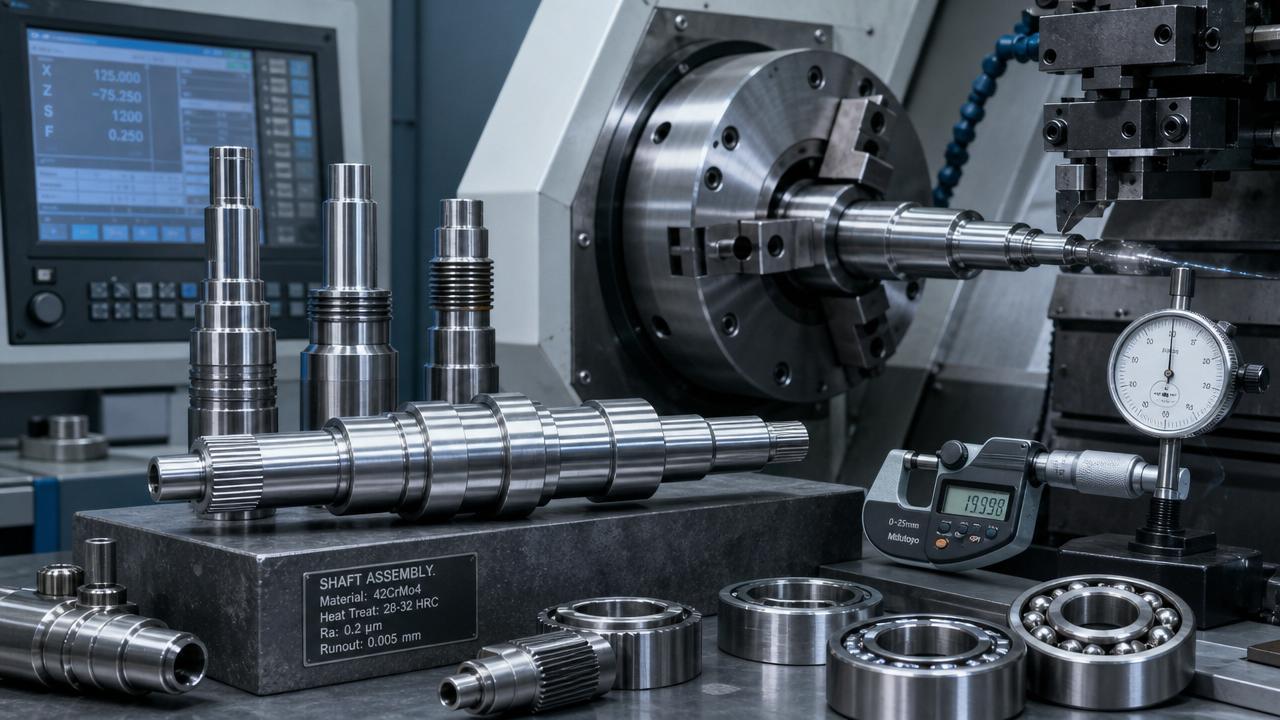
When Shaft Parts fail, the first suspicion often targets either bad material or poor machining.
In precision CNC manufacturing, that split is rarely accurate.
Most Shaft Parts fail because material behavior and machining decisions interact under torque, vibration, heat, surface stress, and tolerance limits.
As CNC systems become faster, more automated, and more precise, the margin for error becomes smaller.
That shift matters across automotive, aerospace, energy equipment, electronics, and general industrial production.
A shaft that passed older standards may now fail in high-speed, multi-axis, tightly monitored applications.
Understanding why Shaft Parts fail is now a strategic issue, not only a technical one.
Why Shaft Parts failure is becoming a more visible industry signal
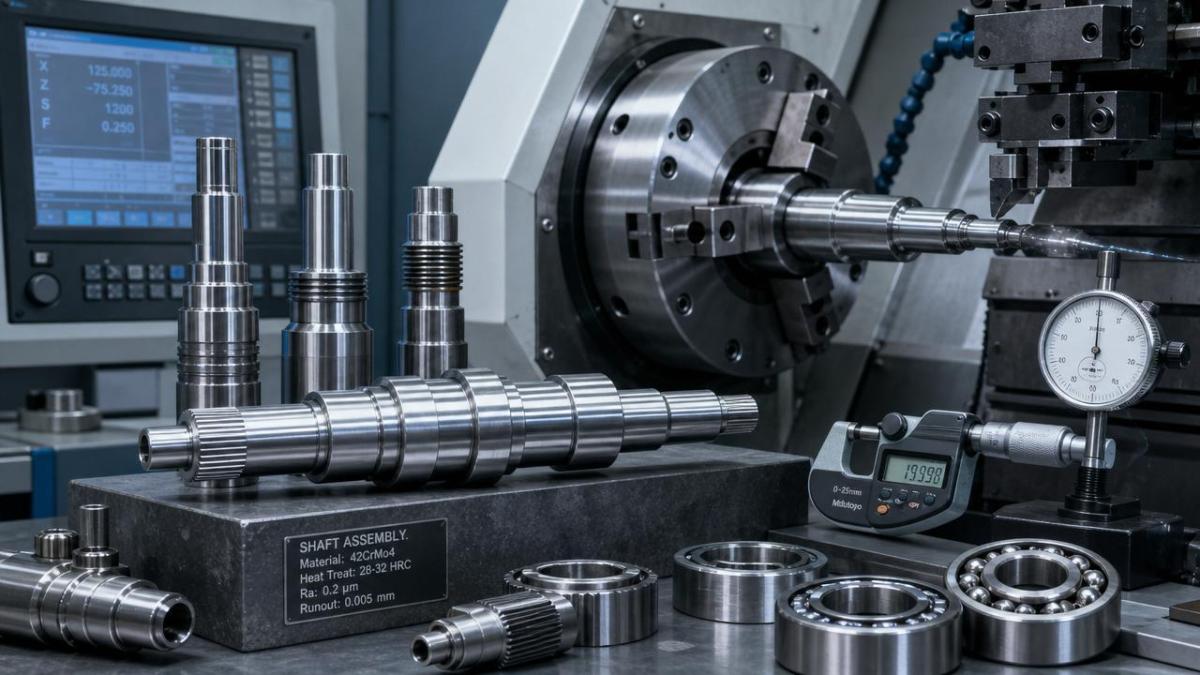
Global manufacturing is moving toward higher spindle speeds, tighter tolerances, longer duty cycles, and more connected production systems.
These changes expose weaknesses in Shaft Parts that were once hidden by looser process windows.
Digital inspection now detects runout, chatter marks, residual stress effects, and geometric inconsistency earlier than before.
At the same time, modern applications demand lightweight designs, higher output density, and reduced maintenance intervals.
That combination increases the performance burden on every shaft component.
In many cases, Shaft Parts do not fail from one obvious mistake.
They fail because hardness, toughness, surface finish, concentricity, and heat treatment were not balanced for the actual working condition.
The real trend: material choice and machining quality are no longer separate decisions
In older production models, teams often selected material first and optimized machining later.
That sequence is becoming less reliable for advanced Shaft Parts.
Today, machinability influences material selection, and material behavior influences every machining parameter.
For example, a high-strength alloy may improve load capacity.
Yet it can also raise cutting forces, increase tool wear, and create thermal distortion.
Likewise, an easier-to-machine steel may reduce cost and improve consistency.
But it may lack fatigue resistance for cyclic bending or shock loading.
This is why Shaft Parts evaluation is shifting from isolated specifications toward system-level matching.
Key signals driving this shift
- Multi-axis CNC machining exposes complex stress paths in Shaft Parts.
- Higher rotational speeds amplify imbalance and surface imperfections.
- Smaller tolerances reduce tolerance for thermal growth and deflection.
- Automated production requires stable, repeatable machining outcomes.
- Predictive maintenance depends on consistent material and surface performance.
What is actually causing Shaft Parts to fail in current applications
Failure patterns in Shaft Parts usually cluster around fatigue, wear, distortion, cracking, or premature vibration.
Each mode can originate from material choice, machining error, or both.
This pattern shows why single-cause thinking often leads to wrong corrective action.
Replacing the alloy alone may not fix machining-induced stress concentration.
Tightening machining tolerance alone may not solve poor core strength.
How changing production demands are reshaping Shaft Parts requirements
Across the broader manufacturing sector, Shaft Parts are expected to do more with less weight, less downtime, and less variation.
That trend changes both design criteria and process control strategy.
Major demand shifts
- Higher speed applications require stronger balance control and superior surface integrity.
- Longer service life demands better fatigue resistance and heat stability.
- Automation needs more predictable machinability and lower process variation.
- Global supply chains favor materials and processes with stable repeatability.
- Smart factories rely on measurable process capability, not assumed quality.
For Shaft Parts, this means the acceptable range of compromise is shrinking.
A part must be strong enough, machinable enough, stable enough, and inspectable enough at the same time.
Where the impact appears across different business and production stages
The interaction between material and machining affects more than final part quality.
It changes cost, lead time, maintenance behavior, and production stability throughout the value chain.
Design and engineering impact
Design assumptions must now include machinability, stress relief strategy, and finishing route.
Ignoring these factors can create Shaft Parts that look correct in CAD but fail in service.
Production impact
Unmatched material and machining choices increase tool consumption, scrap rates, rework, and setup instability.
This weakens CNC line efficiency and disrupts automated production planning.
Field performance impact
Shaft Parts with hidden residual stress or weak surface finish may pass inspection but fail early in operation.
That raises downtime, warranty exposure, and replacement complexity.
What deserves closer attention when evaluating Shaft Parts today
A stronger evaluation model focuses on interaction points instead of isolated checkboxes.
- Verify whether alloy strength matches the real load spectrum, not only nominal load.
- Review heat treatment response together with final machining sequence.
- Check if surface roughness targets align with bearing, seal, or contact requirements.
- Assess residual stress risks after roughing, grinding, or hard turning.
- Confirm concentricity and runout capability under actual fixture conditions.
- Examine whether process capability remains stable across batch production.
- Compare material certificates with microstructure consistency and traceability data.
These checkpoints help determine whether Shaft Parts are suitable for precision CNC applications, not just acceptable on paper.
Practical judgment methods for deciding between material change and process correction
When failure appears, the next step should be structured diagnosis rather than immediate replacement.
This approach prevents costly overreaction and leads to more reliable Shaft Parts improvement.
The likely direction ahead for Shaft Parts in precision manufacturing
The future points toward integrated decisions supported by simulation, process monitoring, and data-based quality control.
Shaft Parts will increasingly be judged by lifecycle stability, not only initial dimensional compliance.
Materials with better balance between strength and machinability will gain preference.
Machining strategies that reduce thermal damage and residual stress will become more valuable.
In this environment, the best-performing Shaft Parts are usually the result of coordinated material science and CNC process planning.
If Shaft Parts are showing recurring wear, cracking, runout, or instability, review the full interaction between alloy, heat treatment, geometry, and machining route.
That next step provides a clearer path to higher reliability, stronger process control, and better long-term manufacturing performance.
PREVIOUS ARTICLE
NEXT ARTICLE
Recommended for You
![]() Changsha Housing Fund Policy Boosts Smart Manufacturing Real Estate DemandManufacturing Market Research Center
Changsha Housing Fund Policy Boosts Smart Manufacturing Real Estate DemandManufacturing Market Research Center![]() SGX April Trading Volume Up 6%; Equipment Financing Gains TractionGlobal Machine Tool Trade Research Center
SGX April Trading Volume Up 6%; Equipment Financing Gains TractionGlobal Machine Tool Trade Research Center![]() China's Avg. Mobile Data Usage Hits 23.4GB, Boosting CNC Cloud Services AbroadManufacturing Market Research Center
China's Avg. Mobile Data Usage Hits 23.4GB, Boosting CNC Cloud Services AbroadManufacturing Market Research Center![]() Germany's DAX Surges 3% on Resurgent Machine Tool DemandGlobal Machine Tool Trade Research Center
Germany's DAX Surges 3% on Resurgent Machine Tool DemandGlobal Machine Tool Trade Research Center![]() Canada Signs Ukraine ICC Treaty, Sanctions Extend to Industrial Equipment ExportsManufacturing Policy Research Center
Canada Signs Ukraine ICC Treaty, Sanctions Extend to Industrial Equipment ExportsManufacturing Policy Research Center![]() MIIT Launches 'AI+Software' Initiative to Boost Smart ProgrammingCNC Machining Technology Center
MIIT Launches 'AI+Software' Initiative to Boost Smart ProgrammingCNC Machining Technology Center


Aris Katos
Future of Carbide Coatings
15+ years in precision manufacturing systems. Specialized in high-speed milling and aerospace grade alloy processing.
▶
Are Shaft Parts Failing Due to Material Choice or MachiningCNC Machining Technology Center▶
Production Process Delays That Quietly Raise Unit CostCNC Machining Technology Center▶
Shaft Parts Tolerance Problems Often Start With Material ChoiceCNC Machining Technology Center▶
Why Shaft Parts Fail Inspection Even After Finish MachiningCNC Machining Technology Center▶
Shaft Parts machining issues that affect fit long after deliveryCNC Machining Technology Center
Mastering 5-Axis Workholding Strategies
Join our technical panel on Nov 15th to learn about reducing vibrations in thin-wall components.

Providing you with integrated sanding solutions
Before-sales and after-sales services
Comprehensive technical support